01
Why Do Dried and Freeze-Dried Snacks Need Different Reviews?
The two products can share a shelf category while reacting very differently to humidity, pressure, rubbing, and repeated opening.
We treat conventional dried fruit as a dense, sometimes sticky product and freeze-dried fruit as a very low-moisture, crisp, fragile product. Each needs its own failure definition.
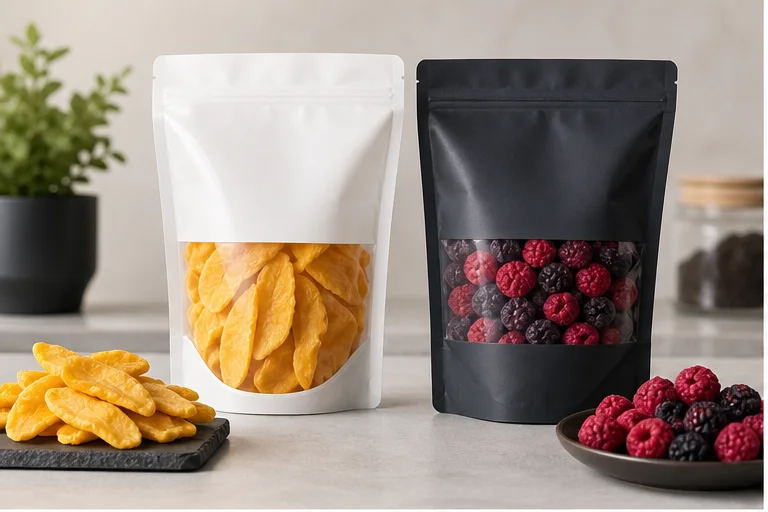
We refuse the broad “dried snack” shortcut
We begin with the product process and final condition. Conventional dried fruit can retain a flexible or chewy texture. Pieces may stick together, carry sugar, or leave residue near the opening. Freeze-dried fruit can be light, porous, and easy to crush. It can lose crispness quickly when it takes up moisture. These differences change filling, headspace, barrier, zipper, and shipping decisions.
We ask the product owner to define the first unacceptable change. For dried fruit, that may involve texture, color, flavor, surface condition, or microbial controls that belong to the food safety and product program. For freeze-dried snacks, the first obvious change may be loss of crispness or breakage, but the team still needs a defined method and limit. We do not turn general packaging advice into a food safety conclusion.
We also compare piece geometry. Sticky slices can bridge across a narrow opening. Fragile berries can break during a long drop or tight case pack. Powder and small fragments can enter the zipper. We capture these inputs in the flexible packaging specification checklist before we discuss film. This prevents the project from buying a popular stock pouch that fits the label but not the actual snack.
| Product condition | Common packaging concern | Evidence we request |
|---|---|---|
| Chewy dried fruit | Stickiness, color, and opening residue | Product-specific storage and use review |
| Freeze-dried fruit | Moisture pickup and breakage | Crispness and handling protocol |
| Mixed fruit snack | Different densities and surfaces | Representative formula range |
02
How Do We Choose Moisture and Oxygen Protection?
A shiny foil look does not prove moisture protection, and a clear pouch does not reveal its transmission data.
We choose protection from measured product sensitivity and comparable OTR and WVTR data. We keep test method, conditions, exact laminate, seals, and shelf-life protocol together.
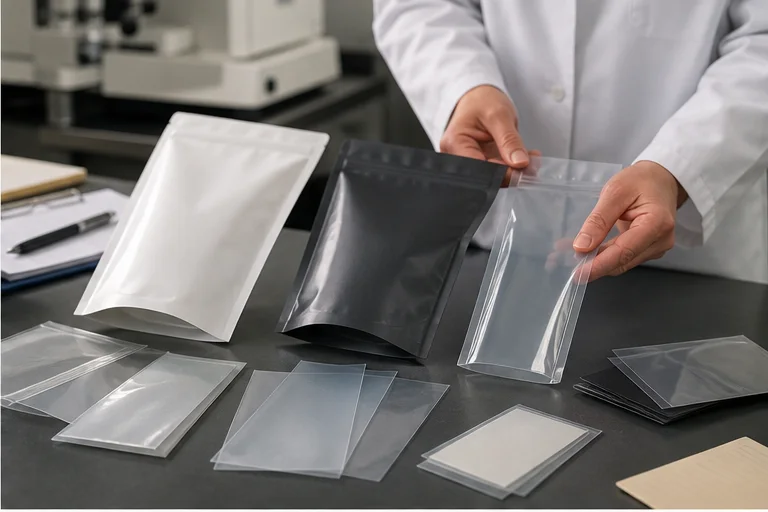
We connect film data to texture evidence
We give moisture special attention for freeze-dried products because the desired crisp texture can change after humidity exposure. We still do not publish a universal WVTR target. We ask the product team to define the texture endpoint and the expected storage conditions. We compare candidate film data only when the method, temperature, humidity, unit, and specimen are clear. ASTM F1249 describes WVTR as an important packaging property and stresses agreed conditions and criteria.[3]
Oxygen may also matter for flavor, color, or ingredients, so we review OTR when the product program identifies that risk. We check whether the headspace process is controlled. We also review light exposure when the fruit color or ingredients may be sensitive. A window creates a different exposure area from an opaque face, so we include the final artwork and window geometry in the study.
We remember that the flat film is only part of the pack. Gusset folds, seals, zipper installation, and handling damage can affect the converted pouch. We use the stand up pouch material structure guide to identify the layer roles and unknowns. We then validate the exact converted pouch with the actual product rather than selecting from a generic “high barrier” label.
| Risk | Material data | Filled-pack confirmation |
|---|---|---|
| Moisture pickup | WVTR with conditions | Texture trend under defined storage |
| Oxygen exposure | OTR with conditions | Product-specific quality result |
| Light exposure | Opaque or windowed design details | Color and quality review |
03
How Should We Balance Headspace, Window, and Zipper?
A small pouch can crush fragile fruit, while a large clear pouch can show breakage, dust, and an underfilled appearance.
We set headspace from fragility and filling, size the window around real product appearance, and test the zipper against crumbs, sticky surfaces, and repeated use.
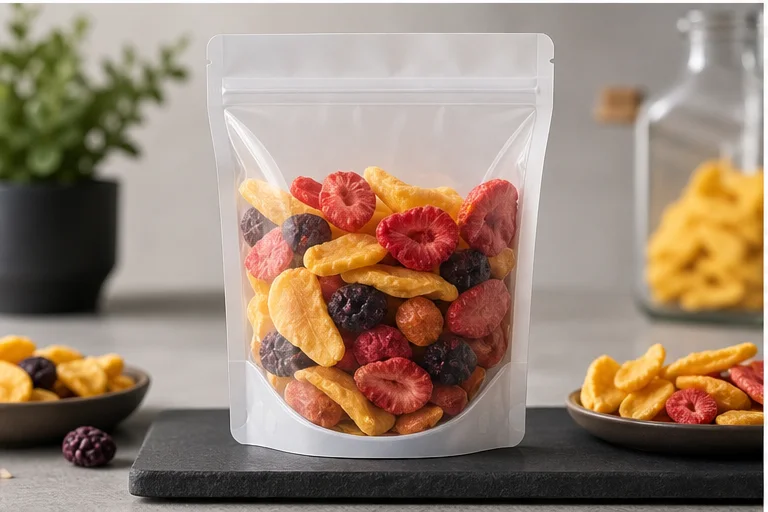
We let product behavior control the visible features
We fill several sizes and compare the settled product, not only the loose fill. Freeze-dried pieces may need space that reduces direct compression, but excess movement can also create breakage. Dried slices may settle densely and press outward. We test the shipping case because the pouch does not protect the product alone. The carton, count, orientation, and empty space all influence pressure.
We use windows carefully. A window can show natural color and piece size, which can be useful for online and retail trust. It can also expose fines, inconsistent fill, and broken pieces. The window reduces the area available for protective opaque material and printed information. We place it away from gusset folds, seals, and barcode zones. We test the pack under expected light conditions rather than assume the window is neutral.
We test the zipper with the real surface residue. Freeze-dried dust can collect in the track. Sticky fruit can touch the opening during removal. We evaluate whether users can reach or pour without contaminating the seal. We use the custom pouch dieline guide to lock the zipper, notch, window, safe zones, and top seal into one drawing. This stops the artwork team from moving a visible feature into a functional area.
| Feature | Dried fruit concern | Freeze-dried concern |
|---|---|---|
| Headspace | Settling and dense outward pressure | Crushing and movement |
| Window | Stickiness and color display | Breakage and light exposure |
| Zipper | Residue on the opening | Dust and small fragments |
04
What Should the Final Fruit Snack Trial Include?
A short drop test cannot prove shelf life, and a shelf-life sample cannot prove that ecommerce handling will protect fragile pieces.
We combine filling, seal, storage, reclosure, display, and distribution trials. Each test has a named method, sample, condition, and acceptance decision.
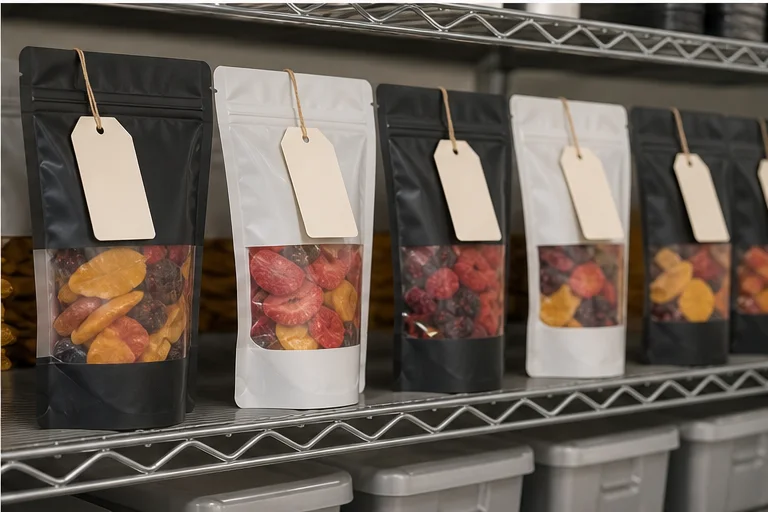
We use one evidence map for several tests
We begin with the filling trial. We record drop height, product breakage, dust, sticky bridging, fill accuracy, and seal-zone condition. We check whether the zipper opens for filling and whether the final seal forms consistently. We photograph the filled pouch before and after normal settling. This evidence supports the process decision, but it does not prove long-term product quality.
We run the storage protocol with the intended product, laminate, headspace process, and seals. We keep real-time and any accelerated work clearly labeled. We record the product lot, film lot, pouch revision, sealing settings, and storage conditions. We include the selected window and artwork construction because they are part of the final package.
We then test consumer and distribution handling. We repeat the opening and closing cycle for a sharing pack. We inspect residue in the zipper and changes in product texture. We pack units into the intended case or mailer and review breakage, abrasion, puncture, and seal stress. The pouch sample approval guide helps us state what each sample proves. We approve the pouch only when all required evidence points to the same exact construction and product use.
| Trial | Primary question | Limit of the result |
|---|---|---|
| Filling trial | Can the line fill and seal without damage? | It does not prove shelf life. |
| Storage study | Does product quality remain acceptable? | It covers only stated conditions. |
| Distribution review | Does the pack protect pieces in transit? | It does not replace product testing. |
Conclusion
We select separate pouch directions for dried and freeze-dried snacks, then we validate moisture, handling, opening, and distribution with the exact product.
Sources and further reading
- FDA: Food Packaging and Other Food-Contact Substances (further reading)
- FDA: Determining the Regulatory Status of Food-Contact Material Components (further reading)
- ASTM F1249: Water Vapor Transmission Rate Through Plastic Film (cited in article)
Reddit links are community insight only. We use official standards and regulator pages for technical context, and we require project evidence for the final pouch decision.