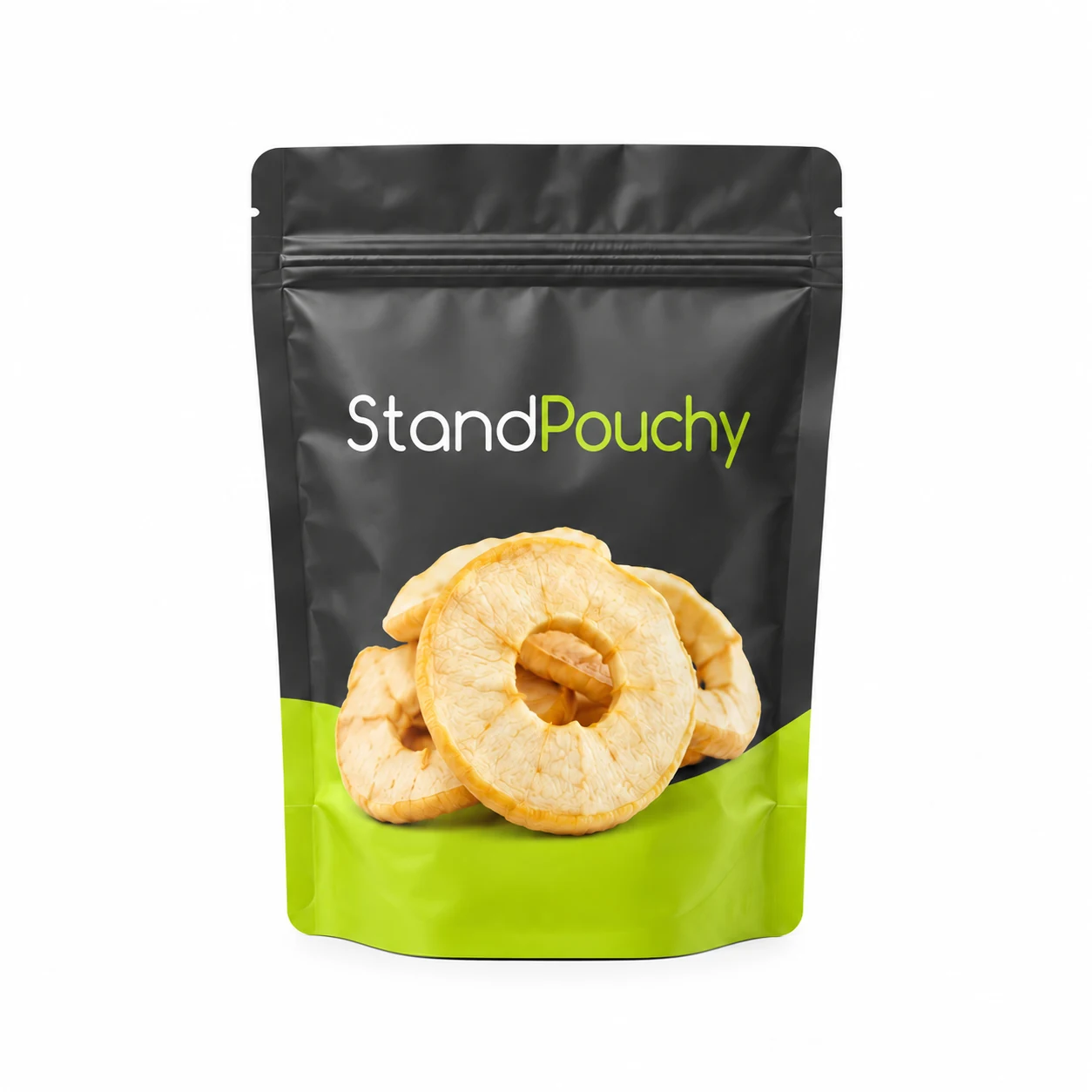
01
Which Apple Texture Should Our Supplier Actually See?
We create a weak comparison when one reviewer expects a chewy ring and another expects a crisp chip. We agree the product reference first.
We send representative soft rings with thickness, diameter, formulation, condition and target fill. We record the acceptable texture with the food owner rather than asking the pouch supplier to infer it from a name.
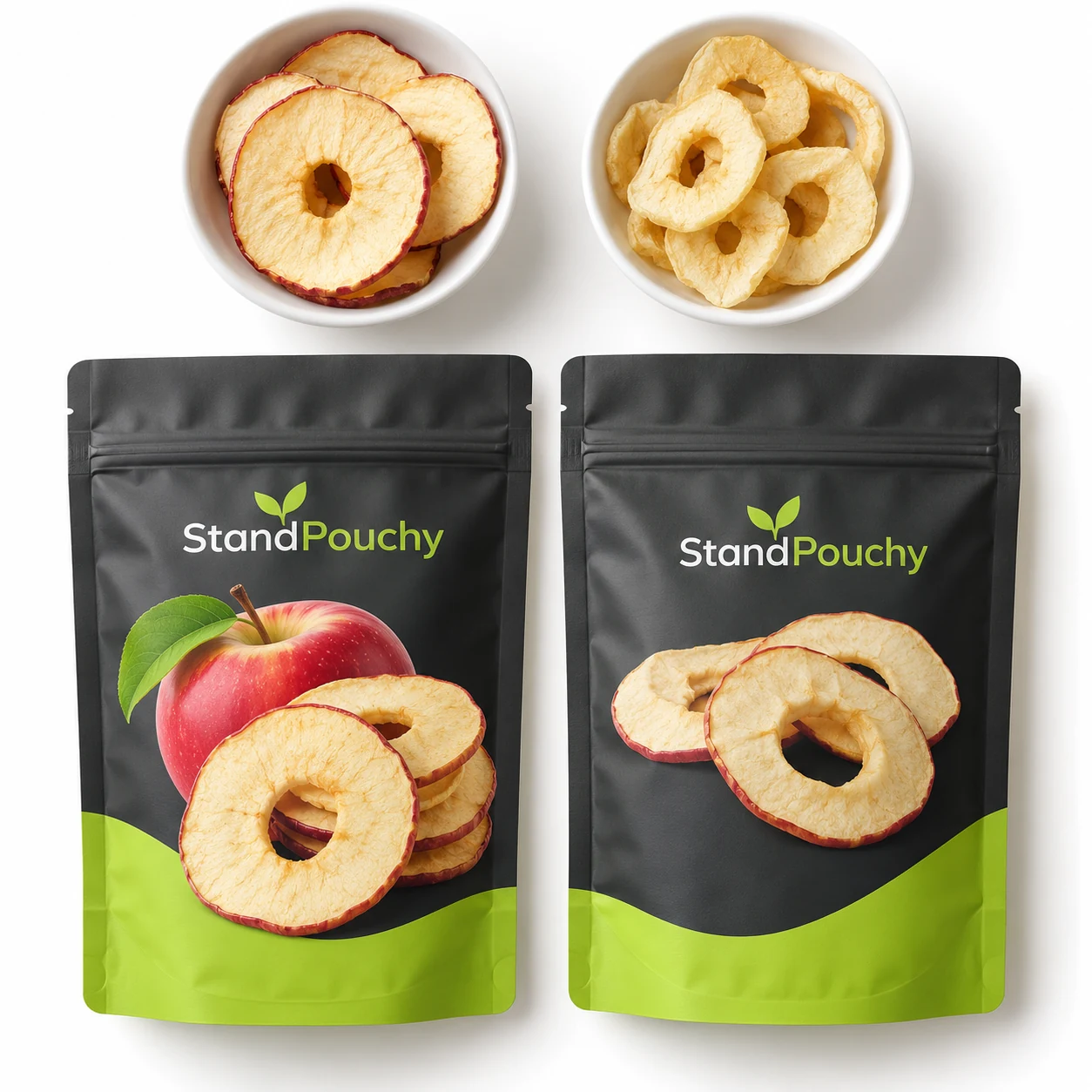
We keep the expected bite beside the sample
We record whether rings retain peel, their thickness range, intact diameter and the amount of small pieces. We identify added ingredients and the product state at filling. We ask the food owner to provide the relevant product measurements and acceptance plan; appearance or finger feel cannot establish safe water activity. We label the sample with its lot and history. A home-preservation source from the University of Georgia explains moisture reabsorption and reopening exposure in dried foods.[2] We use that limited principle as context, not as a commercial drying process, moisture target or shelf-life validation.
We make a simple geometry record from representative rings before filling. We lay them flat without stretching and record diameter, thickness and intact shape using the same method. We keep peeled and peel-on pieces identifiable if both are included. We ask the food owner to define the conditioning and handling of retained samples. We do not use a bend test or a photograph as a substitute for its product measurements, and we avoid treating a crisp fragment as representative of the intended soft ring.
Nut Cravings describes its dried apple rings as soft and chewy in a resealable bag.[1] We treat that as an example of the product language a buyer may encounter. We do not adopt its nutrition, storage period or formula. We ask our buyer to show the particular ring it wants to sell and to describe an unacceptable change in ordinary words.
A Reddit contributor asks how to achieve supermarket-style soft rings rather than crispy or leathery slices.[6] We use that attributed question to make a commercial distinction clear. We are selecting packaging for an already defined product; we are not offering a drying recipe. If the food is still under development, we ask the buyer to resolve that uncertainty before buying printed stock.
We place the product reference in our dried-fruit packaging brief and list which questions belong to the food team. We ask the supplier to confirm the represented condition in its sample proposal. That makes a quotation easier to compare and prevents an attractive apple image from hiding a mismatch in the food the package is expected to contain.
| Decision | What we compare | Buying consequence |
|---|---|---|
| Texture reference | Soft ring or crisp chip | Avoid an ambiguous brief |
| Piece geometry | Thickness, diameter and fragments | Choose representative samples |
| Food readiness | Defined product and acceptance owner | Resolve development gaps |
02
How Do We Choose an Opening for Intact Rings?
We may choose a narrow pouch that fills acceptably but forces buyers to tear rings apart. We review access before accepting the size.
We compare filling and whole-ring removal with the same product, then check the zipper and seal clearances. We approve useful access and case fit together rather than relying on nominal pouch capacity.

We review the widest and the last ring
We describe overall width, height and full bottom gusset separately from usable mouth width. Side seals and zipper ends reduce the practical opening. We observe a representative wide ring entering and leaving without assuming every ring can fold in the same way. We note dragging, sticking, torn pieces and contact with the closure. We repeat the task after the defined storage interval in the trial plan. We also observe a nearly empty pouch, where the buyer may reach deeper. We keep the ring lot and handling sequence the same when comparing candidate sizes.
For the access comparison, we keep the pouch at the intended fill level and observe the ring’s path through the opening. We record whether the ring must bend, touches the zipper or catches at a corner. We repeat the observation with a representative large ring and with the remaining product near the base. We photograph the access position rather than stretching the mouth flat for a misleading width measurement. The recorded result belongs to that product lot and pouch geometry.
We use the snack size worksheet to organize a small comparison. We ask whether the proposed pouch suits a hand, a serving utensil or a controlled pour. We do not pay for extra height merely because the front face looks more generous. We ask which size gives the intended presentation without creating unnecessary empty space or an awkward case arrangement.
We compare an opaque printed face and any proposed window as separate purchasing options. If the buyer wants visible whole rings, we ask how the filled arrangement will look after ordinary handling. We keep a neat studio sample separate from the production-representative fill. We use the clear-window guide to explain the questions, then request evidence for the actual offered construction.
We ask the supplier to identify size-related changes in artwork, case count and sample work. We keep those consequences beside the access observations so procurement sees the whole comparison. Once a candidate completes the intended task, we avoid adding more formats without a specific unresolved question. The next approval can then focus on the represented closure and food condition.
| Decision | What we compare | Buying consequence |
|---|---|---|
| Mouth clearance | Whole-ring removal | Avoid forced tearing |
| Filled appearance | Intact rings after handling | Match presentation expectations |
| Size consequence | Artwork and case arrangement | Compare the complete offer |
03
Which Moisture and Closure Evidence Should We Compare?
We cannot choose a material from “keeps fruit fresh” alone. We ask what the offered film and filled seal evidence actually represent.
We compare identified constructions and moisture transmission conditions, then review seals and repeat opening with the actual rings. We leave the commercial product-life decision with the agreed food and filled-pack study.

We separate the film number from the food outcome
We record the outer print layer, proposed barrier and inner seal layer from outside to inside. We ask whether the report represents the exact windowed or opaque option. ASTM F1249 addresses water vapor transmission through film.[3] We retain method, units, sample, temperature and humidity conditions with the result. We do not infer a universal target from the word “dried.” The food owner must decide which texture changes and other outcomes to monitor. We also keep product contact and intended storage conditions with the specification; FDA’s food-type and use-condition tables show why actual use belongs in that review.[5]
We retain a defined opening-cycle record for the trial units. We note when the pouch is opened, how the ring is removed and when the zipper is closed. We record ambient conditions where the project plan requires them and keep the unopened control separately. We check whether residue appears in the track and whether the same closing motion still completes the intended task. We do not extend the observation to an untested household storage period or infer food safety from successful reclosure.
We ask the supplier to explain the commercial alternatives in a matched proposal. One option may prioritize visible product while another uses an opaque face. We request the sample and evidence needed for each difference. We do not assume that a more expensive-looking finish gives a better moisture result. We use the barrier-data guide to prepare a clear list of missing information.
We keep ring residue and loose pieces out of the represented final seal area, and we record the sealing setup used for the sample. ASTM F88 measures the force to separate a seal strip and the failure mode.[4] We treat that result separately from checking for leaks, whole-pack handling and actual opening. We also test reclosure with the intended rings; a zipper is a repeat-use feature rather than a replacement for the original permanent seal.
We ask who supplies the reports and who owns the food study. We keep sample approval open until the responsible reviewers have accepted their part. If a supplier offers only a material name, we ask for a named next evidence step. This gives procurement a useful comparison without turning uncertain test scope into a published promise.
| Decision | What we compare | Buying consequence |
|---|---|---|
| Moisture evidence | Method, conditions and construction | Compare relevant reports |
| Seal evidence | Represented setup and failure mode | Separate different test questions |
| Repeat use | Actual rings and intended opening cycle | Approve the consumer task |
04
What Must We Approve Before Buying Printed Apple Pouches?
We can accept a lovely apple design and still leave packing or food approval unowned. We make the final sample decision explicit.
We approve the food reference, filled opening, print, closure and case arrangement under one revision. We ask the supplier’s quote to identify those choices and the work still assigned to the buyer.

We buy a defined release scope
We identify retained filled units with product lot, pouch revision, filling date and represented conditions. We keep an unhandled reference beside samples used in the agreed case review. We record whether a torn ring, closure mark or new crease was present before handling. We avoid assigning cause from a single observation. We retain the proposed artwork with its actual dieline and keep closure areas clear of important information. We also identify which proof represents appearance only and which sample represents the proposed construction. These records let a later reviewer understand what was accepted and what was still outside the trial.
We record the packed ring orientation before the case trial and retain photographs of the original fragment level. After handling, we inspect the pouch faces, bottom fold, seal margin and zipper ends in a consistent order. We compare intact-ring access again rather than checking only exterior appearance. If the food condition or piece distribution differs from the retained reference, we record that difference before interpreting the package observations. This keeps product variation and packaging change identifiable in the review.
We use the sample approval guide to collect the decisions. The food owner accepts the defined apple product and study scope. Brand accepts the intended appearance and accurate wording. Operations accepts the represented filling and access task. Procurement checks that the quote names the same option. We ask each reviewer to identify remaining work instead of using a general “approved” message.
We compare quantity per design, setup, proof stages, pouch construction, packing, delivery terms and exclusions. We ask whether a change in ring size, formulation or filling route triggers a new sample review. We also ask what the reorder reference will be. These questions help a buyer compare actual scope without publishing assumed prices, minimum quantities or production timing.
We then prepare an apple-ring pouch inquiry with the product reference, target fill, destination, artwork status and unresolved questions. We request a specific next sample or document check. If the accepted food changes later, we return to that record before buying more printed stock. This keeps the commercial decision connected to the product the buyer intended to sell.
For long chewy fruit pieces, our mango strip pouch buying guide connects clumps, filling clearance and the selected storage study to the order scope.
For a different ring cut and surface condition, we trial dried pineapple rings separately with their own lot and texture target.
| Decision | What we compare | Buying consequence |
|---|---|---|
| Approval reference | Food lot and pouch revision | Keep the decision traceable |
| Commercial scope | Proofs, packing and exclusions | Compare equivalent offers |
| Changed product | New food or operating conditions | Review before reordering |
Conclusion
We approve the expected apple texture, useful opening and represented pack together, then order against the same documented scope.
Notes and sources
- Nut Cravings: Soft dried apple rings in a resealable bag (cited in article)
- University of Georgia NCHFP: Packaging and storing dried foods, home-preservation scope (cited in article)
- ASTM F1249-25: Water vapor transmission through film (cited in article)
- ASTM F88/F88M-23: Seal strength of flexible barrier materials (cited in article)
- FDA: Food types and conditions of use (cited in article)
- Reddit community insight: Soft chewy apple rings versus crisp slices (cited in article)
About the StandPouchy packaging team and editorial responsibility
Reddit links are community insight only. We use official standards and regulator pages for technical context, and we require project evidence for the final pouch decision.