01
Which Coconut Flakes Belong in Our Supplier Brief?
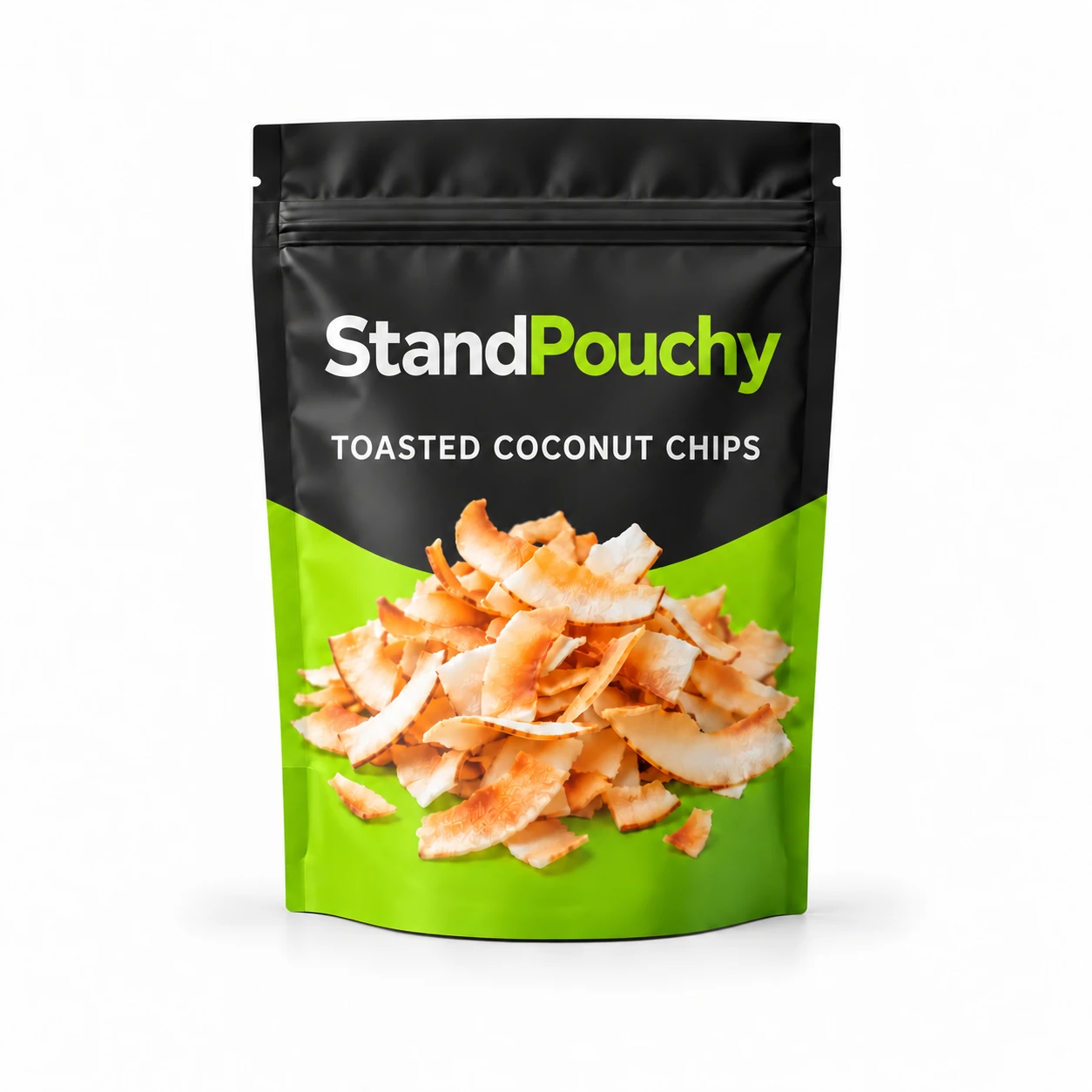
We can describe coconut chips as one uniform product. That hides recipe and shape differences, so we define the actual flake range.
We provide broad and curled flakes, normal fragments, coating information, target fill and intended use. We ask the food owner which quality changes the packaging study must investigate.
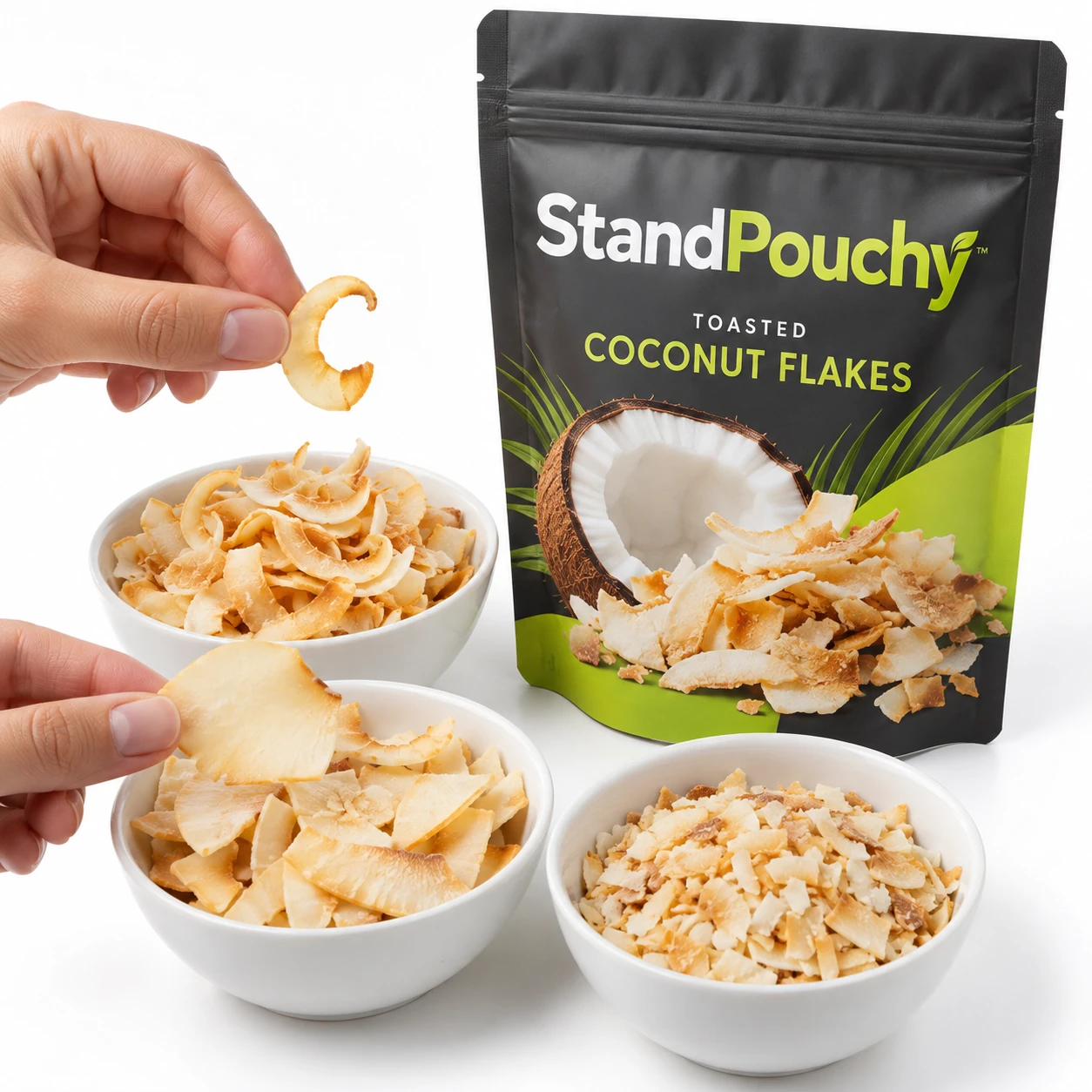
We separate product identity from a familiar pack name
We record slice shape, thickness variation and ordinary fragments from the product supplied for review. We note whether it is toasted, sweetened, seasoned or coated. We identify any inner wrap and whether the flakes directly contact the pouch. We photograph normal curl and contact points at the front, back and bottom fold. We ask the food owner to define the relevant texture, aroma or appearance endpoint without prescribing a shelf life.
We request food-contact support for the exact proposed structure and conditions. FDA guidance makes component identity and intended use part of that review.[1] We do not infer authorization from a competitor’s food-grade description. We keep the product formulation reference, storage conditions and pouch revision with the evidence request. A change in coating or product form remains visible as a possible reason to repeat the sample review.
We keep the sample preparation method consistent across comparisons. We photograph the normal mix of broad flakes, curled pieces and small fragments beside a scale. We record the product reference, target fill and actual filled amount. We keep observations from different recipes separate rather than merging them into one sample record.
We ask our buyer how the product will be used. A snack eaten directly from the pouch, a topping poured over breakfast and a gift-oriented assortment can create different expectations for flake access and appearance. We decide which unit we are buying before discussing decoration. We also ask whether intact broad flakes are central to the offer or whether ordinary small pieces are acceptable. The commercial promise should match the sample rather than the most attractive ingredient photograph.
A Reddit discussion about coconut granola bark includes complaints about the amount of coconut shown and the product texture.[6] We attribute that to a mixed bark product, not a pure coconut chip study. We use the concern to ask whether the artwork and delivered contents tell the same story. The specification checklist keeps these questions beside the actual flakes. We ask suppliers to state which sample they used when proposing a size or material direction. That makes their quotations comparable and keeps a generic dried-fruit answer from replacing the specific buying decision.
| Comparison input | Question for our supplier | Buying decision |
|---|---|---|
| Flake range | Are curls and normal fragments represented? | Comparable samples |
| Product identity | Which recipe and process are intended? | Defined food input |
| Selling promise | Do contents match the artwork expectation? | Buyer acceptance |
02
How Do We Choose Access for Thin Curled Flakes?
We can buy a compact bag that catches flakes at the zipper. That can spoil filling and pouring, so we compare the usable opening.
We compare opening width, fill height, bottom-gusset behavior and top seal margin using real flakes. We review hand access or pouring according to the intended sale before approving dimensions.
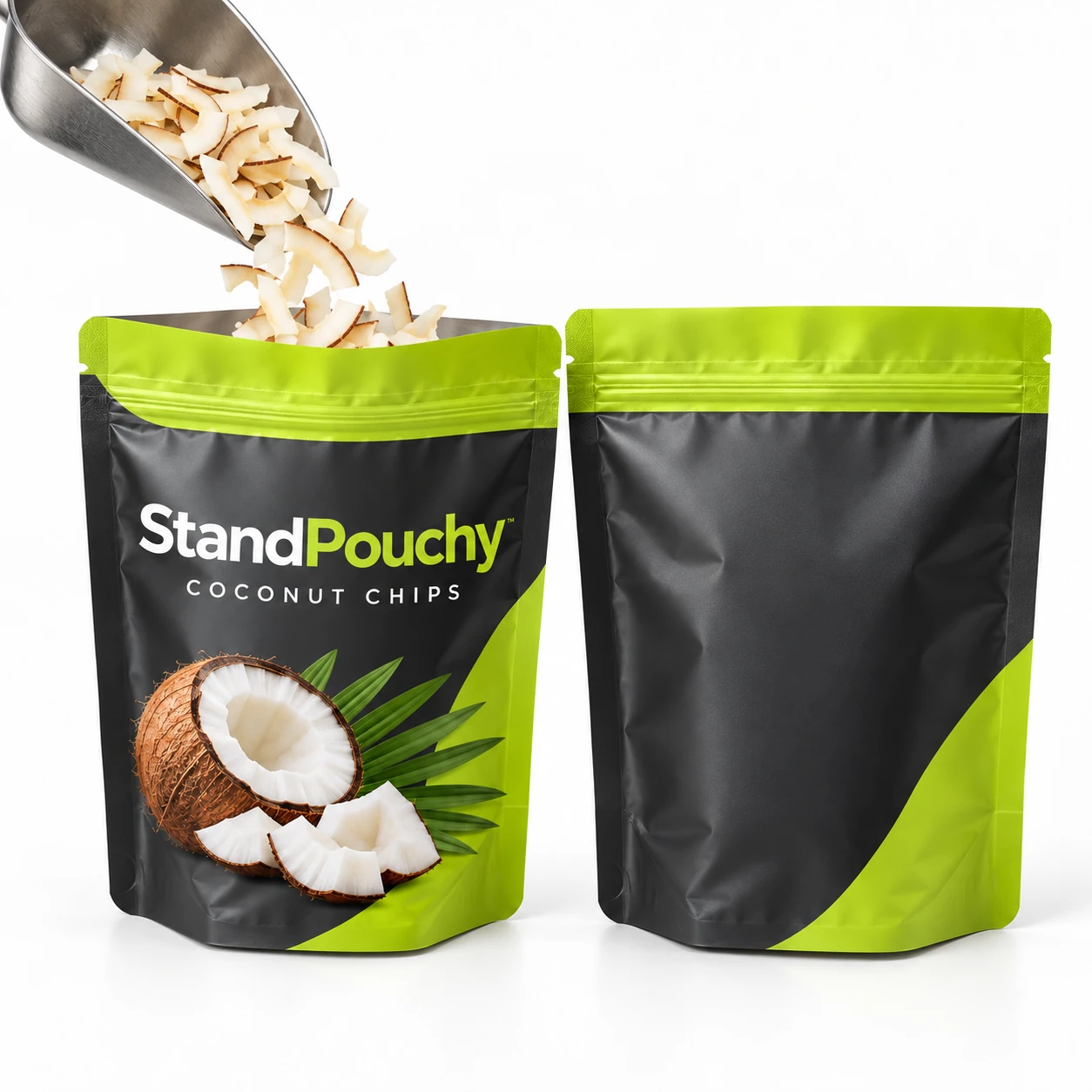
We measure a filled pouch and observe its use
We start with front and back faces, narrow side seals and a bottom folded gusset. We record face dimensions separately from usable space below the zipper and permanent seal. We observe how broad flakes enter the opening and how curled pieces settle. We photograph the fill line rather than converting a target weight directly into a fixed catalogue size. We keep loose and settled observations under the same preparation method.
We open the sealed sample in its intended sequence and review the resulting mouth. We observe whether flakes bridge, spill or rub against the tear edge during the planned pouring step. We check access again when the pouch is partly used. We keep the zipper position and the food-clear seal margin visible on the planning drawing. We ask the converter to confirm final coordinates before a production dieline is released.
We record the opened mouth dimensions with the tear strip removed and the zipper fully released. We note whether the filled walls restrict access compared with an empty pouch. We observe pouring at the intended angle and record where pieces catch. We repeat with partly used packs rather than extrapolating from the first opening.
We ask the buyer to compare two useful options. A narrower unit may support a compact shelf face; a wider opening may make broad flakes easier to handle. We ask what changes in case count, artwork width and sample preparation. We do not choose the larger option just because it looks more premium. We choose the option that resolves the intended access problem while respecting the buyer’s channel and approved presentation.
We connect the pouch size guide to the coconut chip pouch direction when preparing samples. The product page is a starting direction rather than a capacity guarantee. We request a filling demonstration with the actual food and equipment. If suppliers quote different opening features, we ask each to explain which use they support. We then record the feature decision as part of the scope. This prevents procurement from comparing a plain pouch, a zipper pouch and a pouch with an extra insert as if they were identical units.
| Comparison input | Question for our supplier | Buying decision |
|---|---|---|
| Opening width | Can our broad flakes pass gently? | Access option |
| Fill line | What space remains below the seal? | Filling review |
| Use occasion | Will the buyer pour or reach inside? | Feature choice |
03
How Do We Compare Film and Filled-Seal Proposals?
We can receive two high-barrier quotes with different evidence. That hides the real scope, so we request matching reports and trial conditions.
We compare laminate identity, stated oxygen and moisture methods, and representative filled-seal checks. We ask the food owner to connect those measurements to its quality study before selecting a structure.
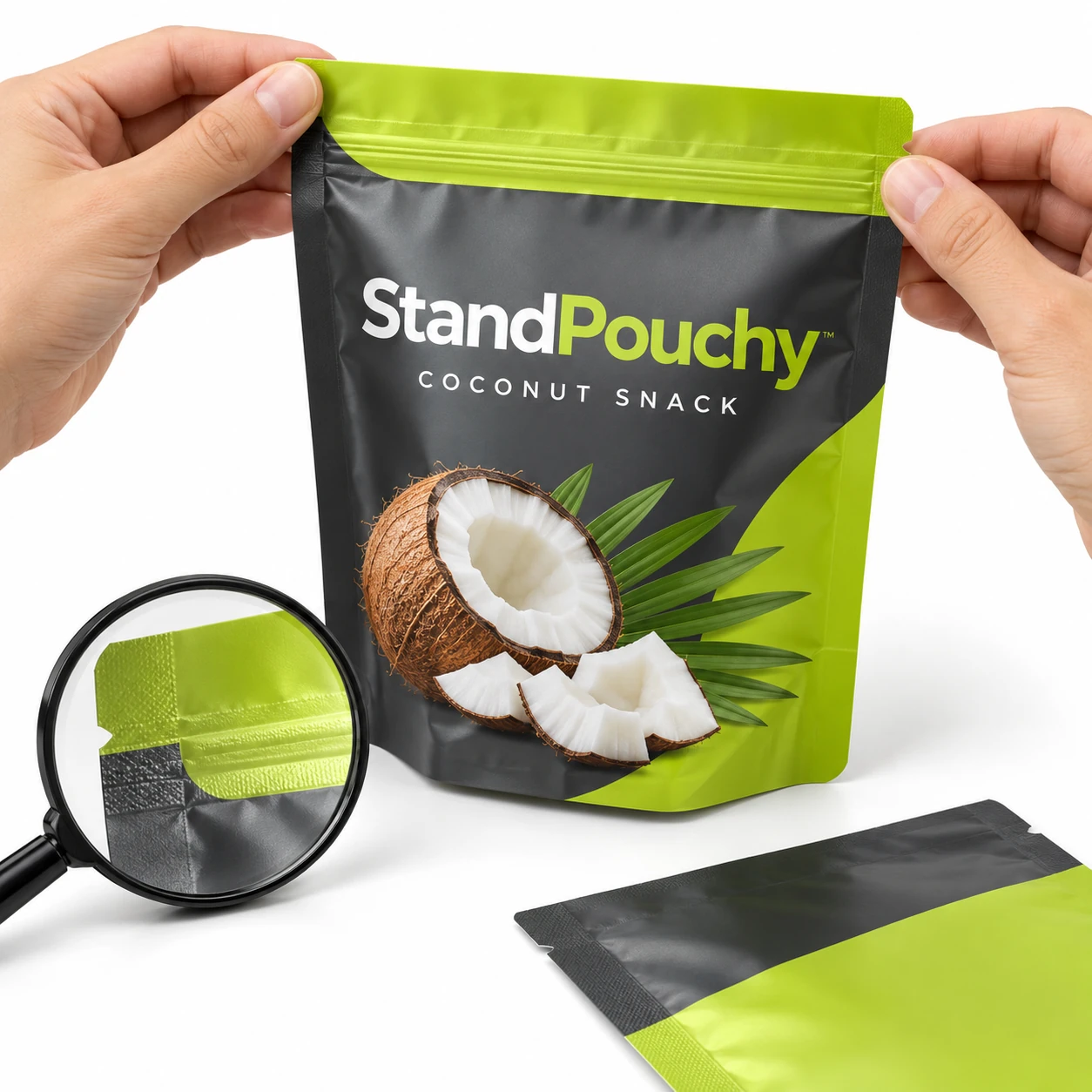
We keep film data separate from pack approval
We can discuss PET, a metallized PET barrier layer and a PE sealant as one candidate direction. We request layer identities and thicknesses before treating that shorthand as a specification. ASTM D3985 addresses oxygen gas transmission through film and sheeting.[3] ASTM F1249 addresses water vapor transmission through film and sheeting.[2] We record method, units, conditions and sample identity with each result. We ask for a justified comparison when reports were produced under different conditions.
We review ordinary flake fragments and residue around the permanent seal after filling. We keep the zipper review separate from the top heat seal. ASTM F88/F88M concerns seal strength.[4] ASTM D3078 addresses gross leaks in flexible packs with headspace gas, with limitations for small leaks.[5] We agree suitable sample preparation and acceptance criteria with the packer and laboratory. We do not convert any single test into a universal coconut shelf-life promise.
We record the permanent seal position, sample conditioning and specimen identification with the laboratory report. We keep the sealant and barrier-layer references visible alongside nominal total thickness. We ask which parts of the finished pack were tested. We record strength and leak observations separately because the methods investigate different properties.[4][5]
We compare the work that comes with each offer. We ask whether the supplier is providing an existing film record, newly converted samples or a complete filled trial. We ask who supplies the representative food and who pays for a repeat when the first candidate needs revision. We also request an explanation of any window, finish or alternate layer that changes the evidence scope. A familiar material acronym is not enough to compare those purchases.
We use the barrier report guide to organize the questions. We prioritize a structure that can be investigated with the actual recipe and storage route. We leave aroma, texture and other food endpoints with the food owner. We ask for separate costs for optional decoration and extra testing so that the buyer can choose deliberately. If a claimed benefit cannot be supported, we remove it from the purchase basis or ask for evidence. We avoid ordering more elaborate packaging merely to replace a missing study with a stronger-sounding adjective.
| Comparison input | Question for our supplier | Buying decision |
|---|---|---|
| Structure | Which layers and thicknesses are quoted? | Defined candidate |
| Evidence | Are reports comparable and relevant? | Trial purchase |
| Optional finish | What extra work or uncertainty follows? | Deliberate scope |
04
What Should Our Coconut Pouch Order Actually Include?
We can accept a good loose pouch and miss the case or artwork revision. That leaves delivery expectations unclear, so we approve one configuration.
We define dimensions, features, artwork, sample approval, case arrangement and delivery scope together. We compare suppliers using the same exclusions and change rules before releasing an order.
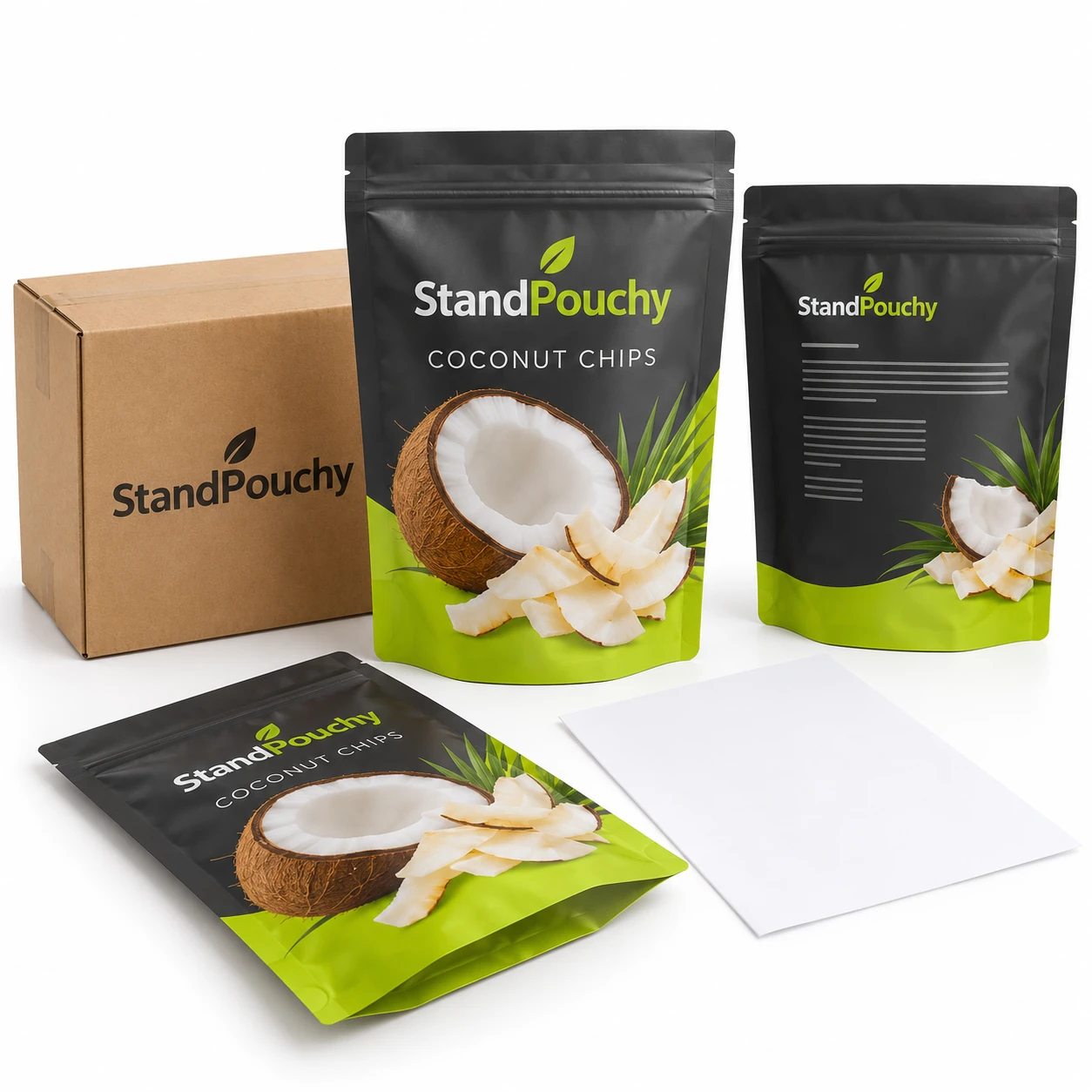
We keep the quotation attached to the approved sample
We document the filled pack, case orientation and arrangement used during handling review. We observe the flake condition before and after the agreed sequence, keeping product fragments separate from pouch damage. We inspect the bottom fold, side seals and top seal on the same revision. We do not assign a transport rating or universal damage allowance without a defined method and buyer criteria.
We identify the printed proof, film, pouch and product references on one record. We retain a sample and note who approved each decision. We list change triggers, including new flake dimensions, a coating change, a different laminate or a new case count. We make unresolved test questions visible. The trial only supports the configuration and conditions that were actually reviewed; we do not silently extend it to every flavor or distribution route.
We photograph the case before handling, after handling and after removing the pouches. We record the actual case count and the orientation of each layer. We retain the agreed inspection categories for flake condition and pouch damage. We check the same sample configuration after any proposed change to packing arrangement.
We compare quotations for the same quantities, print scope, tooling or setup, sample work and delivery basis. We ask whether a later artwork change requires another proof and whether case packing is included. We request project-specific commercial terms rather than repeating marketplace minimums or prices. We also ask the supplier to identify what remains the buyer’s responsibility. That helps us decide whether a lower quote leaves necessary work with another provider.
We use the sample approval guide to finish the decision. We ask the brand owner to approve product imagery, the food owner to approve intended use and quality evidence, operations to approve filling, and the channel owner to accept the case. We then send a coconut pouch inquiry with real flakes, target fill, quantities, destination, artwork status and remaining questions. We request the next sample that can resolve those questions. The useful result is a comparable offer and an identified approval route, rather than a promise that every coconut snack needs the same bag.
| Comparison input | Question for our supplier | Buying decision |
|---|---|---|
| Order scope | Which samples, print and case work are included? | Comparable quote |
| Open evidence | Who resolves each remaining question? | Named responsibility |
| Revision control | Which changes need another approval? | Controlled release |
Conclusion
We buy coconut chip pouches from representative flakes, matched evidence and a controlled filled sample. We keep the supplier quotation tied to the approved configuration.
Notes and sources
- FDA: Regulatory status of food-contact components (cited in article)
- ASTM F1249-25: Water vapor transmission through film (cited in article)
- ASTM D3985-24: Oxygen transmission through film (cited in article)
- ASTM F88/F88M-23: Seal strength of flexible barrier materials (cited in article)
- ASTM D3078: Gross leaks in flexible packaging by bubble emission (cited in article)
- Reddit community insight: Coconut granola bark buyers discuss contents and texture (cited in article)
Reddit links are community insight only. We use official standards and regulator pages for technical context, and we require project evidence for the final pouch decision.