01
What Must We Learn About crackers First?
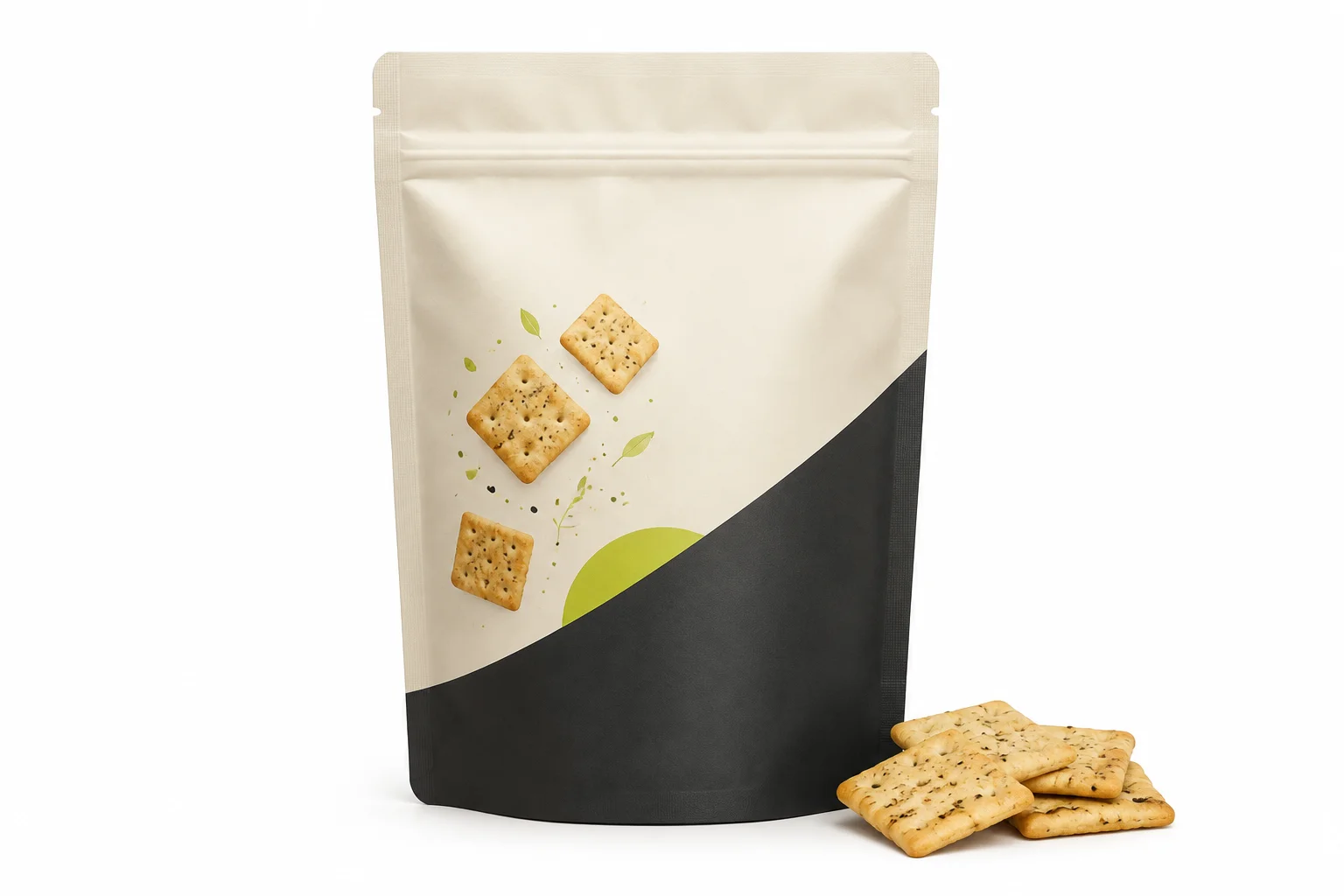
We identify whether the crackers are stacked, irregularly filled, coated or supplied with an inner tray.
We record cracker shape, breakage sensitivity, crumb level, target fill, storage plan before choosing a pouch direction.
We convert uncertainty into a usable brief
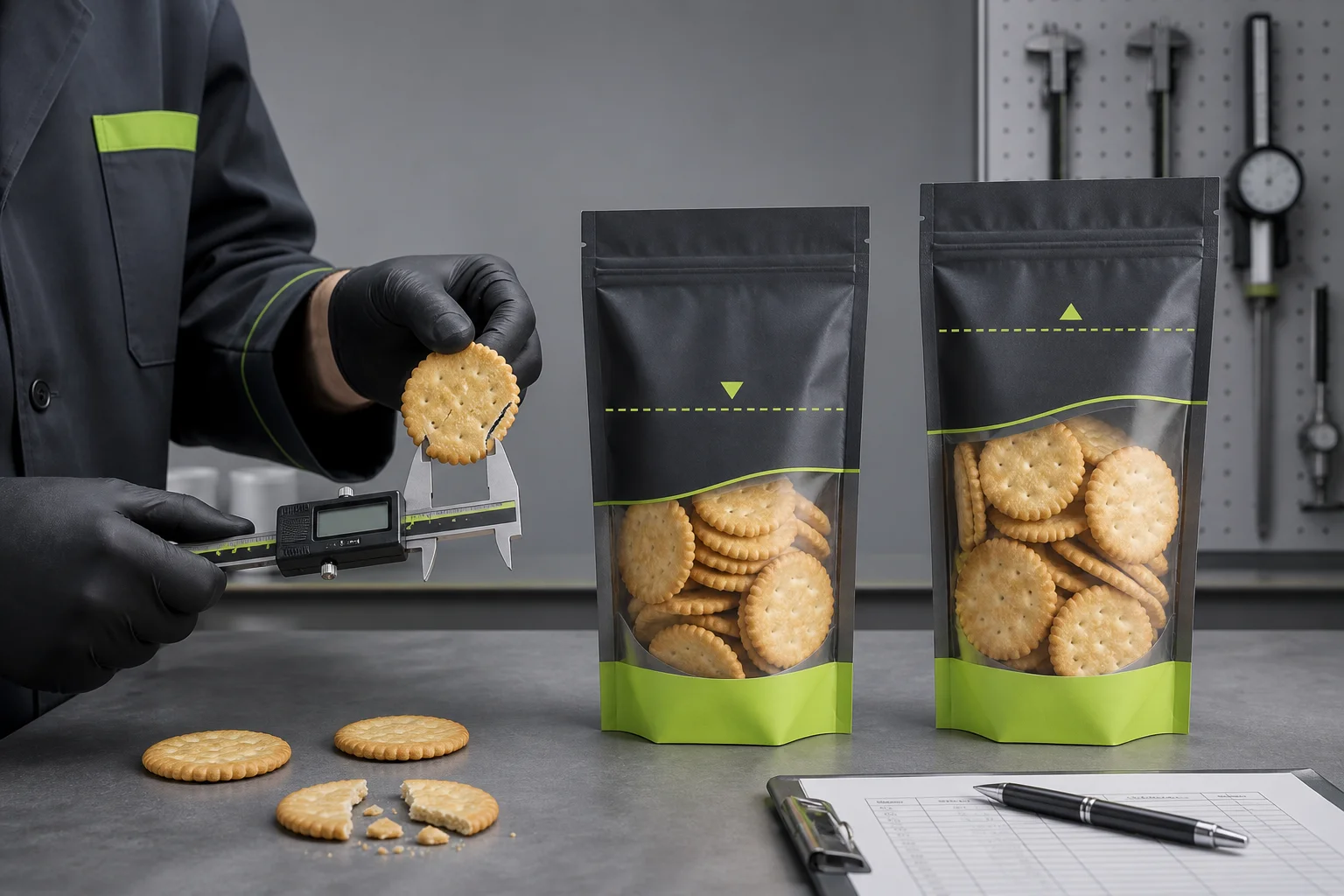
Shape matters because a thin flat cracker and a thick irregular piece can fail differently during filling and transport. We ask the buyer to define acceptable whole-piece presentation and how the pouch will be displayed. The starting brief includes representative broken pieces as well as intact product so the seal review reflects the fines likely to be present.
We ask for representative crackers, not only a target fill weight. The pieces can settle, bridge at the opening, release crumbs, or place load on the bottom gusset in ways a stock sample cannot show. We record the loose and settled fill, expected consumer use, planned channel, carton route, and what the buyer needs the pouch to communicate on shelf. This creates a useful commercial comparison instead of a search for one supposedly universal pouch size.
FDA explains that food-contact substances are evaluated for their intended use.[1] Its component-status guidance also ties authorizations to the exact substance and conditions of use.[2] We use the flexible packaging specification checklist to keep the product, market, barrier question, features, artwork, and open evidence in one brief. A sample that answers only appearance is not a released packaging specification.
| Brief input | Why it matters | Decision |
|---|---|---|
| Product sample | crackers | Filled review |
| Buying brief | cracker shape, breakage sensitivity, crumb level, target fill, storage plan | Confirm scope |
| Main risks | moisture exposure, breakage, crumbs, and handling damage | Assign evidence |
02
How Do We Choose the Right Geometry for crackers?
We compare the opening with the widest cracker and the intended orientation during filling.
We choose width, usable height, bottom gusset, and opening space from repeated filled samples, then compare the pouch against its shelf, case, and consumer-use role.
We approve a three-dimensional pack
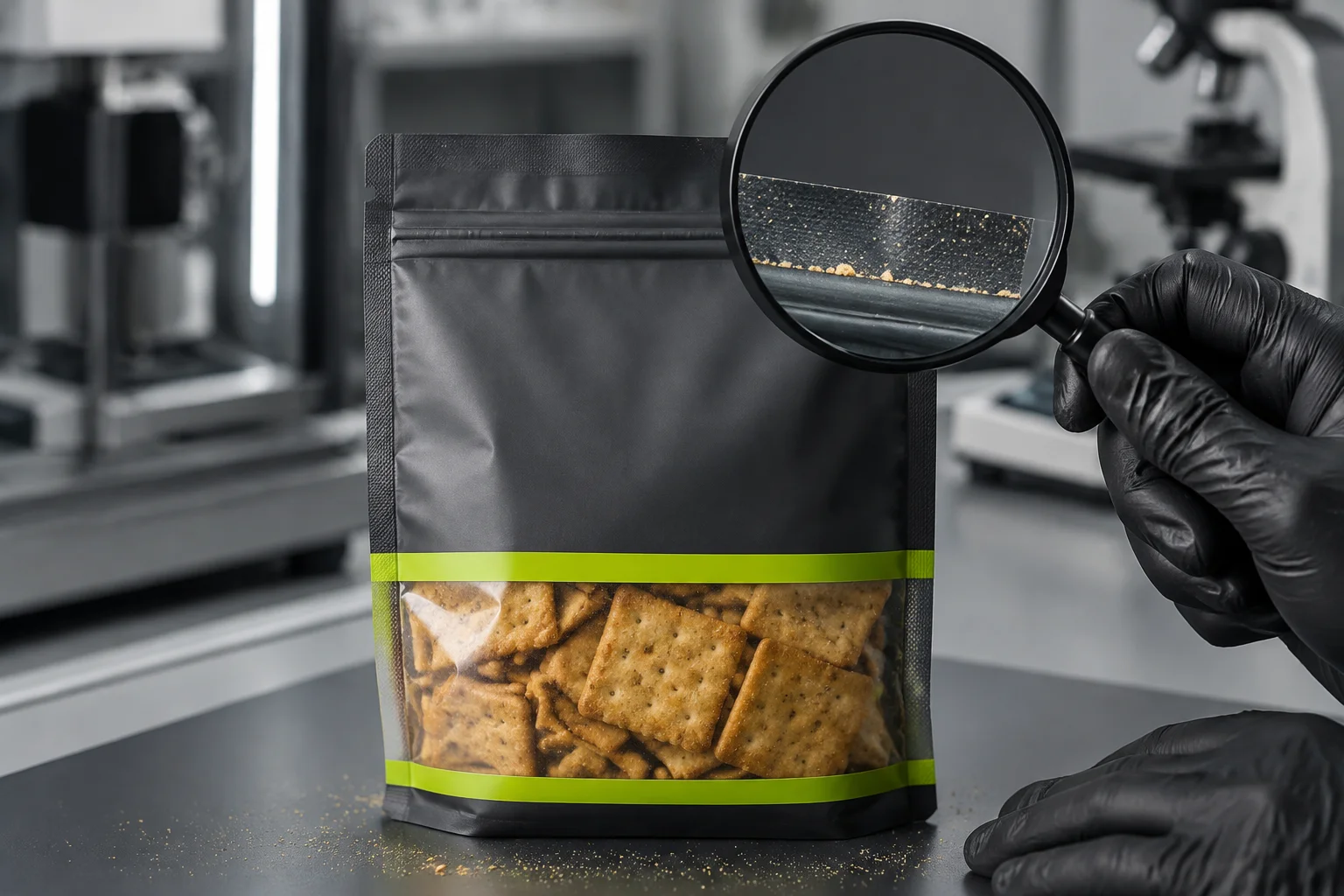
If a stack or tray is proposed, we measure that complete assembly and check its corners against the pouch walls. Increasing height does not necessarily solve a narrow opening or an awkward insertion angle. We observe whether the filled pouch stands securely without forcing the crackers against the front face, then compare access after opening with the intended serving method.
We test conventional stand-up pouch candidates with the actual product. We observe how the product distributes on the bottom gusset, where the fill line settles, and how much space remains for the zipper and permanent top seal. We do not approve size by water volume or a flat rendering. The buyer sees the meaningful trade-off: a compact pack can reduce material and case volume, while a more generous format can improve access, presence, or product protection.
We document total dimensions separately from usable fill height. The stand up pouch size guide helps us plan those inputs before a converter-approved dieline exists. We call it a planning guide, not a production promise. The packer and converter must still confirm the compatible construction, filling sequence, and final dimensions with the same representative product.
| Geometry | Risk | Review |
|---|---|---|
| Opening | crackers during filling and use | Trial with the real product |
| Standing base | crackers after settling | Filled sample |
| Top space | crackers below the seal | Seal-zone review |
03
Which Packaging Checks Matter for crackers?
We use the cracker texture concern to define a moisture-barrier question, while keeping the actual shelf-life study with the product team.
We choose features only when they solve a defined buyer problem, preserve a clean permanent seal area, and can be checked on a filled representative pouch.
We protect the permanent seal
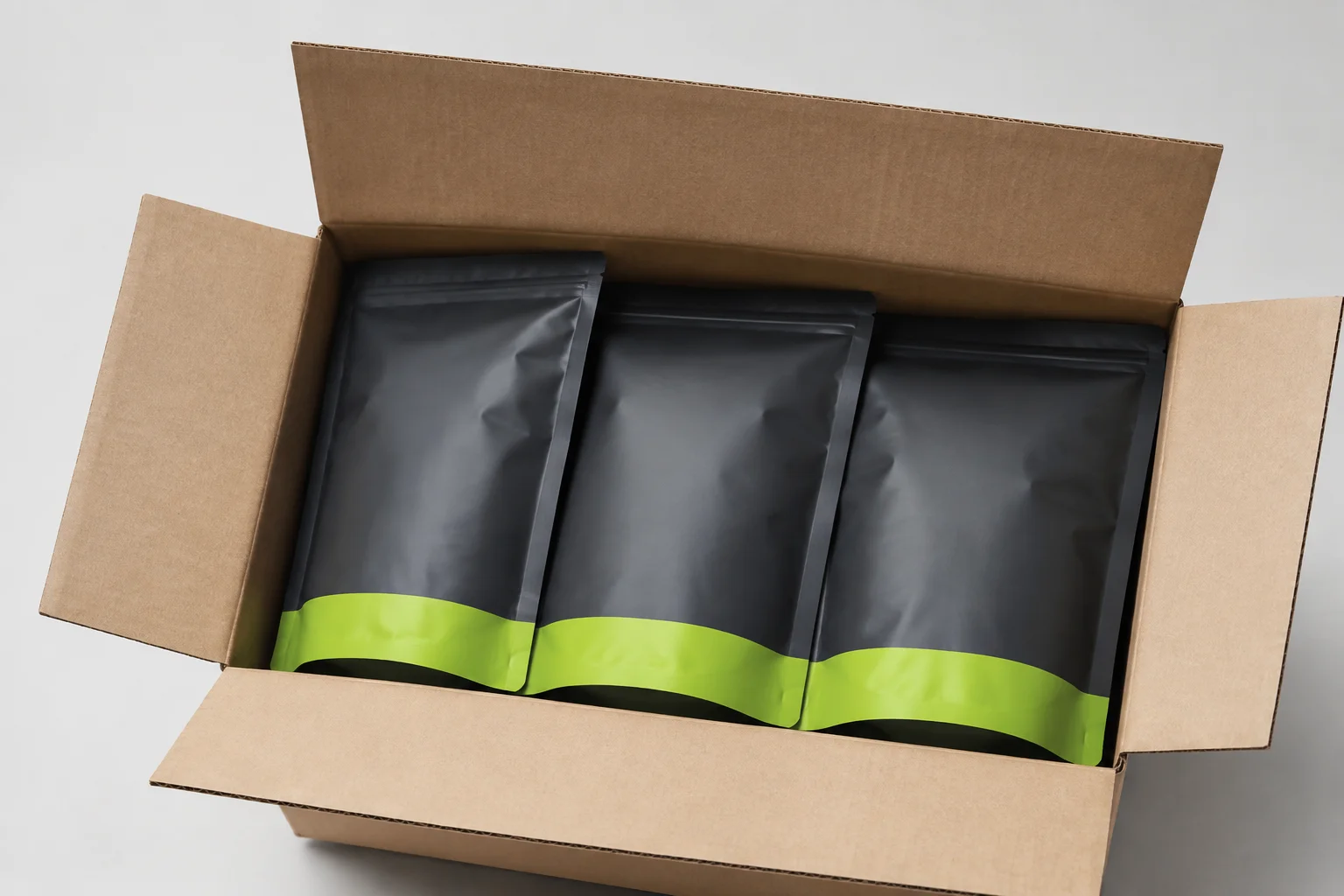
A coated or seasoned cracker may also raise oil, aroma or light questions that an uncoated reference does not answer. We inspect the top seal area for crumbs from the real filling process. Changing film without addressing that contamination can leave the same packaging failure unresolved, even when the new film report looks stronger.
We map the functional zones before the artwork takes over. A conventional doypack has front and back faces, side seals, a bottom gusset, and a top closure area. We mark expected product height, tear path, zipper position when needed, and the permanent top seal. Then we inspect normal product variation after filling. A feature that looks attractive in a PDF can reduce usable seal margin, wrinkle on a filled pouch, or add a question the buyer has not agreed to test.
ASTM F88 identifies seal-strength measurement as a tool for process validation and control, including failure mode; it is not a universal pass result.[3] We agree the sample, method, acceptance basis, and owner before we interpret any outcome. The flexible packaging test specification guide keeps that evidence linked to the pouch revision rather than a disconnected laboratory number.
| Feature | Question | Evidence |
|---|---|---|
| Material | moisture exposure, breakage, crumbs, and handling damage | Compare defined evidence |
| Closure | crackers use occasion | Opening trial |
| Permanent seal | crackers residue or pieces | Filled seal review |
04
How Do We Approve Packaging for crackers?
We agree how whole crackers and broken fragments will be assessed before the handling comparison begins.
We release one controlled revision only when the buyer, converter, filler, and channel can connect the artwork, filled sample, test record, and distribution configuration.
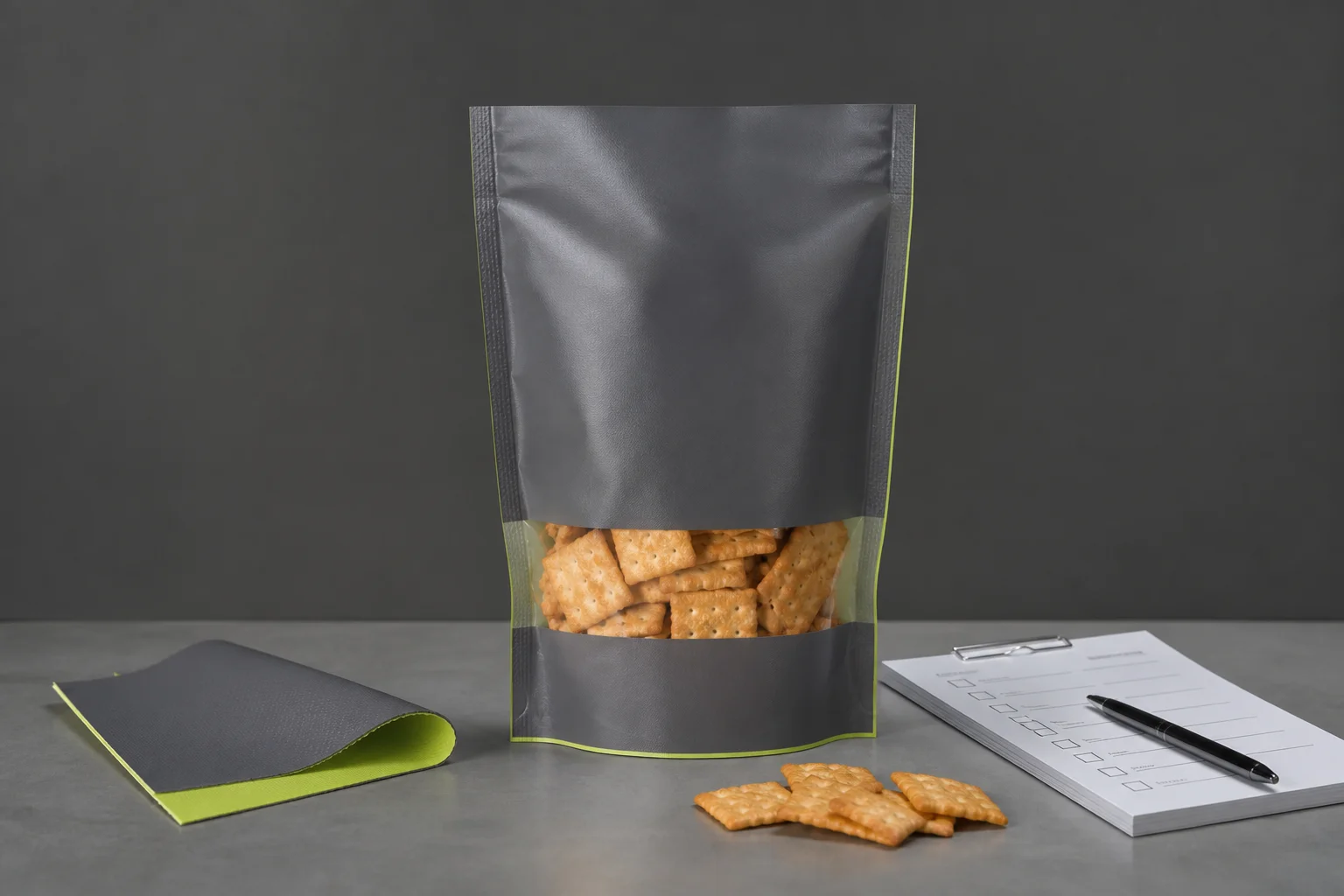
We make the approval record usable
The filled pouch, case dividers if used, carton orientation and route all belong to that comparison. We avoid reporting a stronger film as a solution to breakage without checking the packing arrangement. For a sharing pack, the review also includes removal of a portion and reclosure without crushing the remaining crackers or trapping fragments in the zipper.
The brand owner reviews product identity and supported copy. The packaging owner reviews geometry, construction direction, features, and evidence gaps. Operations reviews filling and the permanent seal. The channel owner reviews shelf, ecommerce, and case handling. Each decision must point to the same artwork revision and a representative filled sample. This reduces the commercial risk of ordering a pack that looks approved but is not ready for its intended route.
We leave unknowns visible. A pending shelf-life study, an unverified market condition, or an untested mailer does not become an approval because the artwork deadline is close. The pouch sample approval guide gives the team a shared structure. Once complete, the buyer can prepare a snack pouch inquiry with product, fill, destination, artwork status, and required decisions instead of relying on a generic pouch request.
| Owner | Decision | Reference |
|---|---|---|
| Buyer decision | crispness and case protection | Controlled approval |
| Physical sample | Filled crackers pouch | Recorded revision |
| Supplier scope | crackers construction and artwork | Matched quotation |
Conclusion
We release packaging for crackers only after the physical sample, artwork, features, filling, route, and unresolved evidence point to one controlled decision.
Sources and further reading
- FDA: Food Packaging and Other Food-Contact Substances (cited in article)
- FDA: Determining the Regulatory Status of Food-Contact Material Components (cited in article)
- ASTM F88/F88M: Seal Strength of Flexible Barrier Materials (cited in article)
- PMC: Cereal and Confectionery Packaging Review (further reading)
- Reddit community insight: granola packaging and moisture (further reading)
Reddit links are community insight only. We use official standards and regulator pages for technical context, and we require project evidence for the final pouch decision.