01
What Must We Learn About the Jerky First?
A generic high-barrier request misses the real product, process, and market questions that determine a useful pouch brief.
We ask for the jerky format, pieces, oils, target fill, storage plan, market, label content, expected route, and open food-safety questions before selecting a construction.
We separate product facts from packaging assumptions
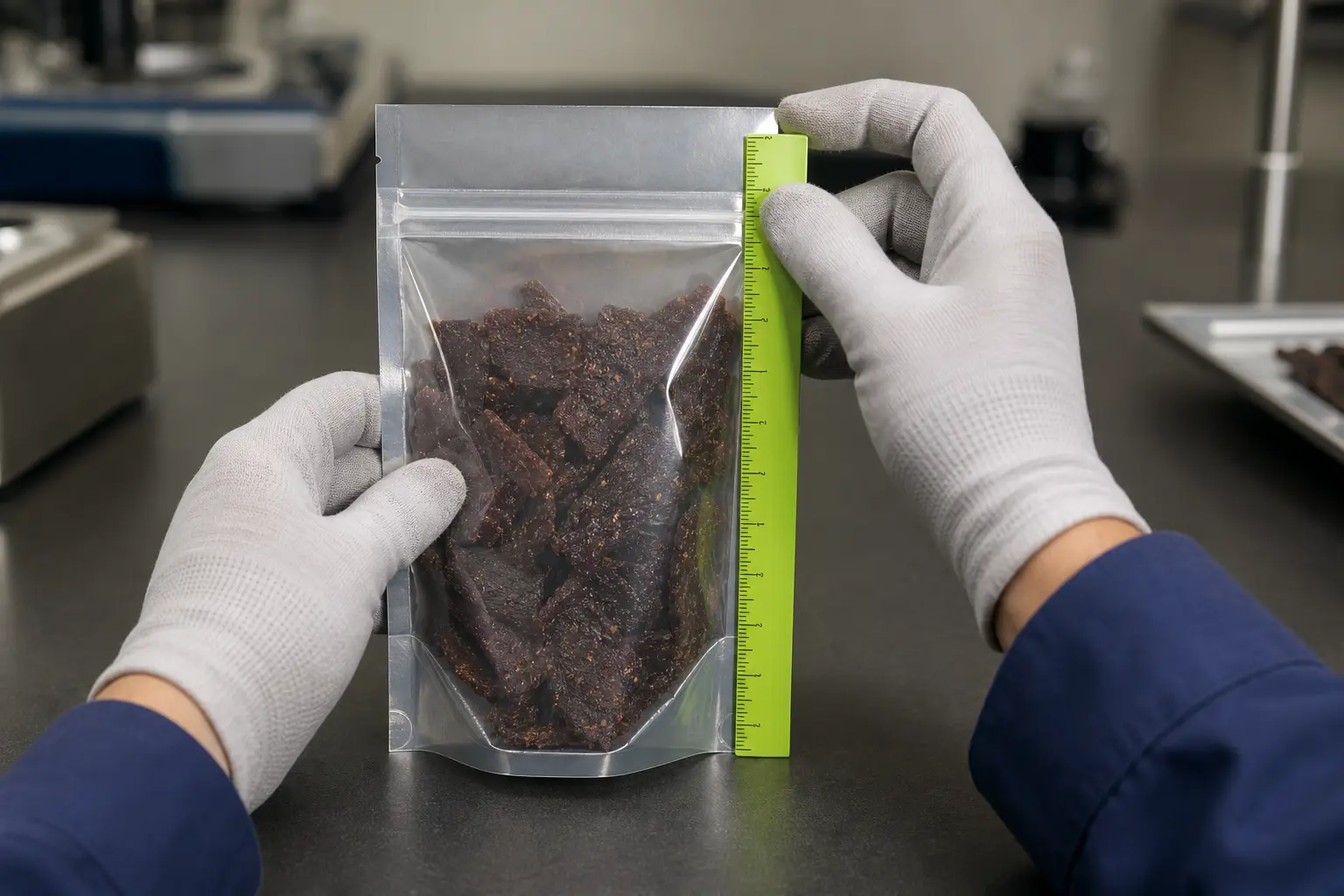
We start with what is actually being packed. Whole strips, bites, and thin pieces do not settle, bridge at an opening, or stress a pouch in the same way. We record the target fill weight, loose and settled height, surface oil, sharp edges, and the normal variation that a filler must handle. We also ask where the pack will be sold, stored, and opened. A retailer, ecommerce shipment, and direct sample kit can place different demands on the same pouch.
We keep food responsibility clear. The FDA explains that food-contact materials are evaluated for their intended conditions of use, not as a universal food-packaging label.[1] We therefore request the final construction, intended food contact, destination-market requirements, and support documents from the responsible supplier. We do not turn a general material name into a compliance or shelf-life claim. Our stand up pouch material structure guide gives the buyer a practical way to frame the outside-to-inside laminate discussion.
Commercially, this early brief avoids buying a visually attractive sample that cannot answer the decision. We ask the buyer to rank what matters first: a reclosable sharing pack, a compact trial unit, a shelf-facing front panel, or a case-efficient ecommerce unit. That ranking helps us compare options without inventing a minimum order, a storage duration, or a barrier result. We capture every unknown as a question for the product owner or packer before a printed proof is approved.
| Brief input | Why a buyer needs it | Decision it informs |
|---|---|---|
| Jerky piece and oil condition | It affects opening, settling, and pouch contact questions. | Pouch face, opening, and filled trial |
| Channel and destination market | It defines the evidence and label route to confirm. | Artwork and food-contact review |
| Priority use case | It stops features from being added by habit. | Zipper, window, and pack geometry |
02
Which Pouch Geometry Supports the Product and Sale?
A large pouch can look underfilled, while a tight pouch can reduce workable fill and seal clearance.
We select face width, usable height, bottom gusset, and opening space from repeated fills with representative jerky, then compare the result against the intended shelf and case.
We approve geometry from filled samples
We make plain conventional stand-up pouch candidates and fill them with representative product. We observe loose fill, settled fill, pouch posture, and the remaining space above the product. We do not use a paper drawing or a water-volume conversion as final proof. Jerky can catch at the opening, leave irregular headspace, or concentrate weight differently once it rests on the gusset.
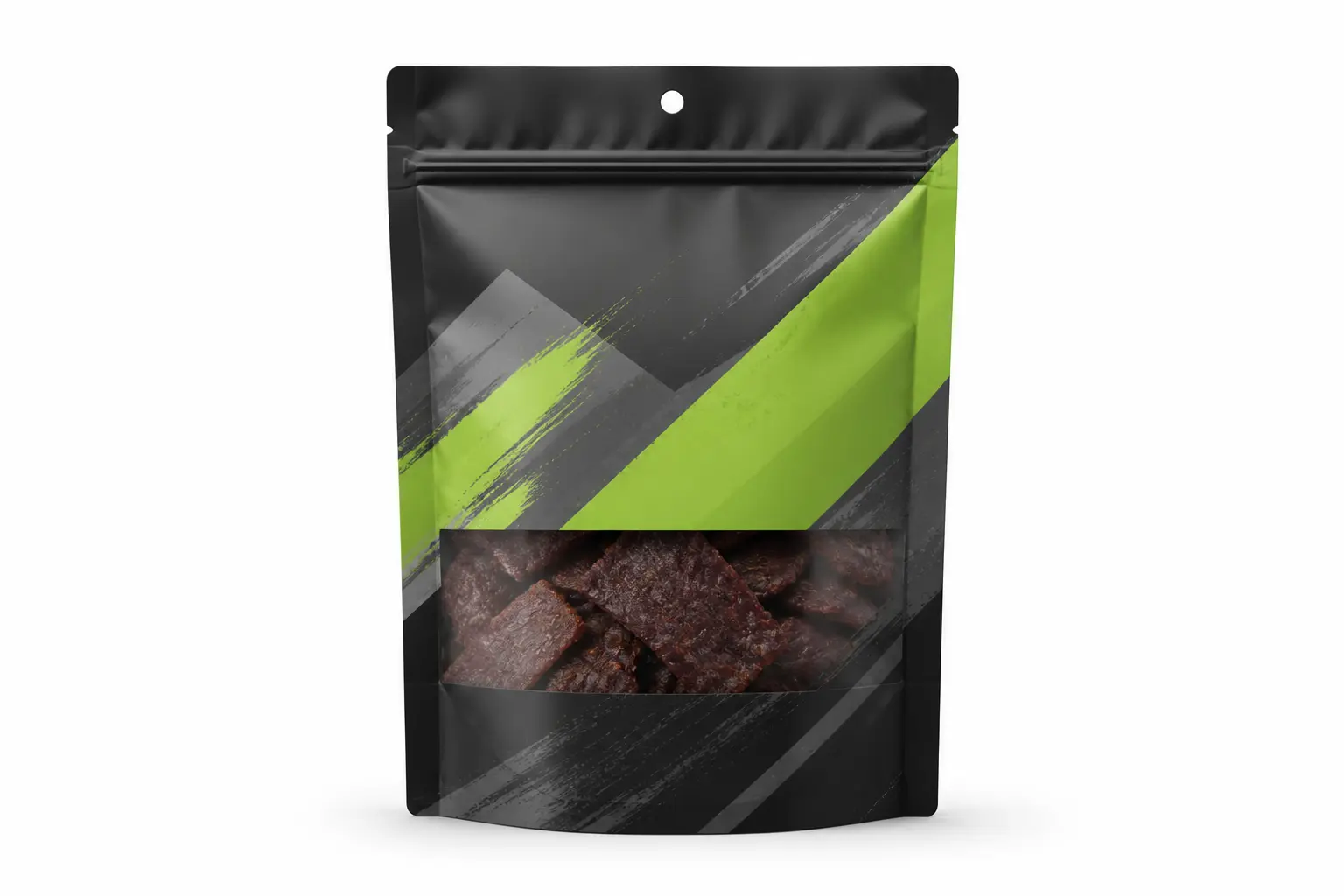
We then look at the commercial picture. The front panel needs to identify the product and flavor clearly without being covered by wrinkles or a product line that sits higher than expected. The unit must also make sense in a retail tray, on an ecommerce product page, and in an outer case. A smaller pack may use less material, but it can create filling frustration. A larger pack may create more air space, carton volume, and an underfilled visual. We make the buyer choose from those visible trade-offs instead of accepting a stock size by default.
We record total dimensions separately from usable fill height. The zipper, tear path, grip area, and permanent top seal all occupy space. Our stand up pouch size guide helps the buyer bring those dimensions into one sample review. This is a planning guide, not a converter-approved production dieline. Final dimensions are released only after the supplier, filler, and product owner agree on the same revision.
| Geometry check | What we inspect | Buyer trade-off |
|---|---|---|
| Front panel | Product identity after settling | Shelf read versus compact pack |
| Bottom gusset | Standing shape and product distribution | Display stability versus depth |
| Top functional zone | Zipper and clean seal clearance | Fill volume versus repeatable closure |
03
When Does a Zipper Add Real Value?
A zipper can support repeat use, but it cannot replace the permanent factory seal or prove the pack’s storage performance.
We add a zipper when the buyer has a clear repeated-use need and the pouch keeps a separate clean heat-seal zone above it.
We treat reclosure as a consumer feature
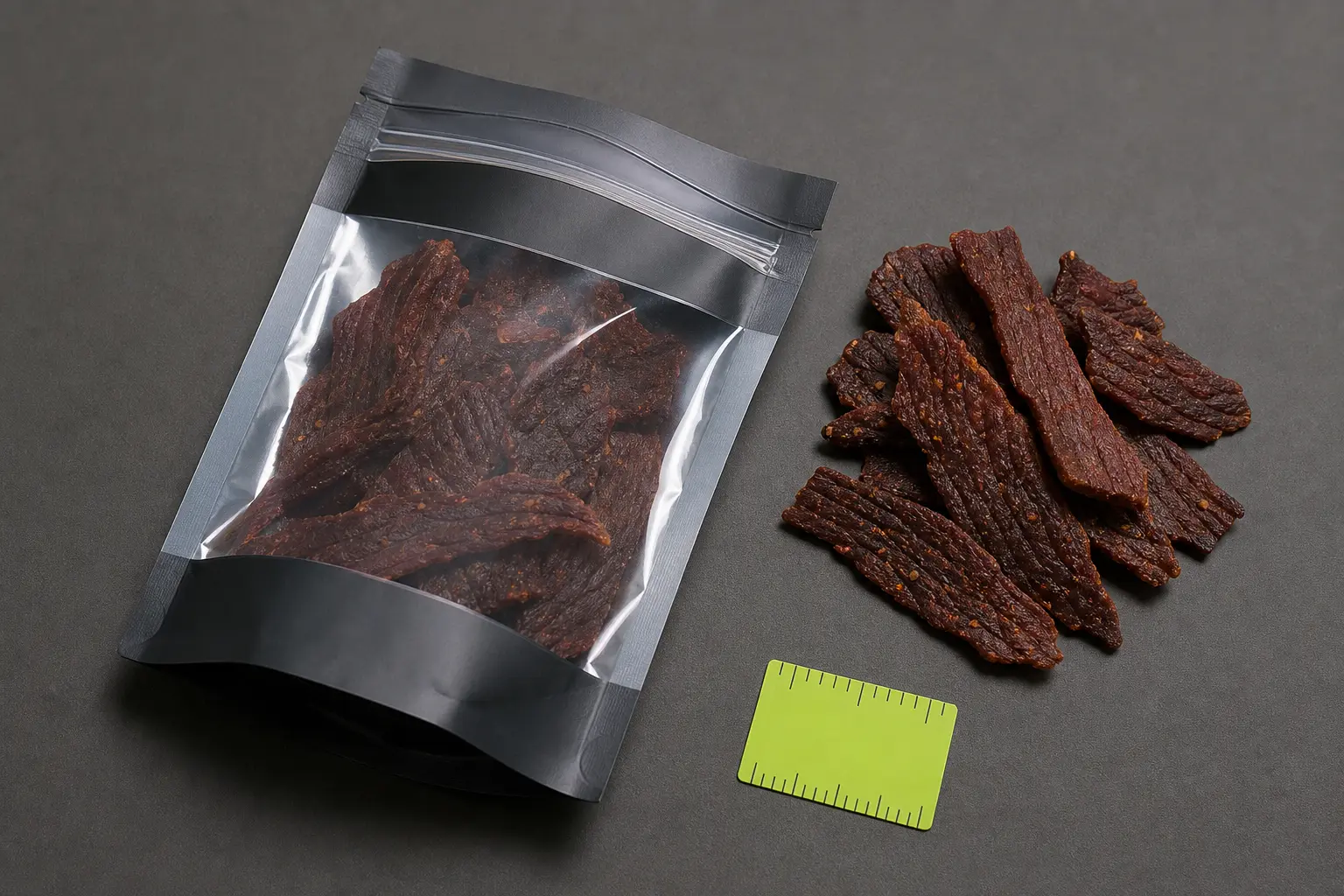
We first ask how the pack will be consumed. A small single-occasion pouch may not benefit from a zipper. A sharing pouch can make a reclose feature easier to explain and use, provided the consumer can open it cleanly and find the tracks. Community discussion about jerky packaging often focuses on resealing after opening, which is useful buyer context but not technical proof.[2] We keep that distinction visible in the brief.
The technical decision is the full opening system. We review the tear notch, top margin, zipper position, product movement, and final heat-seal area together. Product crumbs, seasoning, or oil near the seal zone can create a process question that a zipper does not solve. We ask the filler to review pouch opening behavior and seal access before print. We also check whether the zipper's feel and location work with the chosen pouch size rather than selecting it as a separate catalogue add-on.
Commercially, we help the buyer compare the feature against its job. Does it support a multi-serve claim the brand can substantiate? Does it complicate filling or add a consumer step with little benefit? Does the pack still look intentional after first opening? Our flexible packaging specification checklist keeps the answers with the product, channel, and sample plan. That makes the feature decision easier to defend during supplier comparisons.
| Use question | Evidence we request | Decision |
|---|---|---|
| Repeat consumption | Consumer use scenario | Whether a zipper belongs |
| Clean factory closure | Filled sealing observation | Top margin and fill line |
| Opening feel | Representative opening trial | Notch and zipper position |
04
How Do We Approve the Final Jerky Pouch?
An empty artwork proof cannot prove filled shape, opening, case behavior, or the evidence needed for the final food-packaging decision.
We approve the final pouch through a revision-controlled review of construction support, filled appearance, fill and seal observations, opening, barcode, case handling, and unresolved product evidence.
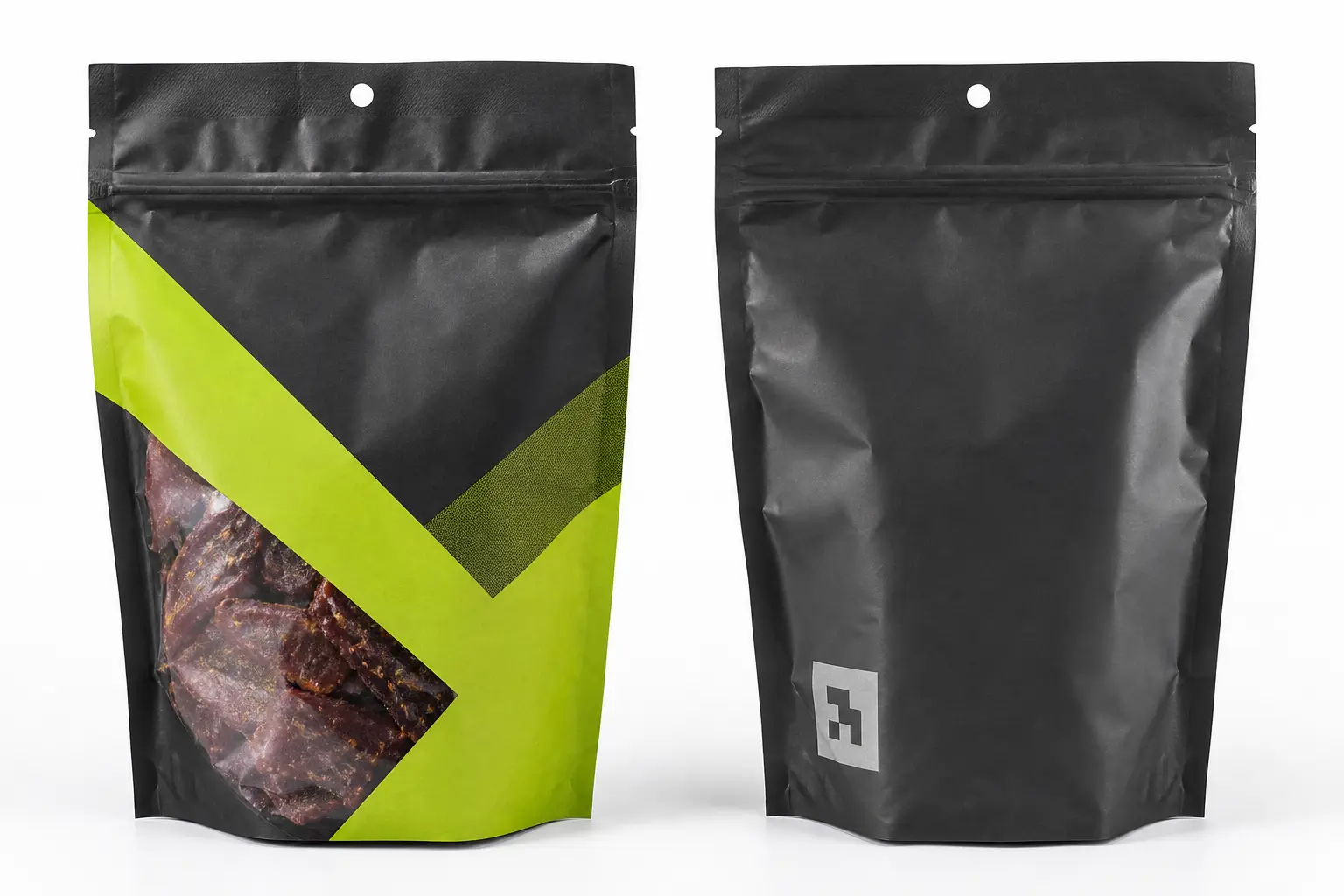
We make one sample record the release point
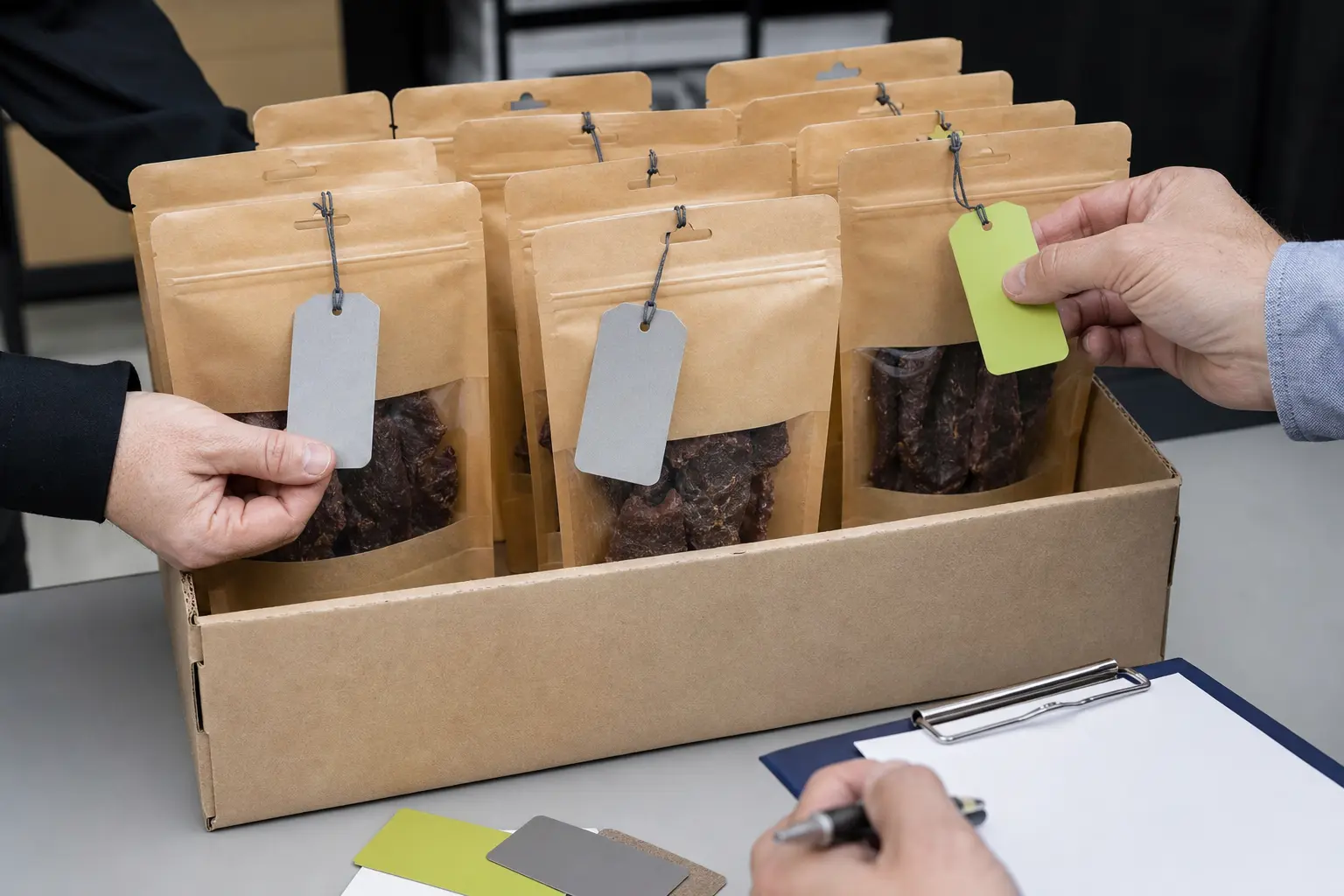
We bring the buyer, product owner, converter, filler, and artwork owner back to one physical reference. We photograph the filled pouch from the front, back, side, and base. We record the actual fill condition, seal clearance, zipper position, visual hierarchy, and relevant case arrangement. If a barcode is required, we verify the final printed sample in its filled state. If a technical test is needed, we record its method, condition, sample identity, and acceptance decision rather than claiming an outcome in advance.
We use the pouch sample approval guide to distinguish what each sample can prove. A plain prototype can support geometry. A print proof can support artwork placement. A filled sample can support handling observations. None of those automatically confirms product shelf life, food safety, or a final production capability. Those remain product-specific responsibilities backed by the applicable parties and evidence.
For the buyer, the commercial decision is now concrete. The same release record identifies the pack that sales will show, operations will fill, and procurement will compare. We list unresolved matters instead of hiding them behind a launch date. When the record is complete, the buyer can prepare a snack pouch inquiry with a useful brief rather than restart the conversation from a photo and a generic request.
| Approval lens | Reference | Release question |
|---|---|---|
| Product and construction | Supplier support and product brief | Is the intended use documented? |
| Operations | Filled pouch and line observation | Can the pouch be filled and closed cleanly? |
| Commercial use | Artwork, shelf, and case review | Does the pack support the chosen route? |
Conclusion
We approve a jerky stand up pouch only when one filled, revision-controlled sample connects the product brief, operations, sales route, and remaining evidence.
Sources and further reading
- FDA: Determining the Regulatory Status of Food-Contact Material Components (cited in article)
- Reddit community discussion: Jerky packaging and resealable zipper use (cited in article)
- ASTM F88/F88M: Seal Strength of Flexible Barrier Materials (further reading)
Reddit links are community insight only. We use official standards and regulator pages for technical context, and we require project evidence for the final pouch decision.