01
Which Pineapple Rings Should We Send for Sampling?
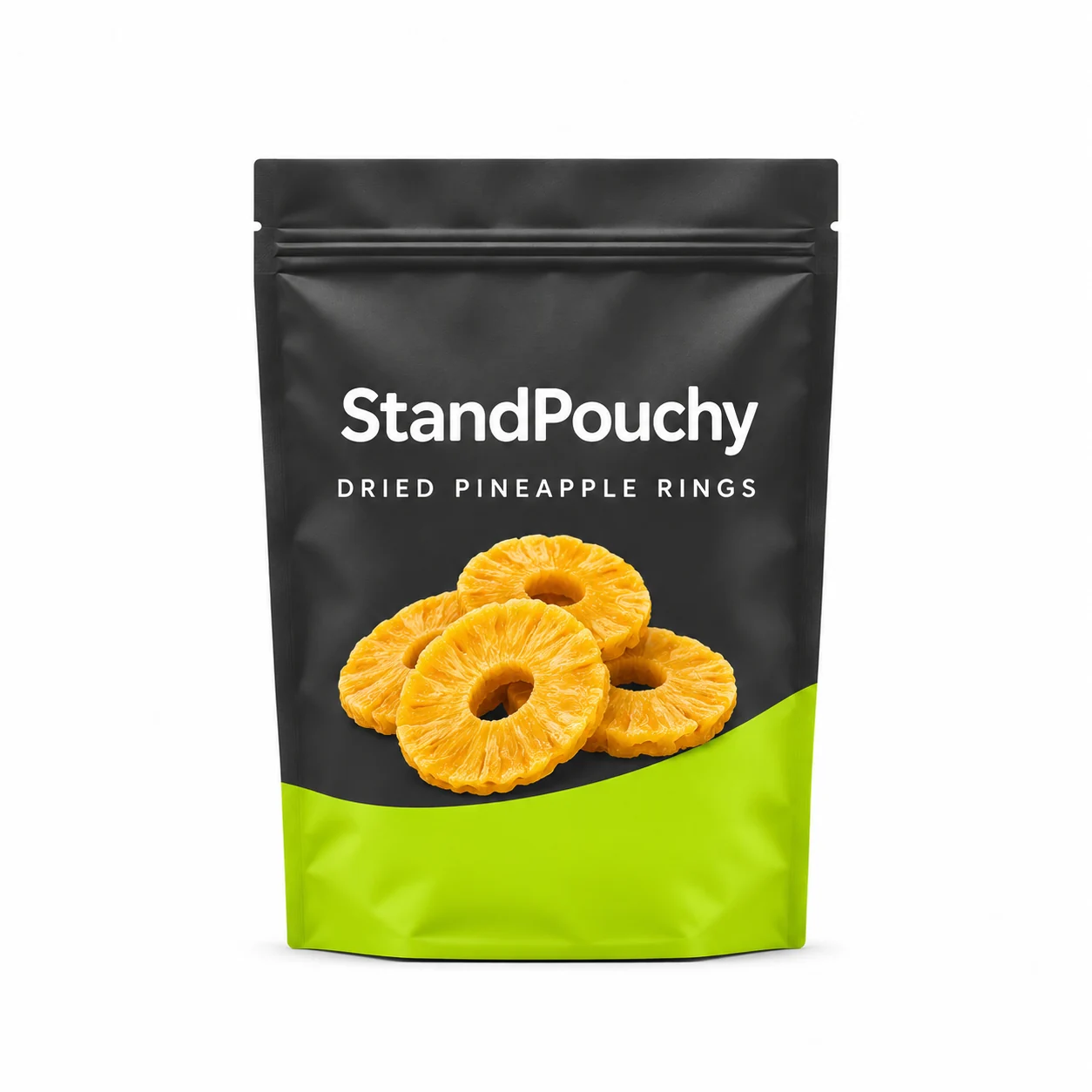
A single tidy ring makes a forgiving sample. We send the mix of shapes and sizes the packer will actually handle.
We send rings from a representative lot, including the largest acceptable pieces and the stickiest expected condition. We record outside diameter, thickness, fill weight and whether folded or broken pieces can be sold.
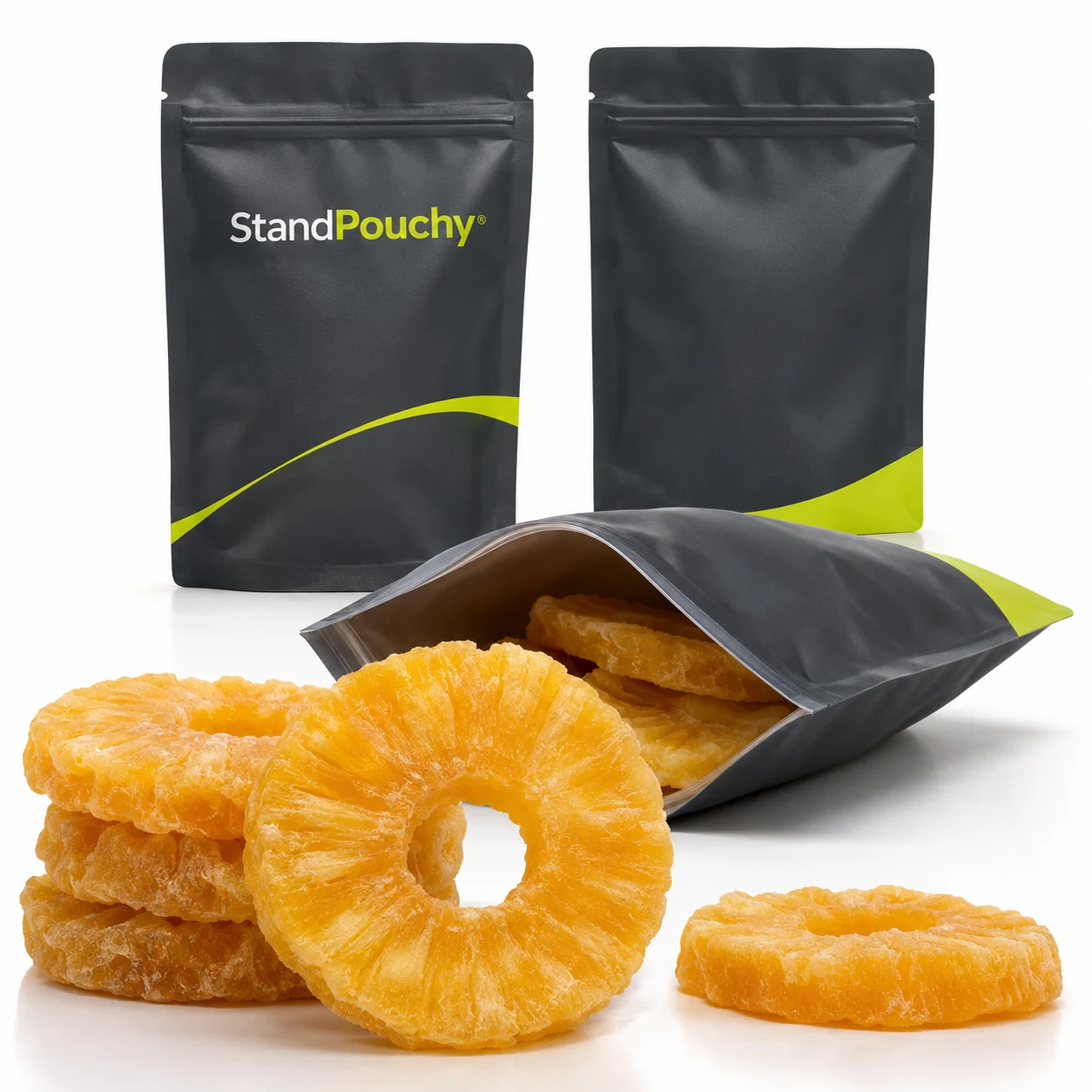
Build a sample around the grade we will buy
We measure the outside diameter across the widest part of each ring. We note folded pieces and thickness where slices overlap. Then we weigh the intended fill and observe how it sits after normal handling. A stack that leans into the opening changes the usable clearance even when the measured weight stays the same.
We photograph the range with a scale and keep a sample lot reference. If two suppliers dry or cut the fruit differently, we keep those samples separate. We ask the product team whether stickiness, sugar crystals or a broken outer arc is within grade. We repeat observations for any proposed cut that may be used interchangeably.
We ask the buyer whether it sells a neat display of whole rings or a serving that may include torn pieces. That decision controls which units can enter the comparison. We use our dried fruit pouch guide to brief the format and record the ring requirements as a separate attachment.
We ask the packer to review the lot before samples are cut. If a size proposal represents only hand-selected pieces, we label it as a presentation mockup. We request a second set with realistic variation before approving a stock size or buying printed inventory. We compare suppliers on the same ring grade. Target lists dried rings and freeze-dried pineapple separately, which helps us name the requested format in the brief.[1]
| Sample | Record |
|---|---|
| Largest accepted ring | Diameter and thickness |
| Sticky pairs | Whether they pass together |
| Settled fill | Weight and stack profile |
02
How Wide Does the Pouch Opening Need to Be?
The quoted width includes material that the ring cannot pass through. We measure the working mouth on real samples.
We compare usable openings at the zipper and side seals, then fill the two best sizes in the intended orientation. We allow enough clean space above the settled fruit for the packer's final seal.
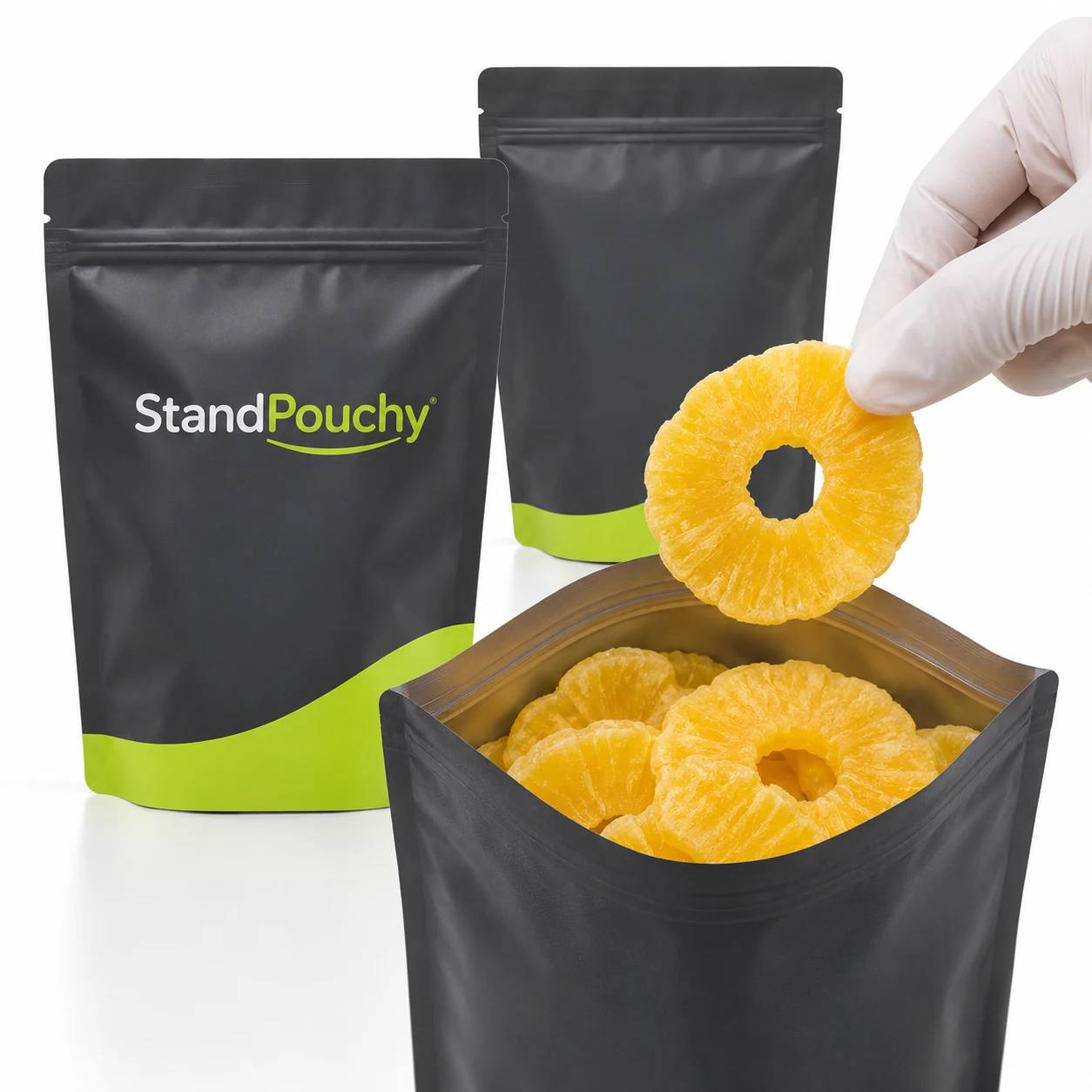
Trial the entry and the first serving
We measure flat width, opening clearance and filled depth separately. We let the packer open the zipper the way it will be opened in production and, where applicable, use the intended guides or filling tool. We watch whether the broadest ring catches at the corners or needs a second movement to clear the zipper.
We observe both ring entry and removal. A sticky pair may travel together and occupy more space than an individual ring suggests. We mark the part of the pouch that touches the fruit and check whether product reaches the intended seal band after the fill settles. We record how the sample was filled each time.
We compare a broader mouth against a narrower alternative that may leave more facings on a shelf. We use the stand-up pouch size guide for the trial record. We avoid requesting more width without asking how it changes the case arrangement and whether the added film introduces a trade-off in the quote.
We ask the buyer to remove a first and last serving from each partly emptied pouch. If customers are expected to pick out one whole piece, we count repeated pinches or forced folds as access issues. If the project is a smaller single-serve pack, we also ask whether a zipper contributes enough value to keep. We authorize the opening that works for both packing and serving before buying print.
| Check | Compare |
|---|---|
| Packer access | Usable mouth and orientation |
| Final closure | Clean area after settling |
| First serving | Whether a whole ring comes out |
03
What Film Should We Compare for the Intended Chew?
The fruit can be right on packing day and disappointing later. We make the target texture explicit before comparing film reports.
We ask the food owner for the texture and storage target, then compare exact laminates at matched test conditions. We use film data to shortlist candidates and filled samples to check whether the rings keep the agreed chew.
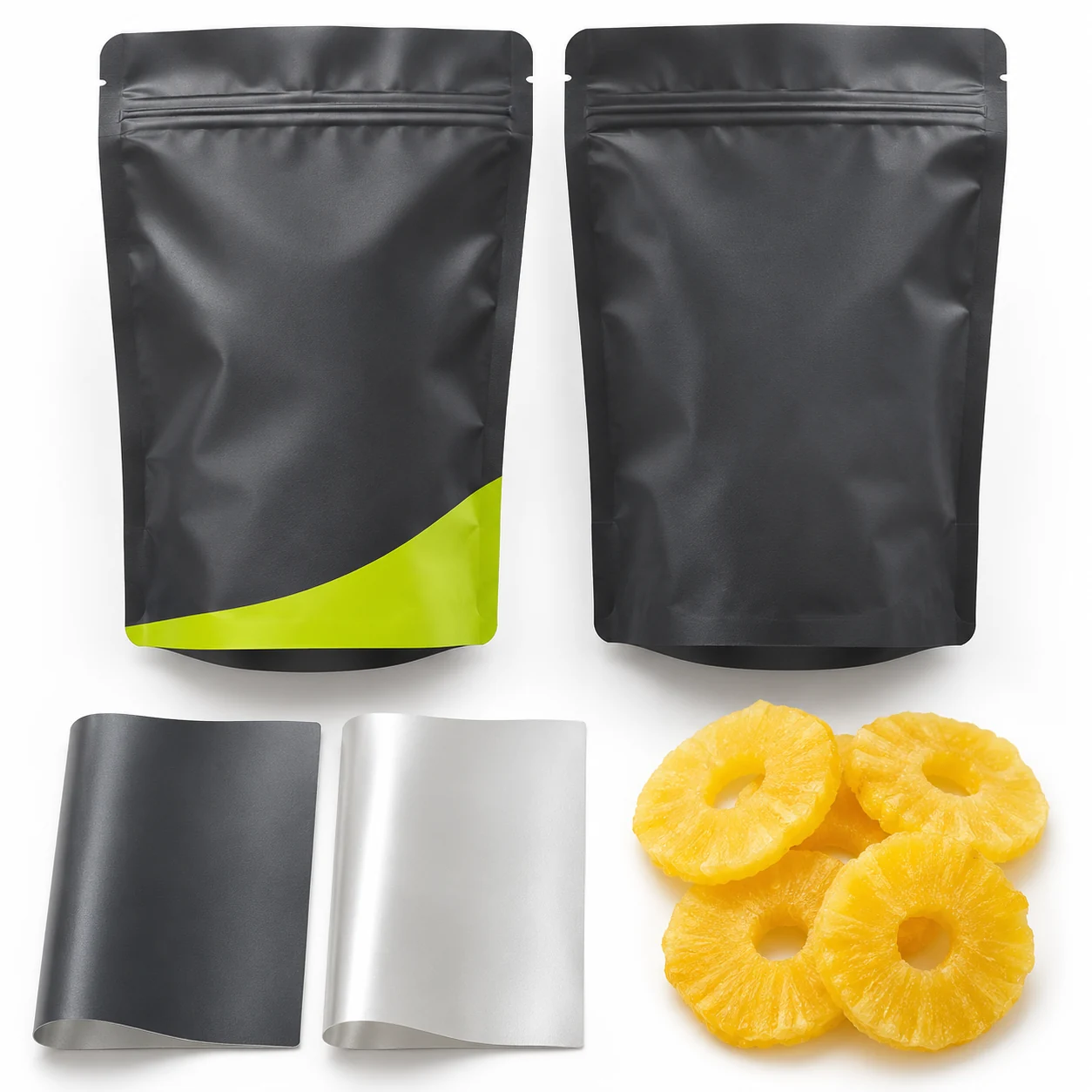
Separate material screening from fruit approval
We record the formulation and the food team's water activity result. Water activity describes the equilibrium vapor pressure relative to pure water at the same conditions.[2] It does not replace the texture target or the food owner's safety assessment. We tie each sample to the fruit lot and its storage conditions.
We might compare a clear PET/PE construction with a metallized laminate and a PE sealant if the intended presentation allows opacity. We ask what each data sheet represents. ASTM F1249 applies to water vapor transmission through film or sheeting under specified conditions.[3] We do not read that result as a measured life for a sealed pouch. We ask for the food contact basis covering the intended food and conditions of use.[4]
We ask retail whether viewing the fruit is essential or simply preferred. When the brief needs visibility, we shortlist a clear or windowed option and check for smears and unattractive overlap. We use our window comparison guide to frame that conversation.
We request quotes for the exact structures that enter the trial, including printing, any window, zipper and sample charges. We identify which supplier includes testing and who owns the filled samples afterward. If the fruit owner changes drying, cut or coating during development, we agree which comparisons must be repeated before transferring the approval.
| Option | Buying question |
|---|---|
| Clear laminate | Does seeing the fruit help? |
| Opaque laminate | What film evidence comes with the quote? |
| Windowed laminate | Does the filled window look acceptable? |
04
What Evidence Lets Us Order Printed Pouches?
A neat first fill can hide problems that appear after handling. We agree on the sample stages before buying printed stock.
We approve mouth access, sealed-pack condition and the target texture against retained samples. We write down the approved product and pouch revisions, who owns remaining checks and what a supplier change would reopen.
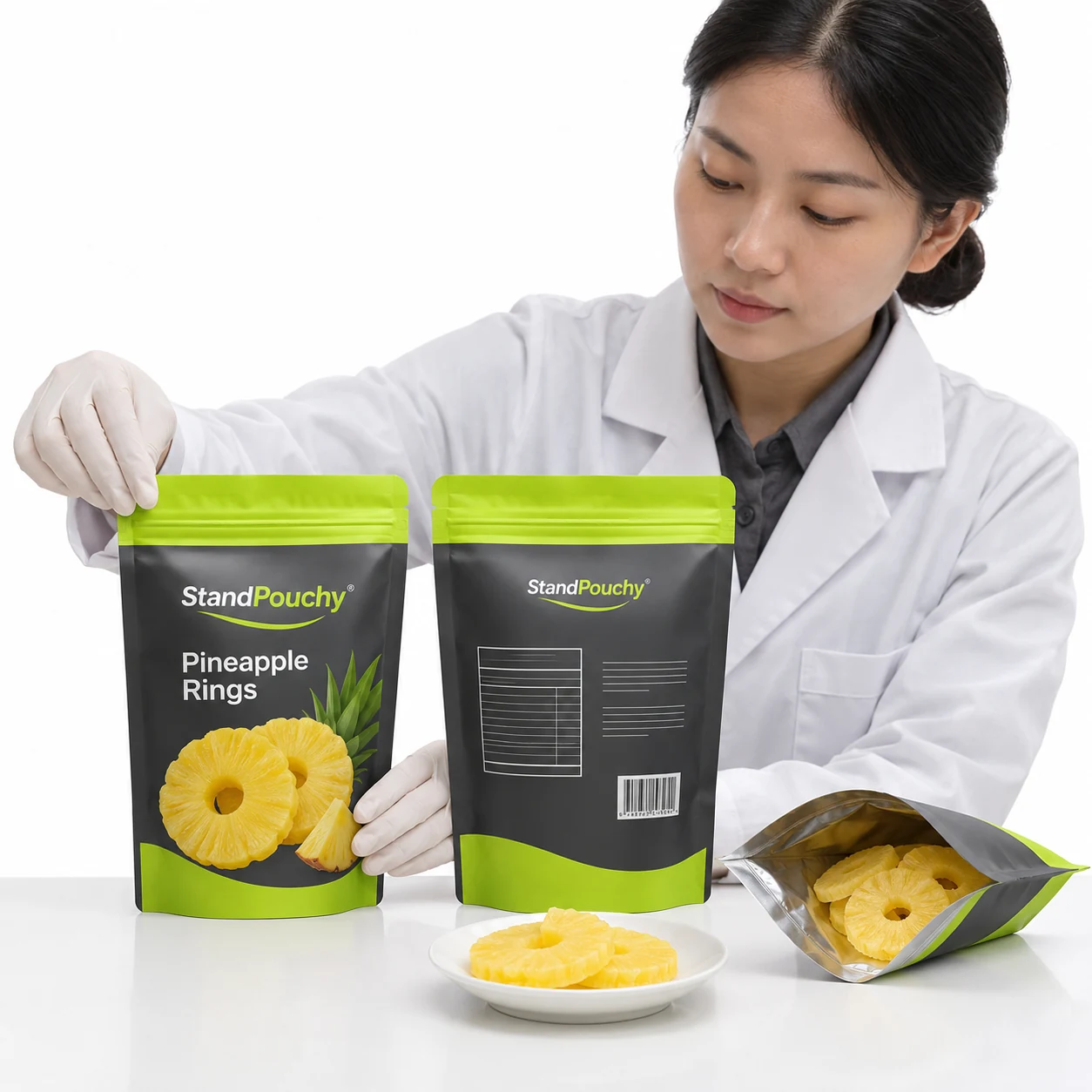
Write the approval around the packed ring
We retain a sealed sample from each construction and identify its ring lot, closure settings and trial date. We keep a separate opening sample to check whether rings release cleanly after normal handling. We note surface tack, clumping, tears and any visible fruit in the seal band. If strength testing is required, ASTM F88/F88M describes a method for measuring flexible barrier seal strength.[5] A strength result is a separate record from the food quality decision.
We keep unhandled controls for comparison and ask the food team to define the checks and storage intervals. If a proposed test does not represent the expected route or display conditions, we note the gap in the approval.
We ask purchasing to keep the unprinted size decision, film decision and printed artwork decision separate. An approved mockup is useful for layout. It does not tell the packer which lot or line settings were represented. Our sample approval guide provides a place to give each approval its own owner and records.
We send the supplier a brief with the ring size range, target weight, working mouth, intended conditions and destination. We ask it to name what the sample charge covers and whether any change to artwork or film needs another run. Before requesting a quote, we attach the desired first order quantities and explicitly identify trial results still pending.
We use a separate pouch trial for dried apricot halves when an assortment moves from rings to thicker, cup-shaped pieces.
| Release decision | Evidence |
|---|---|
| Fit | Accepted rings and mouth trial |
| Texture | Product owner review |
| Artwork | Approved filled reference |
Conclusion
We approve a pouch that accepts whole rings, preserves the agreed chew and releases a usable serving. We keep print approval tied to the filled sample.
Notes and sources
- Target: Dried pineapple retail terminology (cited in article)
- FDA: Water activity in foods (cited in article)
- ASTM F1249: Water vapor transmission through film (cited in article)
- FDA: Food types and conditions of use (cited in article)
- ASTM F88/F88M: Flexible barrier seal strength (cited in article)
About the StandPouchy packaging team and editorial responsibility
Reddit links are community insight only. We use official standards and regulator pages for technical context, and we require project evidence for the final pouch decision.