01
How should I approve a flexible pouch sample?
First identify whether the item is a stock format reference, material swatch, digital or printed proof, machine trial, pre-production sample or production sample. Approve only the dimensions, construction, print, features or process conditions that the named sample genuinely represents.
Compare that sample with the same revisions of the specification, dieline and artwork intended for release. Record each result as accepted, rejected, open or not represented; a single “approved” message hides exceptions and cannot show what still needs filled-pack confirmation.
- Identify what the sample represents
- Review dimensions, print and features
- Specification, dieline and artwork revisions
- Item-level decision and reviewer
02
Check traceability before appearance
Label the sample with supplier or converter, material or job reference, lot where available, date and production route. Confirm whether it was handmade, digitally printed or produced through the intended converting route because those paths may not represent the same color, seals, registration or surface behavior.
Photographs are useful evidence of condition, but they do not replace the retained physical reference or measured result. Keep images tied to the sample ID, review date and observation.
- Unique sample and job identifier
- Material, print and converting route
- Lot, date and quantity reviewed
- Retained sample and linked photographs
03
Measure pouch construction and feature positions
Measure flat width, height, gusset and agreed seal or feature references using the controlled drawing convention. Note sample condition and measurement method so an empty flat measurement is not confused with a filled outside dimension.
Inspect zipper, notch, window, valve and hang-hole presence, side, alignment and observable function. Record results against project tolerances where they exist; do not invent a universal StandPouchy tolerance.
- Dimensions and drawing reference points
- Seal geometry and visible condition
- Closure and opening-feature positions
- Window, valve and hang-hole registration
04
Review print, copy, barcode and surface finish
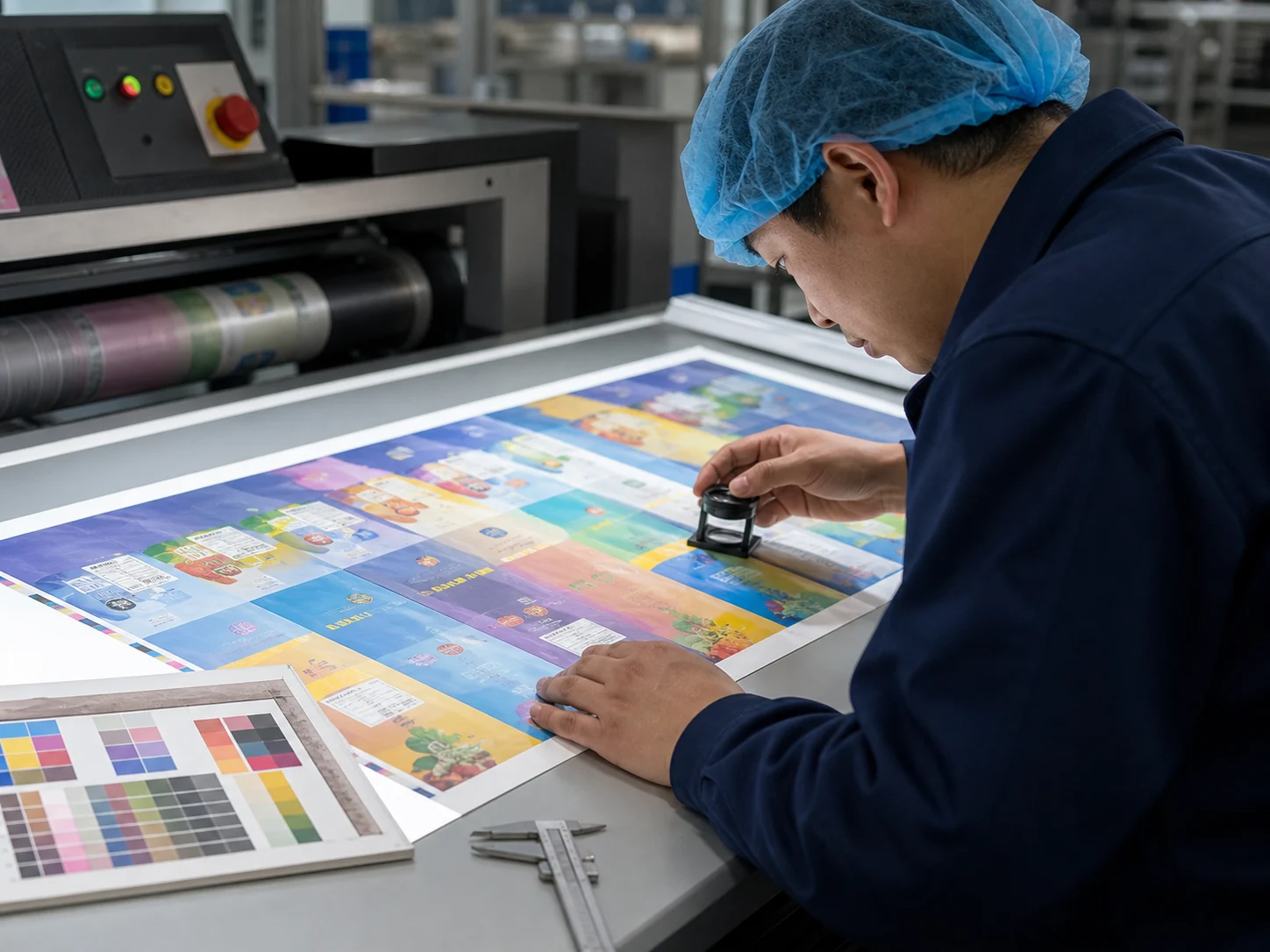
Compare copy and artwork with the released proof, including SKU, language, barcode data and required marks. Review color against the agreed physical or measured reference under the specified viewing conditions rather than relying on an uncontrolled screen or room light.
Inspect registration, small text, reverse copy, scuffing, blocking, gloss or matte consistency and unintended marks. Barcode appearance alone is insufficient; verify the printed and formed symbol through the applicable process.
- Released artwork and copy comparison
- Color reference and viewing condition
- Registration and legibility
- Printed barcode and surface review
05
Fill and seal with the intended product and process
An empty pouch cannot approve usable volume, fill access, seal contamination behavior, headspace, standing shape or closure access. Use a representative product and the intended filling sequence, then close and seal with recorded equipment and process settings.
Review observable seal condition and select any integrity or strength methods from the project risks. ASTM F88/F88M measures force for a defined seal specimen and failure mode; ASTM D3078 addresses gross leaks within its scope and notes that small leaks may not be detected. Neither supplies a universal pass value.
- Representative product, fill and headspace
- Filling sequence and seal settings
- Closure access and standing behavior
- Risk-based seal and integrity evidence
06
Review packing, handling and release status
Pack the filled pouches in the intended orientation and review contact points, carton fit and observable effects of representative handling. If a transport or distribution test is required, define the procedure, samples and acceptance criteria before treating it as approval evidence.
Close the record with accepted items, rejected items, deviations, open actions and disposition. Any change to product, size, material, feature, artwork or process requires an impact review and a new controlled revision; retain the approved reference according to the project record plan.
- Case-pack orientation and contact points
- Defined handling or distribution procedure
- Deviation and corrective-action closure
- Decision, approvers, date and retained reference
Field map
Use one record to separate sample evidence from open work.
The field map does not set universal tolerances, seal strength, leak limits, color difference or transport targets. Record project criteria before review and mark anything the sample cannot represent as open or not applicable.
| Approval field | What to record | Decision question | Evidence retained |
|---|---|---|---|
| Sample identity | Sample ID, type, purpose, supplier, job or lot reference and date | Which physical item is being reviewed? | Labeled sample and receipt record |
| Representativeness | Handmade, proof, trial, pre-production or production route; included and omitted attributes | What can this sample validly approve? | Declared sample scope |
| Controlled references | Specification, dieline, artwork and color-reference revisions | Is the sample compared with the intended release files? | Linked controlled documents |
| Review plan | Reviewers, sample quantity, methods, conditions and project acceptance criteria | Were decisions defined before inspection? | Approved review plan |
| Flat dimensions | Width, height, gusset, reference points, method and results | Does geometry match the controlled drawing and tolerance? | Measurement record |
| Seal construction | Top, side and bottom seal geometry, alignment and visible condition | Does the converted pouch match the approved construction? | Measurements and inspection images |
| Closure and opening | Zipper, notch and opening location, alignment and observed operation | Can the intended user and filling route access the pouch as planned? | Feature check on named samples |
| Other features | Window, valve or hang-hole identity, side, coordinates and observable function | Are optional components present and correctly registered? | Drawing comparison and functional observation |
| Artwork and copy | SKU, language, required copy, barcode data, registration and legibility | Does the printed content match the released proof? | Annotated proof comparison |
| Color and finish | Reference, viewing condition, agreed method, results and surface observations | Does the sample meet the project color and finish decision? | Reference ID, readings where agreed and photographs |
| Filled-pouch setup | Representative product, fill, headspace, equipment, sequence and seal settings | Was the pouch assessed under the intended packing route? | Filled and sealed sample record |
| Filled-pack use | Standing, opening, reclosing, handling, distortion and seal-area observations | Does the pack geometry and feature use work with the actual product? | Recorded observations and named samples |
| Integrity evidence | Selected method, conditions, result, units, failure mode and acceptance criterion | Do the risk-based seal or leak checks meet the agreed limit? | Test report linked to sample ID |
| Packing and handling | Carton orientation, contact points and defined representative procedure | Does downstream packout reveal an issue? | Packout record and any test report |
| Disposition | Accepted, rejected, deviation, open action or not represented for every field | What is approved and what remains unresolved? | Item-level decision log |
| Release and retention | Decision, approvers, date, corrections, revision impact and retained-reference location | Can the release be reconstructed after a later change? | Controlled approval and retained sample record |
Method references
Verify the controlled method before testing.
F88/F88M measures the force required to separate a defined seal specimen and records failure mode; it does not simulate every whole-package use. D3078 is limited to gross leaks in flexible packs with headspace gas and may not detect small leaks. GS1 barcode checks include data, quiet zones, contrast, construction, placement and packaging effects. Apply only the current methods relevant to the project.