01
Which Product Change Should We Protect Against First?
Barrier selection becomes vague when nobody defines what unacceptable staling, softening, oxidation, or flavor loss means.
We begin with a failure mode and an acceptance limit. The snack team must define which sensory, chemical, physical, or appearance change ends acceptable shelf life.
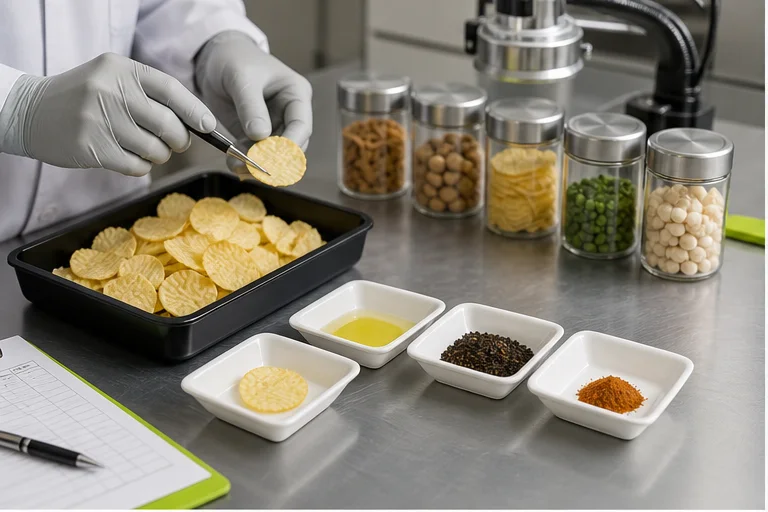
We turn “keep it fresh” into observable questions
We ask the product team what changes first under normal storage. A crisp snack may absorb moisture and lose texture. A fatty nut may develop oxidized flavor. A strongly seasoned snack may lose aroma or transfer odor. A colorful dried fruit may change under light or heat. These are different problems, so we do not start with a laminate name. We start with the failure that the brand and consumer would notice.
We define how the team will observe that failure. The method may include sensory review, texture measurement, moisture analysis, peroxide or other product-specific chemistry, color measurement, or a combination. We do not invent an acceptance number. The product owner, qualified laboratory, and applicable market requirements must set the method and limit. Our packaging role is to connect the package variables to that protocol.
We also record the storage and distribution conditions. A cool dry warehouse, a hot delivery route, and repeated ecommerce handling create different exposures. The target date has little meaning without those conditions. We use the flexible packaging test specification guide to keep method, temperature, humidity, sample count, and acceptance rule together. This record stops the team from comparing test results that were produced under different conditions.
| Possible first change | Packaging factor we investigate | Product evidence |
|---|---|---|
| Loss of crispness | Moisture entry and seal integrity | Texture and moisture trend |
| Oxidized flavor | Oxygen entry and headspace process | Sensory and chemistry plan |
| Aroma loss or transfer | Aroma barrier and closure use | Sensory review after storage |
02
How Do OTR and WVTR Guide the Material Direction?
A barrier number without its test conditions can create false confidence and a poor comparison between suppliers.
We compare oxygen transmission rate and water vapor transmission rate only when the method, temperature, humidity, specimen, unit, and laminate state are clear.
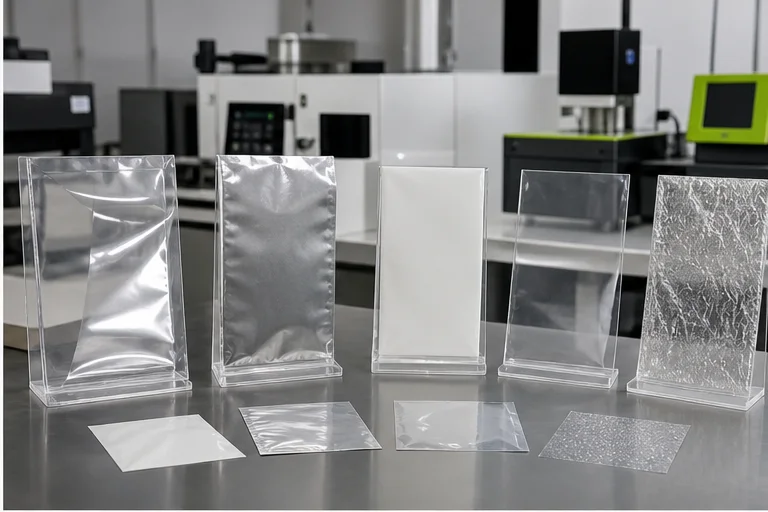
We keep the number attached to its method
We use OTR when oxygen entry is relevant and WVTR when moisture movement is relevant. These values help compare candidate films, but they do not describe the whole filled package. We ask whether the data came from the exact laminate, a single layer, or a typical family value. We record the test method, temperature, relative humidity, unit, specimen orientation, and date. We also check whether folds, windows, printing, or converting steps change the final structure.
We avoid simple labels such as low, medium, or high barrier unless the project defines them. The ASTM F1249 page explains that WVTR data depend on agreed sampling, standardization, test conditions, and acceptance criteria.[3] We apply the same discipline to every transmission value. We compare like with like and we keep supplier data separate from results produced by an independent laboratory.
We then connect the material result to the package. Side seals, the bottom gusset, zipper area, pinholes, and final top seal can become easier entry paths than an undamaged flat film. We therefore use film data as an input to the shelf-life plan, not a replacement for it. The stand up pouch material structure guide shows how we record layers from outside to inside and identify the evidence that each direction still needs.
| Data field | Why we keep it | Mistake we avoid |
|---|---|---|
| Test condition | Transmission changes with the stated environment. | We do not compare unmatched conditions. |
| Exact specimen | A layer value may not represent the laminate. | We do not label a family value as final. |
| Unit and method | They make the result interpretable. | We do not copy a number without context. |
03
What Roles Do Light, Grease, and Aroma Play?
Oxygen and moisture get attention, but light, oils, flavor compounds, and product contact can decide the real structure.
We review light sensitivity, grease resistance, aroma retention, odor transfer, and sealant compatibility alongside OTR and WVTR. The food-contact layer must fit the intended use.
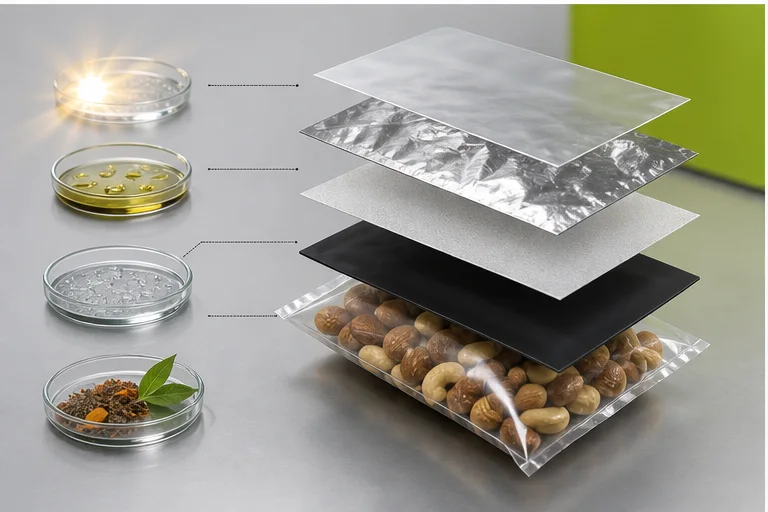
We review every contact and exposure path
We ask whether the product contains oils, sharp inclusions, strong flavors, acids, sugar coatings, or fine seasoning. Oils can challenge paper appearance and some adhesive or ink systems if the structure and seals are not suitable. Strong aromas can move out of the pack, while external odors can move in. Light can accelerate change in some products. A clear window can support selling but reduce the light-protection area. We treat each feature as a tradeoff that needs evidence.
We pay special attention to the sealant layer because it touches the food and forms the package seals. It must work with the filling and sealing process as well as the intended product contact. The FDA explains that food-contact substances include packaging components such as adhesives and colorants, and the authorized use depends on the conditions of use.[1] We therefore request the applicable compliance support for the exact material and market. We do not turn a general “food grade” statement into a universal approval claim.
We also check printing and windows. Ink should remain on the intended non-food-contact side unless the approved system says otherwise. A window needs clear dimensions and location, and it can affect stiffness and barrier direction. We record all of this in the flexible packaging specification checklist so the visual design does not become detached from the material construction.
| Exposure | Question we ask | Possible design response |
|---|---|---|
| Light | Does visible or UV exposure change the snack? | We compare opaque and windowed areas. |
| Grease | Can oil affect appearance or seals? | We review contact layer and converting system. |
| Aroma | Can flavor move into or out of the pack? | We add aroma retention to the shelf-life review. |
04
How Do We Validate a Snack Barrier Structure?
A supplier data sheet cannot prove the filled pouch will meet a brand’s shelf-life goal under its real distribution conditions.
We validate barrier with the exact laminate, converted pouch, production seals, real snack, intended headspace process, and a documented shelf-life protocol.
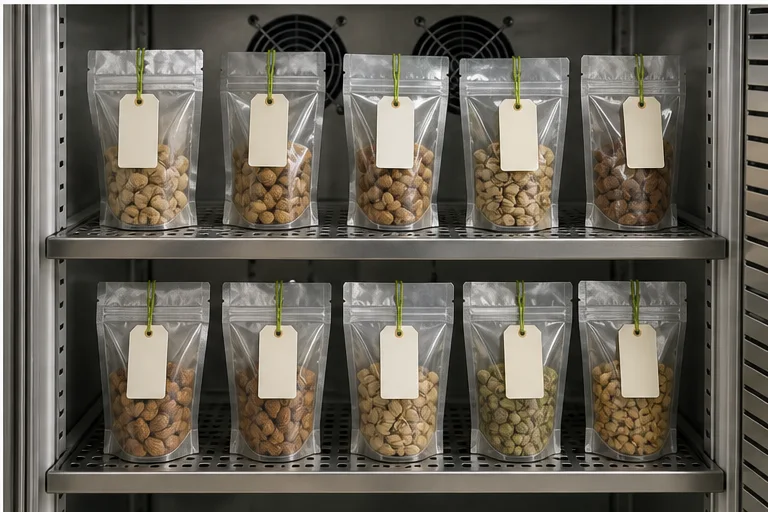
We test the package that will actually be sold
We build the validation from three layers of evidence. First, we review the material construction and relevant transmission data. Second, we inspect converted pouches for dimensions, seal areas, zipper installation, folds, and visible defects. Third, we fill and seal the pack through the intended process and place it into the defined storage and distribution study. Each layer answers a different question.
We include control samples when the protocol supports them. A known current structure can help the team understand whether the new option changes the product faster or slower under the same conditions. We keep sample dates, laminate lots, product lots, sealing settings, and storage conditions with the results. We do not compare an accelerated study with a real-time study as if the dates meant the same thing unless a qualified technical plan provides that relationship.
We also plan for failure analysis. If one pouch performs poorly, we check whether the cause is the film, a seal, a puncture, a zipper area, or the product process. We do not blame “barrier” as one vague property. The pouch sample approval guide helps us keep the final approval tied to what the tested sample actually represents. Only then do we lock the laminate direction and the test requirements in the controlled specification.
| Evidence layer | What it can show | What it cannot prove alone |
|---|---|---|
| Film data | Flat-material transmission behavior | Converted package shelf life |
| Converted pouch inspection | Features and visible seal quality | Product stability over time |
| Filled shelf-life study | Package and product behavior together | Unstudied markets or conditions |
Conclusion
We choose snack barrier from the first defined product failure, then we prove the complete filled package under recorded conditions before we approve it.
Sources and further reading
- FDA: Food Packaging and Other Food-Contact Substances (cited in article)
- FDA: Determining the Regulatory Status of Food-Contact Material Components (further reading)
- ASTM F1249: Water Vapor Transmission Rate Through Plastic Film (cited in article)
Reddit links are community insight only. We use official standards and regulator pages for technical context, and we require project evidence for the final pouch decision.