01
What Does the Zipper Actually Do?
Buyers often ask a zipper to solve oxygen, moisture, seal, and shelf-life problems that belong to the complete package.
We use the zipper as a consumer reclosure feature. It brings the pouch sides together after opening, but its performance depends on alignment, cleanliness, track engagement, and user handling.
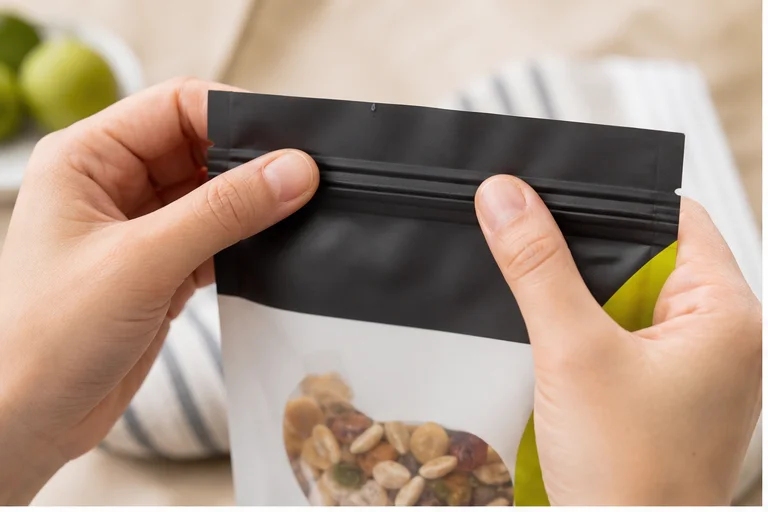
We define reclosure without overpromising freshness
We explain the zipper in plain terms. Before sale, the permanent heat seals and the pouch material create the unopened package. The consumer tears away the top and opens the zipper. After that action, the original headspace changes. The zipper can close the opening for storage, but it does not recreate the original gas composition. It also does not make every pouch airtight under every use condition.
The Reddit discussions that shaped this topic show the exact confusion. Some people expect a zipper to keep chips crisp, while others point out that the original protective headspace is lost after opening.[1] We treat this as a community question, not a laboratory result. The useful insight is that consumers link reclosure with freshness and portion control. The technical answer still needs product testing.
We check whether the zipper fits the intended pack. A single-serve snack may be eaten at once. A sharing pack may be opened many times. A powdery coating can enter the track. Large pieces can make the pouch hard to align. We compare these conditions with the snack food packaging application page and decide what the zipper should do in the real use pattern.
| Package stage | Main closure | What we evaluate |
|---|---|---|
| Before opening | Permanent production seals | Integrity and shelf-life performance |
| First opening | Tear path and zipper access | Grip, tear, and product control |
| After opening | Consumer zipper reclosure | Alignment, cleanliness, and repeated use |
02
Why Can Snacks Still Go Stale After Resealing?
Every opening exchanges air and moisture, and a zipper cannot remove what entered the pouch while it was open.
Snacks can still change after resealing because oxygen, humidity, heat, light, crumbs, and repeated opening remain active. The rate depends on the product and use conditions.
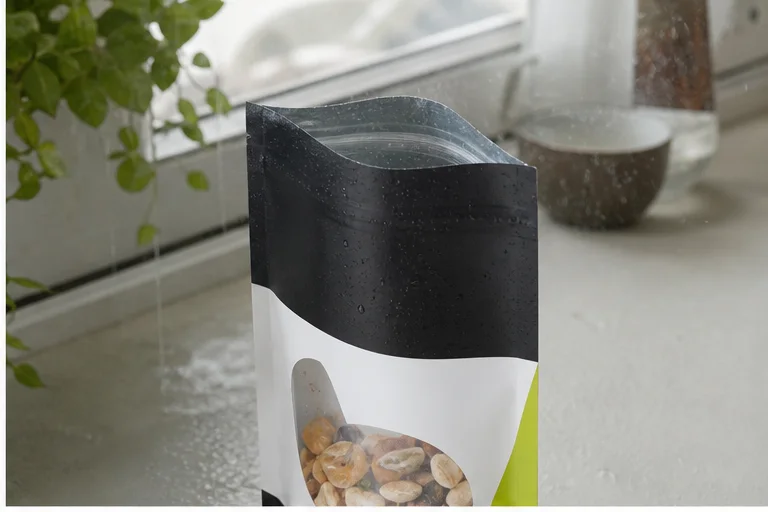
We map the post-opening exposure cycle
We picture each use as a cycle. The consumer opens the pouch, reaches inside, removes product, and leaves the opening exposed for a period. New air enters. The remaining headspace changes. The consumer then presses the zipper. The result can still be useful, but the product has already experienced an exposure event. Repeated cycles can build a different quality path from the unopened shelf-life study.
Moisture-sensitive snacks can soften when humid air enters. Fat-rich snacks can oxidize after oxygen exposure. Strong flavors can fade or move. Warm storage can speed many changes. A window can add light exposure. The zipper must also close across the full width. One folded corner or trapped crumb can create a local gap. We therefore avoid a simple statement such as “the zipper keeps food fresh.” we describe the intended convenience and we verify the actual product response.
We ask the brand to define a realistic after-opening instruction and test window. That may include a storage direction and a period for best quality after opening, but the responsible product team must support the statement. We connect the unopened material choice to the stand up pouch material structure guide and keep the post-opening plan as a separate use test.
| Post-opening factor | What changes | What we test |
|---|---|---|
| Repeated air exchange | Oxygen and humidity can enter. | A realistic opening schedule |
| Product in zipper | The track may not engage fully. | Closure with normal crumbs or coating |
| Warm or bright storage | Quality change may accelerate. | Defined storage conditions |
03
How Do We Choose and Position a Snack Pouch Zipper?
A zipper can be strong in a supplier sample and still be difficult to open, fill, close, or grip in the final pouch.
We choose zipper profile and position from pouch width, product size, filling method, opening force, grip space, tear notch, and seal-zone clearance.
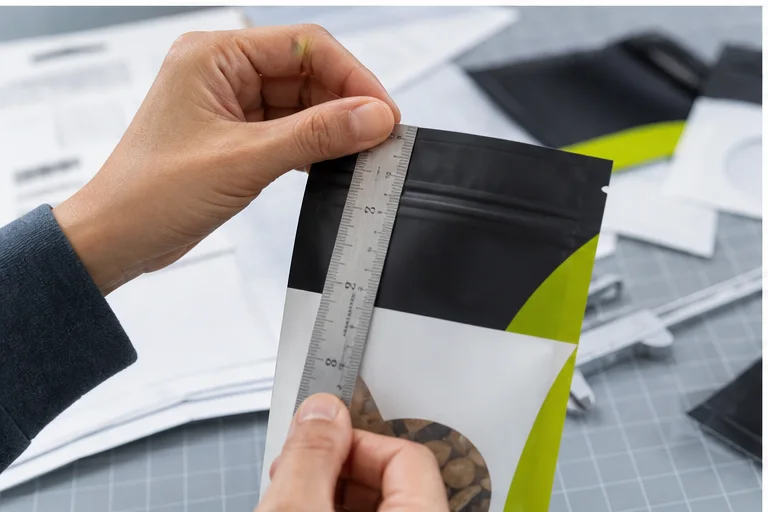
We test the zipper as part of the opening system
We start with pouch width and product access. A narrow pouch needs a zipper that can be aligned and closed without excessive force. A wide sharing pouch needs consistent engagement across the full opening. We check the product piece size because users may need a wider mouth for chips, clusters, or dried fruit. We also check whether the consumer will pour, pinch, or reach into the pouch.
We then review the vertical stack at the top. The final heat seal sits above the consumer opening. The tear notch starts the first opening. The zipper sits below the tear path. The user needs enough material to grip both sides. If these zones crowd one another, the pack becomes hard to open or the production seal becomes hard to control. We mark each line on the custom pouch dieline guide and test the finished geometry.
The filling line matters too. Some premade-pouch machines must pull the zipper open. The pouch mouth must stay open during dosing. Crumbs and seasoning must be kept away from the track and final seal. We request zipper samples made in the intended film because stiffness and pouch shape change how the track feels. We do not approve a zipper from a loose profile strip alone.
| Zipper decision | Our question | Approval evidence |
|---|---|---|
| Profile | Can users engage it across the pack? | Repeated opening and closing trial |
| Position | Is there room for grip, notch, and seal? | Finished pouch measurement |
| Line compatibility | Can equipment open and hold it cleanly? | Representative filling trial |
04
How Do We Test Reclosure with Real Consumers?
A laboratory technician may close a zipper perfectly, while a shopper uses one hand, dim light, or a pouch full of crumbs.
We test first opening, repeated closing, audible or tactile feedback, one-handed handling, product contamination, and storage with representative users and filled pouches.
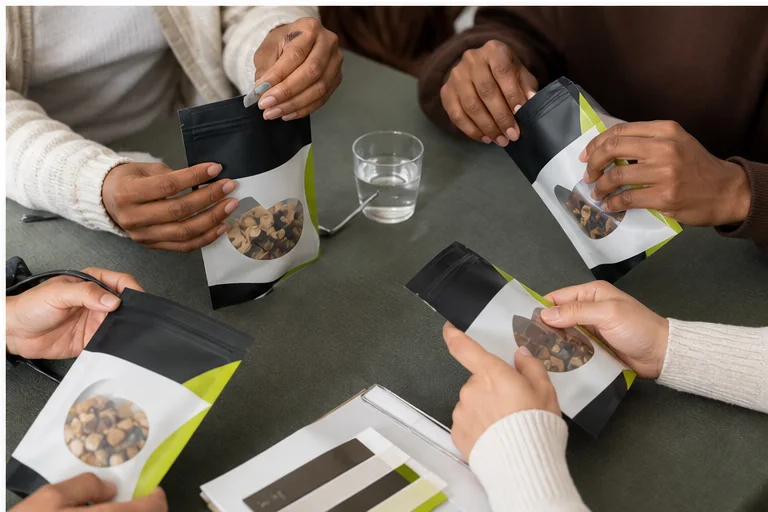
We observe use instead of explaining the mechanism
We give a filled pouch to each participant without a long instruction. We ask the person to open it, remove a normal portion, close it, and store it as they usually would. We watch where the hands grip, whether the tear travels cleanly, whether product spills, and whether the person checks the full zipper. We ask what made the closure feel complete. We do not lead the answer.
We repeat the cycle because the first close is not the whole experience. The pouch becomes less full. The sidewalls fold differently. Crumbs collect near the opening. The user may squeeze out air or leave the pouch expanded. We inspect the zipper track and remaining snack after the planned cycles. If the brand wants a freshness statement, the study must also connect this use pattern to product quality. A preference test alone cannot prove shelf life.
We document failures in simple language. The zipper felt too stiff. The user missed one end. The torn header blocked the opening. The pouch tipped while one hand held it. These findings lead to specific design changes. We use the pouch sample approval guide to record which zipper, film, pouch size, and product lot were tested, so the next sample can be compared fairly.
| Use task | What we watch | Possible change |
|---|---|---|
| First tear | Grip, direction, and clean opening | Move notch or adjust top geometry |
| Full reclose | Both ends and the center engage | Review profile or pouch stiffness |
| Repeated storage | Crumbs, folds, and remaining quality | Adjust instructions or feature choice |
Conclusion
We use a zipper to support real post-opening handling, but we keep freshness claims tied to the full pouch, consumer use, and product evidence.
Sources and further reading
- Reddit community discussion: Why do some snack bags lack a zipper? (cited in article)
- Reddit community discussion: Better food packaging for less waste (further reading)
- FDA: Food Packaging and Other Food-Contact Substances (further reading)
Reddit links are community insight only. We use official standards and regulator pages for technical context, and we require project evidence for the final pouch decision.