01
What Seal Question Are We Trying to Answer?
A vague request to test seals can produce data without telling the buyer whether the pouch is ready for its intended channel.
We define whether the question is opening force, process consistency, leak investigation, distribution handling, or a product-specific storage study before choosing samples and methods.
We connect every method to one decision
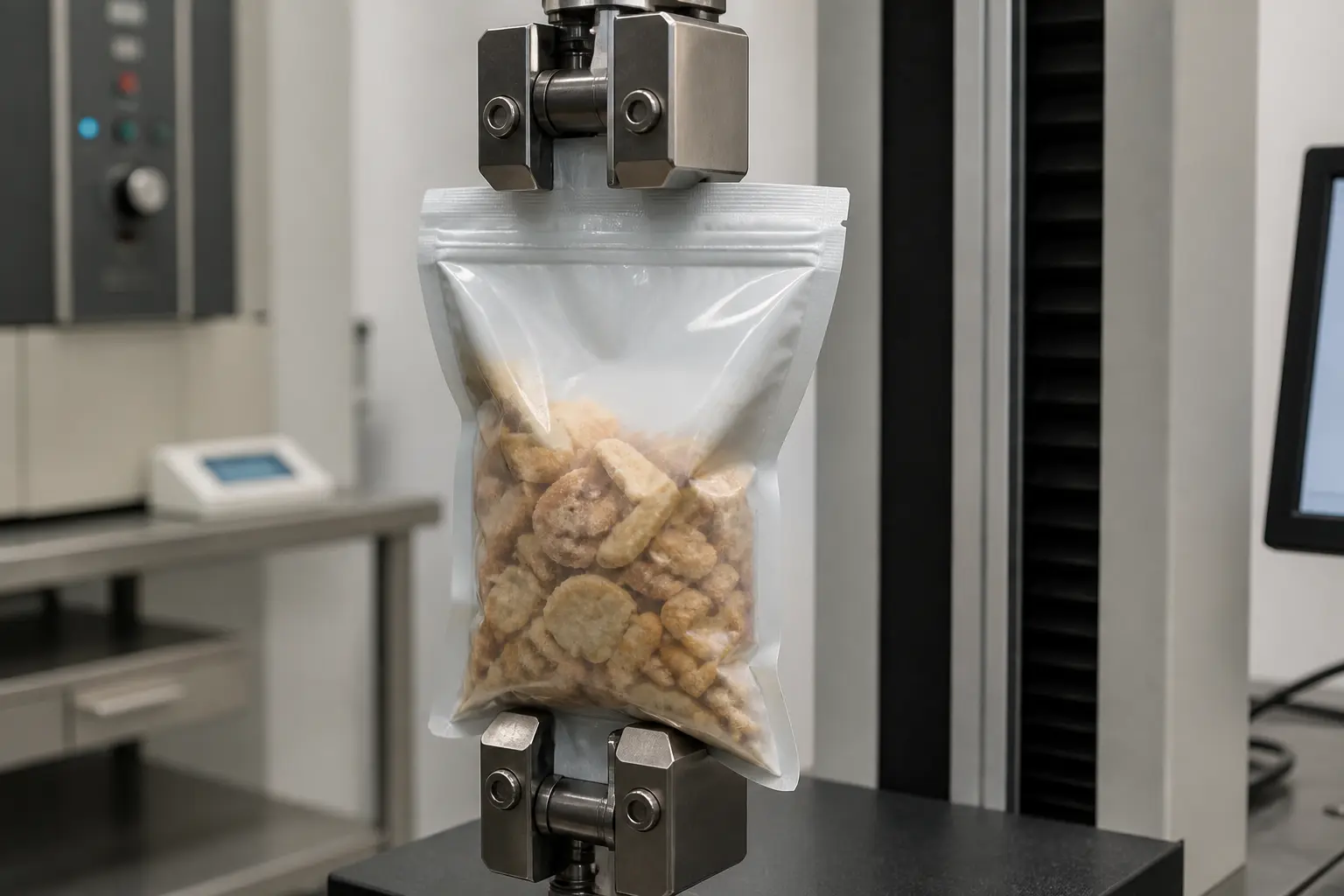
We start with the commercial decision that is at risk. A buyer may need to compare two constructions, prepare a co-packer trial, investigate a customer complaint, or approve a first production sample. Those are different questions. We name the route, product, pouch revision, and failure concern before asking for a test. This keeps a supplier quotation and a test report from becoming disconnected documents with clear next actions.
The technical scope follows. ASTM F88/F88M describes seal-strength measurement for flexible barrier materials and notes its use in process validation and process control.[1] It does not set a universal pass value for every snack pouch. We agree the specimen, orientation, conditioning, equipment, reported values, and acceptance basis with the responsible parties. We also record whether the observed failure is in the seal, film, or another part of the specimen.
That precision supports a better purchasing conversation. Rather than asking a converter to promise a vague “strong seal,” the buyer can ask what the sample represents and which production condition it reflects. Our flexible packaging test specification guide offers a compact way to keep the method and the business decision together.
| Business question | Technical evidence | Decision owner |
|---|---|---|
| Compare constructions | Defined samples and method | Product and packaging owner |
| Check process change | Production-representative trial | Operations owner |
| Review a complaint | Traceable retained or new samples | Quality and supplier team |
02
How Do We Keep Product Out of the Seal Zone?
Snack pieces, crumbs, oil, powder, and changing fill height can turn a clean empty-pouch seal into a real production risk.
We observe real filling motion, define usable headspace, and review the final heat-seal area with representative product rather than assuming a flat pouch is clean.
We design headspace as an operating allowance
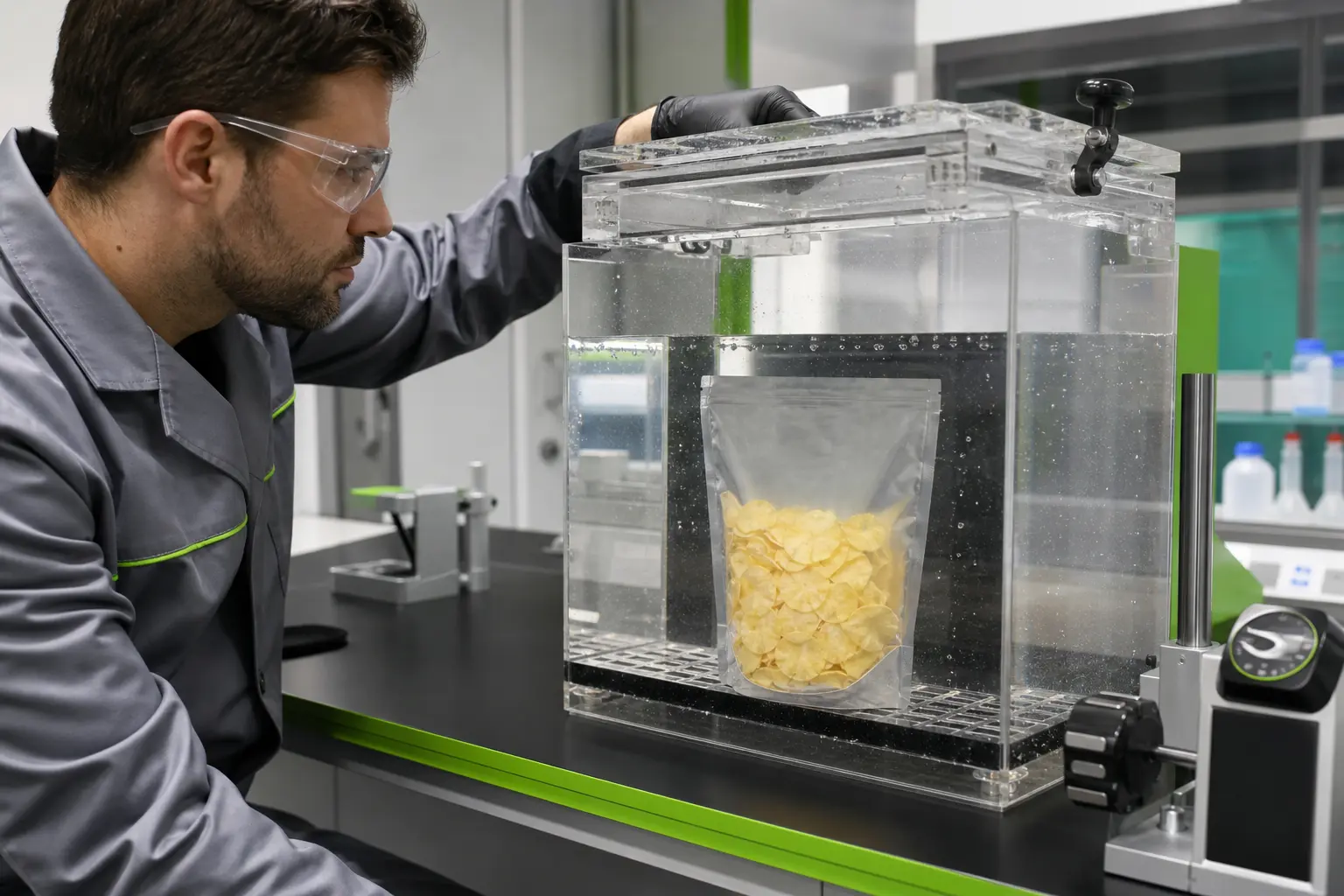
We watch how the product reaches the pouch. Light chips, coated nuts, powder seasoning, and sticky fruit can behave differently at the same nominal fill weight. We record the highest normal product level, any bounce or dust, and whether product enters the permanent seal area. Then we compare pouch height, zipper location, fill settings, and the sealing sequence. A design can be visually attractive and still leave too little usable top margin for a repeatable process.
We do not solve every issue by making the pouch taller. Extra material can affect shelf appearance, carton volume, and the way the pack looks after settlement. Instead, we work through the buyer's options: adjust the fill condition, revise the functional zone, choose a different pouch geometry, or change the operating plan. The right answer depends on what the actual product and line demonstrate. Our stand up pouch size guide helps frame the dimension review without pretending it replaces a line trial.
Commercially, this prevents avoidable resampling. The buyer can show a co-packer or converter a documented fill picture rather than asking them to infer product behavior from an artwork file. We preserve the sample identity and record the conditions so a later design revision triggers the right repeat review. That protects the project schedule more honestly than claiming a feature works before it has faced the snack.
| Seal-zone input | What we observe | Potential response |
|---|---|---|
| Product movement | Highest fill and crumbs | Revise fill or top margin |
| Pouch functional area | Zipper and seal spacing | Adjust geometry or feature position |
| Line sequence | Fill-to-seal transfer | Plan a representative trial |
03
Which Filled Samples Should We Review?
A hand-filled ideal sample may hide the variation that operations and distribution will expose after approval.
We review samples that represent normal product variation, intended pouch construction, relevant fill conditions, and the commercial route; we label what every sample can and cannot prove.
We avoid perfect-sample bias
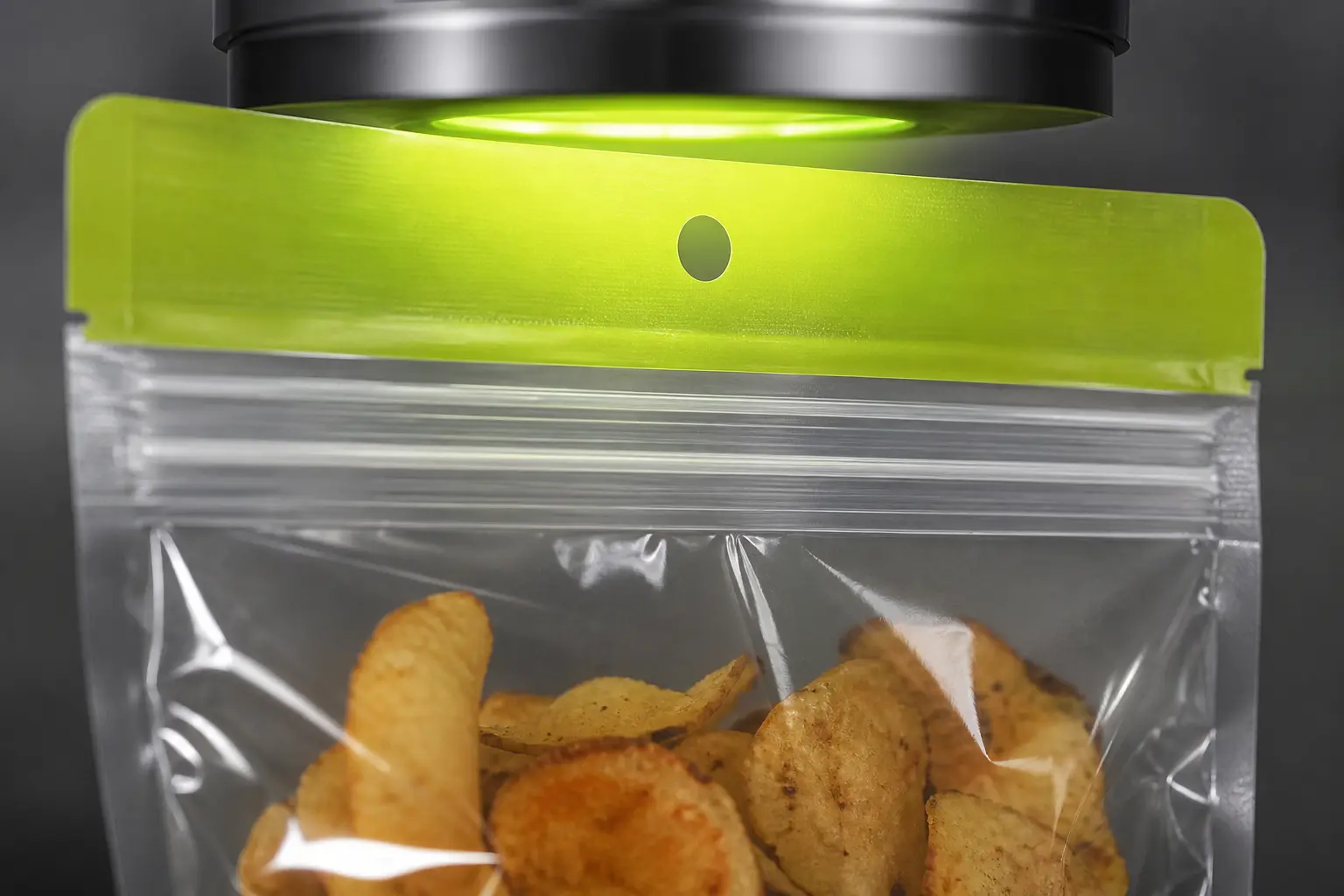
We define the sample set before testing. It may include a blank reference, a filled candidate, a sample after representative handling, and a sample produced after a controlled process adjustment. We avoid hand-picking only the neatest packs. The product needs to show the range that a real operation expects to manage. We also keep pouch construction and artwork revision visible, because a new laminate, zipper position, or print layout can change what the team must review.
We keep each result in context. A seal-strength result can answer a specific material-and-seal question. A leak observation can answer a defined inspection question. A filled distribution sample can show handling evidence. None automatically proves a product's storage life or regulatory status. The FDA notes that food-contact authorization depends on the individual substances and intended conditions of use.[2] We ask the responsible owner for that separate support instead of stretching a seal test into a broader claim.
For procurement, the sample plan turns supplier comparison into an apples-to-apples review. We ask what was filled, how it was closed, which condition was used, and who set the acceptance decision. The pouch sample approval guide makes those questions part of the release record. This means a buyer can reject an unclear sample without rejecting an entire supplier relationship.
| Sample type | What it can support | What it cannot prove alone |
|---|---|---|
| Blank construction sample | Seal-layout reference | Filled product behavior |
| Filled candidate | Product and seal-zone observation | Final shelf-life outcome |
| Handled case sample | Distribution evidence | All market requirements |
04
How Do We Release a Seal Decision?
A test number without sample identity, acceptance context, and ownership can delay a purchase decision instead of resolving it.
We release a seal decision only when the report identifies the sample, method, result, failure mode, acceptance basis, remaining risk, and the owner who accepts the intended use.
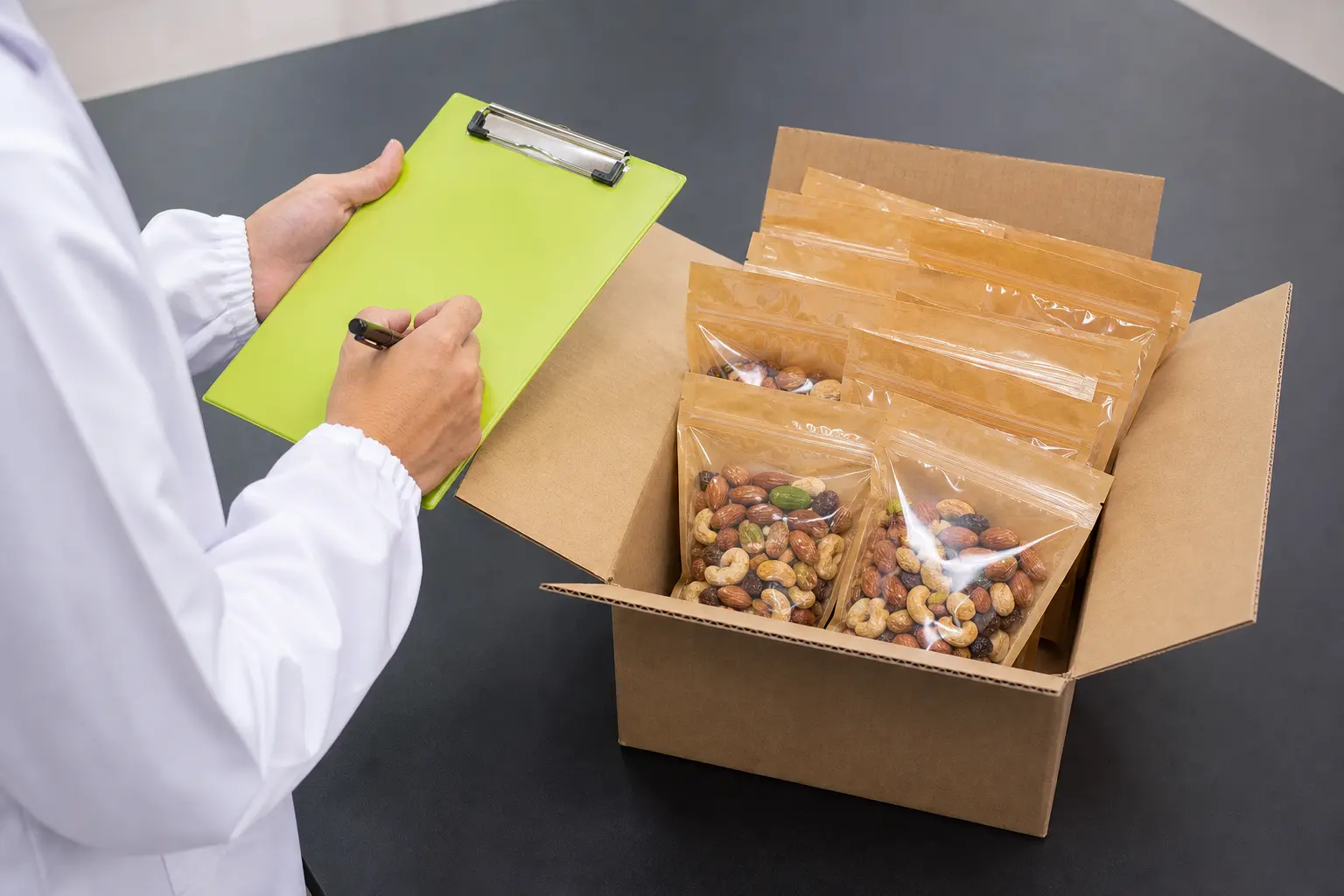
We make the report useful to operations and buyers
We review the result with the people who must act on it. The packaging owner needs to know the construction and functional zone. Operations needs to know whether the process can produce the intended condition. The product owner needs to understand which questions remain outside the test. Procurement needs a clear basis for comparing candidates. We give each decision a named owner rather than calling a sample “approved” without context.
We include the visible commercial checks too. Does the pouch still stand after filling? Is the zipper accessible? Does the front panel remain readable? Does the unit fit the intended case? A technically sound laboratory specimen may still be the wrong commercial pack if its geometry or handling creates another problem. We test these together because a conversion project succeeds only when the factory and the sales route use the same pack revision.
We close with a controlled next step. If the evidence supports the intended trial, we issue the revision and conditions. If evidence is incomplete, we list the exact missing item and hold the claim. Buyers can prepare a snack pouch inquiry with the snack, fill, pouch feature, market, artwork status, and test question. That is a more useful request than asking for a generic “leak-proof” pouch without a product or method.
| Release item | Record we keep | Why it matters |
|---|---|---|
| Sample identity | Construction, product, and revision | Results stay traceable |
| Acceptance basis | Named condition and owner | No invented universal threshold |
| Open risk | Specific next test or review | Purchase decision stays honest |
Conclusion
We release a snack pouch seal decision from traceable filled samples and an agreed method, not from a smooth-looking empty seal or an unsupported promise.
Sources and further reading
- ASTM F88/F88M: Seal Strength of Flexible Barrier Materials (cited in article)
- FDA: Determining the Regulatory Status of Food-Contact Material Components (cited in article)
- Reddit community discussion: Why do some snack bags lack a zipper? (further reading)
Reddit links are community insight only. We use official standards and regulator pages for technical context, and we require project evidence for the final pouch decision.