01
What Must We Learn Before Choosing a Chip Pouch?
A generic high-barrier request can hide the snack oil, seasoning, breakage, route, and sales questions that actually shape the pack.
We collect the chip style, oil and seasoning condition, target fill, channel, storage plan, destination market, carton route, and unresolved food-contact evidence before we compare constructions.
We start with the buyer brief
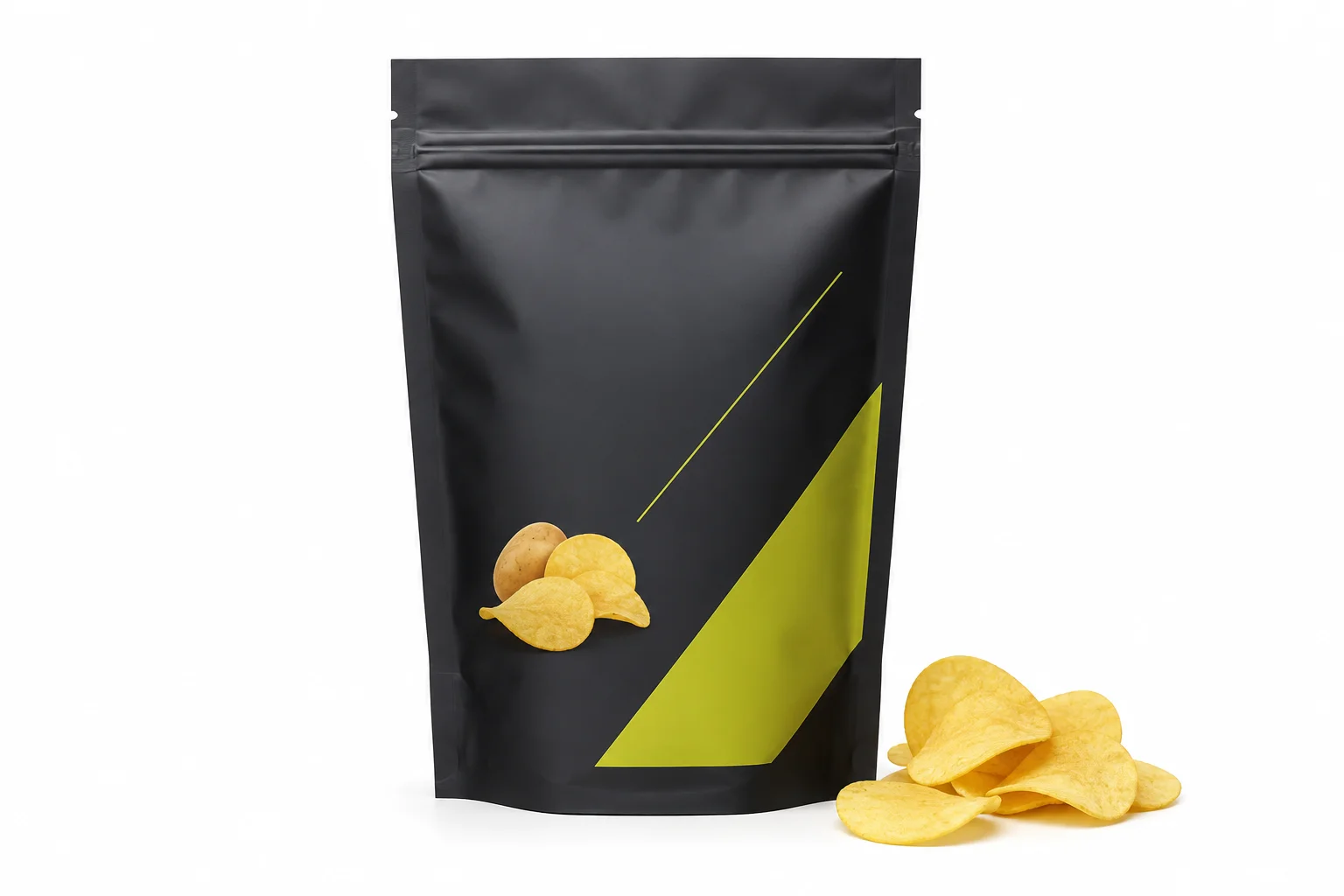
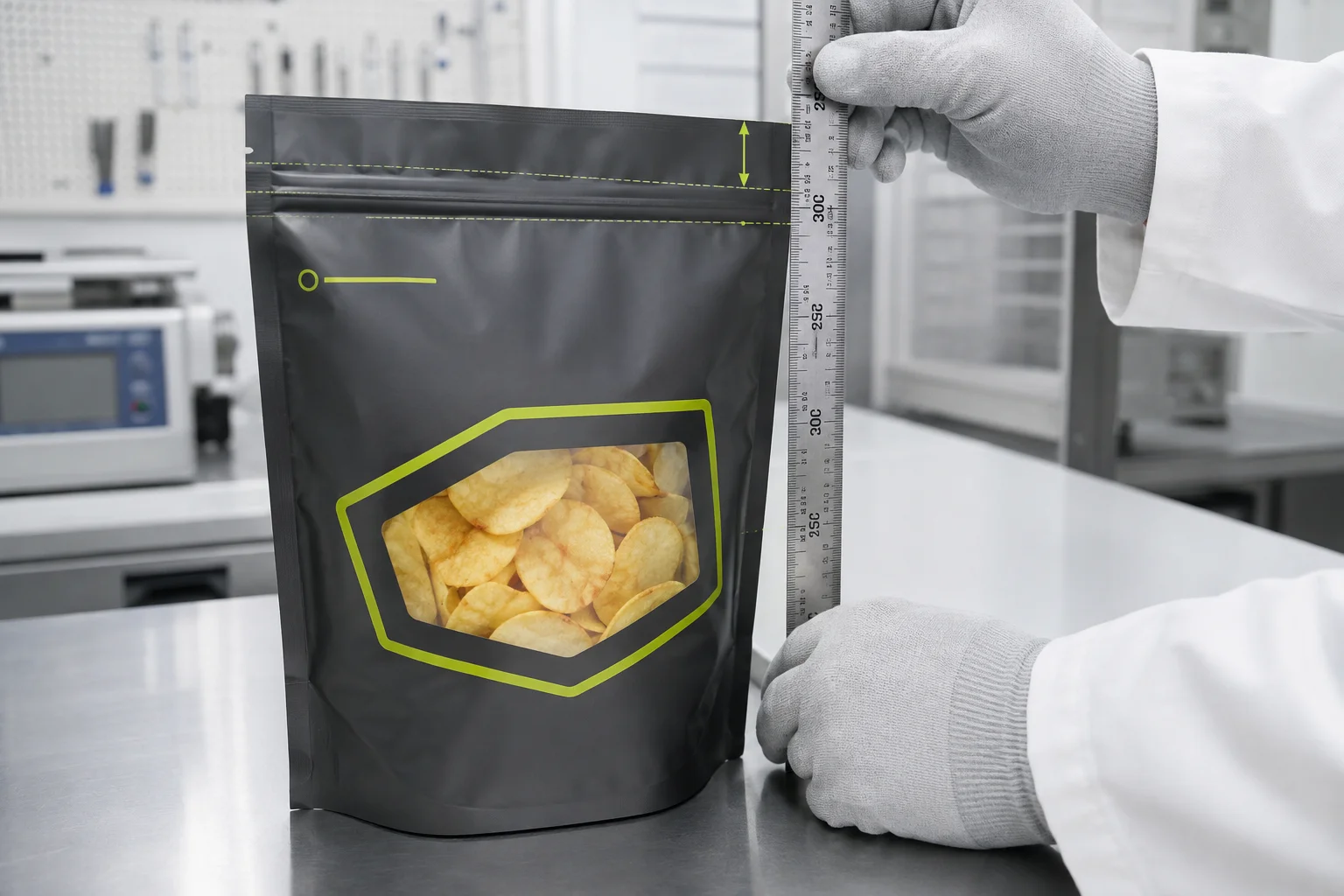
We begin with the real chip rather than a stock pouch. Thin kettle chips, ridged chips, tortilla chips, and puffed snacks settle differently, break differently, and occupy different space at the same declared weight. We ask the buyer to show representative product, target fill, expected sales channel, handling route, artwork status, and any planned gas-flush process. The community debate about apparently empty chip bags makes a useful commercial point: shoppers notice headspace, so the pack needs an honest weight declaration and a reasoned distribution design.[5]
We separate packaging questions from food responsibility. FDA describes food-contact substances as intended-use specific, so a generic claim is not a project approval.[2] We ask the responsible supplier for the exact construction support and the buyer for destination-market requirements. Then we use the flexible packaging specification checklist to record oxygen, moisture, light, grease, puncture, filling, and claim questions. This prevents a sales sample from becoming an unsupported technical promise.
We separate sliced, ridged and formed chips in the brief and record seasoning and surface oil. The largest pieces and expected fines belong in the sample together. Ask whether the buyer values intact chips, a compact portion or a resealable sharing format most. Each choice changes what should be observed at filling and after distribution, even when the printed net weight is identical.
| Buyer input | Why it matters | Decision |
|---|---|---|
| Chip shape and seasoning | It affects volume, crumbs, and seal risk. | Fill and opening review |
| Channel and route | It changes the breakage exposure. | Headspace and carton plan |
| Food-contact evidence | It is tied to intended use. | Construction confirmation |
02
Why Does Headspace Matter for Potato Chips?
Less empty space can look efficient, but a fragile chip needs a package that protects quality and survives handling.
We treat headspace as a controlled product-and-distribution decision: it can support reduced oxygen conditions and create a cushion, but its final amount must be proven with the actual chip and route.
We test gas and geometry together
We do not publish one universal gas ratio. The Centre for Food Safety explains that oxygen can react with unsaturated fats and that moisture exposure can make chips stale, while nitrogen can be used as packaging gas to slow deterioration.[4] That explains why a chip brief must consider both atmosphere and barrier direction. It does not prove a particular pouch, flush condition, or storage duration will work for every formula.
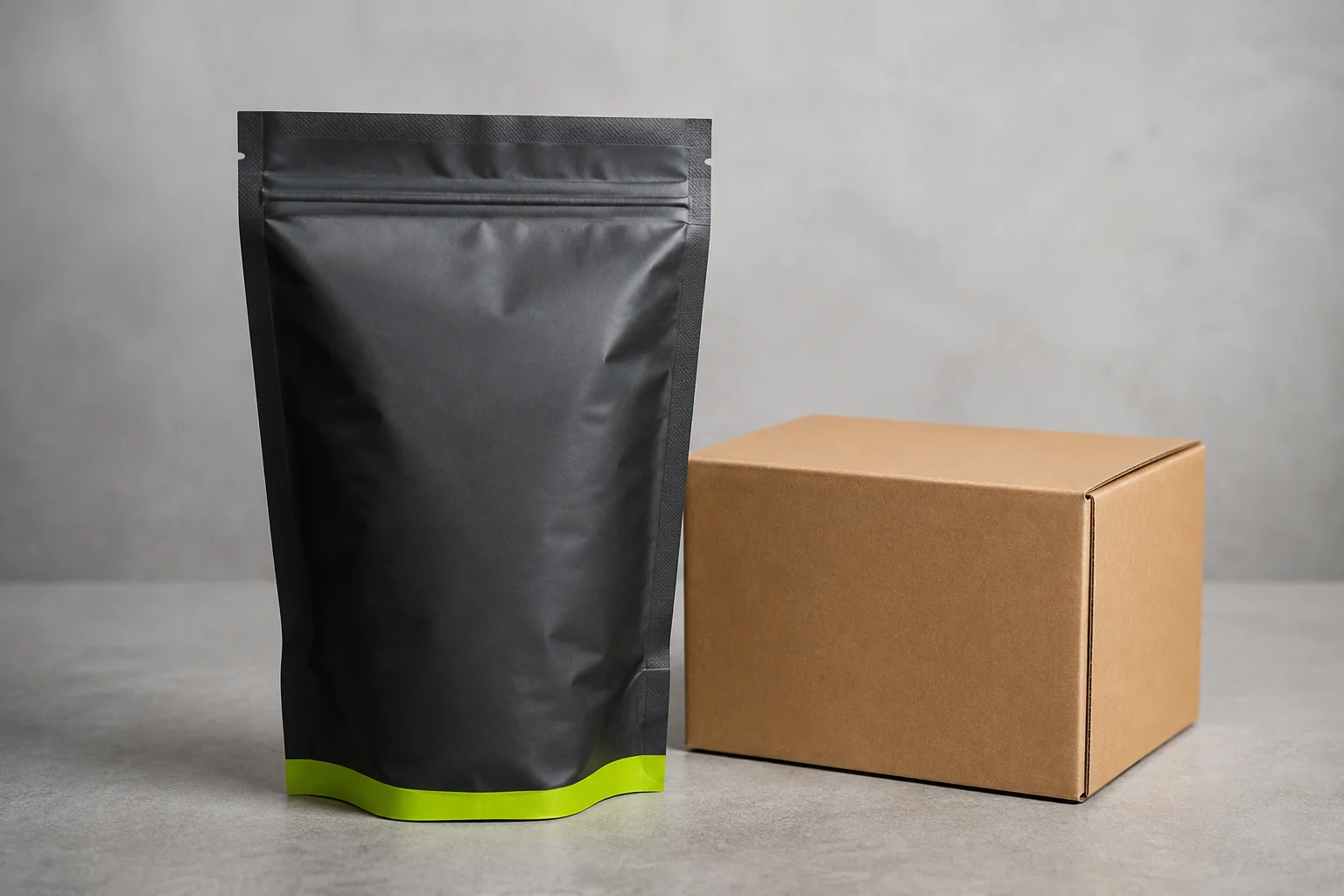
Commercially, we compare visible trade-offs. A pouch that is too tight can increase breakage and leave too little practical room for filling and sealing. A pouch that is too large can increase carton volume and invite a poor value perception. We fill conventional samples, check settled appearance, and review the pack in its intended carton. The stand up pouch size guide helps us record face width, usable height, and bottom gusset as planning inputs. The final setting belongs to the product owner and packer after representative trials.
We compare mouth width with the largest chip and watch for bridging as the product enters. If gas flushing is proposed, we review the actual line sequence and remaining headspace with the filler. We do not force extra chips into a chosen dimension to make a volume estimate work. The standing footprint, seal clearance and carton arrangement are checked on the same filled candidate.
| Check | Risk | Evidence |
|---|---|---|
| Headspace | Crushing or poor value perception | Filled-case review |
| Atmosphere plan | Oxidation or staleness | Product-specific study |
| Pouch geometry | Unstable standing shape | Representative filled sample |
03
Which Pouch Details Protect Crispness and Seals?
A strong film direction cannot rescue crumbs or seasoning that enter the permanent top-seal area during filling.
We specify a conventional stand-up pouch around its real functional zones: product space, bottom gusset, zipper when needed, and a separate clean permanent seal area.
We protect the closure process
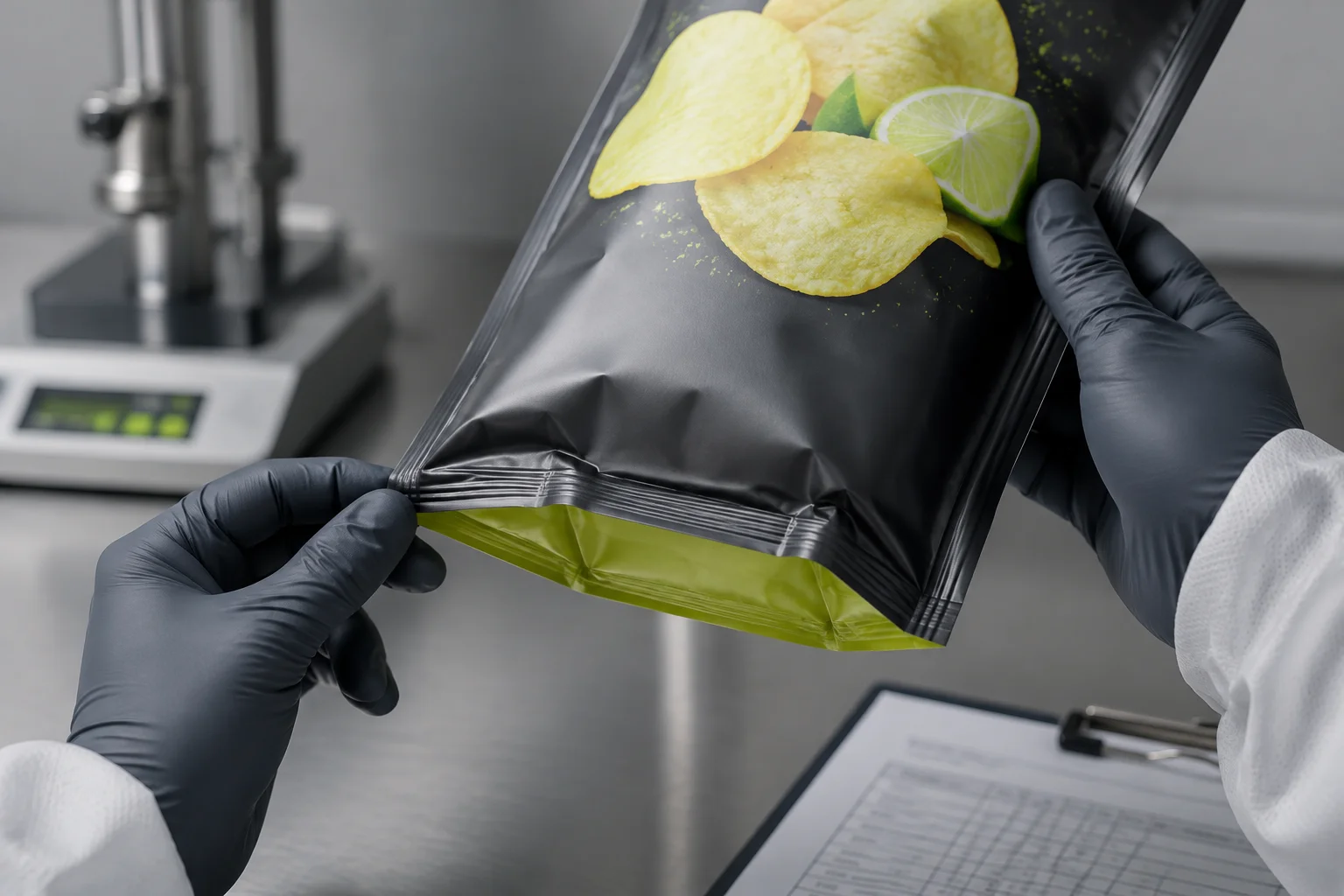
We map the pouch before we decorate it. A standard doypack uses front and back faces, side seals, and a bottom gusset. We do not substitute a box-pouch silhouette because it changes the product and filling behavior. We mark expected fill height, zipper position, tear path, and the permanent top seal. Then we ask the filler to show normal product variation and crumb movement. A clean-looking empty pouch cannot confirm that a filled pouch will seal consistently.
ASTM F88 describes seal strength measurement as useful in process validation and control, and it identifies both force and failure mode.[3] We use that as a method reference, not a pass claim. The buyer should agree the relevant sample, condition, method, acceptance basis, and owner. This keeps a commercial quote focused on options and unknowns rather than invented performance. Our flexible packaging test specification guide provides the fields to keep the test record with the same pouch revision.
We ask the product team to identify moisture-related loss of crispness separately from oxygen-related flavor change. Seasoning and oil can also create a contact or seal-cleanliness question. We compare the candidate film reports under stated conditions, then plan the filled product study. Where flushing is used, the gas-control and integrity evidence remain part of that defined process rather than a claim implied by a puffy pouch.
| Functional zone | Failure to avoid | Review |
|---|---|---|
| Top seal | Crumbs in the seal path | Filled seal inspection |
| Zipper | Confusing it with the permanent seal | Opening-path trial |
| Bottom gusset | Poor product distribution | Standing filled sample |
04
How Do We Release a Chip Pouch Without Guessing?
A purchase decision becomes expensive when artwork, film direction, gas plan, fill conditions, and carton tests each refer to a different sample.
We release one controlled pouch revision only after the buyer, converter, filler, and channel team can connect the approved artwork, filled sample, test record, and distribution configuration.
We keep one approval record
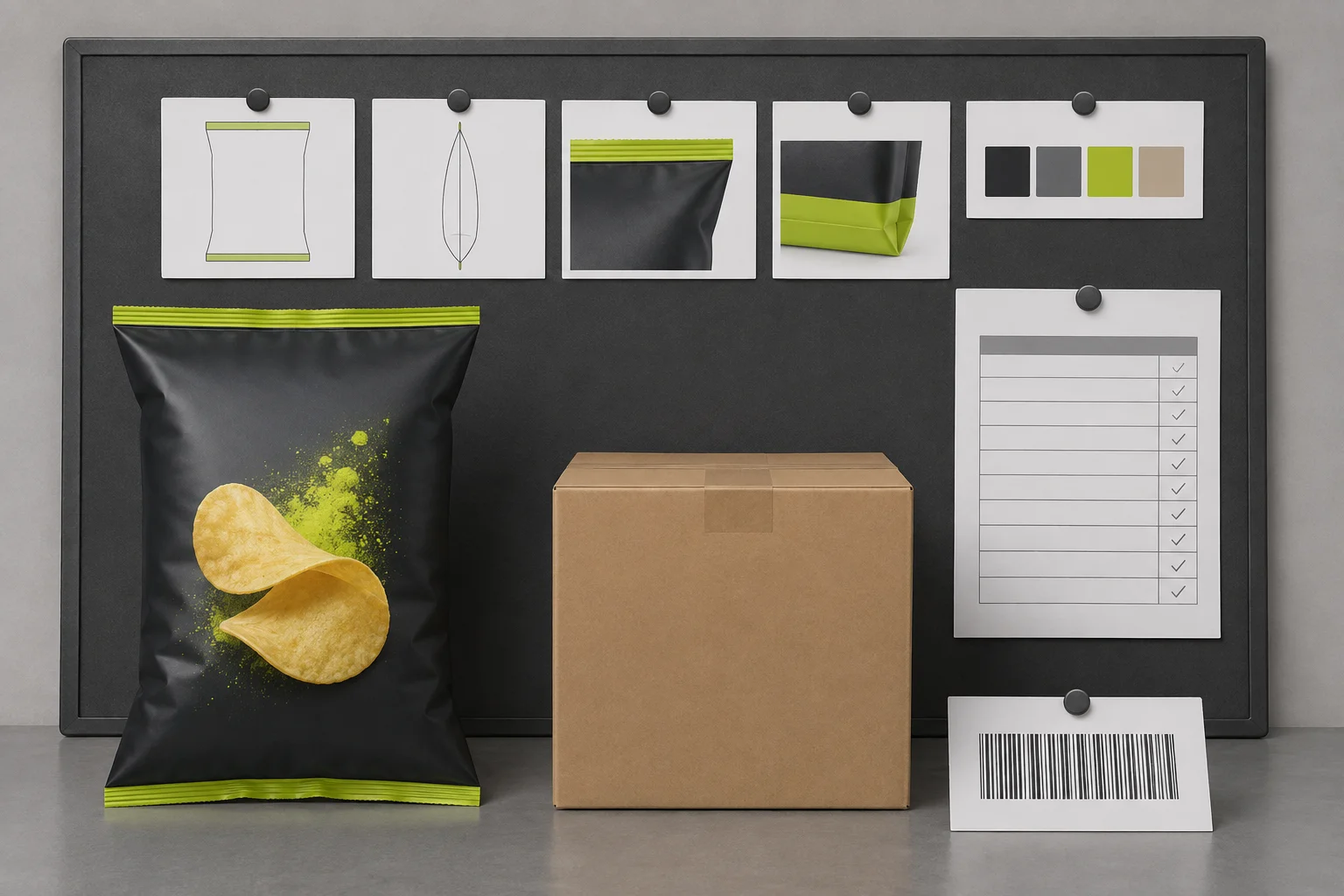
We make the final approval practical. The brand team reviews product identity and supported copy. The packaging team reviews dimensions, construction direction, opening features, and evidence gaps. Operations reviews filling, gas handling where applicable, and the permanent seal. The channel team reviews shelf presentation, ecommerce photography, and the shipping case. Everyone points to the same artwork revision and representative filled sample.
We hold unknowns open. A pending shelf-life result, unverified market requirement, or untested case pack does not become a claim because a launch date is close. The pouch sample approval guide gives us a shared checklist for those decisions. When the record is complete, a buyer can prepare a snack pouch inquiry with the product, target fill, destination market, artwork status, and route. That is a better commercial next step than selecting a generic “chip bag” and discovering the real constraints after print release.
We record whole chips and fines before and after the proposed case-handling review. A change in pouch size may change how neighboring packs press against each other, so the carton is part of the comparison. We also review opening and pouring without crushing the remaining chips. The final decision identifies the chip style, seasoning, filling process and sample configuration that were actually assessed.
| Owner | Approval | Reference |
|---|---|---|
| Buyer and brand | Product and artwork | Controlled proof |
| Packer and converter | Fill and pouch process | Representative sample |
| Channel team | Case and presentation | Route review |
Conclusion
We choose a potato chip pouch through product-specific evidence, then release the filled pack, seal plan, headspace, artwork, and carton route as one controlled decision.
Sources and further reading
- FDA: Food Packaging and Other Food-Contact Substances (further reading)
- FDA: Determining the Regulatory Status of Food-Contact Material Components (cited in article)
- ASTM F88/F88M: Seal Strength of Flexible Barrier Materials (cited in article)
- Centre for Food Safety: Nitrogen as a Packaging Gas (cited in article)
- Reddit community discussion: Chip-bag headspace and handling (cited in article)
Reddit links are community insight only. We use official standards and regulator pages for technical context, and we require project evidence for the final pouch decision.