01
What Product Problem Are We Asking the Packet to Solve?
We can confuse oxygen and moisture questions because the packets look similar. We name the failure concern before asking a supplier to propose an active component.
We separate moisture control from oxygen removal and ask the food owner to define the product target. We provide the snack, existing pack, measured product information and proposed storage conditions before requesting a specific sorbent and trial.
We start with the snack and the purchasing problem
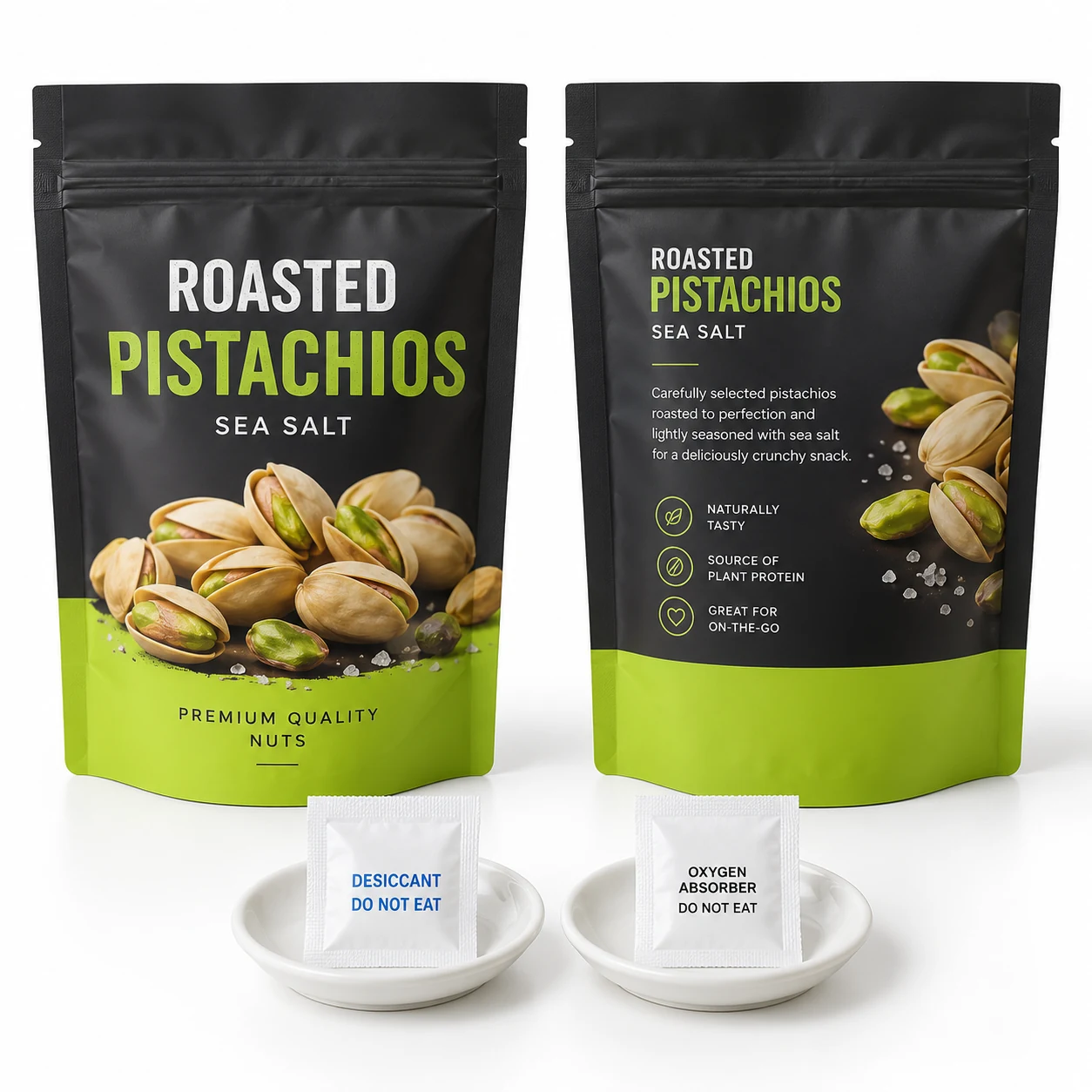
We identify the exact sachet rather than relying on its white outer wrapper. Multisorb distinguishes moisture-control desiccants from oxygen absorbers and describes application-dependent selection.[6] We record the proposed component identity and the supplier's intended application. We cannot substitute one packet for another because its dimensions fit the same pouch.
We ask for product information relevant to that application, including measured water activity when the food owner considers it necessary. FDA's historical technical guide explains water activity as a distinct property of the food.[2] We do not use total moisture, a crisp bite or a community rule of thumb as a food-specific safety approval.
We retain the original sachet supply label and the unopened component reference alongside the pouch. We identify whether the proposed packet is a moisture-control component or an oxygen-removal component from its supplier documentation. We leave its contents sealed and record the component reference rather than trying to identify it by appearance.
We ask the buyer what changed: an unopened product lost the intended texture, the food developed an unwanted flavor, or repeated opening did not match expectations. We keep the report and reference lot. In a Reddit cracker discussion, a user asks whether an oxygen absorber or silica packet is appropriate.[7] We attribute that uncertainty without adopting the commenters' dosage or safety advice.
We compare a review of the current pouch first with a review that includes a sachet. We ask the supplier which evidence would show that adding a component addresses the stated problem. We avoid ordering more features merely because a competing pack contains a packet. We leave the food owner responsible for the product and its study design.
We connect the request to our barrier selection matrix and the packaging brief checklist. We want an offer that identifies the component, proposed sample and decision owner. We can then compare purchasing scope without pretending that every snack needs the same active packaging.
| Option or input | Buyer question | Approval evidence |
|---|---|---|
| Moisture question | What texture target is being studied? | Food-owner brief |
| Oxygen question | Which change is being investigated? | Product study plan |
| Packet identity | What exactly is proposed? | Supplier component reference |
02
How Do We Compare the Sachet and Pouch as One System?
We can select a packet in isolation and overlook the film, seals or repeated opening. We request a controlled comparison before approving the combined pack.
We compare identified sachet options in the actual filled pouch with agreed controls, storage conditions and review points. We record the food lot, film revision, closure and opening pattern, then ask qualified owners to interpret the results against the product target.

We pay for a trial that can answer the buyer decision
We retain the pouch construction and barrier reports alongside the sachet reference. Film water-vapor transmission measured under ASTM F1249 does not describe the complete filled system or oxygen behavior.[3] We record the report conditions without treating a film number as proof that the combined pack will meet the food owner's storage objective.
We document the sequence from filling and insertion to final sealing and review. We distinguish unopened storage from a repeated-opening study, because they are different sample conditions. We record any change in the food, pouch or component between trials. We do not assign a universal sachet capacity, expiry interval or acceptable gas level in a general buying guide.
We record the initial food condition, component reference and filled-pack preparation date for every comparison group. We keep the intended storage condition and review point with that group. We preserve the control-pack identity throughout the sequence so results cannot be confused with an unrecorded change in the pouch or food.
We ask the supplier which control pack will make the result useful. We may need an existing specification and a proposed alternative, but the food owner and testing team decide the actual design. We ask for the same food and route across relevant comparisons. We budget for the study rather than expecting a decorative packet sample to resolve performance.
We request separate quotations for the component, trial preparation and testing. We ask what analysis the supplier includes and what must be arranged by the buyer. We compare the cost of the proposed evidence before evaluating a production offer. We keep any asserted shelf-life outcome outside the order until the responsible study supports it.
We use the barrier-data guide for report questions and the test specification guide for the agreed scope. We ask the buyer what result would justify accepting or rejecting the extra component. We want that decision stated before sample results arrive, so commercial pressure does not set the acceptance basis afterward.
| Option or input | Buyer question | Approval evidence |
|---|---|---|
| Control pack | What comparison is meaningful? | Agreed trial design |
| Storage condition | Does it match the proposed sale? | Documented study scope |
| Opening pattern | Is this unopened or repeated use? | Separate sample records |
03
Who Should Own Sachet Storage, Insertion and Seal Inspection?
We can buy compatible components and still leave insertion undefined. We assign the packer's steps and inspection responsibility before comparing production-ready offers.
We ask the sachet supplier and packer to define component handling, storage, insertion sequence and inspection. We trial the actual pouch mouth and final-seal process, then record the steps and responsibilities needed to maintain the agreed pack configuration.

We bring the small component into the real filling workflow
We review where the packet travels relative to the snack, zipper and permanent seal. We inspect the filled mouth before closure and the final pack afterward. We record any trapped component or product material as an observed deviation requiring assessment. A sachet that fits inside the food space does not by itself establish compatibility with the filling sequence.
We keep seal testing and component identification separate. ASTM F88 addresses flexible-barrier seal strength, while the packer still needs the agreed process and inspection controls.[4] We ask the component supplier for its handling instructions and retain those with the trial revision. We do not publish a generic exposure time or reuse instruction that might belong to a different component.
We inspect the closed packet before insertion and the pouch mouth after filling. We record any visible damage, misplaced component or material at the closure before the permanent-seal step. We retain the actual insertion sequence with the pouch revision, without treating the packet as an alternative to a controlled sealing process.
We ask whether insertion will be manual or integrated into the line. We ask the packer to identify the practical checks, changeover steps and training scope it expects. We request a trial with the actual opening rather than estimating from a flat drawing. We keep responsibility for an omitted or misplaced sachet explicit in the operating agreement.
We compare the commercial impact of the whole process. We ask for component supply, protected storage, dispensing or handling work, trial time and inspection scope as distinct items. We do not invent a labor saving from an equipment photograph. We ask which steps already exist and which require a separate purchase or agreement.
We connect this work to the co-packer trial brief and seal contamination guidance. We ask each supplier where its responsibility ends and who accepts the next step. We prefer a smaller, clearly owned trial over a broad promise that leaves the actual insertion task unresolved.
| Option or input | Buyer question | Approval evidence |
|---|---|---|
| Handling | Which component instructions apply? | Supplier reference |
| Insertion | Who confirms the correct packet is present? | Packer trial record |
| Seal inspection | What happens after a misplaced packet? | Agreed assessment step |
04
What Must the Final Active-Packaging Purchase Record Include?
We risk substituting a similar-looking packet during repeat orders. We connect component identity, pouch revision and approved process before committing supply.
We specify the sachet identity, pouch construction, intended food use, approved trial and operating responsibilities together. We record supplier documents, lot traceability, quantities and change control, then compare offers on the same complete purchasing scope.

We make repeat orders depend on identity rather than appearance
We request intended-use support for the actual food-contact components. FDA's component-status guidance does not make a generic packet description approval for every food.[1] We match the supplier reference, relevant manufacturer and proposed use to the supporting documents. We keep the sachet wrapper and any associated instructions identifiable in the final reference set.
We retain a complete physical pack and its component lot references with the trial record. We check that changes to mouth size or food fill leave the reviewed insertion and closure sequence intact. We record the filled package dimensions consistently, using the GS1 framework when preparing channel records.[5] We reopen the affected review when the physical system changes.
We keep the approved packet wrapper, pouch film reference and final pack together as a physical reference set. We record the component lot identifiers and the preparation sequence. We compare a proposed substitute against that set before assigning it the same trial history, rather than relying on similar packet size or color.
We ask the buyer to compare total scope: component supply, pouch supply, sampling, study, insertion work, inspection and delivery basis. We separate a sachet distributor's offer from a converter's pouch quote and a packer's operating commitment. We do not assume that one quotation includes the work supplied by the other parties.
We ask how substitutes will be proposed and approved. We require a named review when a supplier changes the packet, wrapper, construction or handling recommendation. We record who decides whether the earlier evidence still applies. We keep unconfirmed alternatives out of repeat orders rather than relying on a similar color or trade description.
We finish with the sample approval guide and a defined snack pouch inquiry. We include the food, target fill, destination, current pack, component question and responsible packer. We ask for the next evidence step and its scope. We release supply when the buyer can connect every purchased component to the same approved reference.
| Option or input | Buyer question | Approval evidence |
|---|---|---|
| Component identity | Can a substitute enter a repeat order? | Change approval record |
| Complete scope | Who supplies each part of the system? | Matched quotations |
| Remaining evidence | Who accepts the open product decision? | Named owner and next step |
Conclusion
We order a sachet system only from identified components, a matched snack trial and clear insertion responsibility. We keep unresolved product evidence visible before release.
Notes and sources
- FDA: Food-contact component status (cited in article)
- FDA: Water activity technical background (cited in article)
- ASTM F1249-25: Film water-vapor transmission scope (cited in article)
- ASTM F88/F88M-21: Seal strength method scope (cited in article)
- GS1: Package and product measurement standard (cited in article)
- Multisorb: Application-specific sorbent selection FAQ (cited in article)
- Reddit community insight: Absorber or desiccant for buttery crackers (cited in article)
About the StandPouchy packaging team and editorial responsibility
Reddit links are community insight only. We use official standards and regulator pages for technical context, and we require project evidence for the final pouch decision.