01
Does the Report Cover the Laminate We Were Quoted?
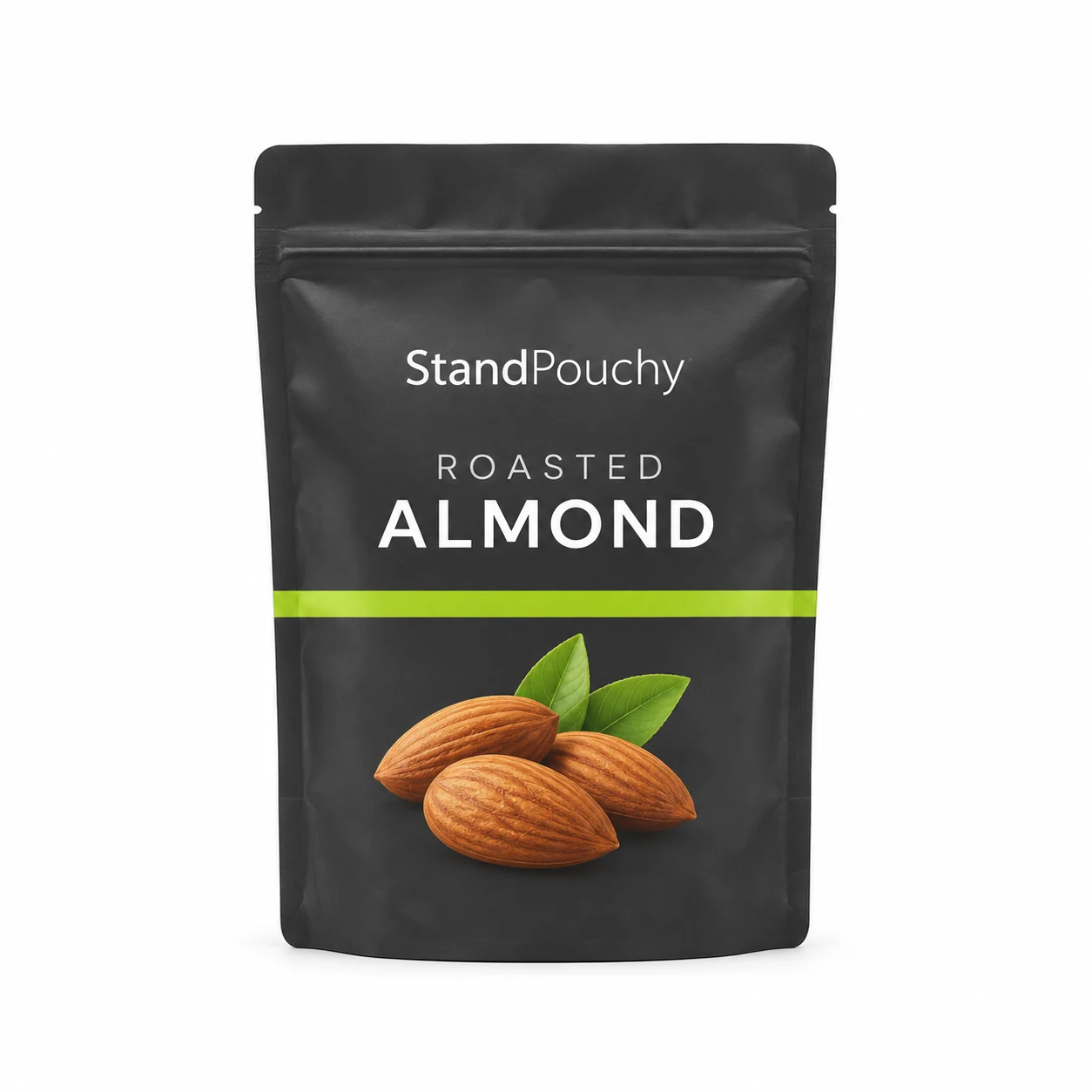
A supplier can send a useful film data sheet that belongs to another construction. We tie the report to the specific option before reading the result.
We record the quote revision, material code and layer construction. Then we ask whether the data came from a raw film, the finished laminate or a converted package.
Match the specimen to the purchasing record
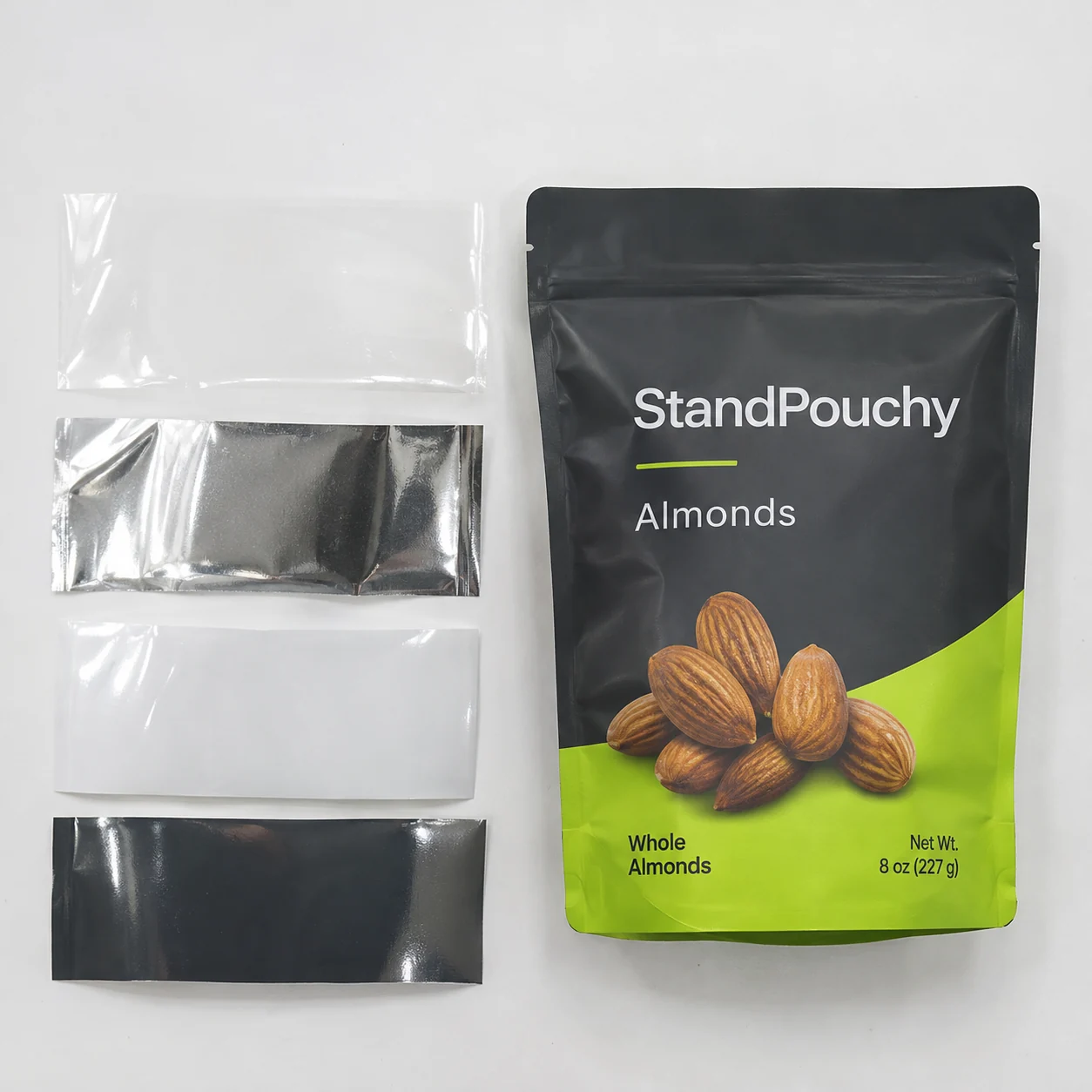
We compare the identified specimen with the bill of materials on the offer. A report on a barrier carrier can answer a different question from a report on the fully laminated material. We record the print carrier, the barrier layer and the food-contact sealant from outside to inside. We ask whether a window, print treatment or material substitution is represented. ASTM D3985 describes oxygen transmission testing through film and sheeting.[1] That scope does not mean a film result covers a pouch with different seams, a window or a closure.
We ask the supplier to mark each attachment with the quoted option it supports. If the document is a family data sheet, we keep it as preliminary evidence and record the exact sample we still need. When the seller proposes a private-label material code, we ask it to give us a revision identifier that can appear on the order even if it does not disclose its upstream source.
We set a review deadline and ask one named owner to close the missing record. A substitution may be commercially useful if it solves availability, but we do not quietly attach the original report to the substitute. We use our material structure guide to record both structures. We ask for the extra cost and timing of a matched report, so the buyer knows what is included before paying for a separate trial.
| Specimen | Typical use in the review |
|---|---|
| Raw film | Screen a proposed layer |
| Finished laminate | Assess the offered film construction |
| Converted pouch | Review the represented pouch features |
02
Can We Put Two Numbers in the Same Column?
Two results can share a label and still describe different tests. We check the conditions and units before deciding which offer is stronger.
We compare oxygen with oxygen and water vapor with water vapor. We line up the method, temperature, humidity, specimen and units. We convert compatible area units only after checking the other fields.
Make an evidence matrix before ranking quotes
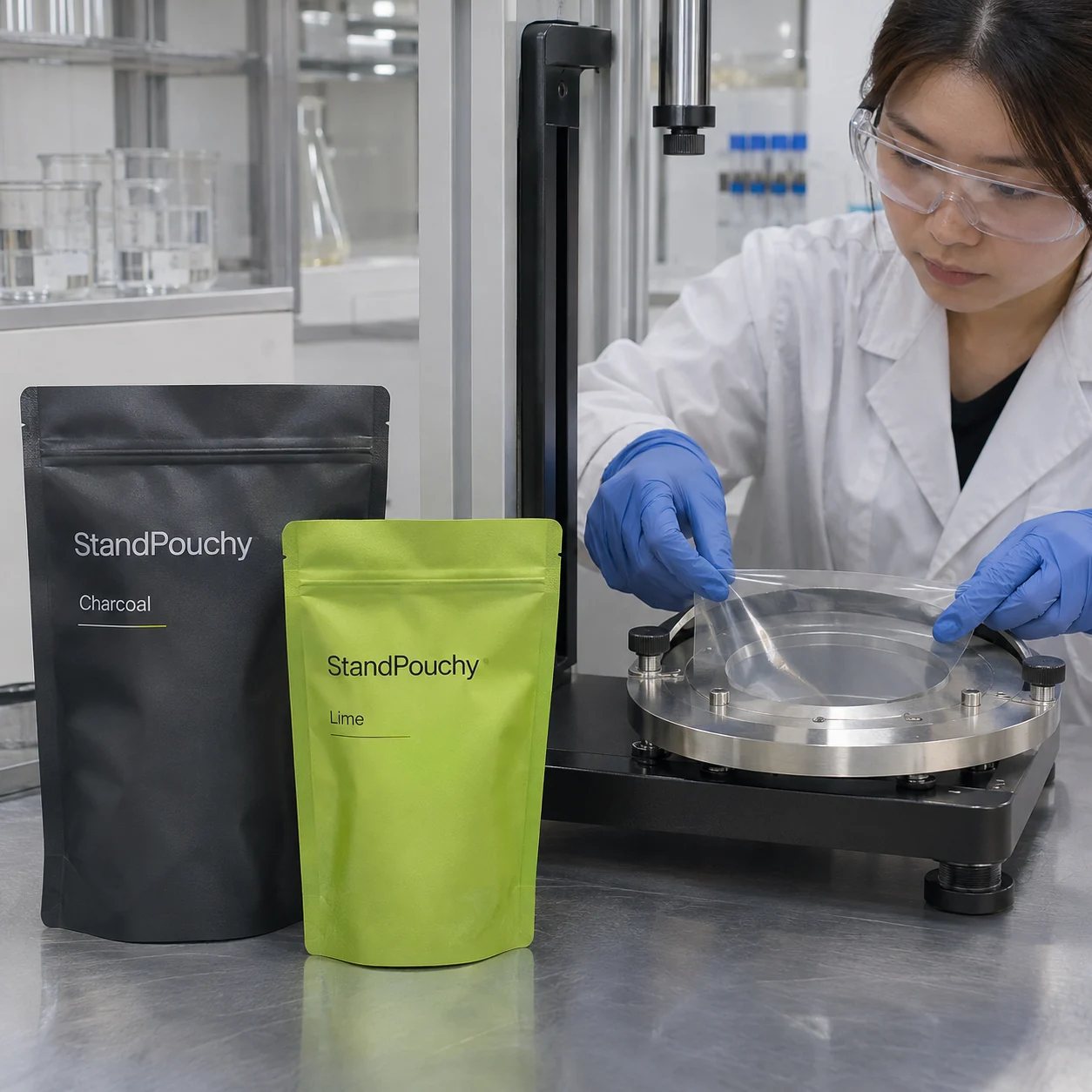
We use one row per specimen and metric. ASTM D3985 and F1927 are separate oxygen transmission methods; F1927 explicitly addresses controlled relative humidity.[1][2] F1249 addresses water vapor transmission through flexible barrier materials.[3] We retain the units and the test environment as printed. An area conversion can reconcile square meters and square inches, but it cannot reconcile different humidity conditions. We preserve less-than symbols and ask for the reporting limit. We also ask whether the number is a typical data-sheet value or a result for the submitted sample.
We ask the lab to explain what a reported limit means for the decision. If both results are below their reporting limits, we do not rank the materials by treating the limits as exact readings. If a result was reported in different units, we keep the original and the conversion in separate fields. We use the OTR and WVTR reference for metric definitions instead of turning the quote table into a universal pass list.
We compare the cost of requesting a retest with the cost of choosing a construction that may be wrong for the program. If the team has already approved one option for an unchanged snack and distribution route, we ask what new decision the extra report would resolve. If we are choosing between two new options, we send the same written request to both suppliers and ask them to flag any condition the lab cannot reproduce.
| Report gap | What we ask for | Purchasing status |
|---|---|---|
| Different material revision | Report for the quoted construction | Screening only |
| Different humidity | Comparable conditions agreed with the lab | Retest if decision depends on it |
| Flat film only | Evidence for the relevant converted feature | Pack approval remains open |
03
When Do We Need Evidence From a Converted Pouch?
A flat specimen can help us screen films. We still need a different check when the purchase depends on seams, windows or an actual pouch.
We ask the lab and packer to separate film transmission, package transmission, seal integrity and product stability. We choose a test for the failure we are trying to rule out.

Move from film screening to the right pack test
We identify every tested package feature, including the permanent top seal and the converter seams. ASTM F1307 addresses oxygen transmission into dry packages under its stated scope.[4] We ask the lab what closure, preparation and test setup represent the sample. AMETEK MOCON illustrates how film and whole-package results use different specimen bases.[5] A result per package and a result per square meter cannot be treated as the same quantity. We also keep the product storage study separate: a transmission result does not measure the filled snack's acceptability over time.
We use a working example. One supplier offers a clear window and another offers a fully opaque pack. If the window is central to merchandising, we ask the buyer what must be visible and the product team what exposure matters. We ask the lab for an evidence plan that isolates that question. If visibility is optional, we compare the cost and timing of a plain structure with the windowed structure before requiring both to go through every test.
We agree which team supplies each specimen and which stage it represents. We decide whether the next order is for converted empty samples, packing trials or production material. We write that decision on our pouch sample approval record and name the packer responsible for the top seal. We reserve full approval until the evidence covers the intended configuration and the product owner has made its separate stability decision.
| Decision | Evidence to request |
|---|---|
| Compare films | Matched transmission reports |
| Assess a converted feature | Representative package specimen |
| Set storage guidance | Filled product stability evidence |
04
What Should the Purchase Order Require Next?
A report filed in email can become detached from the next delivery. We make the approved revision and evidence expectations easy to find.
We attach the approved structure and evidence scope to the order. We agree what the supplier will report by lot, what triggers review and who can authorize a change.

Write the evidence requirement in purchasing language
We record specimen ID, lab report date, method, test conditions, units and the agreed acceptance basis. We keep qualification results separate from routine delivery records. If the supplier offers a certificate, we ask whether it reports measured lot results or attests conformity against a named revision. We ask for food-contact documentation specific to the components and intended conditions of use, following FDA's regulatory status guidance.[6] A barrier result does not establish food-contact status. We retain the selected evidence with the pouch revision and the intended food and use conditions.
We agree whether the next review happens after a change to layer structure, converter location, closure, print treatment or intended use. We distinguish the changes a supplier must notify us about from the ones that require new samples before release. For urgent replenishment, we ask for an approved alternative by name rather than a broad permission to use equivalent material.
We send a short proposal request with the snack, destination, pouch revision, intended use and outstanding evidence fields. We ask the supplier to mark each line as included, available separately or unavailable. The flexible packaging test specification guide helps us state the specimen and method before the price is set. We buy the next useful step with a clear owner and keep any unresolved performance decision open.
| Record | Release question |
|---|---|
| Qualification report | What did the test represent? |
| Lot record | What shipment or sample is covered? |
| Change notice | Does the old evidence still apply? |
Conclusion
We compare matching evidence first. We pay for the test that resolves the buying decision, and we leave unsupported conclusions out of the order.
Notes and sources
- ASTM D3985: oxygen transmission through film and sheeting (cited in article)
- ASTM F1927: oxygen transmission at controlled humidity (cited in article)
- ASTM F1249: water vapor transmission through film and sheeting (cited in article)
- ASTM F1307: oxygen transmission through dry packages (cited in article)
- AMETEK MOCON: flat film and whole-package testing (cited in article)
- FDA: Regulatory status of food contact material components (cited in article)
About the StandPouchy packaging team and editorial responsibility
Reddit links are community insight only. We use official standards and regulator pages for technical context, and we require project evidence for the final pouch decision.