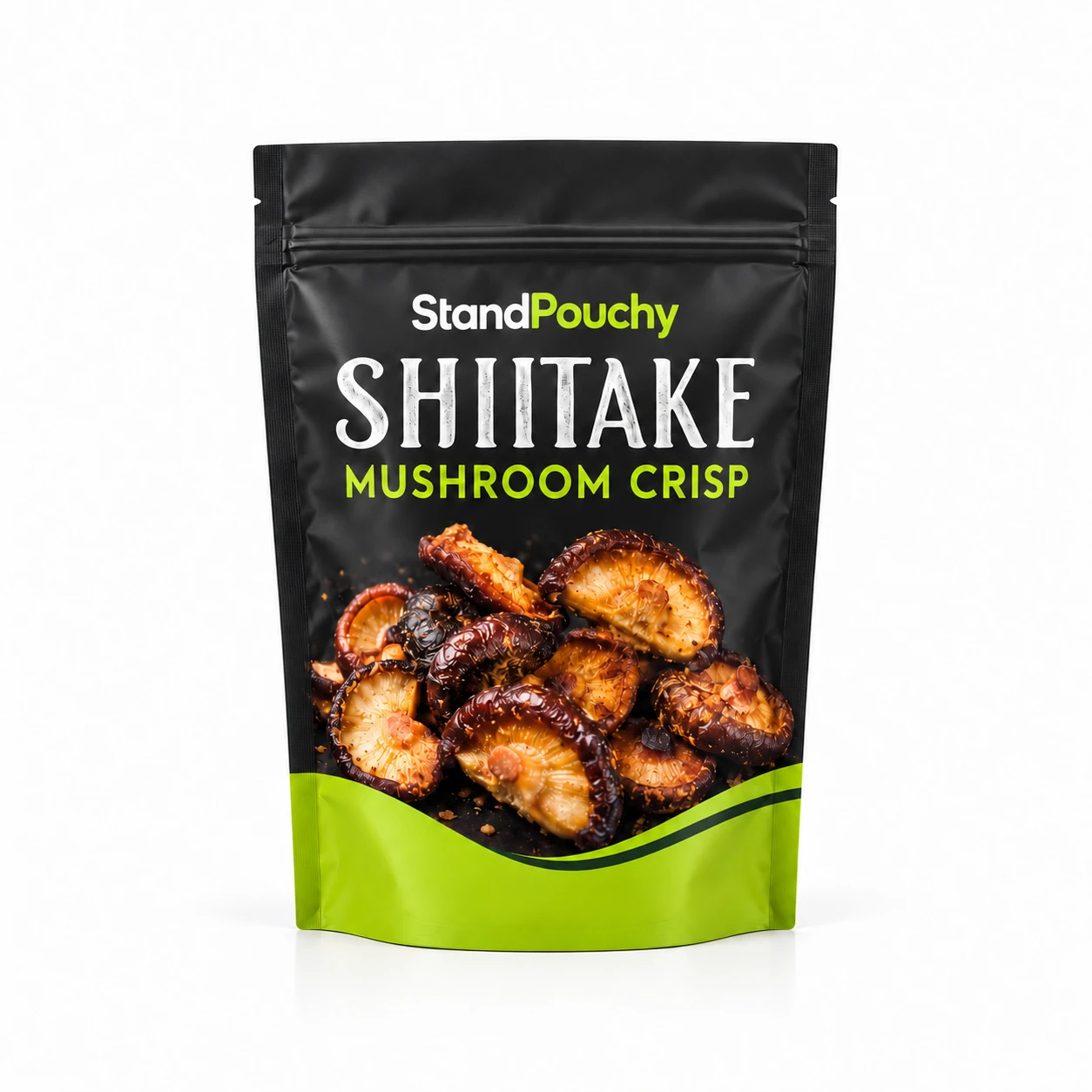
01
Which Mushroom Product Should Our Supplier Actually See?
We can request mushroom packaging and hide the difference between crisp caps and chewy strips. We resolve that confusion before spending on samples.
We send the actual cooked shiitake crisps with normal whole caps, attached stems, cut pieces and crumbs. We record seasoning, packing condition, intended use and product-owner requirements before requesting a pouch proposal.
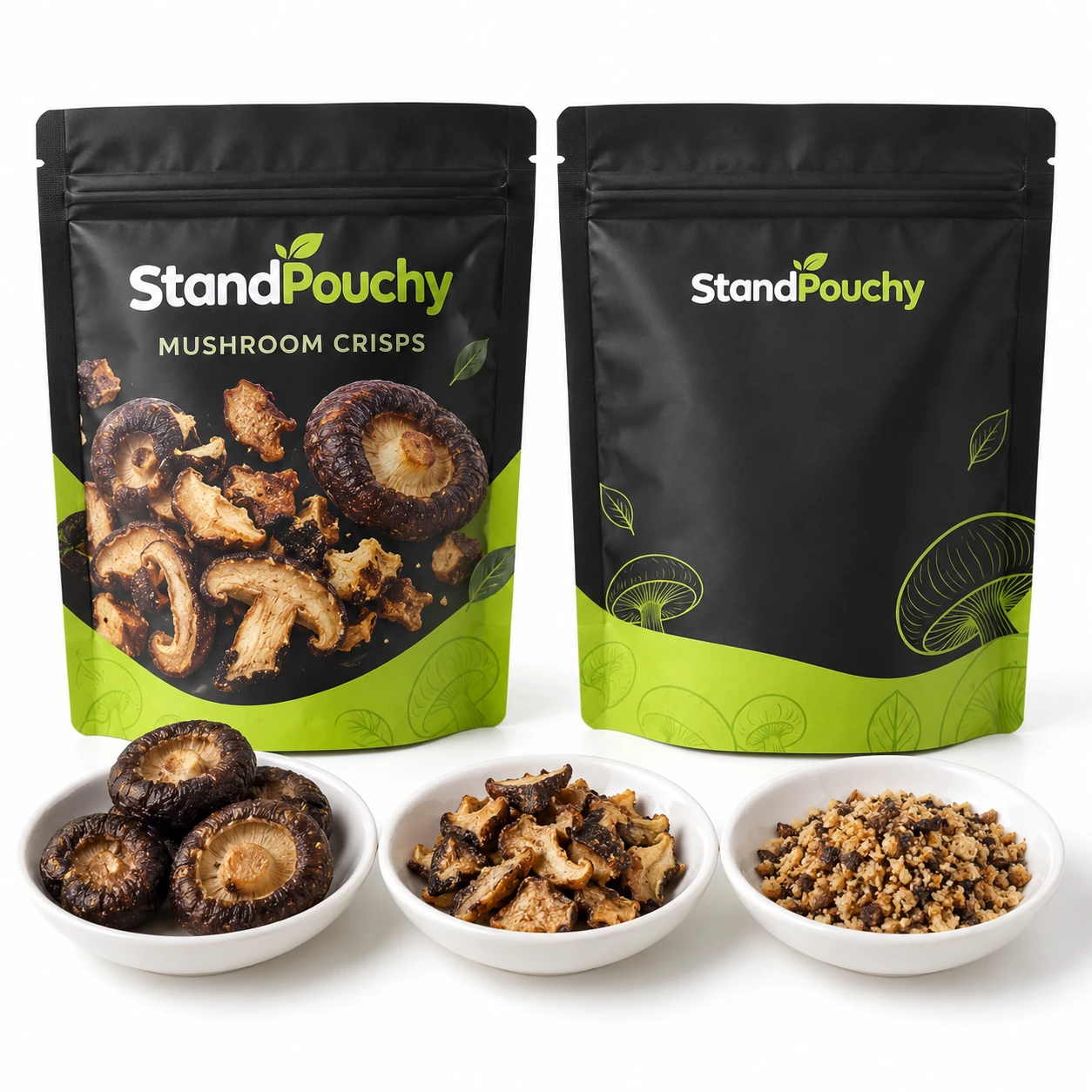
We distinguish the crisp snack from jerky or a cooking ingredient
We retain the actual snack lot and identify what reaches the packing station. We record cap width and depth, attached stem shape, cut pieces and normal fragments. We note whether surface seasoning is loose or adheres to the food. We do not qualify the pack using fresh mushrooms or dried cooking mushrooms that have a different represented condition. A category name is not a complete food reference.
DJ&A lists shiitake crisps and mushroom jerky separately.[5] Its US crisp listing also identifies a formulated snack rather than a raw mushroom.[6] We use those producer pages only to establish the product distinction, without adopting nutrition or process-performance claims. We request food-contact support for the proposed construction and intended use under the FDA component-status framework.[1] The food owner retains product and market approval.
We photograph whole caps, attached stems and fragments beside the food reference. We record the range actually represented and which pieces were used in filling. We keep the packing condition and sample date with those observations. This identifies the physical snack without inventing a universal cap grade or claiming a validated process.
We ask the buyer whether the main promise is intact recognizable caps, a mixed crisp snack or an ingredient for another meal. In a Reddit discussion, users describe eating shiitake crisps as snacks and using them in cooking.[7] We treat those comments as attributed occasions, not evidence that all buyers want the same pack. The selected occasion should drive the sample request.
We ask what product variation the commercial comparison must include. A supplier should not receive hand-picked whole caps while the packer later handles a normal mix of stems and fragments. We use the packaging specification checklist to identify the shared food reference. We request a separate option when the buyer wants a different whole-piece presentation, so the quotation does not conceal a change in product preparation.
We also separate the sampling decision from approval to order printed stock. We ask which empty references are available, what a filled trial will represent and who supplies the food. We request clear exclusions for sorting, recipe work and product studies. Procurement can then compare the proposed pouch development without assuming that the converter has accepted responsibility for producing or grading the mushroom snack.
| Option or input | Buyer question | Approval reference |
|---|---|---|
| Actual mushroom crisp | Which caps and stems are represented? | Shared food lot |
| Product purpose | Whole snack or cooking ingredient? | Buyer use brief |
| Preparation scope | Who controls normal fragments? | Food-owner responsibility |
02
How Do We Choose an Opening for Caps and Stems?
We can choose a narrow opening that catches stems and forces caps through. We compare real access before approving compact dimensions.
We compare usable mouth width, filling clearance, settled height and bottom-gusset depth with representative caps and stems. We observe filling and removal, then review the standing pouch in its intended case.
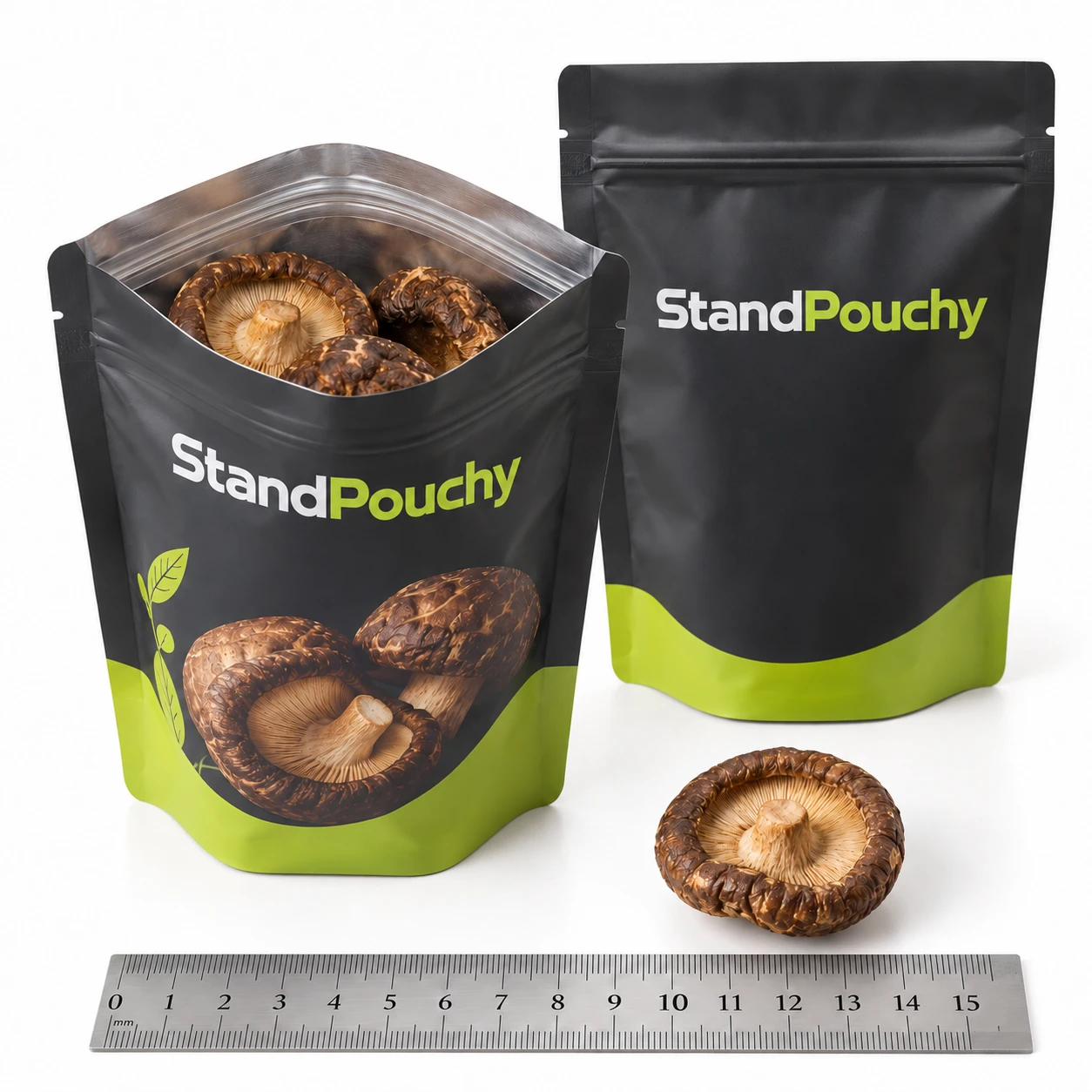
We review three-dimensional pieces rather than a flat cap outline
We present normal pieces to each candidate opening in the intended filling sequence. We observe whether caps bridge, stems catch near the zipper or handling creates new fragments. We record the represented food and trial conditions. We mark the permanent-seal clearance above the settled fill. A hand-filled demonstration can reveal an access issue, but it does not establish the performance of an untested packing line.
We inspect the filled front, base and mouth after settling. We record both cap width and depth because an irregular piece can rotate during entry. We measure the filled package consistently using the relevant GS1 framework for channel records.[4] We keep that record separate from the converter’s flat dimensions. The conventional doypack uses front and back faces, side seals and a bottom gusset, without added side panels.
We observe a cap entering edge-first and face-first when both orientations occur in the intended task. We note contact with the zipper ends and any stem caught near the top margin. We retain the represented sequence and any new fragments separately from pieces already broken before the trial began.
We ask the buyer whether wider access improves the intended presentation enough to justify a different footprint. A larger empty bag can still have a restricted useful mouth. A broad opening can help handling while changing the packed case. We use the pouch size guide to record alternatives, then compare the actual task instead of buying an oversized format as an assumed cure for breakage.
We request observations from the packer and the intended user. We ask how product is removed from a partly emptied pouch when its faces fold inward. We compare whole-piece access with a pouring task when cooking is the selected occasion. We keep the choice specific to this mushroom product rather than borrowing the dimensions from our cracker pouch guide. Similar fill weight does not make those foods geometrically interchangeable.
We ask suppliers to identify the sample stage included in their proposals. An empty size reference, a hand-filled sample and a line trial answer different questions. We ask which changes to cap grade, attached stems or fill weight require another review. The buyer can approve useful access evidence now while leaving a clearly named operating trial pending, without treating one successful demonstration as permission for every future mushroom variation.
| Option or input | Buyer question | Approval reference |
|---|---|---|
| Useful opening | Do stems or caps catch? | Observed filling and removal |
| Settled height | Is the permanent seal clear? | Filled reference |
| Footprint | Does the wider candidate fit the case? | Same packed arrangement |
03
Which Moisture and Seal Records Belong in the Offer?
We can accept a high-barrier label and miss crumbs at the seal. We compare identified records before buying protection that nobody has defined.
We request the actual laminate direction, film-test conditions and filled-seal evidence. We keep moisture transmission, closure observations and the food owner’s quality study separate, then agree which remaining checks each supplier offer includes.
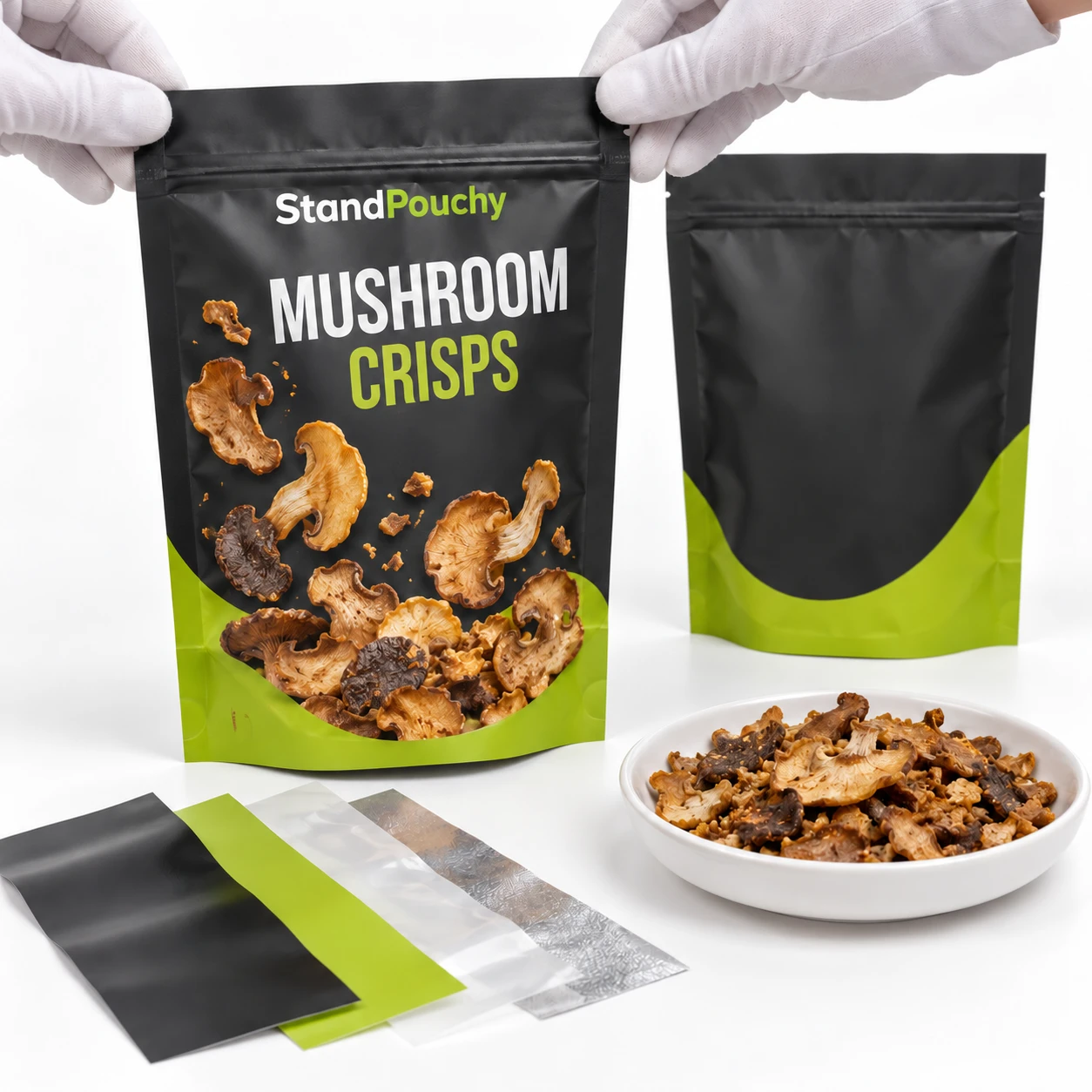
We connect material direction to a defined product question
We ask the food team to define the texture change and storage conditions its study will assess. We request the outside-to-inside construction, for example a PET/VMPET/PE candidate where proposed, with actual layer details and contact-use support. ASTM F1249 addresses water-vapor transmission through film and sheeting.[2] We retain specimen identity, temperature, humidity, method and units rather than comparing numbers taken under unrelated conditions.
We inspect the top area after representative filling for crumbs, seasoning and folds. We record food lot, pouch reference and sealing conditions. ASTM F88 addresses seal-strength measurement for flexible barrier materials.[3] We keep its stated question distinct from leak investigation and from the finished food study. We do not assign a storage duration from a flat-film report, a strong-looking seam or a zipper that closes neatly.
We record the condition of the closure at its corners and center after filling. We retain any crumb deposit and pouch fold before interpreting a separate result. We identify whether the supplied film specimen includes the proposed print and window, keeping its laboratory conditions attached rather than applying an unrelated value.
We ask the supplier what each material alternative is intended to resolve. If the offer changes the window, print or laminate, we ask whether the existing evidence represents that option. We use the barrier-data reading guide to prepare matched questions. Procurement should see the remaining work before comparing quotations, rather than assuming every shiny pouch supplies the same protection.
We ask operations which sample will show normal residue at the mouth. We compare the proposed filling and cleaning steps with the actual snack. We request a named next trial when the sample cannot represent production. Our seal-contamination guide gives context for the discussion; it does not transfer approval from another food or another machine. The included responsibilities belong in the buying record.
We ask whether reclosure serves a real repeat-use occasion. We observe grip, access and alignment with pieces present and ask the food team what opened-pack evidence it still needs. We avoid promising that a zipper preserves crispness for a fixed period. We compare the sample work, construction and unresolved quality decisions together, without inventing a universal barrier threshold, food-safety limit or saving to make the offer seem complete.
| Option or input | Buyer question | Approval reference |
|---|---|---|
| Film data | Does the specimen match the printed pouch? | Method and conditions |
| Filled seal | Were normal crumbs represented? | Packer sample record |
| Food quality | Who approves the actual endpoint? | Food-owner study |
04
How Do We Approve the Packed Case Before Ordering?
We can approve an upright pouch and miss pressure against stems inside a carton. We review the full arrangement before committing printed stock.
We compare filled pouches in the intended case with the represented cap range, unit count and orientation. We match accepted samples, artwork, operating records and delivery responsibilities to one quotation before releasing supply.
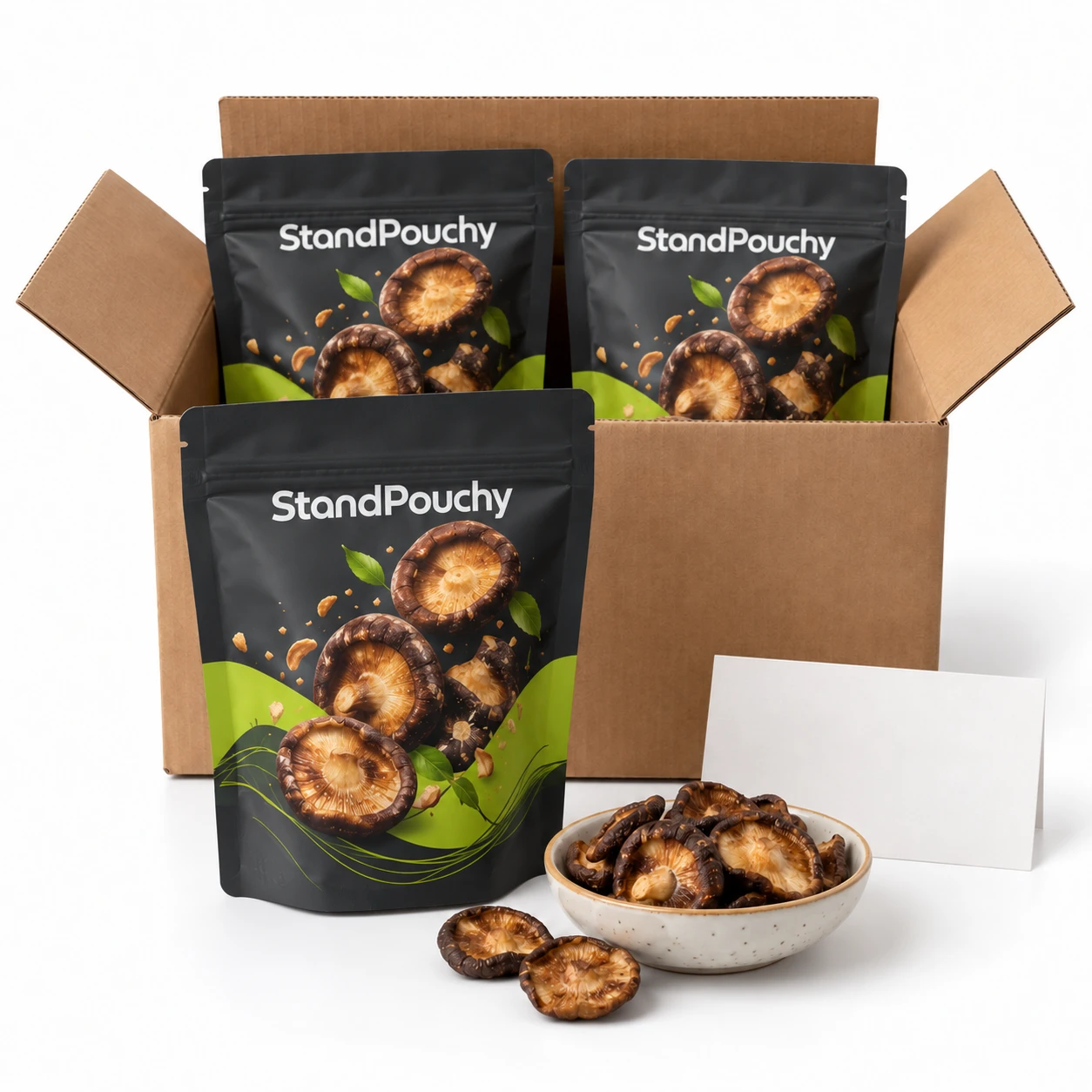
We keep whole-piece presentation attached to the delivered arrangement
We retain the proposed case dimensions, unit count, orientation and any support used. We photograph food and pouch condition before and after the agreed handling. We distinguish fragments already present from new ones observed later. We inspect contact at the faces, base and closure without assigning an invented transport-test result. One tidy carton image cannot qualify every route or every cap grade.
We keep the printed pouch, product lot and case configuration tied to the same record. We check functional-zone clearance, accepted dimensions and the represented material reference. We identify changes between a hand-made sample and the proposed order. We preserve the exact conditions of any handling trial alongside the observation method and acceptance owner. A visual presentation decision does not replace food-contact or product-quality evidence.
We inspect where caps and stems sit against the pouch faces when neighboring units are packed beside them. We record folds, visible abrasion and food fragments separately. We retain an unhandled reference when included in the trial plan, so later observations can be compared with the represented starting condition.
We ask the buyer how the delivered pack must look when opened by a retailer or customer. We compare the sales image with the actual proportion of whole caps and fragments accepted by the food owner. We review the arrangement with the packer for practical loading. The retail and ecommerce guide helps frame the channel task without calling any pouch universally ecommerce-ready.
We request a quotation that states quantities per artwork, accepted construction, sample stages, proofing, packing arrangement and delivery basis. We ask which food, line or handling studies are excluded and who will retain a reference for the reorder. We do not invent a breakage percentage, case saving or price. The useful commercial comparison is the work and represented conditions each supplier is actually committing to provide.
We finish with the sample approval guide and a shiitake crisp pouch inquiry. We include the real caps and stems, fill, route, accepted access task and open decisions. We ask for a named next sample or document rather than a generic best material. We release when the accepted presentation, case arrangement and supplier responsibilities agree, while retaining earlier evidence if a remaining issue needs another trial.
| Option or input | Buyer question | Approval reference |
|---|---|---|
| Case arrangement | What touches caps and stems? | Represented count and orientation |
| Presented food | Does the sales image match the accepted mix? | Brand and food-owner decision |
| Order scope | Which trial and packing work is included? | Matched quotation |
Conclusion
We buy whole shiitake crisp pouches from actual caps, stems and fragments. We approve access, evidence and the packed case before releasing matched supplier scope.
Notes and sources
- FDA: Food-contact component regulatory status (cited in article)
- ASTM F1249-25: Film water-vapor transmission scope (cited in article)
- ASTM F88/F88M-21: Flexible barrier seal strength scope (cited in article)
- GS1: Package and product measurement standard (cited in article)
- DJ&A: Shiitake crisps and mushroom jerky product distinctions (cited in article)
- DJ&A USA: Shiitake mushroom crisp product and ingredients (cited in article)
- Reddit community insight: Using shiitake crisps as snacks or cooking ingredients (cited in article)
About the StandPouchy packaging team and editorial responsibility
Reddit links are community insight only. We use official standards and regulator pages for technical context, and we require project evidence for the final pouch decision.