01
What Information Must Work First?
Too many equal messages make the pouch hard to understand in a fast shelf glance and an even smaller search thumbnail.
We rank the brand, product type, flavor, key differentiator, and net contents before we decorate the pouch. Required information keeps its own controlled space.
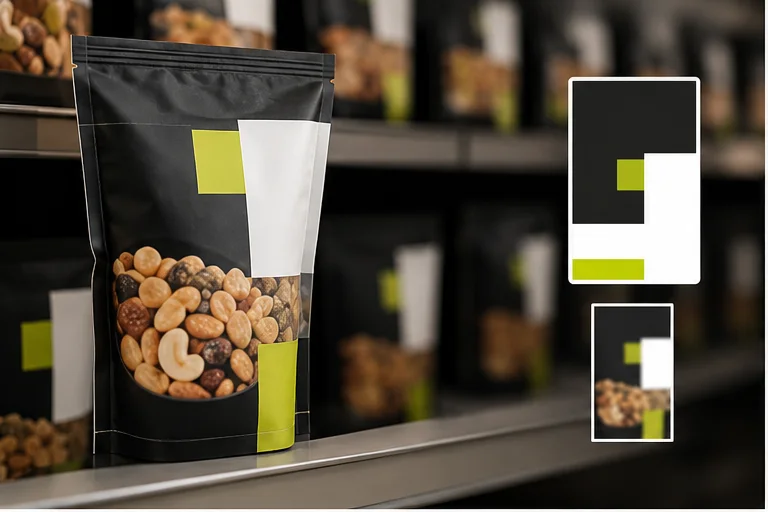
We build a reading order before a style
We write the five-second question first: what is this snack, which flavor is it, and why should the intended buyer care? We arrange the front panel so those answers appear in a clear order. We do not give every benefit the same weight. A crowded list may be readable on a large design screen but disappear on a filled pouch and a mobile thumbnail.
We test the design at several sizes. We view the flat artwork, a filled printed or accurate prototype, a shelf photo, and a small online image. We check whether the zipper, gusset, and product settling bend the main words. We also compare flavors side by side. The system needs enough consistency for brand recognition and enough difference to prevent a picking error.
We reserve controlled areas for market-specific required copy. The responsible brand and regulatory team must approve the actual statements. We do not invent nutrition, ingredient, allergen, environmental, certification, or performance claims. We keep the technical layout aligned with the custom pouch dieline guide so the design team works around real seals, folds, and features. This simple hierarchy makes later print and channel tests much easier.
| Information layer | Our question | Test view |
|---|---|---|
| Primary identity | Can we identify product and flavor quickly? | Shelf distance and thumbnail |
| Supporting message | Does it add one clear reason to consider? | Filled front panel |
| Required information | Is approved copy readable and complete? | Final artwork review |
02
How Do We Protect Barcode and Print Quality?
Flexible film bends, stretches, wrinkles, and seals, so a perfect barcode in the artwork file may not scan on the final pack.
We place the barcode on a stable area, protect quiet zones and contrast, match its orientation to print needs, and verify it on filled production-representative pouches.
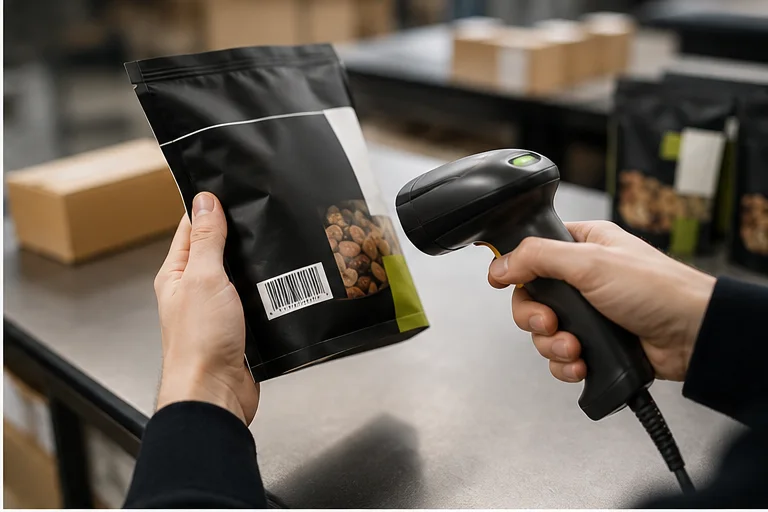
We verify the converted pack, not the PDF
We ask where the item will be scanned. Retail point of sale, warehouse handling, and internal production can have different needs. GS1 states that barcode type, size, placement, and quality depend on the scanning environment.[1] We use the applicable GS1 requirements and retailer specifications rather than copy a code from another pouch.
We keep the symbol away from seals, folds, zipper distortion, and strongly curved areas when practical. We protect its quiet zones and contrast. We review print direction with the converter because the printing process can affect barcode orientation and gain. We do not reduce the code to fill leftover artwork space.
We verify samples after filling because the pouch shape changes the reading surface. We test normal product settling and reasonable handling. We also inspect small text, reverse print, fine lines, and color differences near gussets and seals. If a matte or tactile finish is used, we check whether it changes legibility or scan performance. We record the final location and verification result with the pouch sample approval guide. This creates evidence that the approved artwork and the approved physical pack are the same revision.
| Print control | Risk on a pouch | Our verification |
|---|---|---|
| Barcode placement | Fold, curve, or seal distortion | Scan filled representative units |
| Contrast and quiet zones | Artwork reduces readable separation | Formal symbol verification |
| Fine copy and lines | Print gain or pouch wrinkles | Converted sample inspection |
03
How Does Ecommerce Change the Package Review?
Online shoppers see a few images, while the shipped pouch faces compression, rubbing, temperature swings, and mixed-item cases.
We test the pouch as both a digital product page and a shipped unit. Images must explain the pack honestly, and secondary packaging must carry distribution loads.
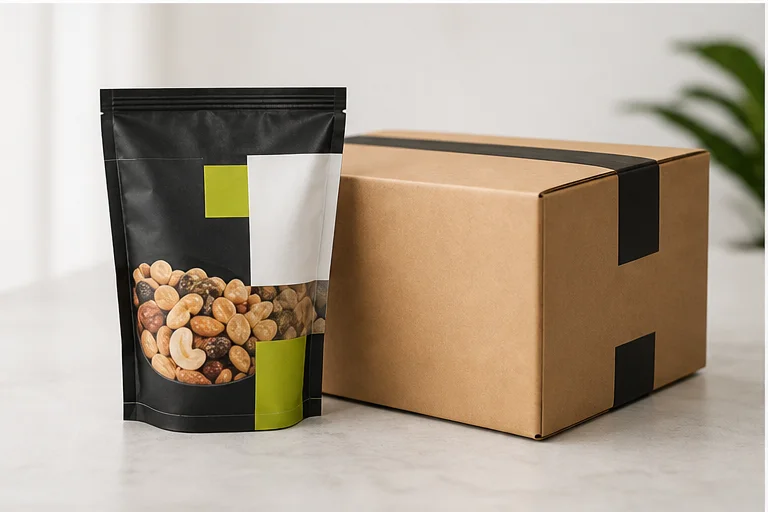
We connect the digital promise to the delivered pack
We create a basic image set from the approved filled pouch. The main image shows the front clearly. Supporting images can show the back, zipper, gusset, product view, dimensions, and a use scene when they are accurate. We do not stretch the pouch shape or exaggerate fill. We keep claims consistent with the printed pack and product evidence. The online page should help the buyer understand what will arrive.
We then pack the product into its real ecommerce system. The pouch may ship in a carton, mailer, or mixed order. We check compression, puncture, seal stress, zipper deformation, abrasion, and product breakage. We also check empty volume because a large headspace can increase movement or shipping volume. The solution may belong in the secondary pack rather than a heavier primary pouch.
We compare the delivered pouch with the online images. If windows scratch, matte films scuff, or the product settles far below the hero image, the digital presentation may set the wrong expectation. We connect these findings to the flexible packaging specification checklist so ecommerce handling, image requirements, and the pouch construction are part of the same brief.
| Ecommerce element | What we check | Evidence |
|---|---|---|
| Product images | Accurate shape, features, and scale | Approved filled sample photography |
| Primary pouch | Seal, zipper, scuff, and puncture behavior | Packed handling review |
| Secondary pack | Compression and movement control | Representative shipping configuration |
04
How Do We Approve One Design for Both Channels?
Separate retail and ecommerce teams can approve conflicting artwork, photography, case packs, and claims unless one owner controls the release.
We use one revision-controlled approval that covers artwork, filled appearance, barcode, shelf fixture, ecommerce images, shipping configuration, opening, and technical specification.
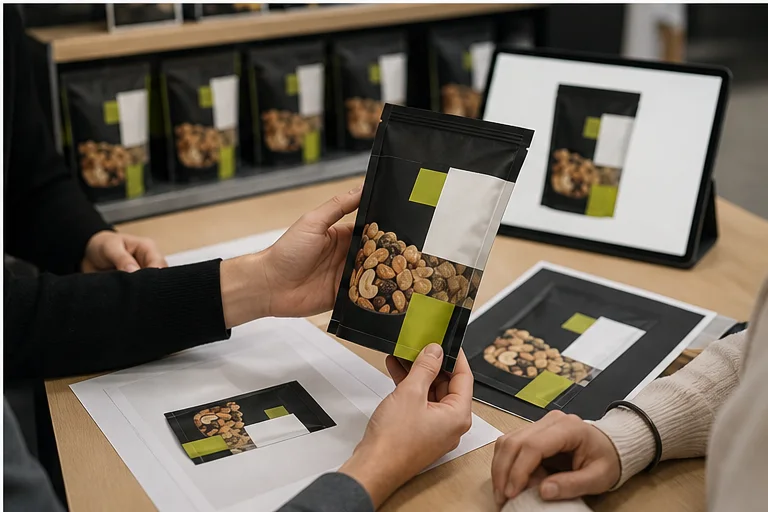
We make every approval point to the same sample
We create a release checklist with named owners. The brand owner approves hierarchy and identity. The regulatory owner approves required copy and supported claims. The packaging owner approves dimensions, material direction, features, and tests. The operations owner approves filling and sealing. The sales or channel owner approves shelf and ecommerce presentation. Each approval references the same artwork revision and physical sample.
We include channel evidence. For retail, we use the intended shelf fixture, tray, and viewing distance. For ecommerce, we use the approved image set and shipping configuration. We verify the barcode on filled units. We test first opening and reclosure when the pouch includes a zipper. We confirm that the shipping case does not create a pouch shape that conflicts with the product page.
We keep unresolved points visible. A pending shelf-life result, unverified claim, or untested mailer does not become approved because the artwork deadline arrives. We record the condition and owner. The pouch sample approval guide gives us a common structure for this record. When every required item is complete, we release one controlled package specification that both channels can use without creating silent variations.
| Approval owner | Decision | Shared reference |
|---|---|---|
| Brand and regulatory | Hierarchy, copy, and claims | Final artwork revision |
| Packaging and operations | Structure, size, fill, and seals | Approved physical sample |
| Retail and ecommerce | Display, images, and distribution | Channel test record |
Conclusion
We design one evidence-backed snack pouch for both channels, then we release the artwork, physical sample, barcode, images, and shipping system as one revision.
Sources and further reading
- GS1: Ten Steps to Barcode a Product (cited in article)
- GS1 Package and Product Measurement Standard (further reading)
- FDA: Food Packaging and Other Food-Contact Substances (further reading)
Reddit links are community insight only. We use official standards and regulator pages for technical context, and we require project evidence for the final pouch decision.