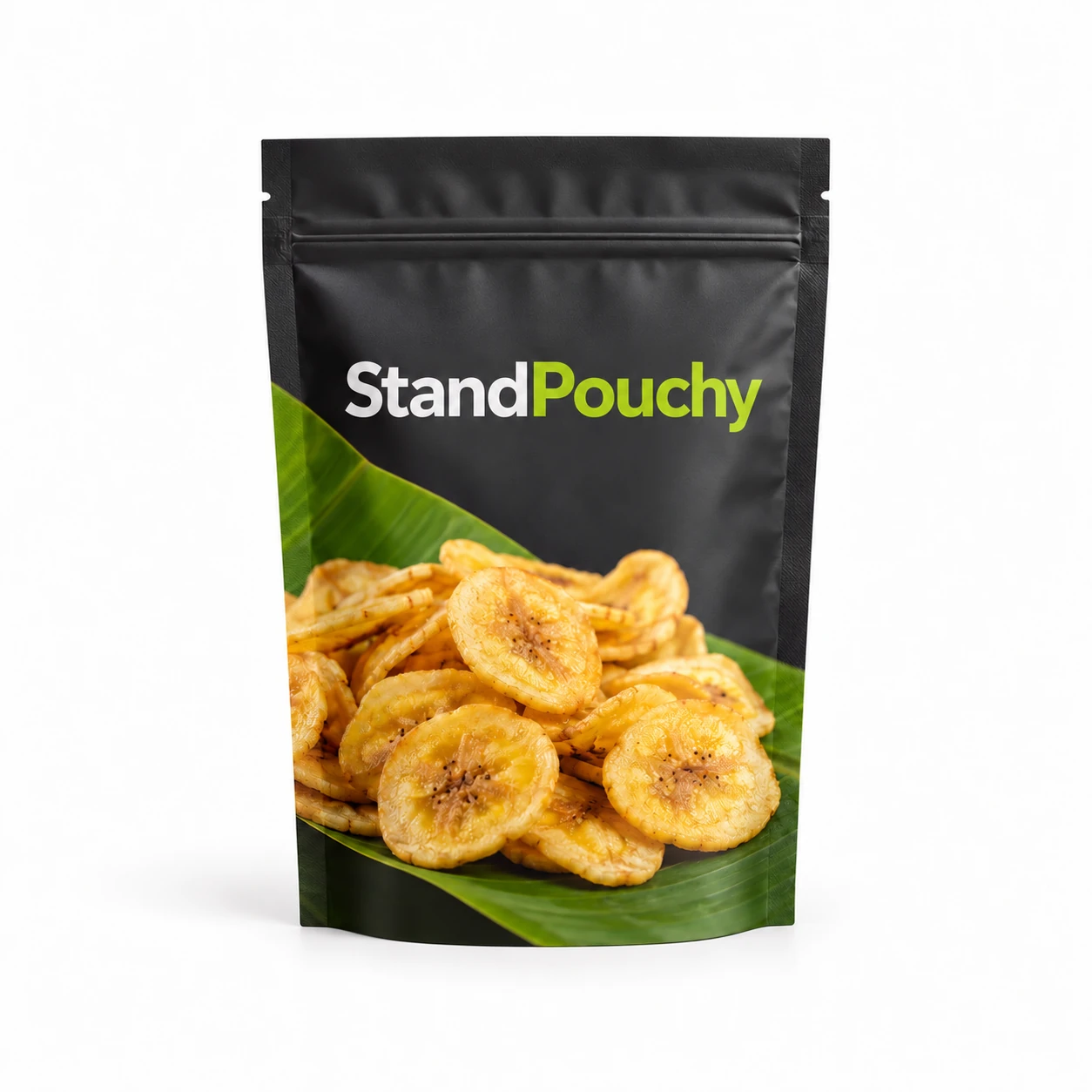
01
Which Product Records Should We Share Before Sampling?
We can blame the bag before identifying the product change. That sends suppliers toward unrelated upgrades, so we record the actual failure question first.
We share representative fried slices, oil and coating information, fill target, cooling and packing process, storage conditions, and the quality endpoint defined by the food owner. We keep these inputs separate from proposed films.
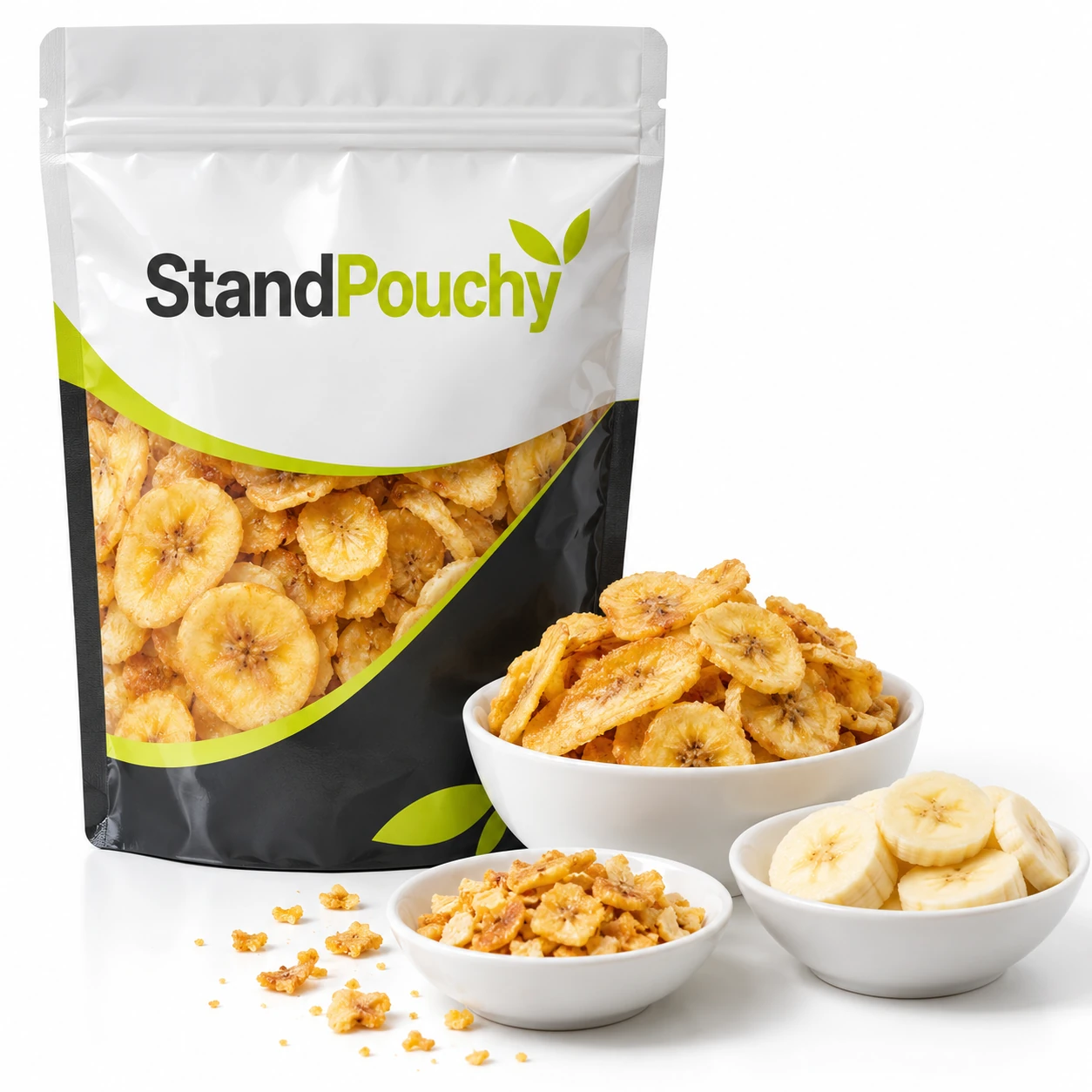
We make the food and package responsibilities visible
We examine representative product rather than a selected photograph. We record slice shape, surface condition, fines, loose fill and settled fill. We ask the food owner which change needs investigation and how it will be measured. We keep product lot, packing date and storage condition with retained samples. We do not prescribe frying oils, antioxidants or food-safety limits from a packaging brief. FDA describes food-contact substances as materials used in packaging and related applications, evaluated for their intended use.[1] That supports a separate construction-document review; it does not establish the quality of the fried food. We keep the food team's assessment beside the pouch assessment so neither is silently substituted for the other.
We label the retained product and pouch samples separately. We record whether the pouch was hand filled or run through the intended equipment. We keep the sampling date, product state and storage exposure visible. This prevents a later comparison from attributing a product-lot difference to the film without an investigation.
We ask the buyer what evidence would make a purchasing decision easier. A local refill pack may need a different presentation from a retail trial size or an ecommerce replenishment unit. We compare the intended selling occasion before adding a window or zipper. We ask whether the shopper should see the slices or whether an approved product photograph gives a clearer view. We also ask which party will provide representative food for sampling. An empty pouch can start a conversation, but it cannot show the actual fill or product condition.
In a Reddit foodscience thread, a small banana-chip seller asks whether a developing oil smell is a packaging or product issue.[6] We use that attributed question to explain the responsibility gap, not to diagnose the seller's food or repeat commenters' remedies. We issue the packaging specification checklist with the known facts and the unanswered questions. Every supplier receives the same brief. We request a sample that closes one named decision rather than ordering whichever bag is advertised as the freshest. We keep the next step specific: collect product records, compare candidates or agree a qualified study.
| Brief field | Evidence to share | Buyer decision |
|---|---|---|
| Actual product | Representative slices and fragments | Comparable sampling input |
| Quality question | Food-owner endpoint and conditions | Who owns the investigation |
| Sales occasion | Retail, repeat use or ecommerce | Which features have a purpose |
02
Which Film Data Helps Us Compare the Offers?
We can pay for a shiny film name without learning its conditions. That makes quotes misleading, so we compare the identified construction and data together.
We compare outside-to-inside layer identity, intended-use support, and relevant oxygen and moisture transmission data under recorded conditions. We treat film results as inputs to the finished-product study, not as a storage-life promise.
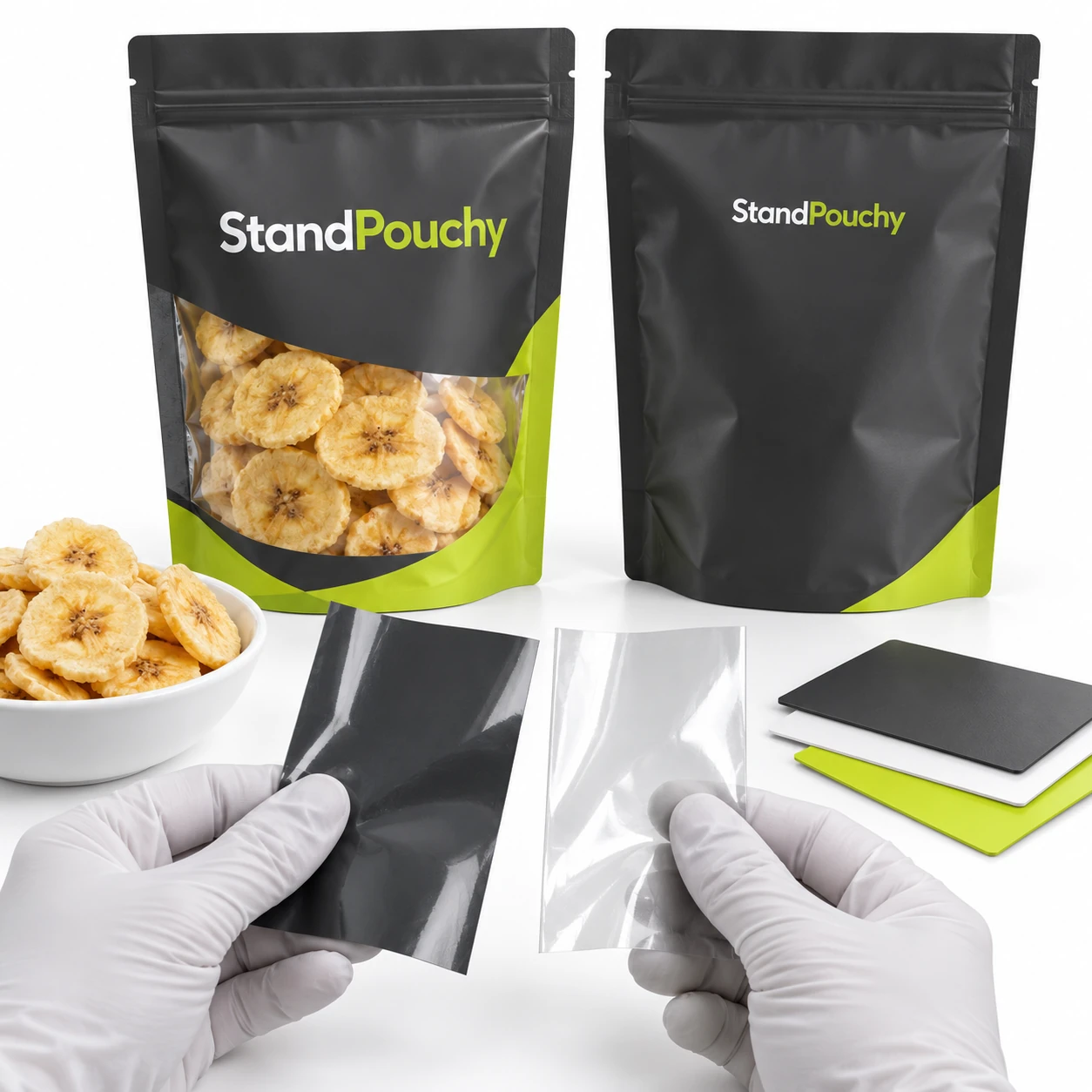
We keep oxygen and moisture comparisons distinct
We ask the converter to identify the print-side layer, proposed barrier layer and food-contact sealing layer. A PET / VMPET / PE direction may enter a comparison, but we keep it conditional on the product and conversion review. ASTM D3985 measures oxygen transmission through film and related materials.[2] ASTM F1249 provides a water-vapor transmission method.[3] We retain the specimen, method, units, temperature and humidity information supplied with each report. We check whether a number represents the actual laminate or a different reference. We also record windows, folds and seals in the final construction. Those details stop us from ranking unlike flat-film values as if they were finished-pouch storage results.
We check whether the stated data represent printed and laminated material or an earlier film state. We identify the proposed window area separately if it changes the construction. We retain folds and seal layout on the sample drawing. We then compare the converted pouch under the agreed product-study conditions.
We ask what each proposed upgrade buys the project. Does the supplier identify the unresolved question, or simply offer a thicker pouch? Does an opaque option serve the product evidence and presentation brief? Does a window offer enough useful visibility to justify another review? We compare a small set of controlled alternatives. We keep the same fill, artwork assumptions and sample stage across them. The barrier test-data guide gives procurement a way to ask for conditions without pretending to set a universal transmission target.
We also compare the document scope. FDA's component-status guidance ties regulatory support to the individual substances and intended conditions of use.[4] We ask for traceable support for the proposed construction and market. We do not accept a general badge as approval for every recipe or storage condition. We record which documents are available and which still need review. This makes the quotation clearer: one offer may include evidence collection while another leaves it to the buyer. We ask the supplier to state that difference before price comparison. We do not publish a savings percentage or assume that the most opaque or heaviest option is commercially best.
| Comparison | Record to request | Purchasing boundary |
|---|---|---|
| Oxygen and moisture | Separate methods and conditions | No automatic shelf-life ranking |
| Construction | Exact layer direction and specimen | No appearance-based approval |
| Food contact | Components and intended-use support | No blanket certificate claim |
03
How Do We Compare Filling and Reclosure Options?
We can choose a compact pouch that leaves crumbs in its closure. That creates avoidable rework, so we trial the fill before approving features.
We fill conventional pouch candidates with real chips, observe settling and fragments, and keep a separate permanent seal above any zipper. We add reclosure only for a defined repeat-use occasion.
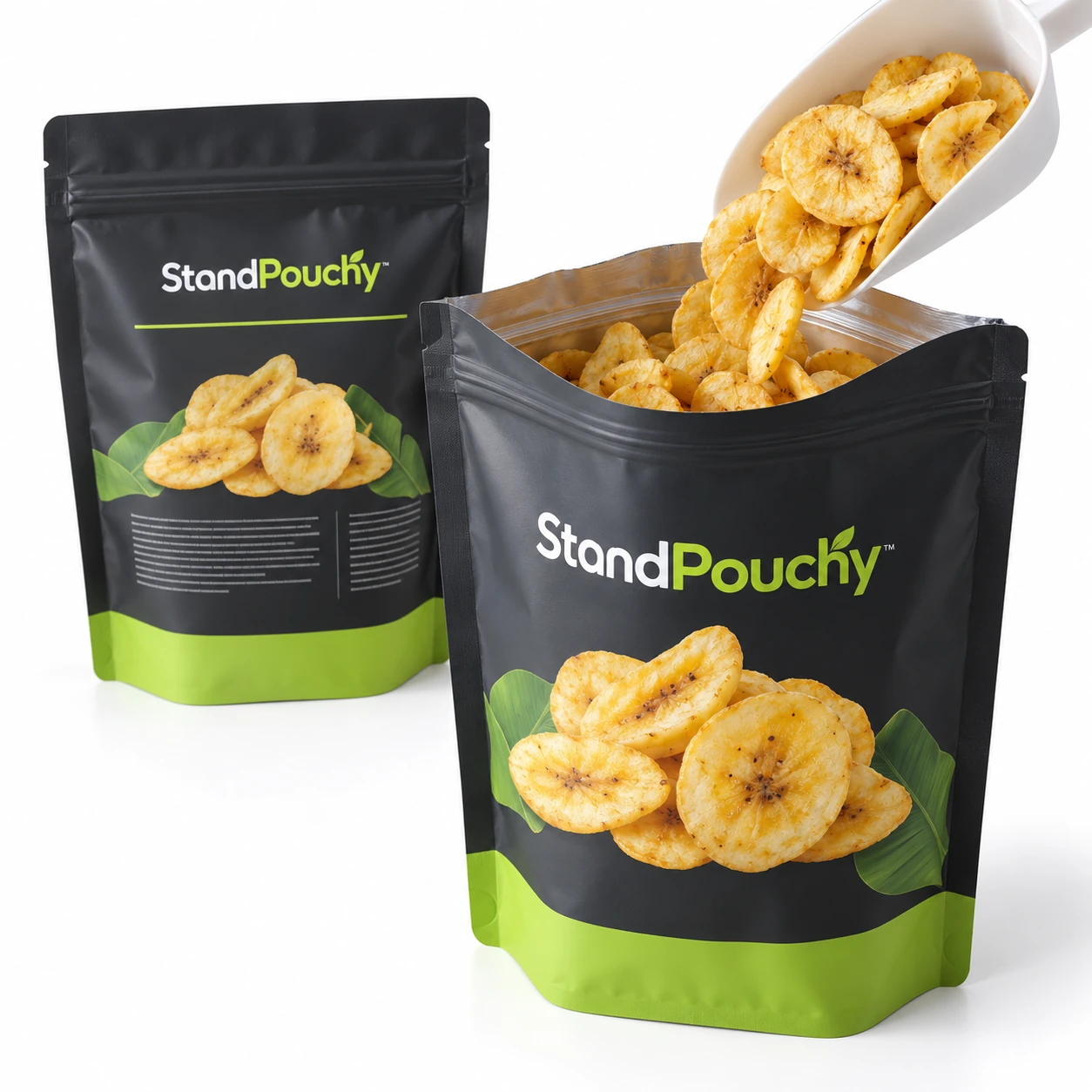
We review the top space as part of the process
We observe how representative slices enter the mouth and rest on the bottom gusset. We distinguish the overall pouch height from the usable area below the closure. We inspect product movement, crumbs near the zipper and access to the permanent seal. We record the intended fill and sealing sequence, including any gas process already specified by the food owner. We do not invent a flush setting from the way the pouch looks. ASTM F88/F88M measures seal strength and supports process-control questions.[5] We agree the sample and acceptance basis with the responsible team. We keep leak investigation, product storage and distribution review separate from that strength result, with each method and owner recorded.
We inspect both ends and the center of the permanent closure after representative filling. We record wrinkles and visible residue rather than cleaning every trial unit into an ideal sample. We retain the actual settings and pouch lot. We repeat the affected observations when usable top space or sealing sequence changes.
We show the buyer several filled candidates. A tighter unit may look compact but be awkward to fill. A roomier unit may improve access while changing shelf appearance or case arrangement. We compare these visible trade-offs using the same product lot. The stand-up pouch size guide helps prepare planning dimensions. The converter still supplies the approved production drawing. We ask operations to identify which candidate is practical before the brand spends time polishing its artwork.
We choose the opening from the actual consumption plan. A small pack eaten at once may need only a clear first-opening path. A sharing pack may justify a zipper, provided people can grip, align and close it with the remaining chips present. We request finished samples rather than a loose zipper strip. We also ask which change would require another fill review: a larger slice, a different seasoning, a lower zipper or a changed laminate. This creates a useful supplier conversation instead of a long feature checklist. We keep feature costs tied to defined work and request the comparison in the quotation. We make no universal opening-force, cycle-count or breakage claim.
| Option | Filled observation | Buyer trade-off |
|---|---|---|
| Compact geometry | Access and usable seal space | Small unit versus operating room |
| Zipper | Grip and repeated alignment | Repeat-use value versus extra feature |
| Permanent closure | Residue and defined seal evidence | Process review before print approval |
04
What Must a Banana-Chip Pouch Quote Include?
We can approve a sample while procurement receives a different scope. That hides launch risk, so we connect each quote to the same controlled reference.
We compare quotes using one product brief, construction, filled dimensions, features, artwork revision, sample plan, packing route and exclusions. We name the owner of any remaining product or package evidence before ordering.
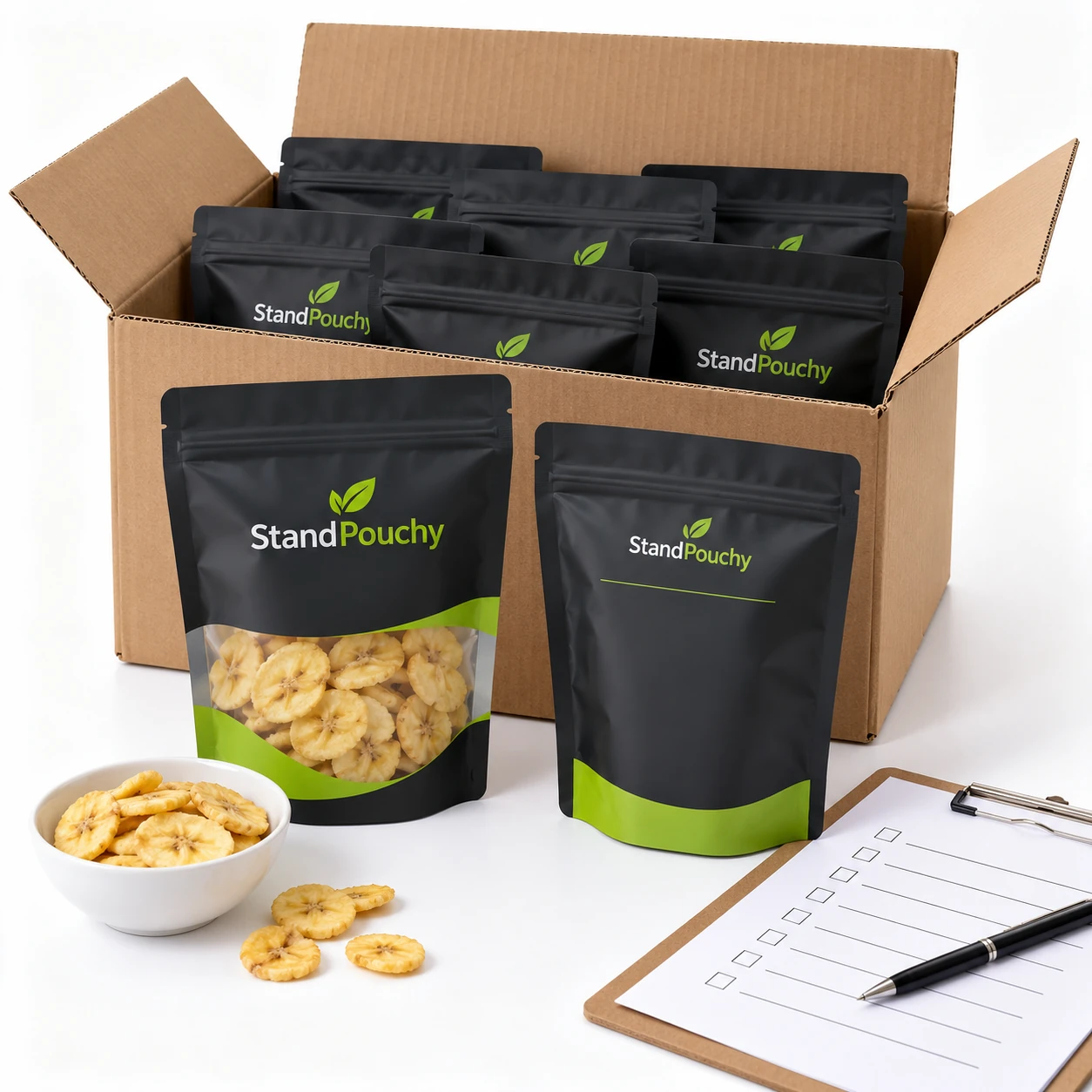
We buy the work needed to reach a release decision
We retain the tested product lot, laminate identity, pouch revision and sealing conditions together. We inspect filled front and back appearance, standing posture, side seals and bottom fold after the planned handling. We check whether fragments move into the opening and whether the case arrangement alters the unit. We record each observation under its actual conditions rather than treating a clean photograph as proof. We keep the food owner's quality study and any package testing clearly identified. If product, fill, laminate or operating settings change, we reopen the affected check. The final record states what the sample represents and which conditions remain outside its approval. That makes repeat orders traceable without inventing a universal performance result.
We photograph the filled unit before and after the agreed case review. We record where any new abrasion, crease or product fragment appears. We also retain unhandled references when the plan calls for them. This helps the team distinguish a new handling effect from a condition already present at filling.
We send the same comparison sheet to the suppliers. We include quantity per artwork, print route to review, sample stage, conversion scope, carton arrangement, destination and delivery terms to confirm. We ask whether setup, proofing and any requested trial work are included. We also ask what the buyer and packer must provide. A low headline price is not directly comparable when another offer includes more approval work. We make those differences visible without inventing prices, capacity or lead times.
We use the pouch sample approval guide to record decisions by brand, food owner, operations and procurement. The buyer accepts the presentation. Operations accepts the fill and closure evidence. The food owner retains responsibility for product limits. Procurement confirms that the chosen offer references the same scope and revision. We then prepare a snack pouch inquiry with the actual fried slices, target fill, intended market and remaining questions. We request a defined sample or document review as the next action. We keep pending evidence visible rather than calling an attractive reference ready for every route.
| Quote item | Common reference | Decision to close |
|---|---|---|
| Pouch and artwork | One approved revision | Matched supplier scope |
| Sample and trial | Included work and exclusions | Clear responsibility |
| Packing and route | Actual case and destination | Evidence before release |
Conclusion
We buy banana-chip pouches from matched product, film, filled-pack and quote evidence. We approve one revision and keep the food owner’s quality responsibilities clear.
Notes and sources
- FDA: Food packaging and food-contact substances (cited in article)
- ASTM D3985-24: Oxygen transmission through film (cited in article)
- ASTM F1249: Water-vapor transmission through film (cited in article)
- FDA: Regulatory status of food-contact components (cited in article)
- ASTM F88/F88M-23: Seal strength (cited in article)
- Reddit community insight: A banana-chip seller asks about oil smell and packaging (cited in article)
Reddit links are community insight only. We use official standards and regulator pages for technical context, and we require project evidence for the final pouch decision.