01
What Changes When a Snack Has a Chocolate Coating?
We can reuse a nut-pouch brief and miss the coating. That leaves avoidable questions unanswered, so we record the complete snack before comparing options.
We describe the coating, center, surface condition, product size, target fill, handling plan, and destination. We ask the food owner which quality risks and storage limits apply to the actual recipe.
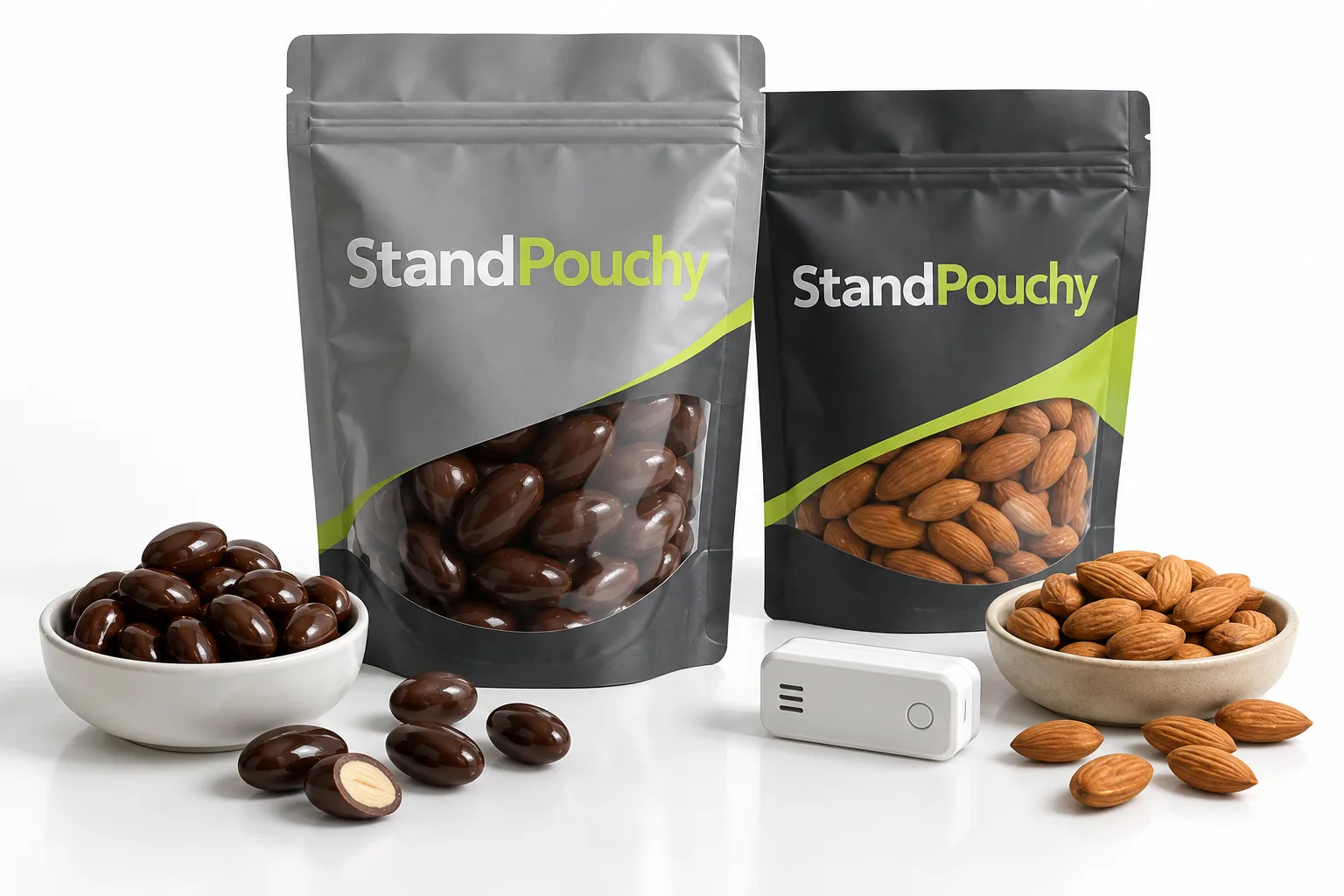
We brief the coating and center as one product
We examine representative pieces and record the coating condition, exposed center, loose fragments, and appearance after normal settling. We ask the food owner to define acceptable product condition rather than deciding it from a packaging photograph. Callebaut's own chocolate-storage guidance explains why stable conditions, odor exposure, and condensation deserve attention.[1] We use that guidance for context, not as a universal temperature specification for every coated snack. FDA food-contact guidance also requires support for the actual components and intended use.[2] We therefore request construction documents that match the food and contact conditions instead of accepting a generic compliance badge.
We first decide how the buyer wants to sell the snack. A gift-oriented small pack may value clean presentation. A pantry pack may need repeat access. An ecommerce unit needs a delivery plan that goes beyond its front image. We compare the commercial job before choosing a finish or window. We ask whether showing the product improves recognition, and whether the same view will remain honest after handling. We do not copy a clear window from a plain-nut pack just because the centers look similar.
We make the supplier brief specific enough to challenge assumptions. We include representative product, fill target, recipe owner's storage guidance, channel, artwork stage, and unresolved questions. The snack material structure guide helps us ask for an outside-to-inside construction direction. We ask what each proposed sample can demonstrate and what remains untested. We keep a sample budget tied to decisions rather than ordering every attractive finish. We do not claim a universal coating failure rate, guaranteed appearance, production lead time, or shelf life.
| Product input | Question we ask | Buyer use |
|---|---|---|
| Coating and center | Which quality limits apply? | Comparable product brief |
| Visible surface | What changes after handling? | Honest window and photography choice |
| Storage guidance | Who owns the product limit? | Separate route approval |
02
Which Film Evidence Helps Us Compare Pouch Options?
We can pay for a film name without learning what it proves. That weakens the buying decision, so we request traceable data and samples.
We compare complete construction directions, intended-use documents, relevant barrier conditions, and filled seal evidence. We keep light, moisture, oxygen, and temperature questions separate rather than treating opacity as proof.
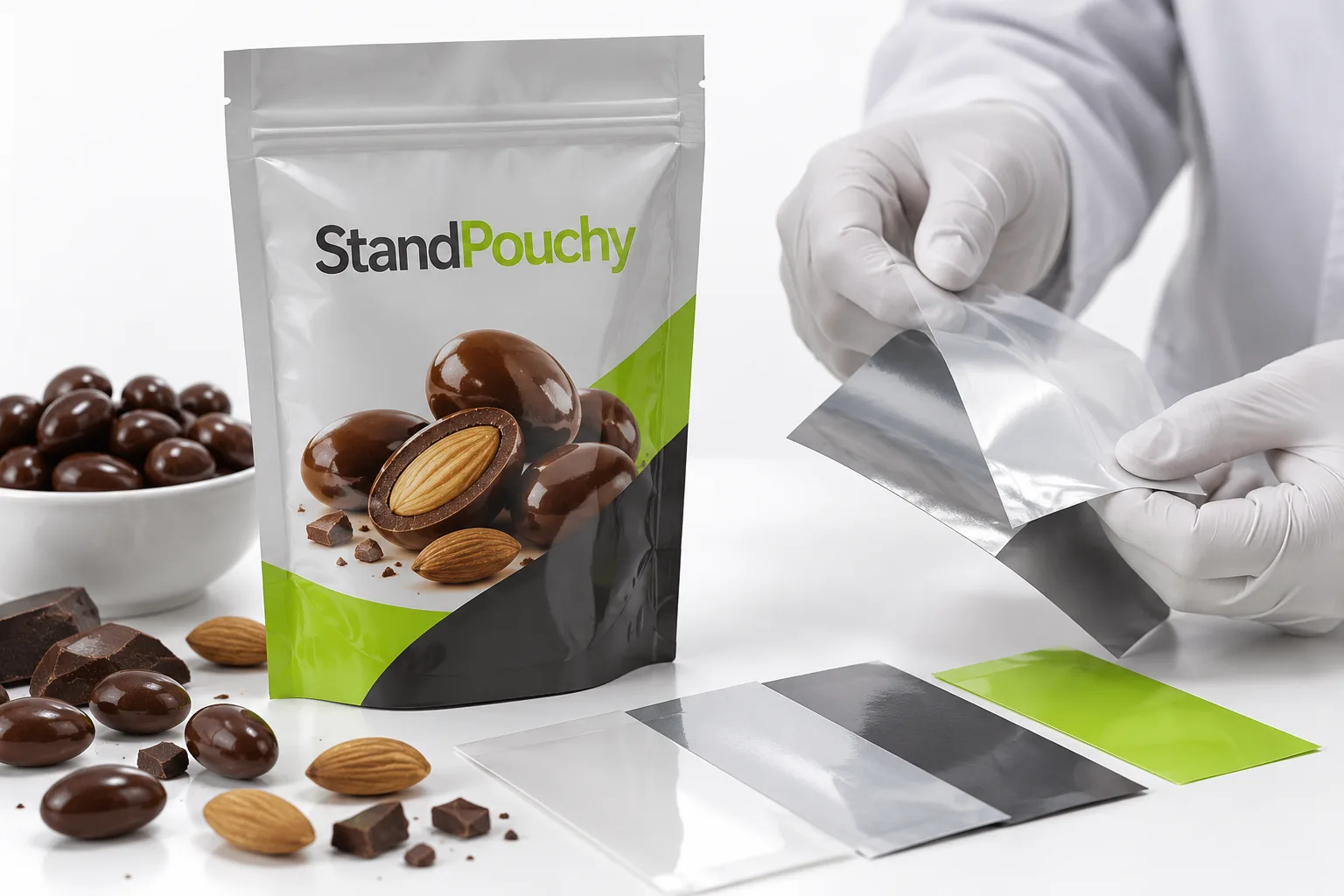
We ask what each material layer is meant to do
We ask the converter to identify the outer print surface, any proposed barrier layer, and the food-contact sealing layer. We treat polyester-based or other outside layers, metallized or foil directions, and sealant choices as candidates that require project confirmation, not approved recipes. ASTM F1249 provides a film water-vapor transmission method.[3] We retain its test conditions and specimen identity with any quoted result. We also request the basis of oxygen-related data where relevant. We do not compare values from unlike conditions as if they ranked finished pouches. An opaque face tells us about the view, not the complete barrier performance or temperature history.
We give the buyer two clear comparison questions. Does the option address a named product risk? Does the evidence represent the proposed pouch? If a supplier proposes a window, we ask how that area changes the construction and presentation review. If a supplier proposes a different finish, we ask whether it changes artwork legibility or the needed sample stage. Our barrier-data reading guide helps keep reported conditions visible. We prefer a documented trade-off to a broad claim that the most expensive-looking option is best.
We request the same evidence scope from competing suppliers. A quote with identified construction and a trial plan is not directly comparable to a quote that lists only high barrier. We record document review, physical samples, printing assumptions, packing, and exclusions. We ask the product owner which quality study remains necessary. This lets procurement identify the work still needed before an order rather than pretending the material selection closes every risk. We hold unsupported environmental, certification, preservation, and cost-saving claims outside the artwork and the purchasing decision.
| Offer element | Evidence to compare | Claim we avoid |
|---|---|---|
| Construction direction | Identified layers and use support | Universal recipe approval |
| Barrier data | Method, specimen, and conditions | Finished shelf-life guarantee |
| Window or finish | Final construction and printed sample | Appearance proves protection |
03
How Do We Separate Pouch Protection from Delivery Temperature?
We can approve a pouch and still ship through unqualified heat exposure. That threatens the snack, so we review the complete delivery system separately.
We treat the pouch as one part of a product-specific route. We qualify storage, dispatch, secondary packaging, exposure conditions, and receipt checks with the food owner instead of assigning a universal cooling recipe.
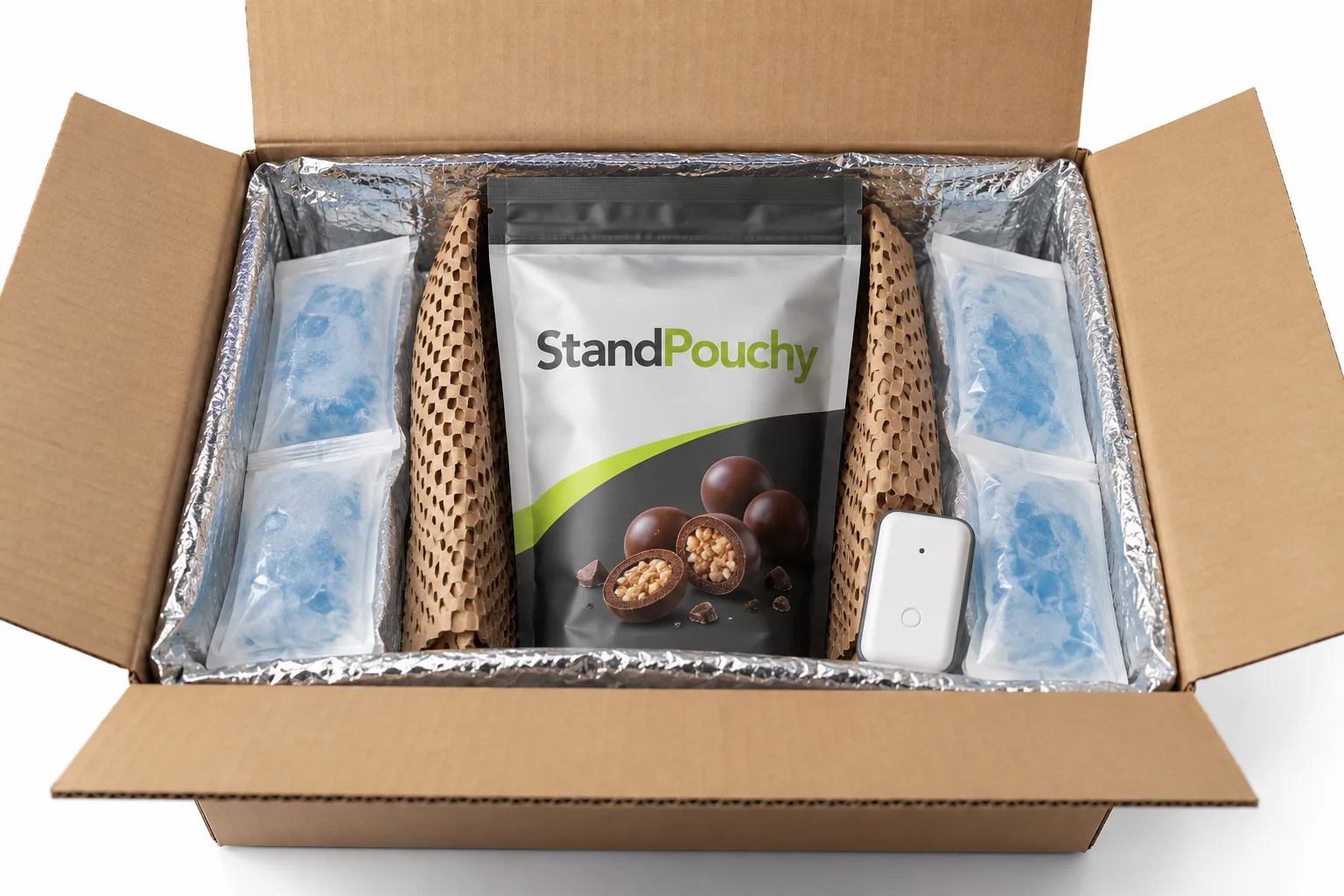
We compare delivery scope before making a parcel promise
We retain a separate temperature plan because film barrier data does not characterize the parcel's thermal history. We ask the product owner to define relevant product limits and the study needed to evaluate them. We record the carton, any proposed insulation or coolant, placement, dispatch condition, monitoring approach, and receipt criteria. Callebaut's guidance on stable chocolate storage and condensation provides useful context.[1] It does not qualify our parcel configuration. We do not publish a fixed cooling duration, recommended coolant quantity, or safe shipping temperature for all coated snacks. We also inspect pouch and product condition after the agreed exposure.
We start the commercial comparison with the actual route. Local delivery, a retail distribution case, and a mixed ecommerce parcel are different buying scopes. We ask which party supplies the secondary pack and which party owns dispatch decisions when conditions change. In a Reddit chocolate-business thread, a small business asks about summer shipping, insulation, and expense.[6] We attribute that as a genuine purchasing concern. We do not reuse commenters' durations, costs, or methods as technical recommendations, and we do not claim their experience predicts another brand's result.
We ask for controlled alternatives. One may involve a different dispatch arrangement; another may include a secondary-pack trial. We request the same product and evaluation conditions so the buyer can see what each proposal includes. We keep the pouch quote distinct from delivery-system costs without inventing figures. Our retail and ecommerce pouch guide helps connect the public product image to what is actually delivered. If route evidence is incomplete, we say exactly what is pending. We do not let a launch deadline turn a lined carton or a gel pack photograph into a performance guarantee.
| Route question | Owner to identify | Purchase implication |
|---|---|---|
| Product exposure limits | Food and quality owner | Qualification criteria |
| Secondary pack and dispatch | Fulfilment and distribution team | Included scope and conditions |
| Receipt condition | Channel or buyer | Evidence before delivery claims |
04
What Should We Approve Before Ordering Printed Pouches?
We can sign artwork while filling, appearance, and delivery refer to different samples. That creates launch risk, so we release one connected approval record.
We approve the construction, filled seal zone, opening, artwork, barcode, case arrangement, and unresolved route evidence on one revision. We ask each supplier to match that record in the quote.
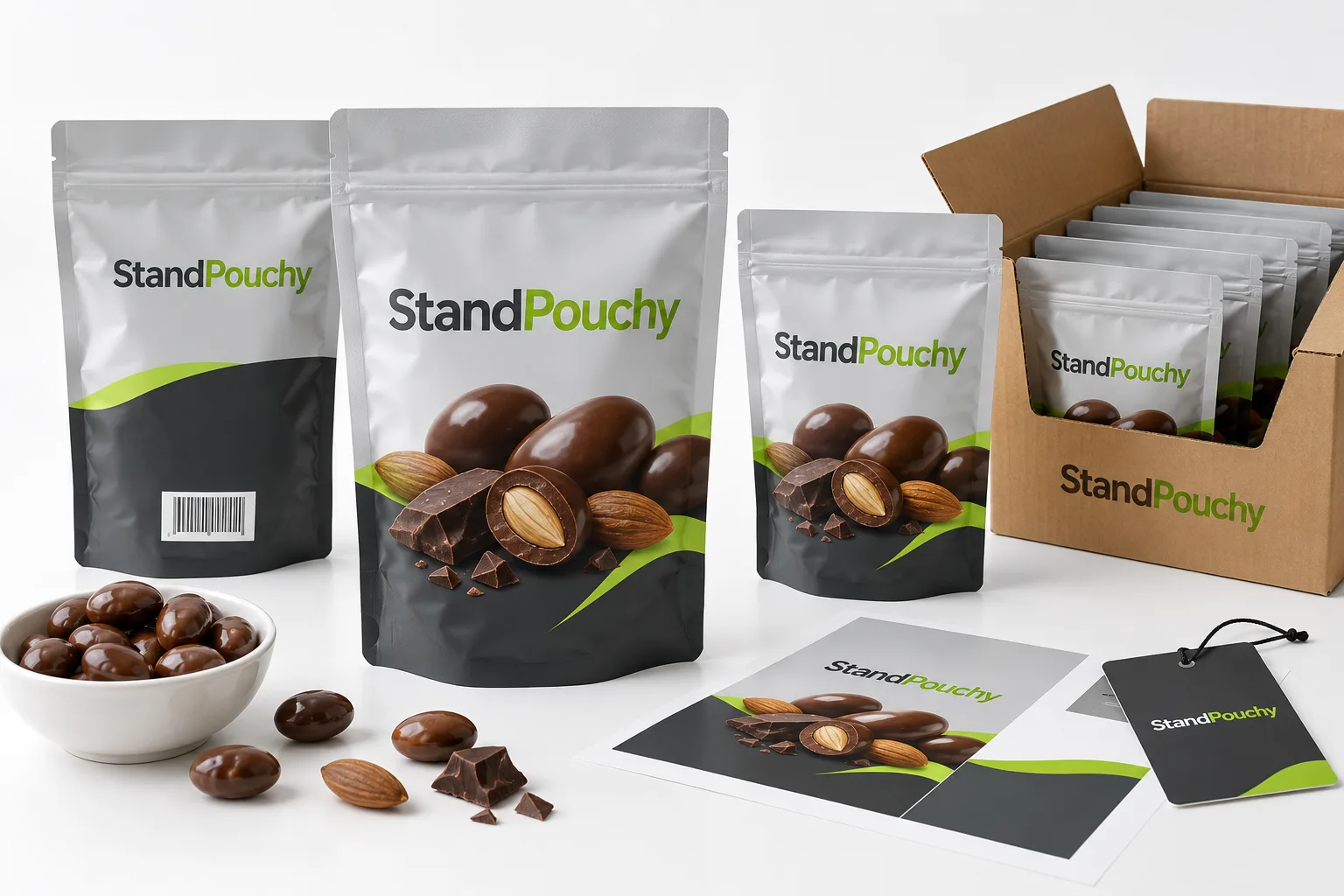
We make procurement and operations review the same sample
We trial the real snack in the proposed conventional pouch. We observe loose fragments and any product residue near the permanent seal. We keep usable top clearance separate from the zipper and tear path. ASTM F88/F88M supports defined seal-strength measurement for process validation and control.[4] We agree the method and acceptance basis rather than assigning a universal force. We also verify the converted, filled barcode against its actual scanning needs. GS1 explains that barcode choices and production requirements depend on the scan environment.[5] We do not treat a clear-looking mockup symbol as verified or extend a seal result into thermal protection.
We compare the approved unit with its commercial uses. The buyer reviews the product identity and coating description. Sales reviews a realistic shelf and online presentation. Operations reviews access and filling. Procurement checks whether the quoted construction, dimensions, features, and sampling work match the chosen revision. We ask which artwork changes trigger a new sample and which costs remain excluded. We do not publish a printing price or claim that one process is always economical. The decision depends on the actual quantity, artwork range, supplier scope, and required approval work.
We use the pouch sample approval guide to record accepted items and open conditions. We keep product-quality evidence and delivery qualification with their responsible owners. A revised coating, fill, film, artwork, co-packer, or route reopens the affected question. Once the brief is coherent, we prepare a snack pouch inquiry with representative product, destination, fill, features, artwork status, and the planned sales route. We ask for matched proposals and a defined next trial. We do not describe a sample as ready for every climate, market, or storage period.
| Release item | Reference we keep | Commercial decision |
|---|---|---|
| Filled closure | Trial and agreed seal evidence | Operation can review the actual pack |
| Artwork and barcode | Controlled printed revision | Channel presentation and scanning |
| Quote and route | Scope, exclusions, and open evidence | No hidden approval responsibilities |
Conclusion
We buy coated-snack pouches from product-specific construction, filled-pack, and route evidence. We keep delivery qualification separate and release one clearly scoped purchasing revision.
Notes and sources
- Callebaut: How to store chocolate (cited in article)
- FDA: Regulatory status of food-contact material components (cited in article)
- ASTM F1249: Water vapor transmission through plastic film (cited in article)
- ASTM F88/F88M-23: Seal strength of flexible barrier materials (cited in article)
- GS1: Ten steps to barcode your product (cited in article)
- Reddit community insight: Chocolate business summer-shipping questions (cited in article)
Reddit links are community insight only. We use official standards and regulator pages for technical context, and we require project evidence for the final pouch decision.