01
Which Information Will We Apply During Production?
We can call every changing mark an expiry date. That creates confusion, so we define each field and its owner before artwork approval.
We list lot identifiers, the agreed date wording and any other variable fields separately. We ask the food owner and destination-market reviewer to approve content, then confirm what the packer will print.
We separate product identity from batch identity
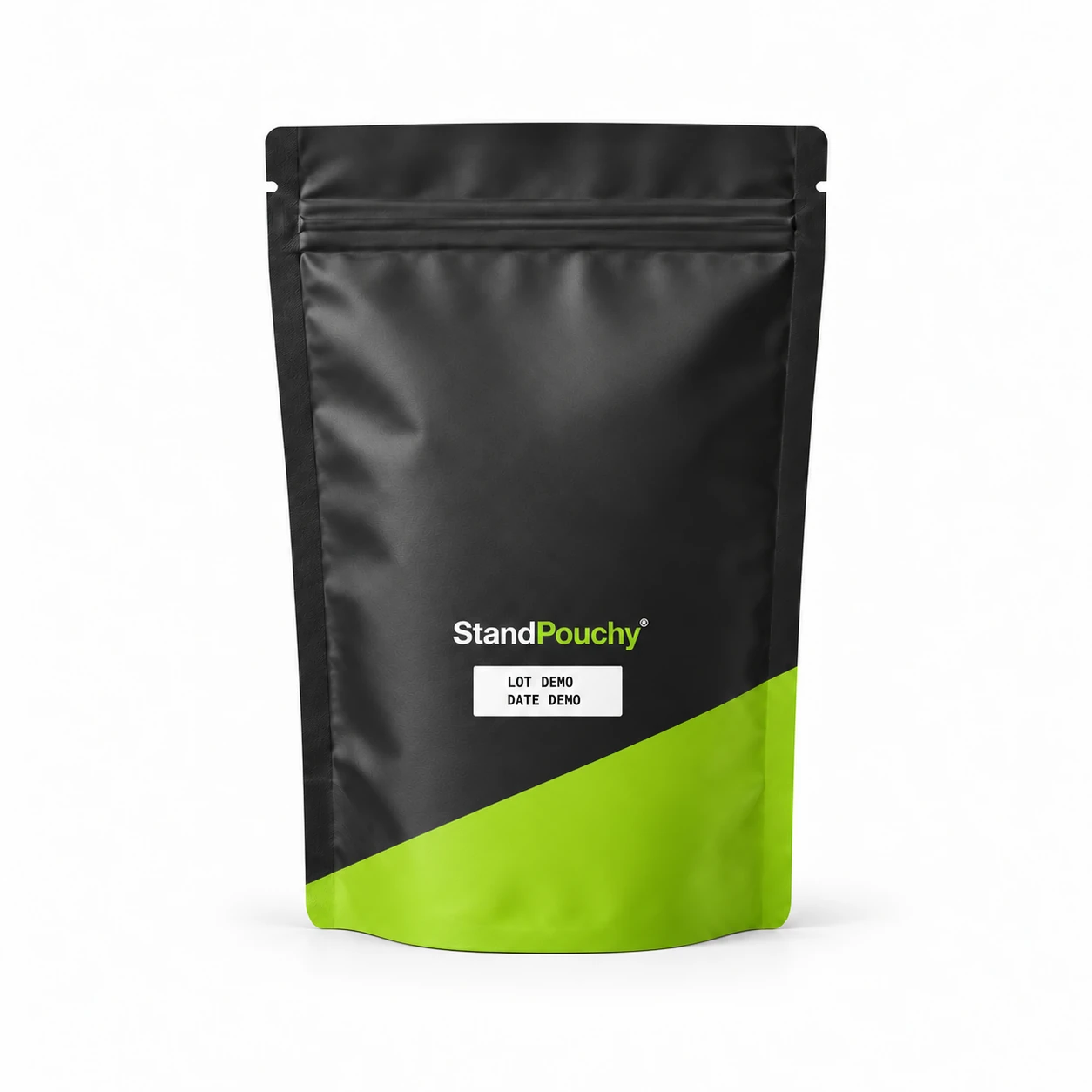
We distinguish a fixed product identifier from information that changes between production lots. GS1 traceability criteria list product identifiers and production batch or lot codes for traceable consumer units, cases and pallets.[1] We request the actual data format and longest expected code string. We include separators and line breaks in the sample rather than approving an unusually short demonstration. We keep sample codes clearly marked as demonstrations.
We distinguish the lot identifier from a quality-based date. FDA discusses Best if Used By as a quality-date phrase.[2] We do not treat that discussion as a complete labeling rule for every destination. We ask the food owner and relevant reviewer to approve the wording, date format and meaning for the intended market. We keep the responsible data source with the trial record instead of letting the artwork team invent a date.
We create a trial data file containing the longest approved lot string, date example, separators and line breaks. We keep demonstration values clearly distinct from production records. We check every printed field against this file. We record the pouch revision used for the check so that artwork and variable information stay connected.
We ask who creates the lot, who calculates the approved date and who checks the production job. Procurement can then compare a converter supplying printed pouches with a packer also applying variable information. These are different scopes. We ask whether our supplier expects a blank patch, a small label or another controlled area. We agree that decision before ordering enough material for a launch.
A small sauce-business discussion on Reddit asks how to apply dates and batch numbers to bought-in labels.[5] The example uses glass jars, so we take the workflow concern rather than its equipment suggestions as pouch advice. We use the specification checklist to record the fields, owners and unresolved requirements. We also ask the buyer whether the same pouch will serve multiple runs. A permanent printed date may limit that plan. We request examples of how the packer will update the content without changing approved fixed artwork.
| Comparison input | Question for our supplier | Buying decision |
|---|---|---|
| Product field | Which information stays fixed? | Artwork scope |
| Lot and date | Who owns each approved value? | Data responsibility |
| Longest string | What must fit the sample area? | Code brief |
02
Where Can We Reserve a Reliable Printing Area?
We can place a blank patch where the filled pouch wrinkles. That defeats the reserved area, so we review the actual surface and line access.
We select the code area with the packer and coding supplier using the finished laminate, pouch geometry and equipment access. We keep seams, folds, graphics and other critical information in the review.
We choose a surface the real process can reach
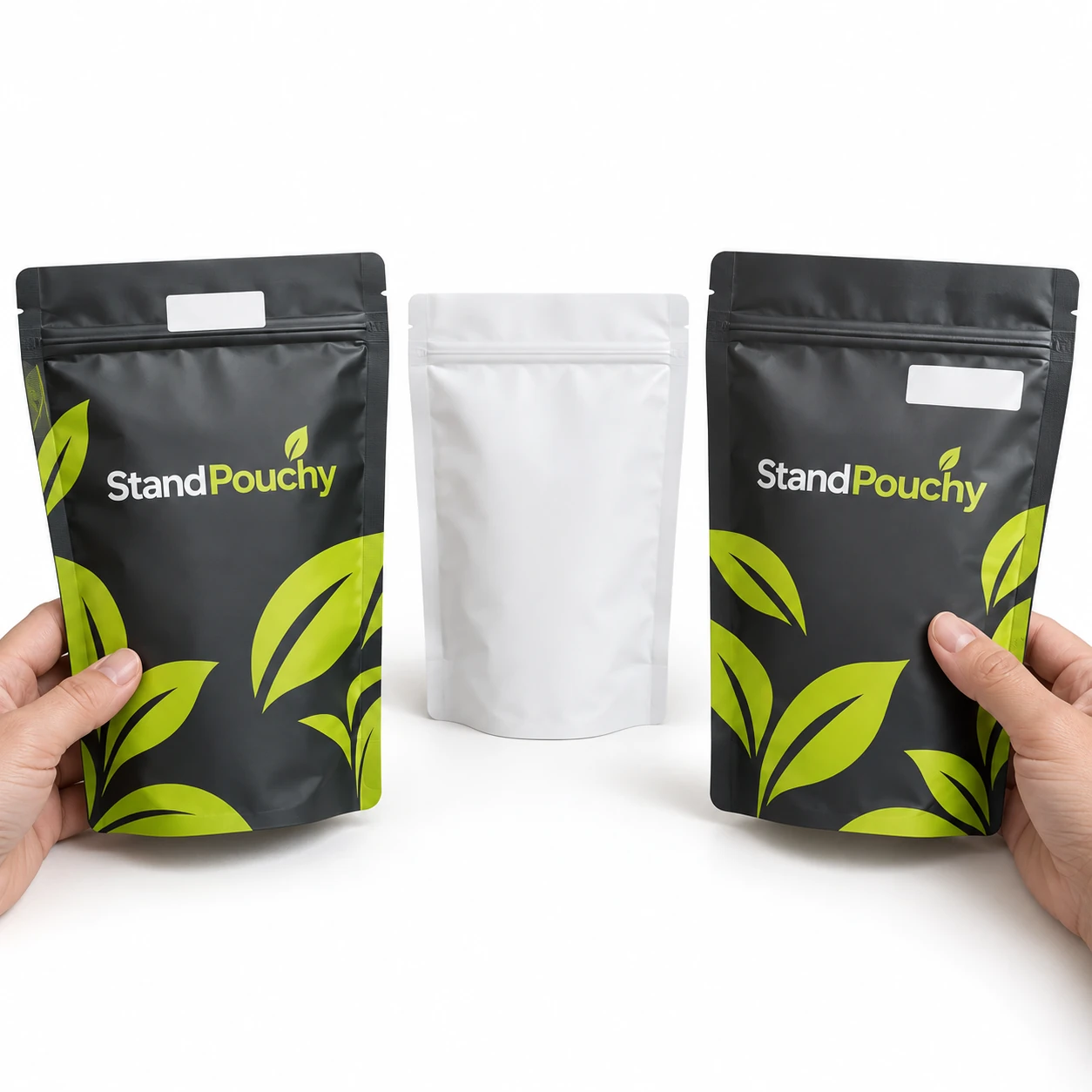
We mark the proposed area on the back-face dieline and locate the zipper, top seal, side seals and bottom fold. We inspect the same area on an empty converted pouch and a filled sample. We note whether the surface bends or wrinkles during the planned printing step. We keep the proposed outer film, coating and finish with the sample identity. We do not assume that a white-looking area has the same coding behavior after a finish changes.
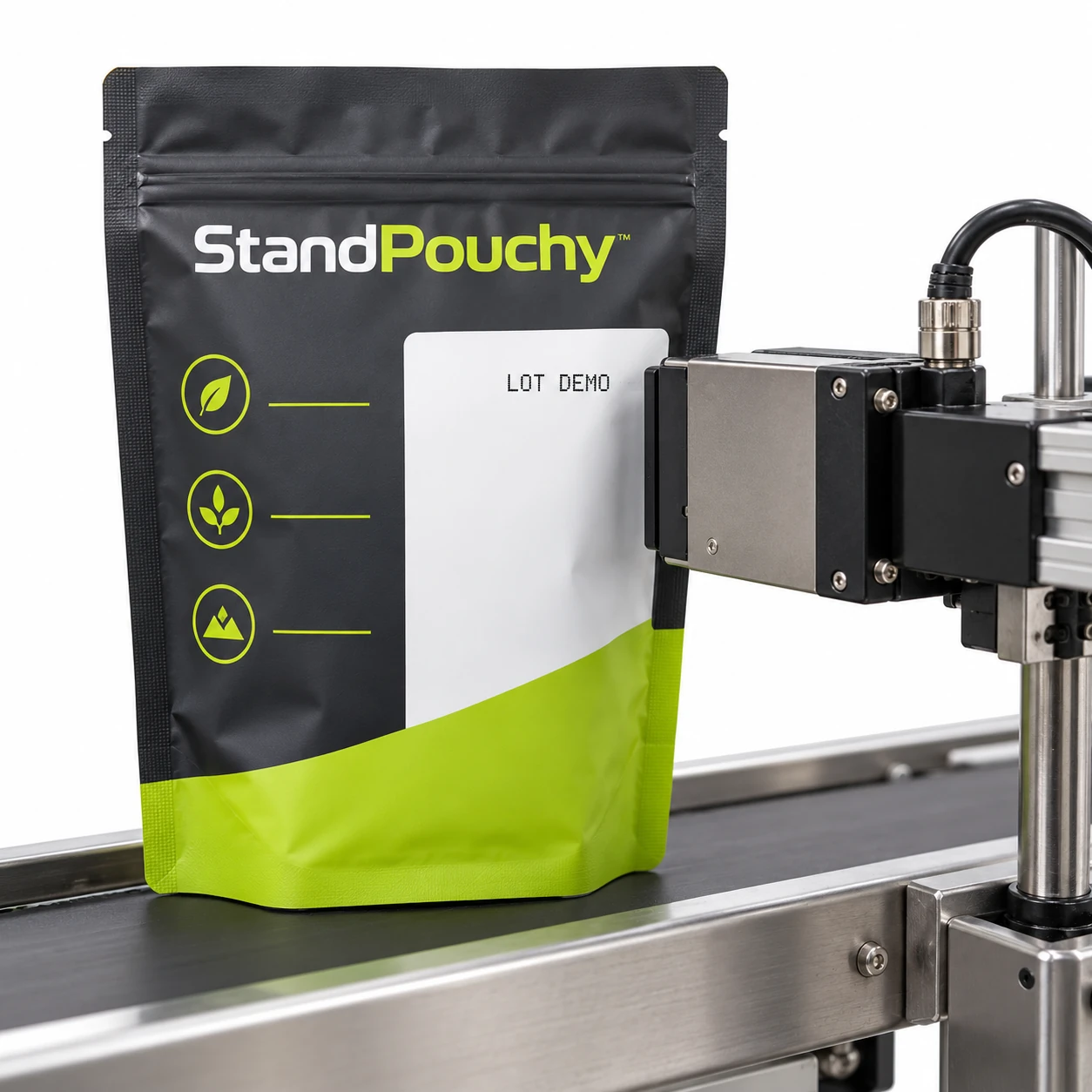
Videojet describes thermal-transfer printing as transferring ribbon ink onto flexible film, while its continuous-inkjet applications are noncontact.[3] Its pouch application note discusses flat, thin film for thermal-transfer coding.[4] We therefore ask whether printing occurs on a supported flat pouch or film, or on a filled unit at a later station. We let the actual equipment arrangement determine the trial rather than treating these mechanisms as interchangeable.
We record the distance of the reserved area from the top seal, zipper, side seals and bottom fold on the physical sample. We note which face the coding head reaches and whether support is present behind it. We retain the finished surface reference and trial settings with the resulting print sample.
We compare two proposed locations if neither is clearly suitable. The buyer can evaluate how easily a consumer finds the date, while operations evaluates access at the coder. We ask the artwork supplier to show a clear reserved area without sacrificing mandatory information or barcode space. We avoid moving the patch late merely to improve visual symmetry if that makes production access uncertain.
We use the custom pouch dieline guide to align the decision. We also keep the barcode placement review separate: a fixed retail barcode and a human-readable lot/date area have different jobs. We ask suppliers what a location change would cost in proofing, samples and line adjustment. We request an actual sample showing the proposed code at its intended location. This gives the buyer something concrete to approve before the converter releases artwork, rather than leaving a small but essential production detail to the first filling day.
| Comparison input | Question for our supplier | Buying decision |
|---|---|---|
| Dieline location | Does the area avoid disruptive folds? | Candidate position |
| Coding stage | Is the surface flat or already filled? | Line integration |
| Outer finish | Which exact surface was trialed? | Material control |
03
How Do We Check the Printed Code on Real Pouches?
We can approve a sharp demonstration on different film. That proves little about our order, so we trial the actual surface and handling.
We review content, location, contrast and durability on identified pouch samples using the intended coder. We agree inspection and rejection criteria with the packer before accepting the result.
We make readability and data accuracy separate checks
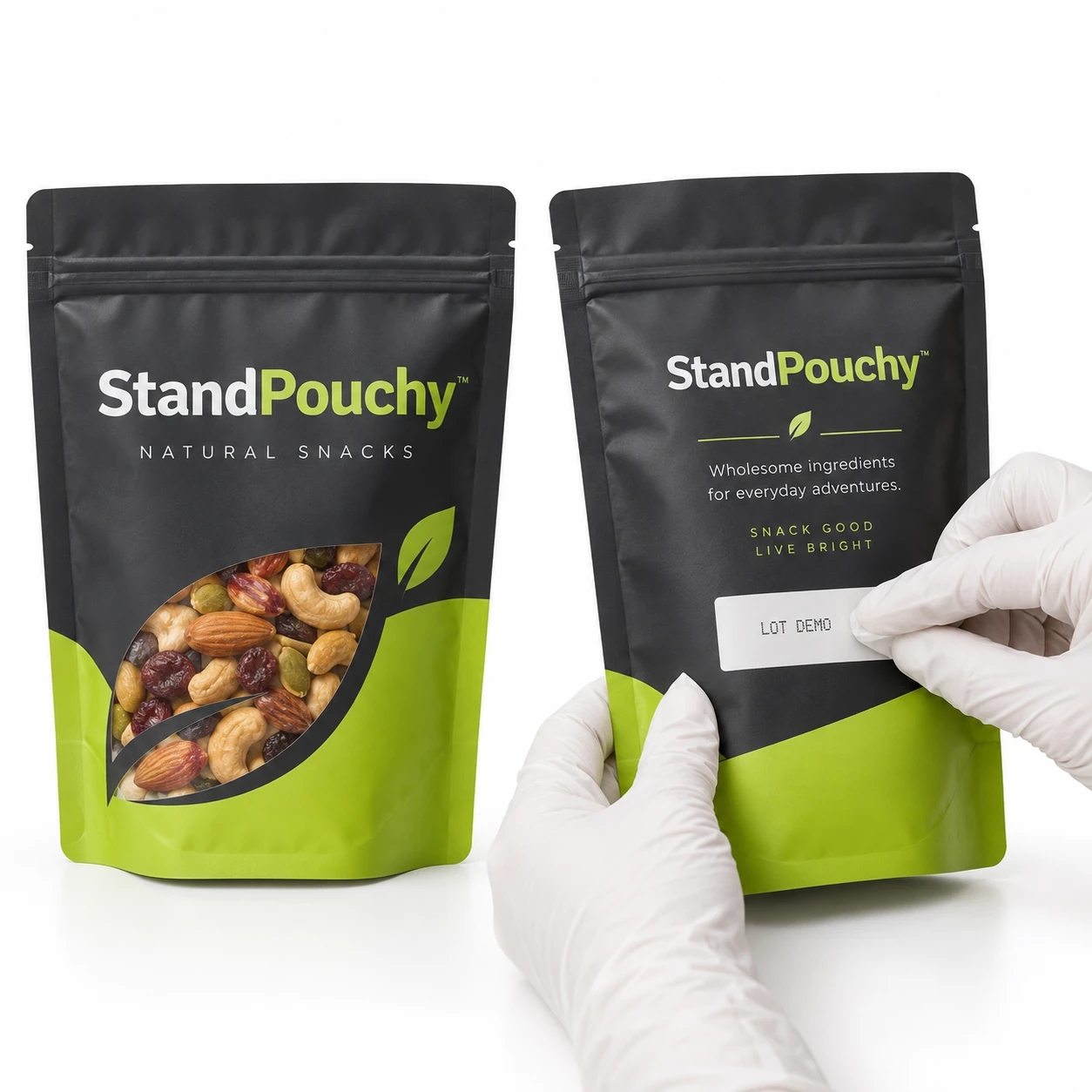
We record pouch revision, outer surface, coder technology, consumable reference and the printing step. We print the longest approved example and inspect its position relative to the reserved area. We review ordinary variation in pouch shape and the conditions expected at the line. Videojet notes that grease, salt and dust can challenge salty-snack coding.[3] We ask the packer to include its relevant surface condition rather than testing only an unusually clean display sample.
We define the handling observations needed after printing, such as legibility after the intended case-packing sequence. We agree any rub or contact check before interpreting its outcome. We compare the visible text with the approved job data separately from its print quality. We do not invent a standard rub count, universal font size or acceptable missing-character rate. If a machine-readable code is included, we request its own agreed verification scope.
We inspect several coded samples rather than choosing only the clearest example. We record missing characters, misplaced lines and visible smearing separately from incorrect data. We photograph the print before and after the agreed handling sequence. We retain settings and surface identity, leaving acceptance thresholds to the approved trial specification.
We ask each supplier which trial it includes and which decisions remain with us. A sample printed by the coder vendor may not include production handling; a packer’s complete trial may include both. We ask for those differences to be stated in the quotation. We also request the action to take when content is wrong but printing looks clear, or content is right but difficult to read. We need an agreed response, not only a flattering photograph.
A Reddit consumer discussion complains about faint dates and instructions that send readers searching elsewhere on the pack.[6] We use that as a usability concern rather than a minimum-size standard. We ask the buyer to review the code under the intended viewing conditions and to explain where consumers should find it. The sample approval guide keeps the accepted example with the inspection owner. We request another controlled sample if the area, coating, equipment or content changes. This protects a useful purchasing decision without claiming that one successful demonstration validates every later production run.
| Comparison input | Question for our supplier | Buying decision |
|---|---|---|
| Content check | Does printed text match the approved job? | Data approval |
| Print check | Can we read the code after handling? | Sample acceptance |
| Change trigger | What needs another line trial? | Revalidation scope |
04
What Coding Scope Should Our Supplier Quote Include?
We can assume coding is included in the pouch price. That leaves responsibilities missing, so we compare the complete production scope.
We compare reserved artwork space, samples, coding work, consumables, inspection and revision responsibilities. We release one approved reference and keep pouch codes connected to production and case records.
We release the artwork and workflow together
We connect the approved pouch reference and code format to the packer’s production record. GS1 traceability criteria include defined procedures for traceable items and their batch or lot identification.[1] We ask how the consumer unit relates to the case and retained samples. We keep the exact physical sample, code content and production record identified together so that a code remains useful after the pack leaves the line.
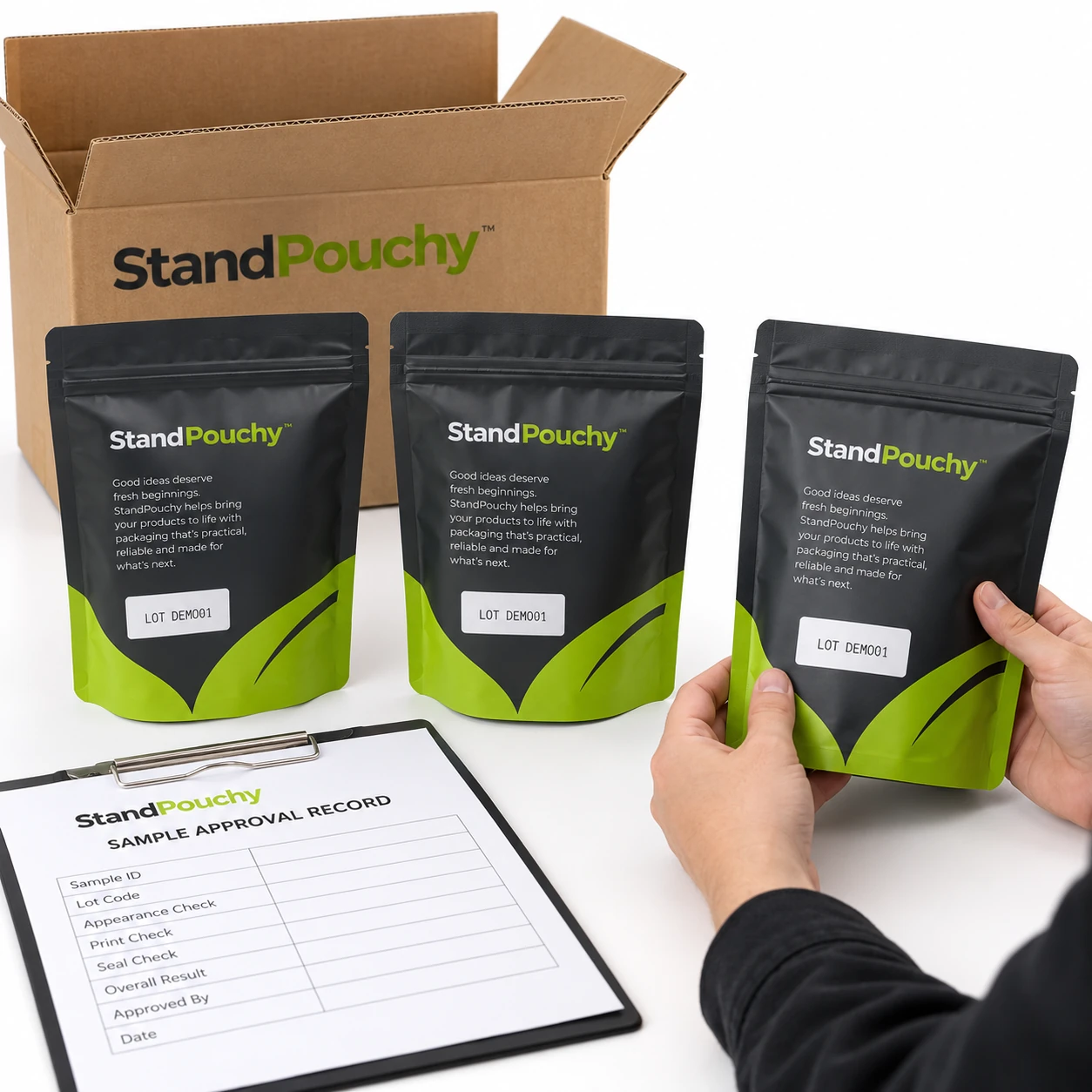
We request a controlled proof showing the reserve area and any locator wording. We identify the outer-film and finish references used in the coding trial. We record who authorizes a new print job and who checks changeovers. We ask what happens to units without an accepted code. We do not claim that a reserved patch alone creates a complete traceability system or satisfies every market requirement.
We keep the accepted code sample with its artwork and material revision. We record the variable-data job reference and the case record that belongs to it. We document which units were checked during the trial. We define the record needed after a changeover instead of relying on a remembered machine setting.
We compare whether the quotation covers only converted pouches, sample coding, or ongoing variable printing. We ask which setup work, consumables, repeat trials and inspections are included. We request a clear exclusion for anything performed by our co-packer or coder vendor. We also ask who will pay for another proof if the buyer changes the location or number of lines. These questions make a quoted unit price easier to assess without inventing a cost figure.
We use the co-packer trial brief when another team fills and codes the pouches. We ask the brand owner to approve fixed copy, the food owner to approve variable meaning, operations to approve the line trial and procurement to approve the scope. We then prepare a pouch inquiry with the dieline, code example, coding stage, material direction, order quantities and destination. We request a concrete next sample or scope clarification. This gives us a purchasing decision that covers the artwork and its production use, rather than a white rectangle with responsibility left blank.
| Comparison input | Question for our supplier | Buying decision |
|---|---|---|
| Supplier scope | Does the offer include actual coding? | Matched quote |
| Inspection owner | Who checks jobs and rejects failures? | Operating responsibility |
| Record link | How do pouch, case and lot connect? | Release reference |
Conclusion
We reserve code space from the real surface and line trial. We release artwork only when code content, readability, records and supplier responsibilities agree.
Notes and sources
- GS1: Product and lot identification in global traceability criteria (cited in article)
- FDA: Quality-based date-label discussion (cited in article)
- Videojet: Printing on salty snack packaging and pouches (cited in article)
- Videojet: Thermal-transfer coding of flexible pouches (cited in article)
- Reddit community insight: A small sauce business asks how to apply dates and batch numbers (cited in article)
- Reddit community insight: Consumers discuss hard-to-find and faint date codes (cited in article)
Reddit links are community insight only. We use official standards and regulator pages for technical context, and we require project evidence for the final pouch decision.