01
Which Flavors Can Share One Physical Pouch Specification?
We can group matching graphics while foods need different packs. That hides rework, so we review physical compatibility before treating flavors as one production family.
We group flavors only after reviewing product condition, fill, dimensions, material direction, closure, finish and the operating route. We record differences that require separate physical samples or evidence.
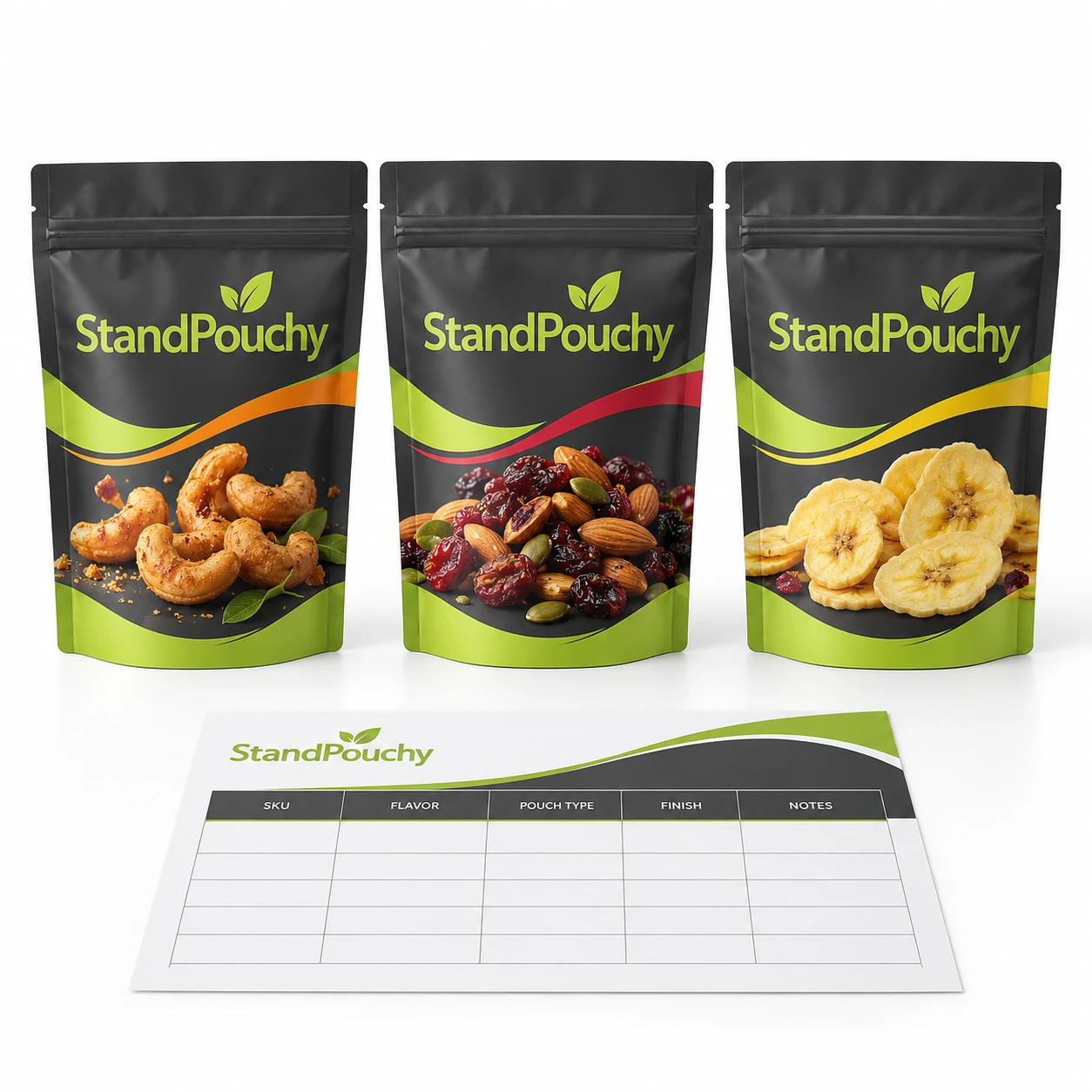
We separate shared geometry from different food inputs
We list each recipe and its representative fill before grouping artwork. We compare piece size, coating, seasoning, surface oil, loose volume and fragments. We also check whether the same usable mouth, top clearance and closure layout can be trialed across the proposed range. We keep laminate and finish identity in the matrix. FDA's component-status guidance requires intended-use support for food-contact construction.[1] We therefore ask whether the available support covers each proposed contact condition. A shared charcoal graphic does not resolve that question. We record any different construction, dimension or process as a separate physical specification. We retain which food represents each trial and do not quietly extend an unrepresentative sample's approval across the whole range.
We mark the dimensions using one gusset convention across all rows. We distinguish total height from usable space below the zipper and permanent seal. We retain the same measurement approach on each filled candidate. We also record which recipe was used so a shared size does not hide different settled shapes.
We ask the buyer why the flavors are being launched together. The goal may be a coordinated shelf family, an ecommerce assortment or a small market test. That goal helps set the comparison, but it does not justify making every quantity equal. We ask which products already have repeat orders and which remain uncertain. We use the buyer's actual plan rather than invent sales forecasts. We compare whether a common pouch meaningfully simplifies the order or merely creates awkward product fit.
We use the packaging specification checklist to record the shared fields and exceptions. Each supplier gets the same matrix with one row per flavor and a named physical family. We ask the converter which differences affect the production arrangement and which can remain artwork changes. We request evidence for that answer before treating it as a capability promise. Procurement can then see which proposals actually cover the whole portfolio. We keep MOQ, timing, capacity and environmental claims conditional on the supplier's reviewed offer. The first useful output is a clear group of comparable specifications, not a claim that every flavor can run together.
| Matrix field | Question to resolve | Buying decision |
|---|---|---|
| Food and fill | Can one geometry represent the range? | Shared family or separate sample |
| Construction and feature | Are the intended conditions covered? | Document and trial scope |
| Artwork only | Which physical inputs stay the same? | Version allocation to review |
02
How Do We Split Quantities and Compare Print Routes?
We can quote a total and hide each flavor’s allocation. That makes proposals incomparable, so we list every version and the work included.
We provide total quantity and quantity per approved artwork, grouped by physical specification. We compare stock-plus-label, digital and other proposed routes through setup, proofing, conversion, inventory exposure and reorder scope.
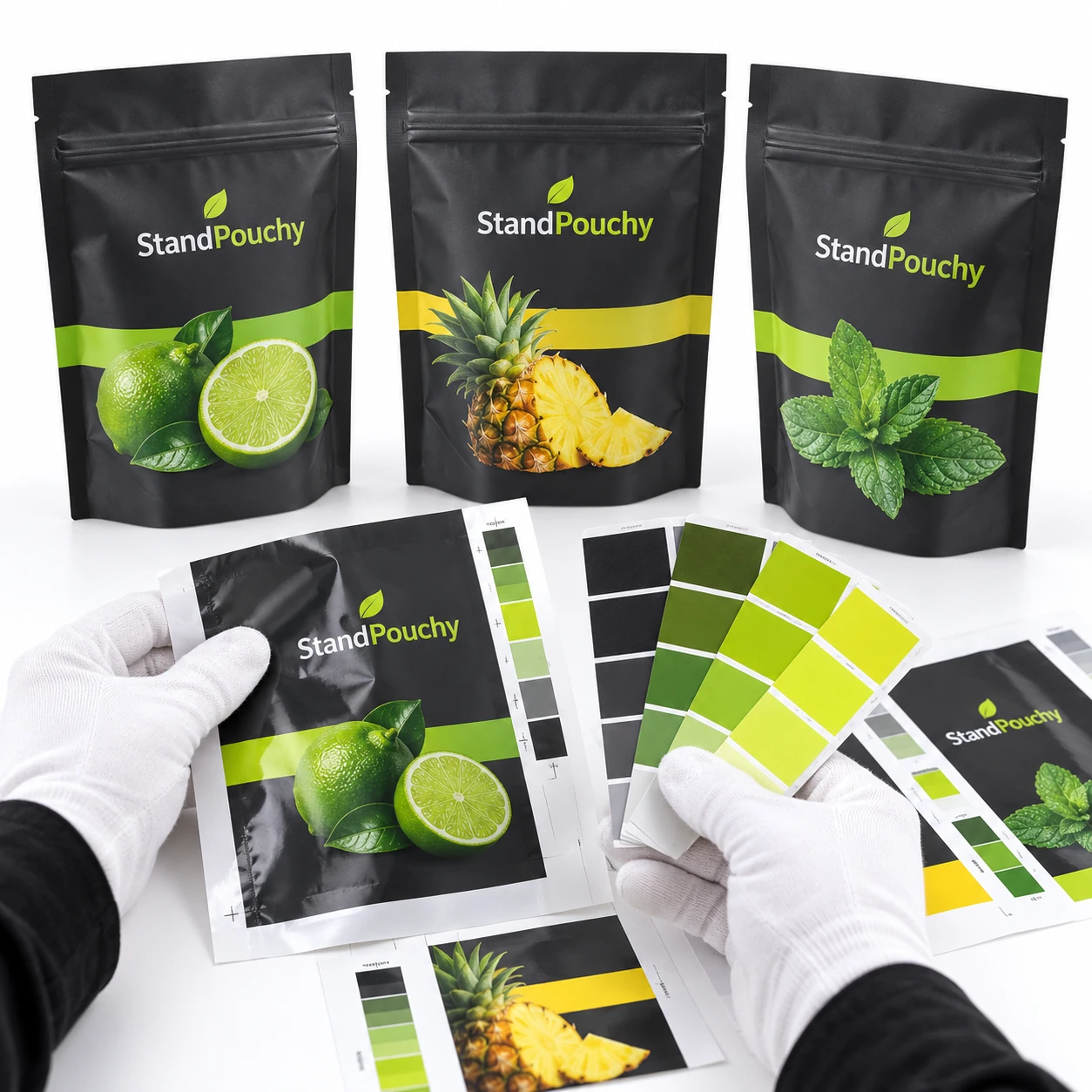
We keep print capability separate from the order promise
We identify what changes between print files: product name, flavor stripe, photograph, legal copy, barcode and any white-ink or finish instruction. We keep dieline, seal zones, zipper position and print-side construction under the physical specification. HP describes digital flexible-packaging equipment that supports artwork variation and growing SKU ranges.[2] That is context for a possible route, not proof of a particular converter's availability, order minimum or approved material system. We ask the supplier to identify the actual route being quoted and the sample stage that represents it. We keep color references, converted appearance and feature registration in the approval plan. If the print or converting process changes on reorder, we identify the checks that need repeating.
We inspect small text, color boundaries and any white-ink area on the actual proposed substrate. We record proof identity, viewing conditions and the accepted reference. We also review the converted face after filling. A screen preview and a process-specific printed sample answer different questions, even when their digital artwork is identical.
We give the buyer a quantity table rather than one portfolio total. A new flavor and a proven flavor may deserve different allocations. We request the buyer's planned quantities and ask suppliers to state any constraints separately. We compare setup, proofing, material arrangement, conversion, packing and delivery terms without inventing unit prices. We also compare the scope of a reorder when only one flavor needs replenishment. A combined initial order does not necessarily mean the next order should repeat every version.
In a Reddit smallbusiness discussion, a product owner describes difficulty with minimum quantities for custom flexible packaging.[6] We use that attributed concern to motivate a clearer quantity brief, not as a verified market-wide MOQ or supplier recommendation. The snack packaging RFQ checklist helps us ask comparable questions. We keep a stock pouch with an approved label visible when it fits the brief, alongside custom routes to review. We do not claim digital always costs less or that pooling artworks automatically reduces the total purchase. We choose the route only after the supplier has addressed the actual allocation, specification and approval work.
| Quote input | Record to provide | Trade-off to compare |
|---|---|---|
| Quantity per version | Buyer-approved allocation | Inventory and reorder exposure |
| Print route | Actual proposed process | Setup and proof scope |
| Physical family | Same controlled specification | Conversion and sample work |
03
How Do We Prevent Flavor and Barcode Mix-Ups?
We can approve a common template and miss one wrong flavor panel. That risks an unusable order, so we review each complete version independently.
We check each flavor’s product identity, ingredients, market copy, barcode, file revision and converted proof. We use a version matrix to track separate approvals and protect the same functional zones across the family.
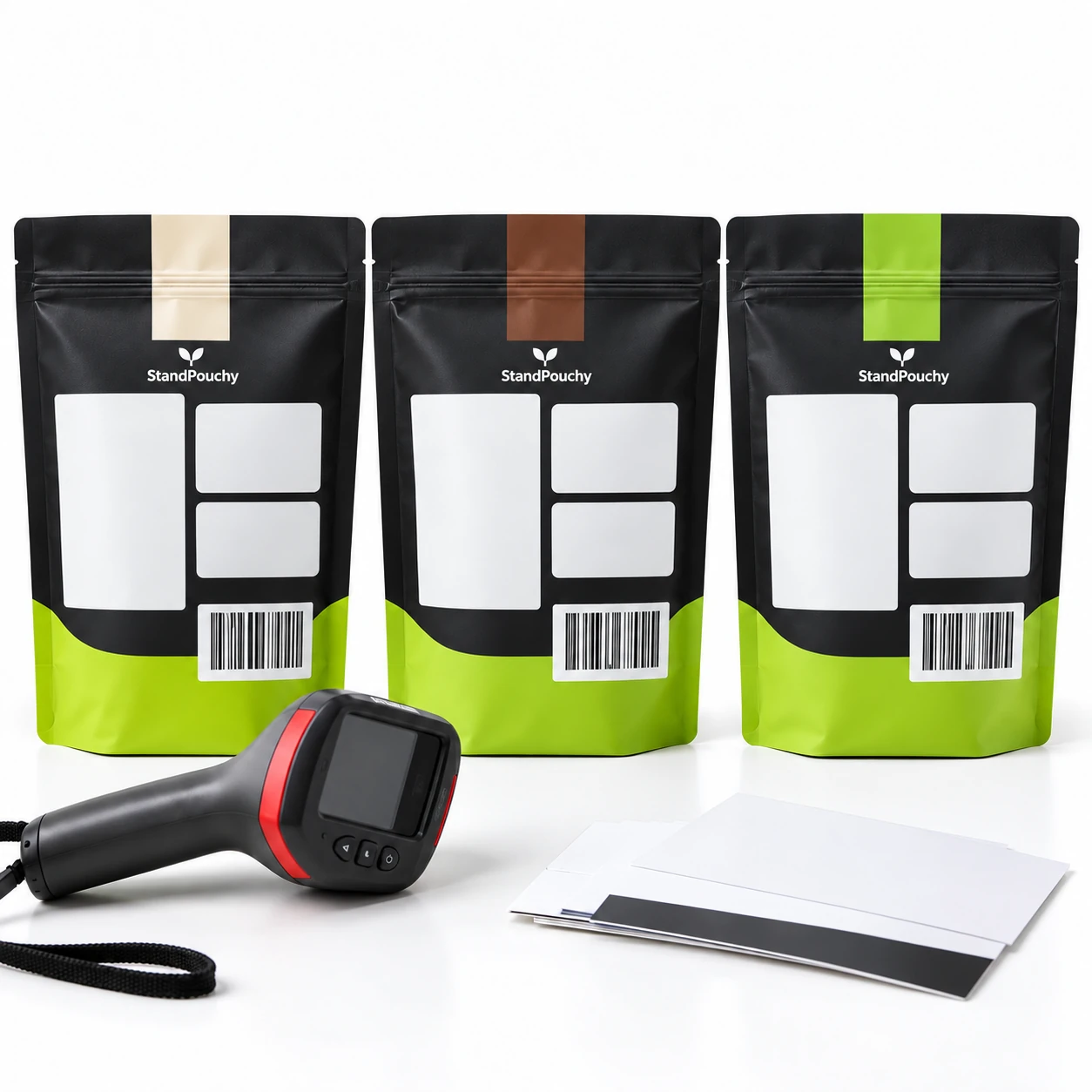
We treat every print file as a separate release item
We identify the product represented by each file before checking its barcode. GS1's new-product guidance includes a new flavor added to a brand's portfolio as a new-product example.[3] We have the responsible identification owner apply the current rules to the actual trade item; we do not copy a code from another flavor by assumption. GS1 also connects symbol production requirements to the scanning environment.[4] We verify the appropriate printed sample and retain its identity. The actual ingredient and allergen text requires its own responsible review. FDA's sesame guidance illustrates why a seemingly small food difference can affect label responsibility.[5] We keep seals, folds and closure positions visible on every artwork proof as part of the converted-pack review.
We protect the barcode area from the mapped seal and fold zones. We retain the verified printed version and its filled condition with the identification record. We review the front and back together so a flavor change is checked throughout the file. We do not infer scan performance from a mockup symbol.
We ask brand and procurement to compare the versions side by side. Can someone identify the correct flavor without reading a long back panel? Does the stripe remain distinct on a filled unit and in a small online image? We do not declare that a color alone prevents mistakes. We use product names and the controlled file list together. We request the approved front and back for each version rather than approving a generic master and assuming the remaining files are equivalent.
We use the custom pouch dieline guide for the shared layout and the snack pouch barcode guide for the individual verification question. Our portfolio matrix records file name, revision, product identity, quantity, proof stage and owner. We ask the supplier how obsolete files are excluded from this order. We also ask how versions will be separated at packing. This is a concrete purchasing question, not a claim that our artwork template guarantees correct fulfillment. We release a version only when its required copy, barcode and physical reference are accepted. An unresolved file remains visibly pending even when the other flavors are ready.
| Version check | Evidence to retain | Owner decision |
|---|---|---|
| Food identity and copy | Approved front and back | Responsible label reviewer |
| Barcode | Trade-item identity and printed verification | Identification and channel owner |
| File control | Current revision and quantity | Brand, supplier and procurement |
04
What Must the Final Multi-Flavor Order Record Contain?
We can approve separate proofs and lose their link to the packing list. That hides order risk, so we release one controlled portfolio record.
We release an order matrix connecting each flavor, quantity, specification, approved file, sample, packing arrangement and quote scope. We keep separate food and operational evidence attached to the versions they actually cover.
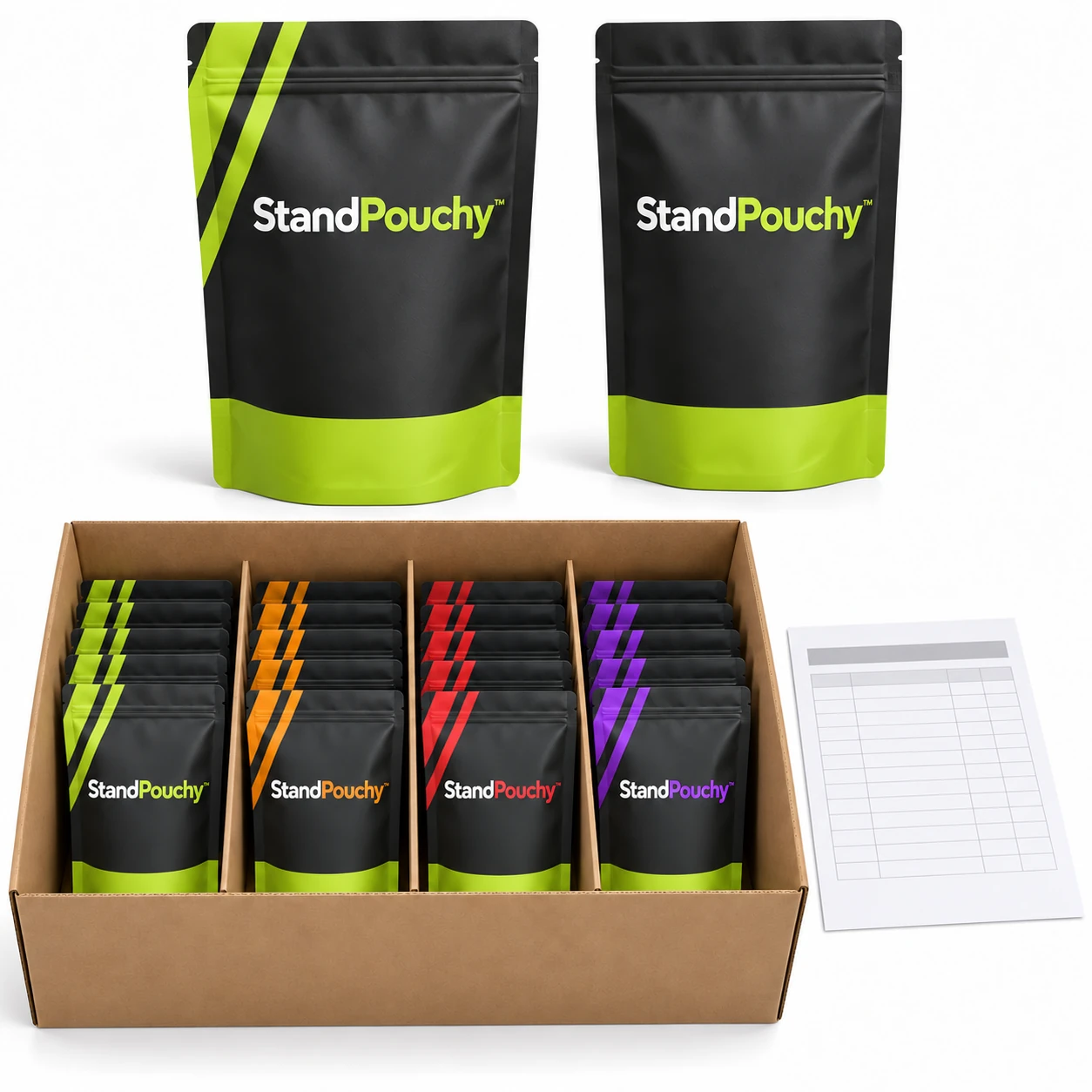
We connect sample approval to versioned packing and reorders
We review representative filled samples for each distinct physical or food condition named in the plan. We retain construction identity, dimensions, filling observations, closure evidence and accepted artwork alongside the version record. We inspect whether product settling changes the front and whether the chosen case arrangement affects access or appearance. We keep any transmission or seal report attached to its actual specimen. We also record how the different printed units are identified in cartons and on the packing list. That arrangement requires supplier confirmation and a sample review; a picture of separated compartments is not proof of fulfillment performance. A changed recipe, film, size, finish or print route reopens the relevant approval before another order inherits it.
We identify each retained pouch with its food, artwork and physical specification. We keep the carton identification consistent with the order matrix and record how mixed or separate versions will be packed. We review those instructions against the sample arrangement. Any unresolved mismatch remains open before the supplier receives the release.
We compare quotations one last time against the accepted matrix. We ask whether all artwork versions, their quantities, proof stages and packing instructions are included. We list setup and delivery exclusions and identify what the buyer or co-packer must provide. If a supplier proposes substituting a construction or combining cartons differently, we treat it as a decision to review. We do not accept the change silently because the portfolio total stays the same. We keep the next reorder by flavor visible so procurement can compare its scope when demand becomes clearer.
We use the pouch sample approval guide to distinguish a completed proof from a completed order release. Brand accepts each artwork. The food owner accepts each required product and copy review. Operations accepts the represented fill and closure conditions. Procurement accepts the version quantities, packing and supplier scope. We then prepare a multi-flavor inquiry with the matrix, known specifications and open questions. We ask for a named next sample or confirmation instead of requesting a generic discount for more designs. This gives the buyer a controlled path from portfolio idea to a comparable purchase, with remaining responsibilities still visible.
| Order record | Common link | Next decision |
|---|---|---|
| Each flavor and quantity | Approved file and physical family | Matched production scope |
| Samples and evidence | Actual represented condition | Release or repeat review |
| Packing and reorder | Version identification and exclusions | Clear procurement handoff |
Conclusion
We order multi-flavor pouches through a controlled specification and version matrix. We approve each file, quantity and sample before releasing the complete supplier scope.
Notes and sources
- FDA: Regulatory status of food-contact components (cited in article)
- HP: Digital flexible-packaging equipment and SKU variation (cited in article)
- GS1: New product and product-change decision guidance (cited in article)
- GS1: Ten steps to barcode your product (cited in article)
- FDA: FASTER Act and sesame allergen labeling (cited in article)
- Reddit community insight: Small brands discuss custom flexible-packaging minimums (cited in article)
Reddit links are community insight only. We use official standards and regulator pages for technical context, and we require project evidence for the final pouch decision.