01
Does the Sales Channel Actually Need a Hanging Pouch?
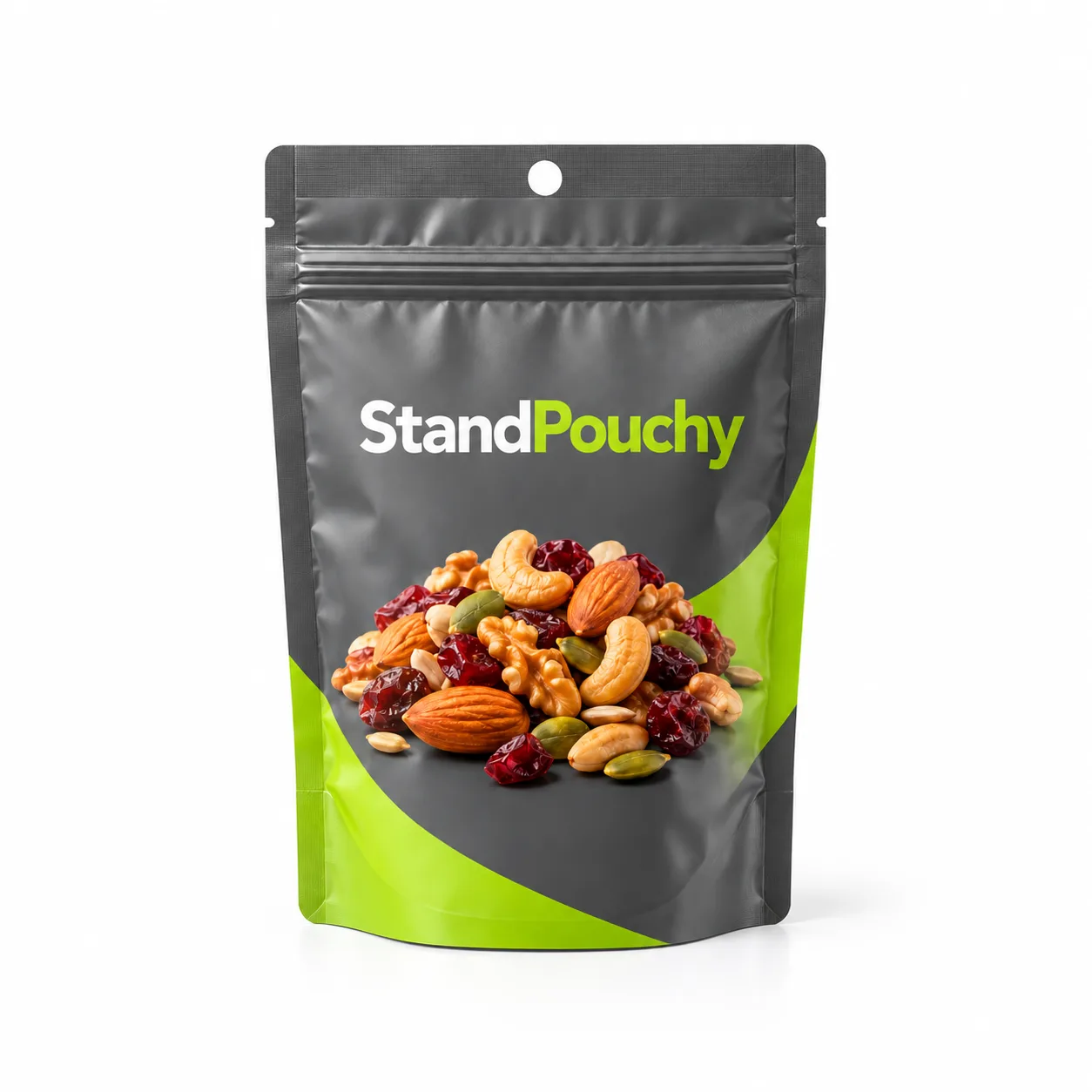
We can copy a hanging format without knowing where it will sell. That adds unowned requirements, so we ask the channel to define its fixture.
We confirm the fixture, hook arrangement, filled unit, stocking workflow, and channel requirements. We compare hanging, shelf-standing, and tray presentation before choosing a hole shape.
We start with merchandising, not the punch catalogue
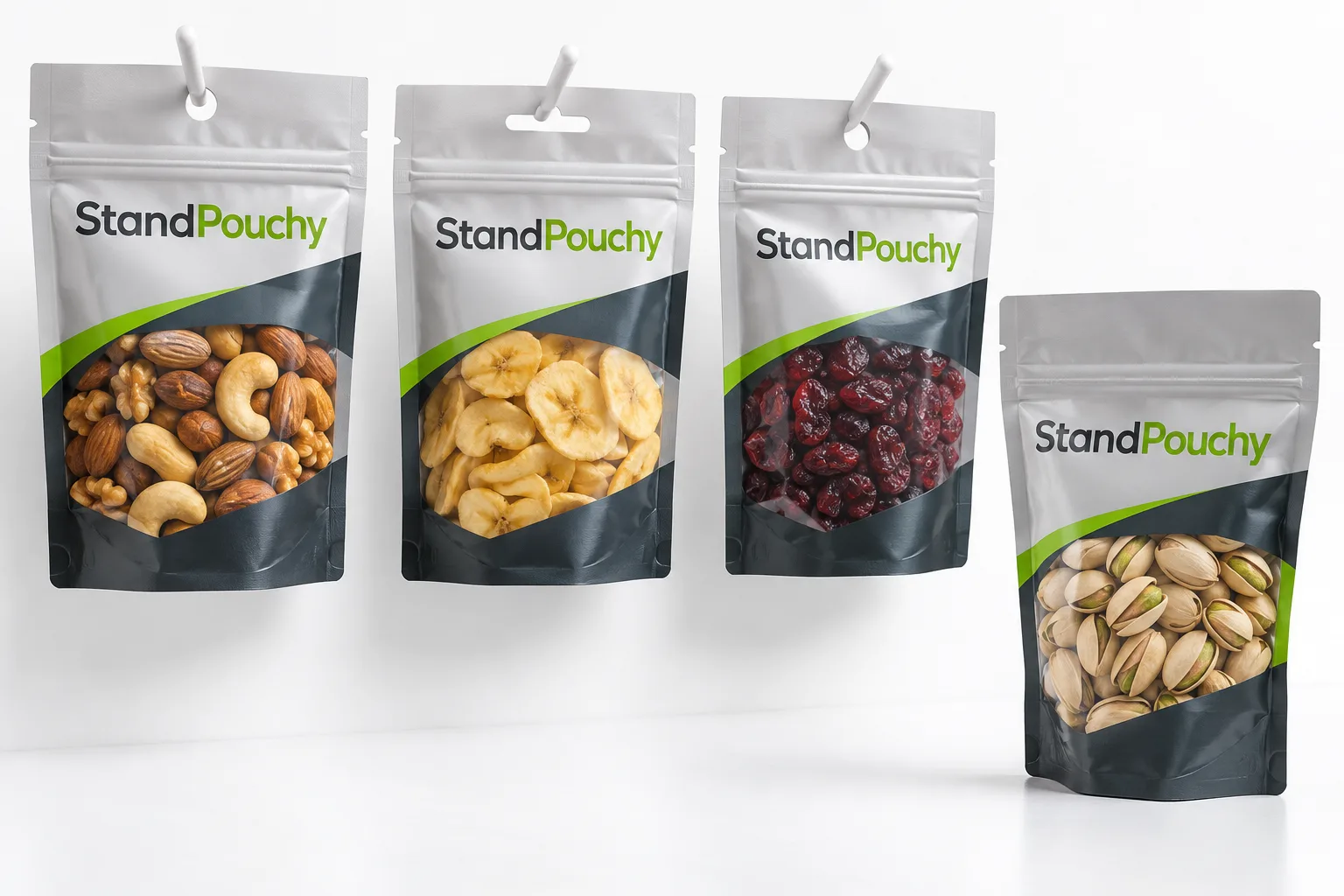
We measure the representative filled unit in the relevant display condition. We record overall height, width, product settling, and how the header sits when supported. GS1 package measurement guidance distinguishes package contexts, including hanging items and flexible packages.[1] We do not substitute a flat converter drawing for the finished-unit measurement needed by the channel. We identify the hook contact and the space around the hole as separate design inputs. We also keep the permanent seal, tear path, and zipper visible on the drawing. A conventional stand-up pouch still uses front and back faces, side seals, and a bottom gusset.
We ask the buyer where the feature will earn its place. A checkout hook, a dense peg display, and a retail tray may lead to different decisions. An ecommerce-only pouch may have no reason to carry a hang hole. We compare the same filled sample standing and hanging so the buyer can judge identity, access, and presentation. We ask who will stock the display and what they need to do without extra preparation. We do not claim that hanging automatically improves sales or that a certain shape is accepted by every retailer.
We request channel input before printing. We ask for the actual fixture reference, relevant requirements, target fill, and the party responsible for acceptance. The retail and ecommerce pouch guide gives us a shared presentation framework. We retain a no-hole alternative when the buyer is unsure. This prevents procurement from comparing feature-rich offers that solve no agreed problem. Our next action is to confirm the merchandising route, not to choose a hole simply because a competitor uses one.
| Sales route | Input to request | Feature decision |
|---|---|---|
| Peg or hook display | Actual fixture and channel requirements | Trial a hanging header |
| Standing shelf or tray | Filled footprint and visibility | Compare a no-hole option |
| Ecommerce only | Packing and consumer use | Do not add a hole by habit |
02
How Should the Hole Fit Around Seals and Opening?
We can reserve a hole late and crowd the closure area. That forces artwork and process changes, so we map the header before decoration.
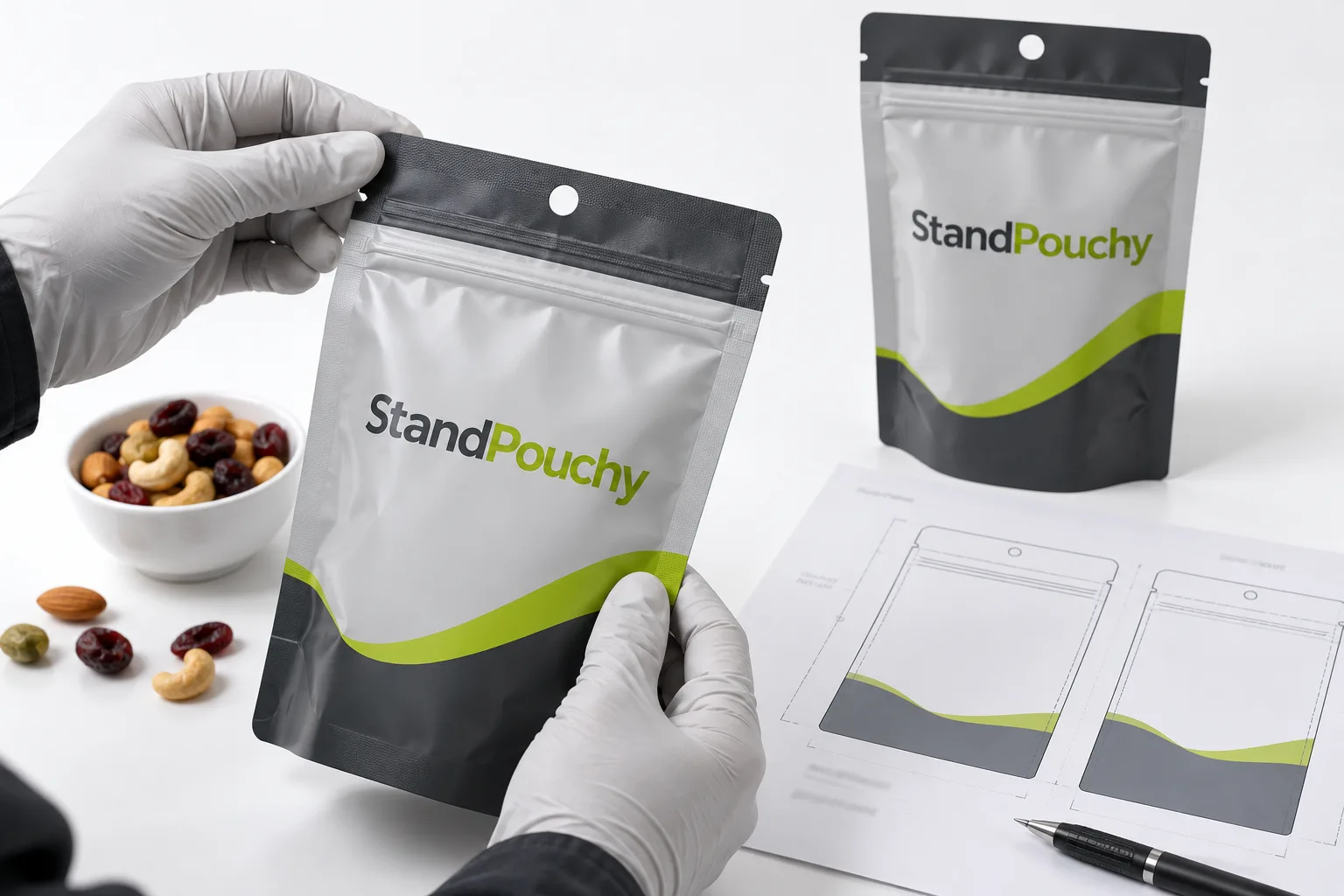
We locate the hole, supporting header, permanent closure, tear path, and zipper on the converter-approved dieline. We verify that the opening sequence preserves the intended feature boundaries.
We approve the functional header as one arrangement
We ask the converter to identify the punched area and the continuous sealed boundary that separates it from the product space. We check that the intended first-opening path and zipper remain usable. We do not publish a universal hole diameter, edge distance, or header height because the fixture, construction, filled weight, and converting setup must be considered together. ASTM F88/F88M can support defined seal-strength characterization.[2] We keep the specimen and acceptance basis with that result; it does not alone qualify the hanging header. FDA food-contact guidance remains applicable to the actual material components and intended contact conditions.[3]
We compare the commercial consequences of that layout. A taller header may affect front-panel proportions, total pouch height, and case arrangement. A crowded top may make the brand name or flavor less clear when pouches overlap on the fixture. We ask whether the buyer wants the same art system across hanging and standing sizes. We show those alternatives early, before artwork work has made the decision expensive. The custom pouch dieline guide helps explain the zones, but the final released drawing belongs to the converter and responsible artwork team.
We request a physical converted sample rather than trusting a circle on a PDF. We ask the supplier what punching and registration checks are included, and whether its sample represents the proposed construction. We identify any new tooling, proof, or setup work as cost drivers without inventing prices. We also ask what happens when a hole option changes after approval. Procurement can then compare both the feature and the work required to release it. We hold the layout when a functional zone or responsible owner remains unclear.
| Header element | Review question | Approval reference |
|---|---|---|
| Punched hole | Does it stay outside product space? | Converted header sample |
| Tear and zipper | Can first opening work cleanly? | Filled opening review |
| Artwork | Is identity visible on the fixture? | Approved dieline and filled view |
03
What Must We Test on the Filled Hanging Pack?
We can approve an empty header that never carries the snack. That hides display risk, so we trial the actual filled pouch and fixture.
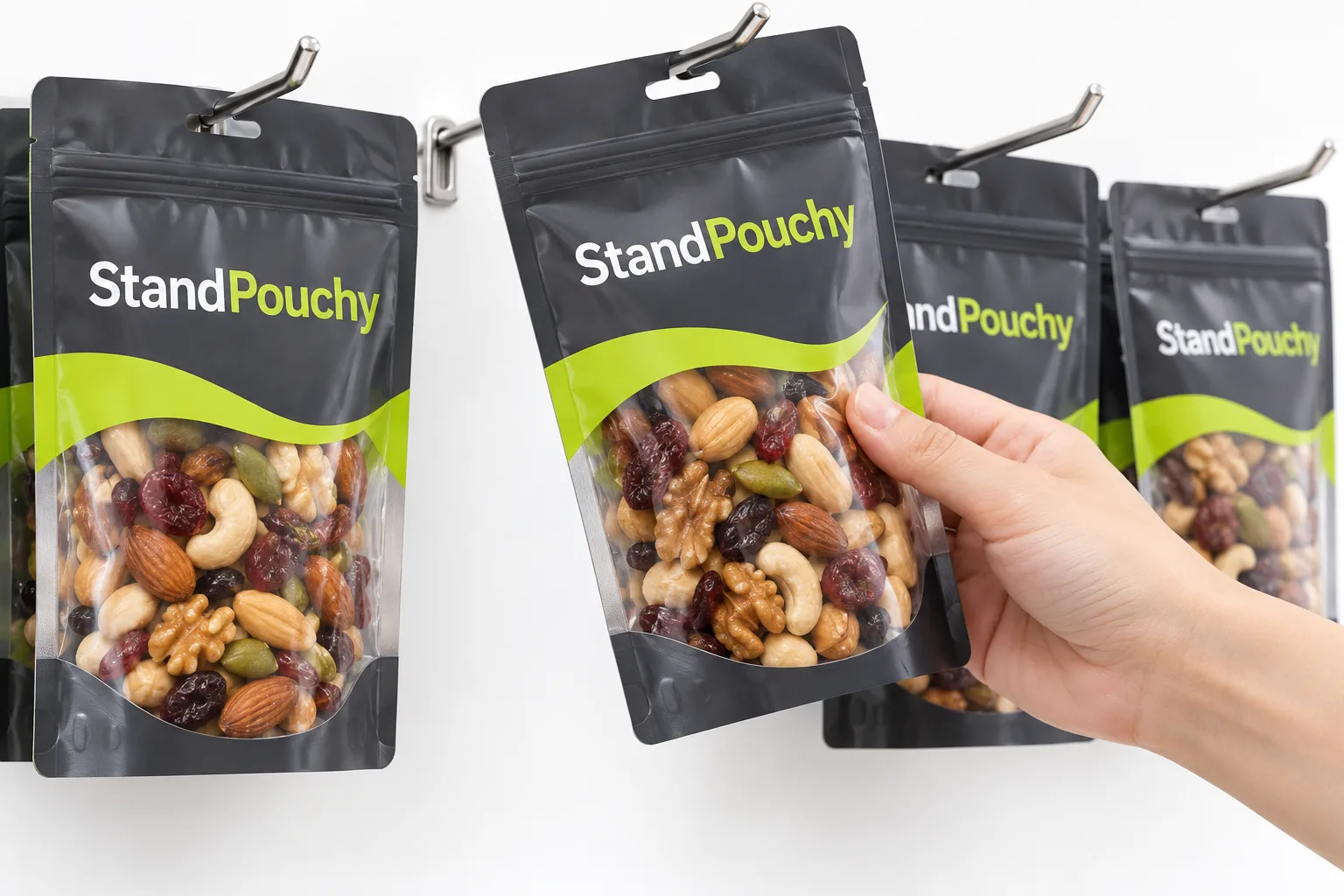
We evaluate the representative filled pouch on its intended fixture under agreed conditions. We inspect hole damage, header distortion, opening, seals, and product presentation rather than relying on film data alone.
We distinguish material screening from display approval
We define the filled load, fixture contact, evaluation conditions, observations, and responsible acceptance owner before the review. We inspect the hole edge and supporting header for visible damage or distortion. We also inspect the permanent closure and how the product settles while hanging. ASTM D882 addresses tensile characterization of thin plastic sheeting.[4] We use that as material-level context, not as a whole-pack hanging test or a universal retail load limit. A film specimen does not include the punched geometry, filled weight, converted seals, or fixture interaction. We keep the filled display evaluation as its own evidence item.
We make the trial useful to the buyer. We compare how easily staff can place and remove the unit, how the row looks at the intended fill, and whether product identity remains visible. In an older Reddit retail-work rant, an anonymous stocker describes incompletely punched sunflower-seed hang holes and torn packages.[6] We attribute that as one community workflow observation. We do not generalize it into a defect rate or adopt it as a test method. It reminds us to ask whether the supplied hole is actually ready for the stocking task.
We agree what an unacceptable observation would trigger. We may need to revisit hole shape, header layout, construction, fill, or the selected merchandising route. We ask the supplier which change requires another converted sample. The flexible packaging test specification guide helps us record condition, sample identity, method, and decision. We do not announce a safe hanging weight or display duration before the team has evidence. We keep purchasing open until the representative unit, fixture, and approval scope agree.
| Filled review | Observation to record | Decision boundary |
|---|---|---|
| Hole and header | Damage or distortion on fixture | Project-specific acceptance |
| Stocking and removal | Actual user handling | No anecdotal defect-rate claim |
| Product and seals | Settling and closure condition | Separate from film tensile data |
04
How Do We Compare Supplier Offers for the Hang Feature?
We can receive a hole price without its approval work. That hides responsibilities, so we compare the feature, conversion, artwork, and trial scope together.
We compare offers against one fixture, filled unit, approved header drawing, sample stage, artwork revision, and packing scope. We keep exclusions and required repeat checks visible before ordering.
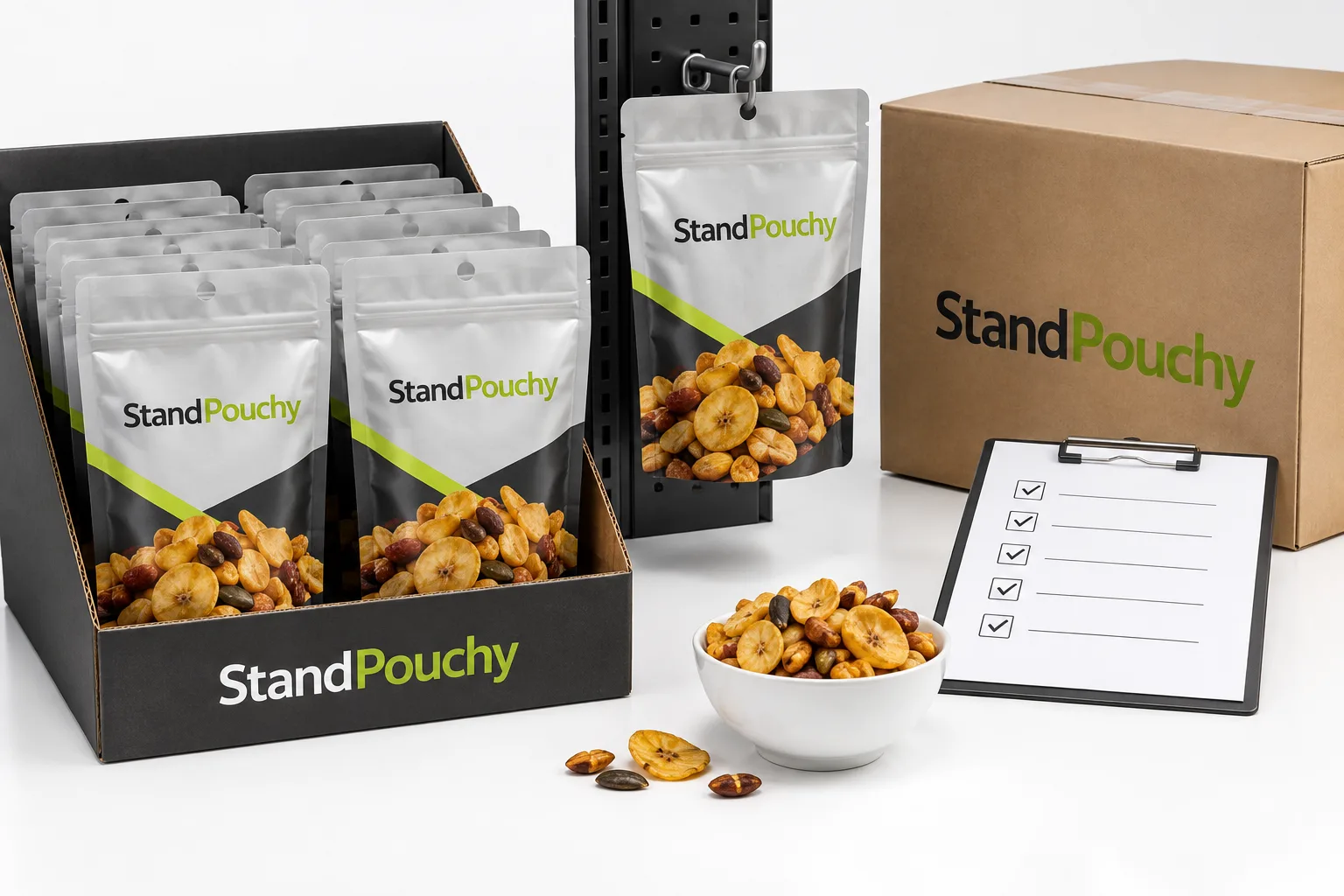
We buy a channel-ready scope rather than an isolated hole
We verify the final printed, filled unit after the header layout is settled. We check whether overlapping pouches or fixture contact obscure useful information. We review the barcode in its actual scanning context rather than merely checking that artwork contains one. GS1's barcode guidance ties symbol and production choices to the scanning environment.[5] We retain the confirmed location, construction, and print revision with the channel record. We also inspect the unit standing and in the intended case if both uses are planned. A changed hole, header, finish, or fill reopens the affected review; it does not silently inherit the previous approval.
We ask each supplier to price the same defined alternative. The comparison identifies hole arrangement, construction direction, dimensions, artwork stage, sample type, conversion review, packing, and destination. We ask whether any setup or tooling is included and which tasks remain outside the quote. We do not claim that a punch always adds a fixed amount or that a no-hole pouch always costs less overall. We compare the full purchasing scope and the buyer's real channel needs. If hanging has no agreed role, we keep the simpler no-hole alternative visible.
We use the pouch sample approval guide to capture the release owners. The channel owner accepts the fixture review. Operations accepts filling and permanent closure. Brand accepts the converted artwork. Procurement verifies the quote against that same revision. We then prepare the inquiry brief with the snack, fill, actual fixture, destination, artwork status, and remaining questions. We request a specific sample or review step rather than asking for a generic Euro-slot bag. We release the hang feature only when its commercial purpose and required evidence are both clear.
| Quote item | Same reference required | Buyer benefit |
|---|---|---|
| Hole and header | Approved converted drawing | Comparable feature scope |
| Trial and artwork | Filled sample and print revision | Clear evidence responsibilities |
| Packing and destination | Intended route and exclusions | No hidden channel assumptions |
Conclusion
We add a hang hole only for a defined channel job, then approve the filled header, opening, artwork, fixture, and supplier scope together.
Notes and sources
- GS1: Package and product measurement standard (cited in article)
- ASTM F88/F88M-23: Seal strength of flexible barrier materials (cited in article)
- FDA: Regulatory status of food-contact material components (cited in article)
- ASTM D882: Tensile properties of thin plastic sheeting (cited in article)
- GS1: Ten steps to barcode your product (cited in article)
- Reddit community insight: A stocker describes pouch hang-hole frustration (cited in article)
Reddit links are community insight only. We use official standards and regulator pages for technical context, and we require project evidence for the final pouch decision.