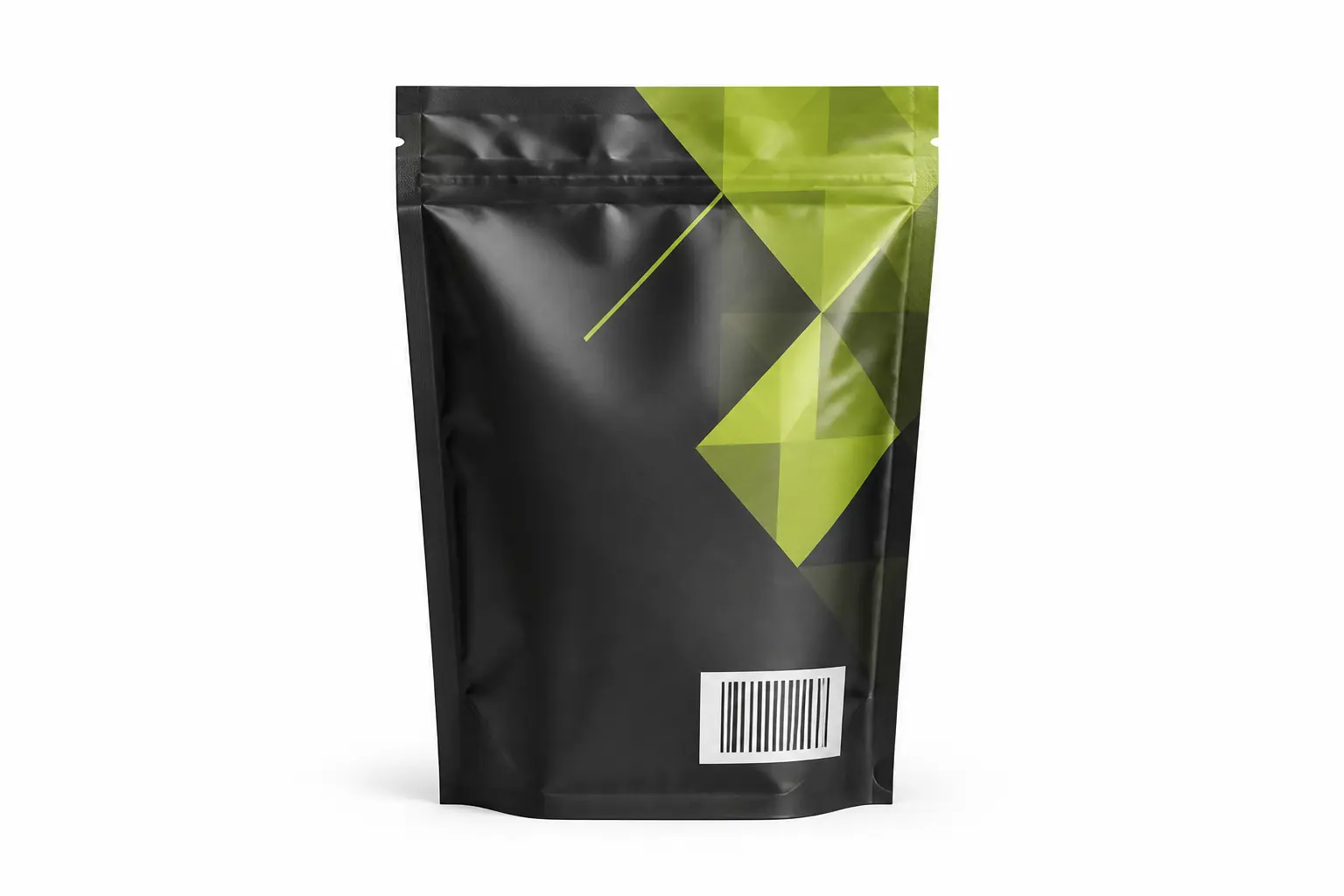
01
Where Will the Barcode Be Scanned?
A barcode that suits one scanner or route may not meet the placement and quality needs of another sales or distribution environment.
We identify point-of-sale, warehouse, retailer, and internal scanning needs first, then choose the applicable barcode type, size, placement, and verification plan.
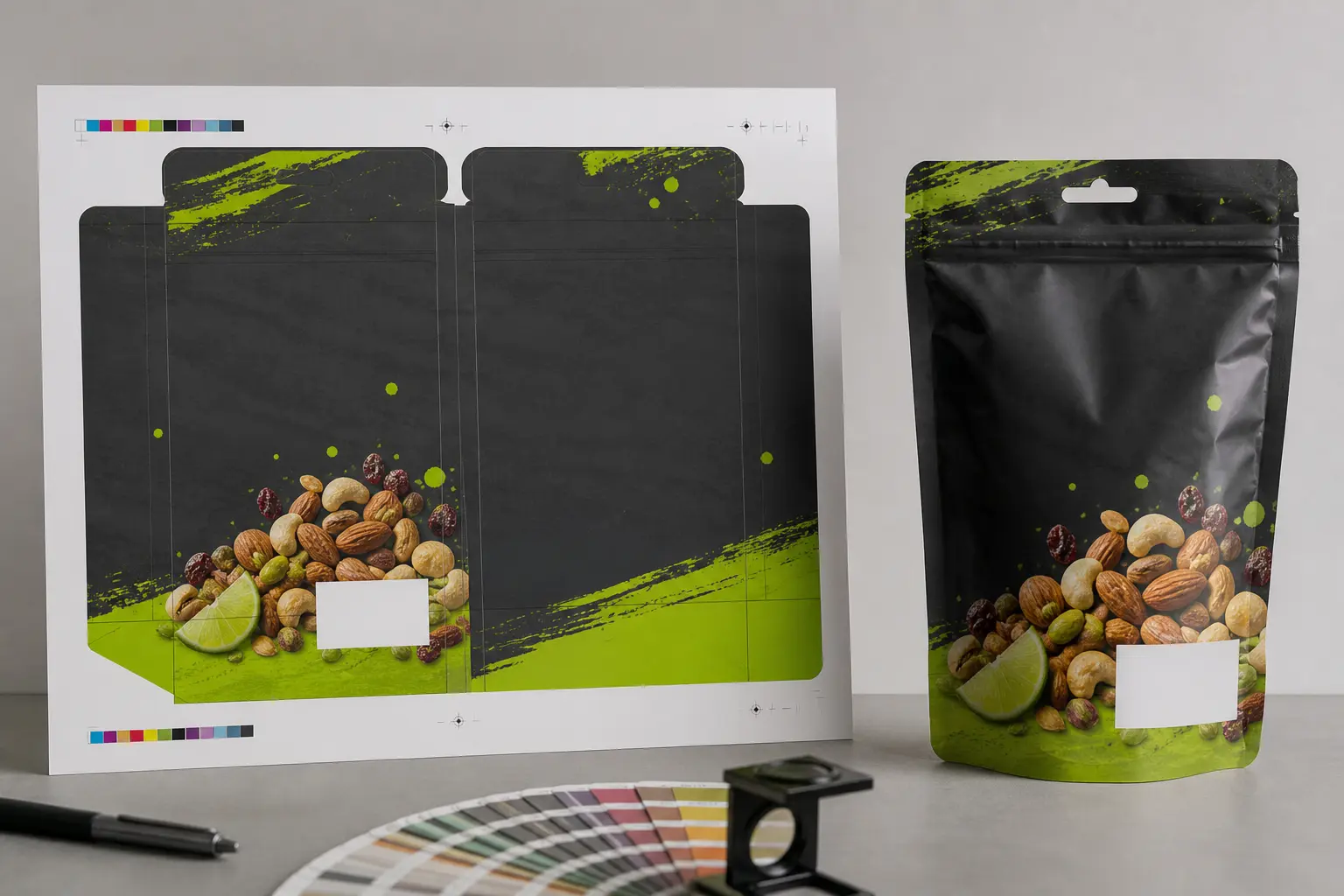
We start with the scan environment
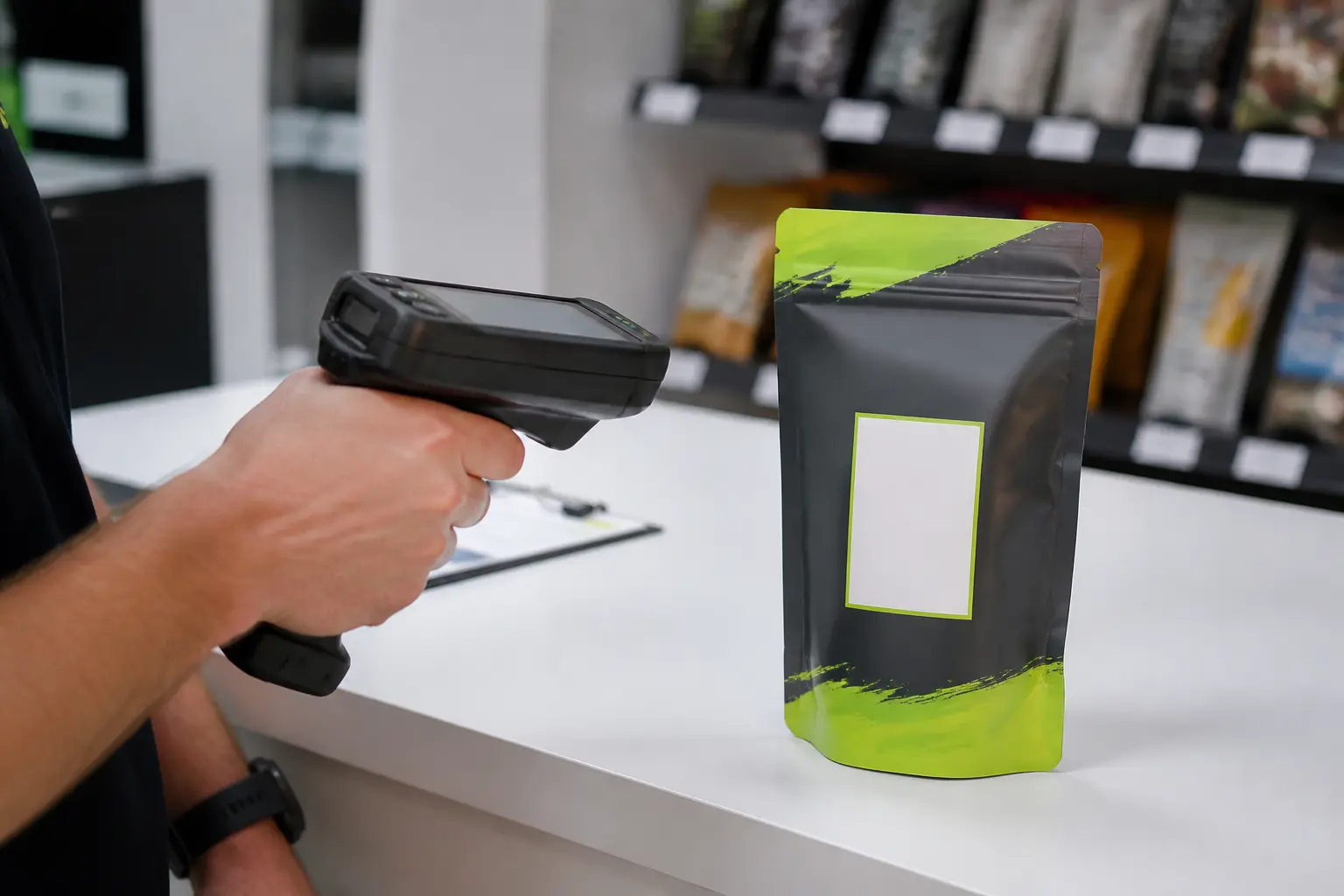
We ask the buyer where the product will be scanned and which party owns the product identifier. Retail checkout, warehouse receiving, marketplace fulfilment, and internal lot control can have different requirements. GS1 states that barcode type, size, placement, and quality depend on where the symbol will be scanned.[1] We do not copy a code location from an unrelated pouch or reduce it simply to fill spare artwork space during a rushed final artwork review.
We turn that information into a commercial brief. The buyer confirms the target channel, retailer requirements, product hierarchy, and the team responsible for barcode assignment. This avoids an expensive late artwork change after a retailer or distributor reviews the unit. It also stops sales photography from becoming a substitute for a functional pack check. A placeholder in a mockup is not a verified symbol.
We document the basics on the custom pouch dieline guide: intended back-panel area, orientation discussion, clear space, folds, seals, zipper, and product fill line. This drawing is a planning preview. The final converter-approved dieline and barcode specification must remain under the responsible artwork, printing, and channel teams.
| Scan route | Question for the buyer | Artwork implication |
|---|---|---|
| Retail point of sale | Which symbol and retailer rule apply? | Size and placement review |
| Distribution handling | How will cases and units be read? | Back-panel and pack orientation |
| Internal operations | What traceability information is needed? | Controlled data and owner |
02
Which Pouch Area Gives the Symbol a Fair Chance?
Folds, seals, curves, windows, and settled product can reduce the stable print area that a flat artwork view appears to offer.
We place the barcode on a smooth, practical area away from likely folds, seals, and damage, then verify its clear zones and orientation with the printer and channel requirements.
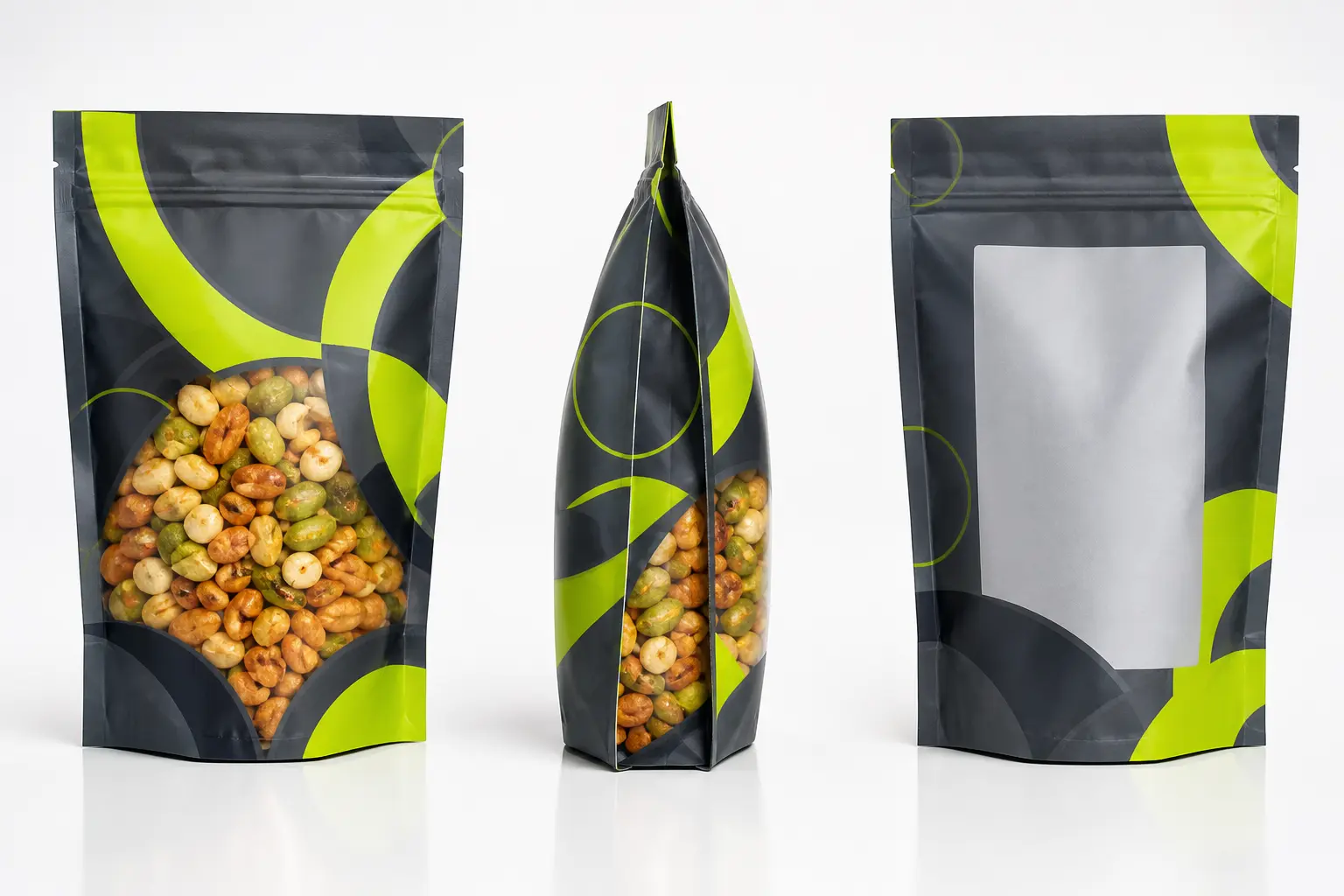
We map functional zones before decoration
We start with the pouch anatomy. A conventional stand-up pouch has side seals, a bottom gusset, a top closure area, and front and back faces that can change when filled. We mark those zones before final decoration. We also mark the zipper, tear notch, window, and likely product height. A symbol placed too near a fold or seal may look square on screen but distort on the physical finished pack.
GS1 US advises keeping the printed surface smooth and protecting the quiet zones; it also cautions against resizing barcode artwork by simply shrinking or enlarging it.[2] We treat this as a placement and production discussion, not an excuse to publish a generic dimension. The printer needs to confirm the process direction, print behaviour, and practical location. The buyer needs to confirm the channel rule.
Commercially, this protects the rest of the design. We reserve a functional zone early so the brand hierarchy, flavour callout, mandatory copy, and product image do not fight for a last-minute rectangle. The flexible packaging specification checklist lets the buyer keep the barcode question alongside product, market, material, and artwork status.
| Pouch zone | Risk to review | Practical action |
|---|---|---|
| Side seal or gusset fold | Wrinkle or distortion | Keep symbol on a stable face |
| Top functional area | Notch, zipper, or seal interference | Reserve separate closure space |
| Decorated back panel | Quiet zone or contrast loss | Protect the verified symbol area |
03
Why Must We Verify the Filled Pouch?
A barcode proof has not experienced the filling, settling, flexing, surface finish, and handling that shape the final scanning surface.
We verify a converted, filled representative pouch because the physical package—not the PDF—shows whether the approved placement survives its intended handling condition.
We review the pack after it becomes three-dimensional
We inspect a filled pouch in the condition the channel will see. We look for product settlement, a wrinkled back panel, scuffing, a curved print surface, or a seal that reaches closer to the symbol than expected. We ask the appropriate verifier or channel process to evaluate the actual code and record the method. The page does not invent a pass grade, because that depends on the intended symbol, print process, and applicable requirements.
We also compare the pouch while it is standing and while it lies flat. GS1's package measurement guidance notes that flexible packaging can change shape and should be assessed with contents settled for the relevant measurement context.[3] That reinforces a practical point: flat art cannot fully represent the filled unit. We use filled samples to review the barcode area alongside front-panel hierarchy and the consumer opening path.
For buyers, this small test can prevent a large operational interruption. A channel-ready sample can move to procurement and sales with a clear record. An unclear sample triggers a controlled adjustment before an order is released. We keep the pouch sample approval guide attached to the artwork revision so a later film, finish, or pouch-size change does not silently inherit an old result.
| Filled condition | What we check | Business consequence |
|---|---|---|
| Settled product | Back-panel flatness | Scan area remains practical |
| Handling and case contact | Scuffing and deformation | Distribution risk is visible |
| Final artwork revision | Symbol and surrounding copy | Approval stays traceable |
04
How Do We Release Barcode Artwork Without Guessing?
Barcode artwork can be released too early when design, printing, operations, and sales each review a different version or sample.
We release barcode artwork only when one revision links the assigned symbol, placement, printer input, filled verification, channel requirement, and any unresolved action.
We use one controlled approval record
We identify the owner of each decision. The product owner controls the item identity. The artwork owner controls the revision. The printer confirms what the process requires. Operations confirms the filled pouch condition. The channel owner confirms the relevant receiving or retail requirement. Each person reviews the same controlled reference instead of relying on screenshots passed between teams.
We keep the commercial decision visible. A barcode area may change the back-panel copy, the photography angle, or the way variants are distinguished on shelf. Community discussion from emerging jerky brands shows that product visibility and shelf recognition are active buyer concerns, but that feedback is not a symbol-placement rule.[4] We use it only to ask better retail questions, while GS1 material and the channel specification guide the technical work.
We release only what has evidence. If verification is pending, the artwork is pending. If a symbol has been assigned but the physical sample has changed, we repeat the applicable review. When the record is complete, the buyer can prepare a snack pouch inquiry with the product, destination market, artwork status, and scan route. That gives the packaging team enough context to plan the work without guessing at barcode compliance.
| Release element | Responsible input | Status to record |
|---|---|---|
| Assigned symbol | Product and channel owner | Approved or pending |
| Print placement | Artwork and printer | Verified revision |
| Filled-package check | Operations and channel process | Method and outcome |
Conclusion
We verify snack-pouch barcode artwork on the filled, converted pack and release it only with the responsible channel, printing, and revision evidence.
Sources and further reading
- GS1: Ten Steps to Barcode a Product (cited in article)
- GS1 US: Barcode Placement and Printing Guidelines (cited in article)
- GS1 Package and Product Measurement Standard (cited in article)
- Reddit community discussion: Beef biltong shelf design choices (cited in article)
Reddit links are community insight only. We use official standards and regulator pages for technical context, and we require project evidence for the final pouch decision.