01
What Must We Specify About the Makhana Before Requesting Quotes?
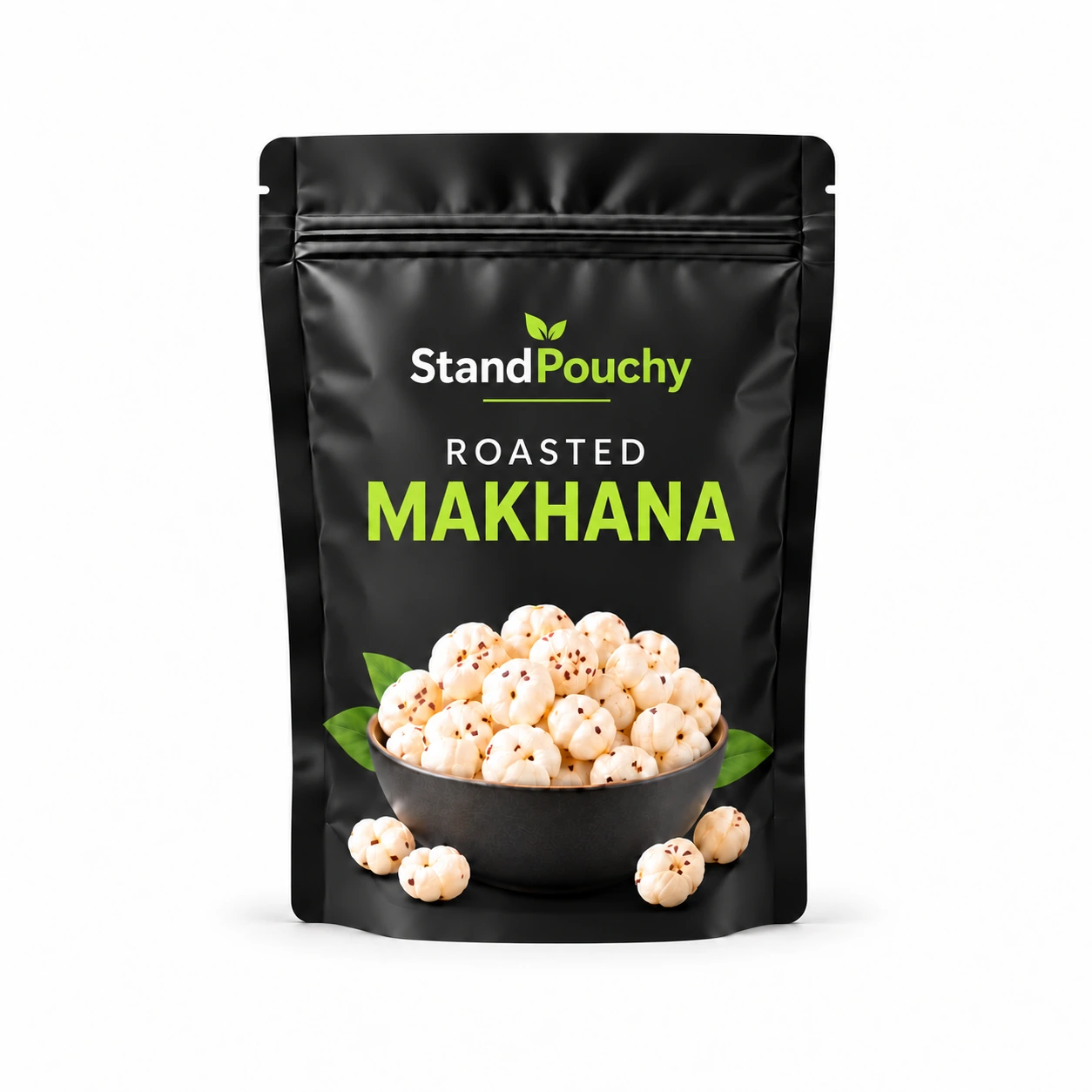
We cannot compare supplier offers when one assumes large whole fox nuts and another assumes smaller seasoned pieces. We define the product first.
We send the popped product condition, grade range, seasoning, target amount, market and sales channel. We name the variation that samples must represent, so each supplier prices and tests the same purchasing scope.
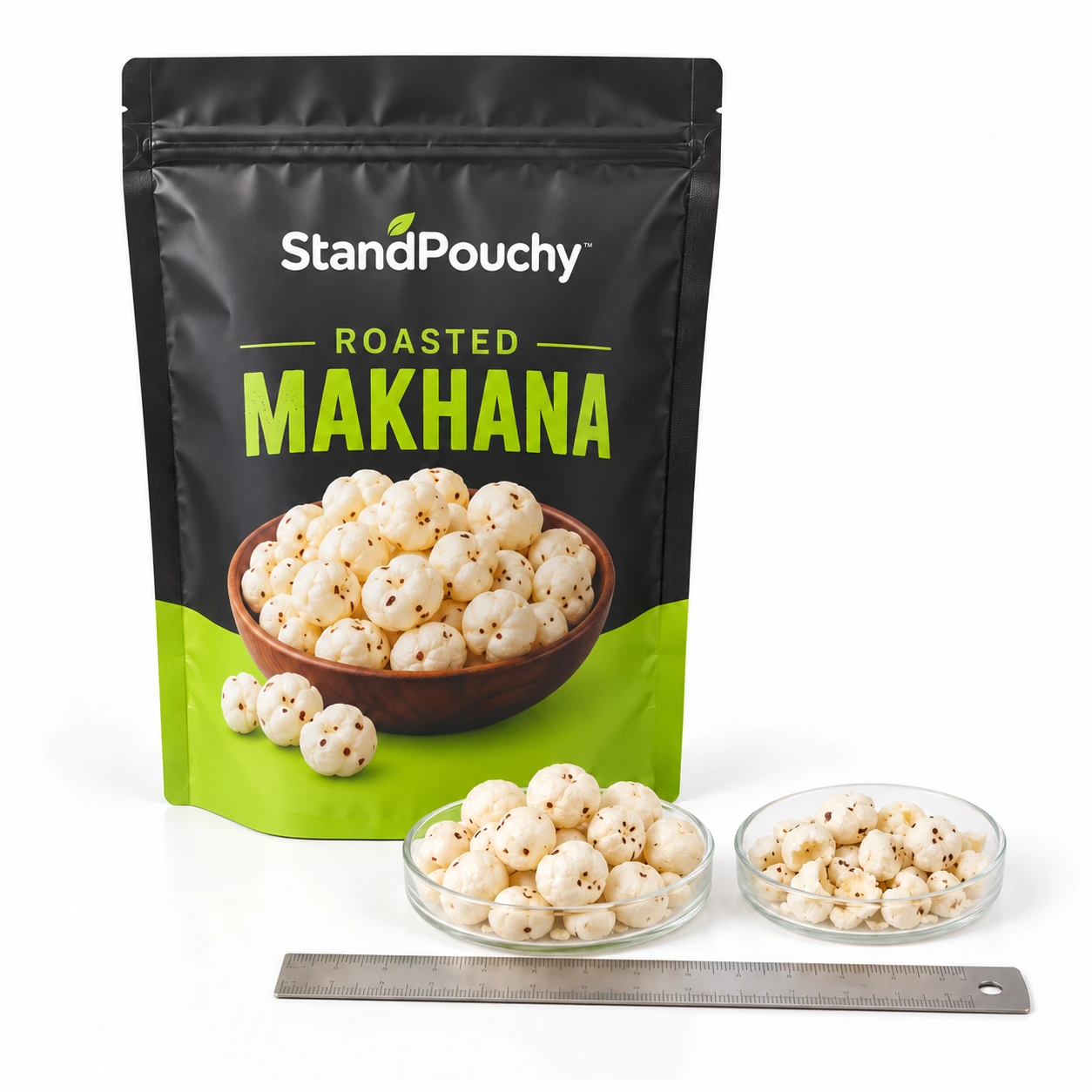
We give suppliers a representative product brief
We begin with the product we will actually sell. NIFTEM's makhana packaging training identifies fox nuts as Euryale ferox and discusses popped-product packaging.[1] We keep roasted, popped makhana separate from raw seed and other puffed snacks. We record larger pieces, small pieces and the normal broken fraction. We also record whether seasoning is dry, oil-carried or added in another way. These are sample inputs, not a recipe recommendation.
We put the useful buying facts on one page. Our brief names the target amount, intended pack occasion, artwork status and destination. We ask the supplier which missing input could change its offer. A supplier who needs product samples should say so before a final quotation. We can then compare a stock trial route with a custom route without mistaking an untested stock size for an approved pack.
We weigh and fill several representative samples. We note loose height, settled height, powder near the opening and whole pieces that bridge at the mouth. We keep those observations beside the actual piece range. A conventional stand-up pouch has front and back faces, side seals and an opened bottom gusset. It does not need separate box-style side panels. We check whether its base opens under the light fill rather than assuming its name proves stability.
We use the specification checklist to decide which questions belong in the quote. We ask for separate options when the product range needs different sizes. This avoids paying for a compromise that leaves a small grade looking empty while making a large grade difficult to fill. We ask what sample stage will answer that uncertainty before we order printed units.
We also keep the buyer's responsibility visible. A Reddit makhana-business discussion asks about freshness, packaging and logistics together.[5] That is a useful commercial question, not evidence that any film performs well. We answer it by assigning product-quality decisions to the product team, pouch construction to the converter and filling to the packer. Our inquiry becomes specific enough for a supplier to respond with a defined next step.
| Brief field | Buyer question | Sample evidence |
|---|---|---|
| Popped grade range | Can one size serve the range? | Whole and broken pieces |
| Seasoning condition | Does the quote cover this product? | Representative coated sample |
| Pack occasion | Do we need repeat access? | Opening and portion trial |
02
How Do We Compare Pouch Volume Without Buying Excess Space?
We risk either crushed pieces or an oversized pack when we convert grams directly into dimensions. We compare repeated fills before choosing.
We compare face width, usable height and full bottom-gusset depth with the actual makhana grade. We include clean top space, consumer access and the intended case. We choose the smallest candidate that passes those tasks, rather than a theoretical maximum fill.
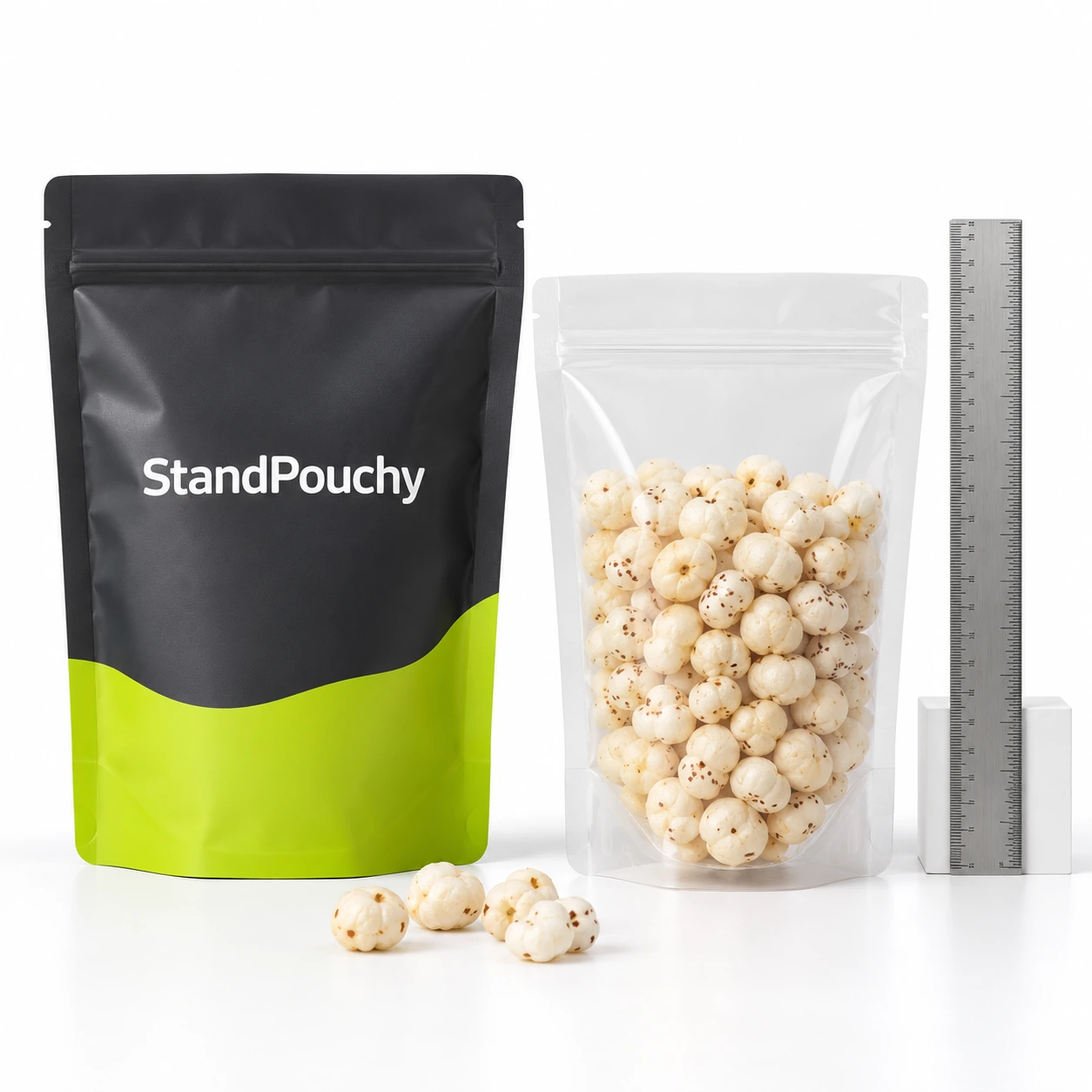
We compare filled candidates as a buying system
We separate the outside dimensions from the space we can use. The top header, tear path, zipper and final seal need their own positions. We fill each candidate through the intended opening and record where pieces stop below the sealing area. We watch whether large fox nuts catch at the mouth or require force to enter. Pushing fragile pieces into a pouch is not the same as demonstrating a workable filling process.
We compare only a few purposeful candidates. One may give easier access. Another may fit more units in a case. We ask the packer which option creates less intervention during filling. We ask the channel owner which filled shape communicates the pack amount clearly. These answers help us buy a useful size rather than selecting the tallest pouch because it looks prominent in an empty sample.
We examine the settled base and front panel after rest. Light pieces may distribute unevenly, and the opened bottom gusset can change the face shape. We inspect whole-piece pressure, wrinkles and movement inside the final case. We keep empty headspace available where the process needs it, but do not claim that extra air guarantees cushioning. We test the actual case configuration to see what it does to broken-piece levels and presentation.
We use the pouch size guide to record the comparison. Our worksheet keeps the product lot and pouch revision beside each observation. We do not ask a supplier to guarantee a gram capacity for an unspecified grade. We ask it to propose dimensions for a sample trial and explain the limits of that proposal. This makes a quotation easier to compare with another converter's offer.
We then discuss the cost drivers that we can actually control. Face area, laminate direction, feature choices, print scope and case arrangement can all change the proposed supply scope. We request the supplier's own explanation and quotation, without inventing a price saving. If a compact option fails access or case review, we keep the larger option in consideration. We approve the trade-off only when its practical benefit is visible to the team that will use it.
| Candidate task | What we inspect | Purchase decision |
|---|---|---|
| Fill and seal | Whole pieces below clean top space | Keep or resize |
| Consumer access | Opening with largest normal pieces | Confirm mouth width |
| Packed case | Settling and damaged pieces | Agree case configuration |
03
Which Material Evidence Should We Request for Roasted Makhana?
We can mistake a metallic appearance for a verified barrier. We request exact construction and conditions before buying a material direction.
We compare moisture and any product-defined oxygen, aroma or light concerns using data for the exact laminate. We request contact-use support and finished-seal evidence. We keep those records separate from the product team’s filled-pack shelf-life approval.
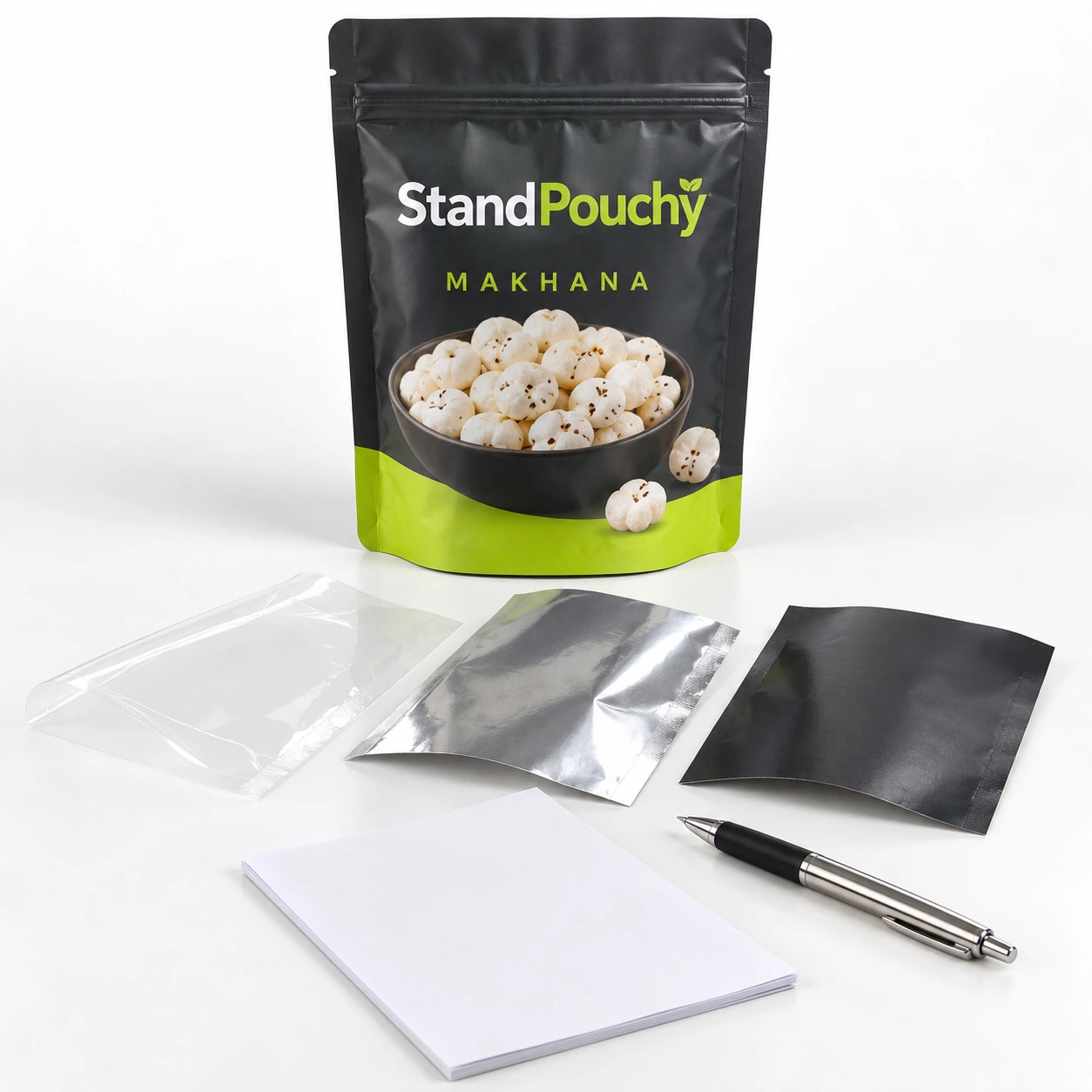
We attach each material option to its evidence
We ask the product team which change ends acceptable quality. NIFTEM's training discusses moisture, storage and packaging as makhana review factors.[1] We use that as a reason to investigate the real product, not as a universal shelf-life result. A seasoned variant may need a different evaluation from a plain variant. The product team or qualified laboratory sets the observation method, conditions and acceptance basis.
We request outside-to-inside layer identity for each quotation. A PET / metallized PET / PE direction can be a discussion candidate; a clear or other direction remains a separate option. We do not call a candidate approved because it is opaque or shiny. We ask what the exact film evidence covers and which print, adhesive and sealant details remain open. We record those questions in the material structure guide.
We keep WVTR values with their method, temperature, humidity, units and specimen. ASTM F1249 concerns water-vapor transmission through film and sheeting; its public guidance calls for agreed sampling and test criteria.[3] We also keep finished-seal measurements distinct. ASTM F88 concerns flexible-material seal strength.[4] A flat-film result and a seal-strength result answer different questions. Neither alone proves the product's storage outcome.
We ask suppliers to identify the evidence included in their offer. Is it a typical family data sheet, a report for this laminate or a proposed trial still to run? We compare like scope before treating two offers as equivalent. We also ask who pays for a changed construction after the first trial and what sample stage must be repeated. That discussion makes the cost of uncertainty visible without relying on an invented unit price.
We request market-specific food-contact support for the intended product use. FDA's component-status guidance links the material review to individual substances and applicable conditions; an FCN also has a named manufacturer scope.[2] We ask the supplier to connect its documents to the construction it is offering. We keep any unresolved market review in the order record. A broad certificate title does not replace that traceability or the buyer's own product approval.
| Evidence | Useful question | Commercial implication |
|---|---|---|
| Exact layer direction | Does the report match the offered film? | Compare equivalent options |
| WVTR and conditions | What specimen and environment were used? | Scope the storage trial |
| Contact and seal records | Are the use and revision traceable? | Assign remaining approval work |
04
How Do We Approve the Makhana Pouch Before Ordering?
We can approve artwork while filling or distribution remains unresolved. We connect the decisions before releasing one controlled order.
We approve the same product, pouch revision, artwork and case configuration through filling, opening, storage and handling reviews. We name the owner and evidence for each decision. We order only after the supplier and buyer share that approved scope.
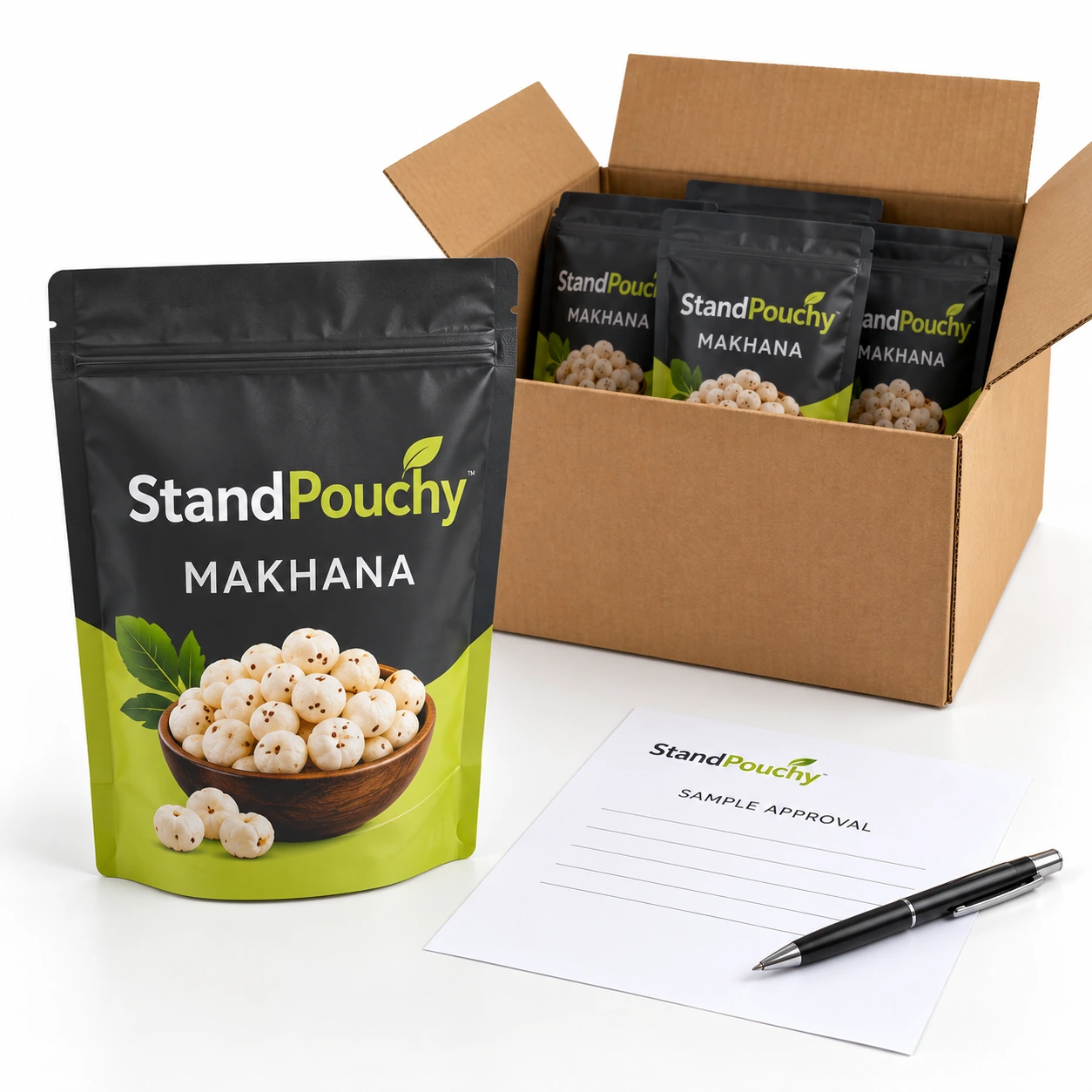
We turn sample approval into an orderable specification
We run the filling sequence with representative pieces and seasoning. We check the mouth, product drop, top clearance and final sealing area. We inspect repeated units for trapped powder, wrinkles and piece contact near seals. We retain both normal observations and failures. We record the product lot, pouch lot, settings and operator or line identity so the next trial can explain a change rather than start again from memory.
We give the brand owner a separate appearance decision. Can shoppers recognize makhana, variant and pack amount on a filled face? Does the illustration match the actual product style? We avoid unsupported health, sustainability or shelf-life statements. We ask for a controlled print proof and name the artwork version in the purchase brief. A pleasing sample does not authorize a claim that the product team has not reviewed.
We review opening and storage on the final construction. We tear the header, reach or pour through the mouth, and reclose when repeat use is intended. We examine remaining pieces and residue after the planned use pattern. We also pack the actual case and inspect pieces, rubbing and seal areas after representative handling. We keep storage observations under the product team's defined protocol, with no assumed conversion from a quick trial to a shelf-life date.
We use the sample approval guide to record a clear decision for every review. We distinguish a size approval from a print approval and from product-performance acceptance. If one item is pending, we say exactly what the supplier can prepare next and what remains unreleased. This is more useful for procurement than an unsigned note saying the sample looks good.
We finish with a matched inquiry and order scope. We send the chosen dimensions, film direction, feature positions, artwork reference, quantities by variant and intended case. We include any agreed repeat-test requirement after a change. We can request a makhana pouch review with those fields and the actual sample questions. We ask the supplier to confirm what its final offer includes, then compare that response against our approved record before committing.
| Decision owner | Approval task | Order reference |
|---|---|---|
| Product team | Storage endpoint and evidence | Product lot and protocol |
| Packer and converter | Fill, seals and dimensions | Controlled pouch revision |
| Brand and buyer | Artwork and supply scope | Approved proof and quotation |
Conclusion
We buy makhana pouches from a defined product range and matched supplier scope. We release the order when filled samples and evidence support the same revision.
Notes and sources
- NIFTEM/MoFPI: Makhana Packaging training (cited in article)
- FDA: Determining Food-Contact Component Status (cited in article)
- ASTM F1249: Water Vapor Transmission Rate (cited in article)
- ASTM F88: Seal Strength of Flexible Barrier Materials (cited in article)
- Reddit community insight: Makhana packaging and logistics questions (cited in article)
Reddit links are community insight only. We use official standards and regulator pages for technical context, and we require project evidence for the final pouch decision.