01
Which Seed Details Should We Give a Supplier?
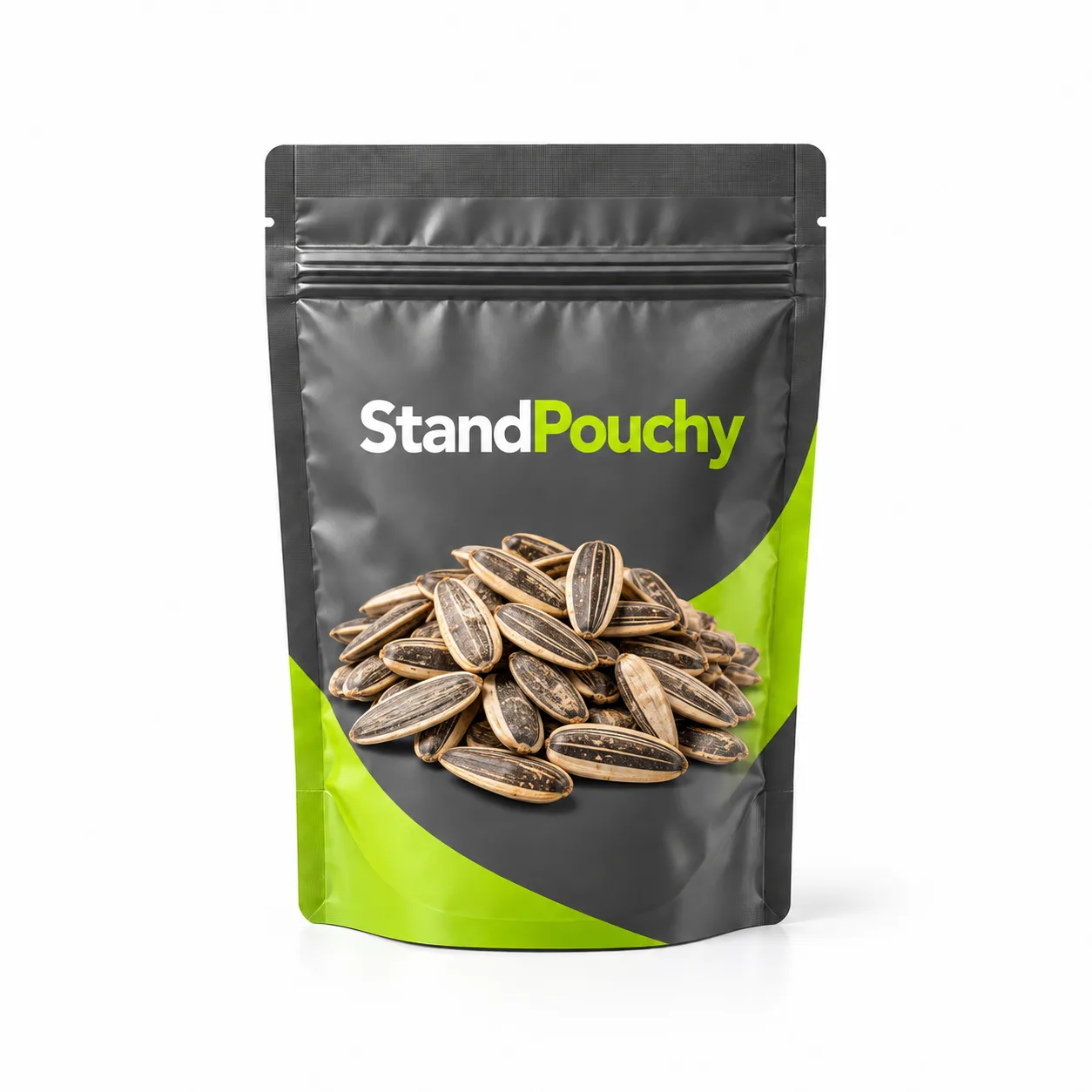
We cannot compare seed-pouch offers when suppliers picture different products. Mixed assumptions create misleading samples, so we define the seed format first.
We provide representative in-shell seeds, target fill, seasoning condition, shell variation, destination market, and the intended purchase occasion. We separate those facts from proposed pouch features.
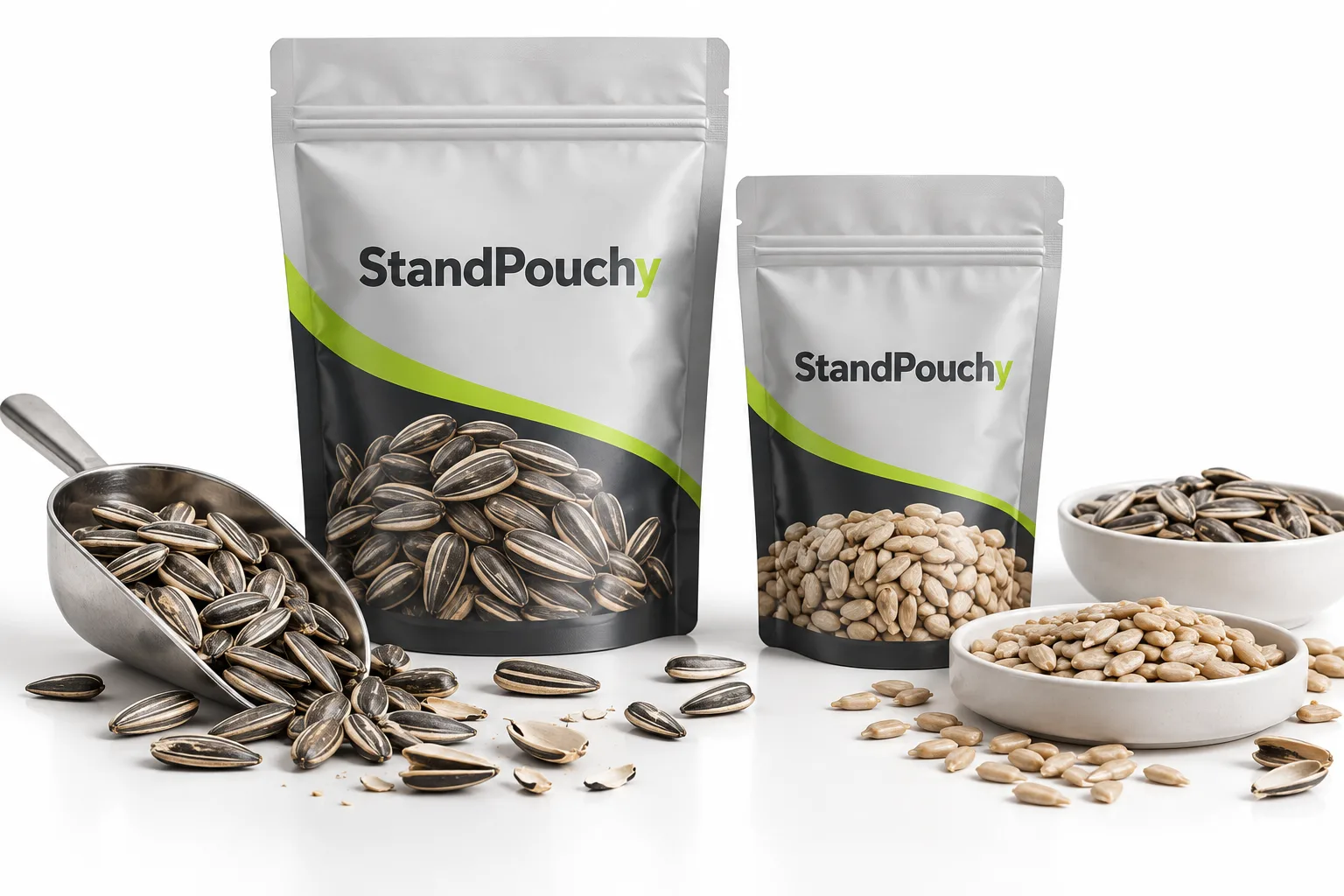
We distinguish shells from kernels before sampling
We start with a representative product lot. We observe seed length, pointed ends, broken shells, loose seasoning, and how the product settles. We record those observations instead of assigning a universal puncture requirement. We also distinguish outside dimensions from the space available below the zipper and permanent seal. The food-contact question remains separate: FDA guidance requires us to establish the regulatory status of the individual construction components and their intended use.[1] We therefore ask for support that matches the actual food contact and conditions, not an unqualified statement that every seed pouch is FDA approved.
We then ask the buyer to describe the sale. A small counter pack, a resealable sharing pack, and an online replenishment pack do not need the same presentation. We compare whether the shopper needs quick pouring, repeated access, or a compact unit. We keep spent-shell handling outside any unsupported claim about the primary pouch. If the buyer wants a separate waste arrangement, we name it as another design question rather than quietly making the seed pouch larger.
We use the snack packaging specification checklist to issue a common brief. Each supplier receives the same seed sample, fill target, channel, artwork stage, and open questions. We request alternatives against that brief rather than asking for the supplier's most popular size. This lets us see where one offer includes a filled trial and another includes only an empty reference. We do not infer demand, storage life, minimum quantities, or a production schedule from a catalogue photograph.
| Buyer input | Sample question | Purchasing decision |
|---|---|---|
| Whole shells and fragments | Where does contact concentrate? | Representative product lot |
| Intended occasion | How will the buyer open and pour? | Single-use or sharing feature |
| Market and food contact | Which support matches this use? | Document review before release |
02
How Do We Compare Film and Size Without Overbuying?
We can add thickness and still miss shell contact or filling space. That creates cost without a clear benefit, so we compare evidence and fit together.
We compare identified film constructions under agreed test conditions, then fill conventional pouch candidates with real seeds. We choose the option that supports the actual product, presentation, and operating plan.
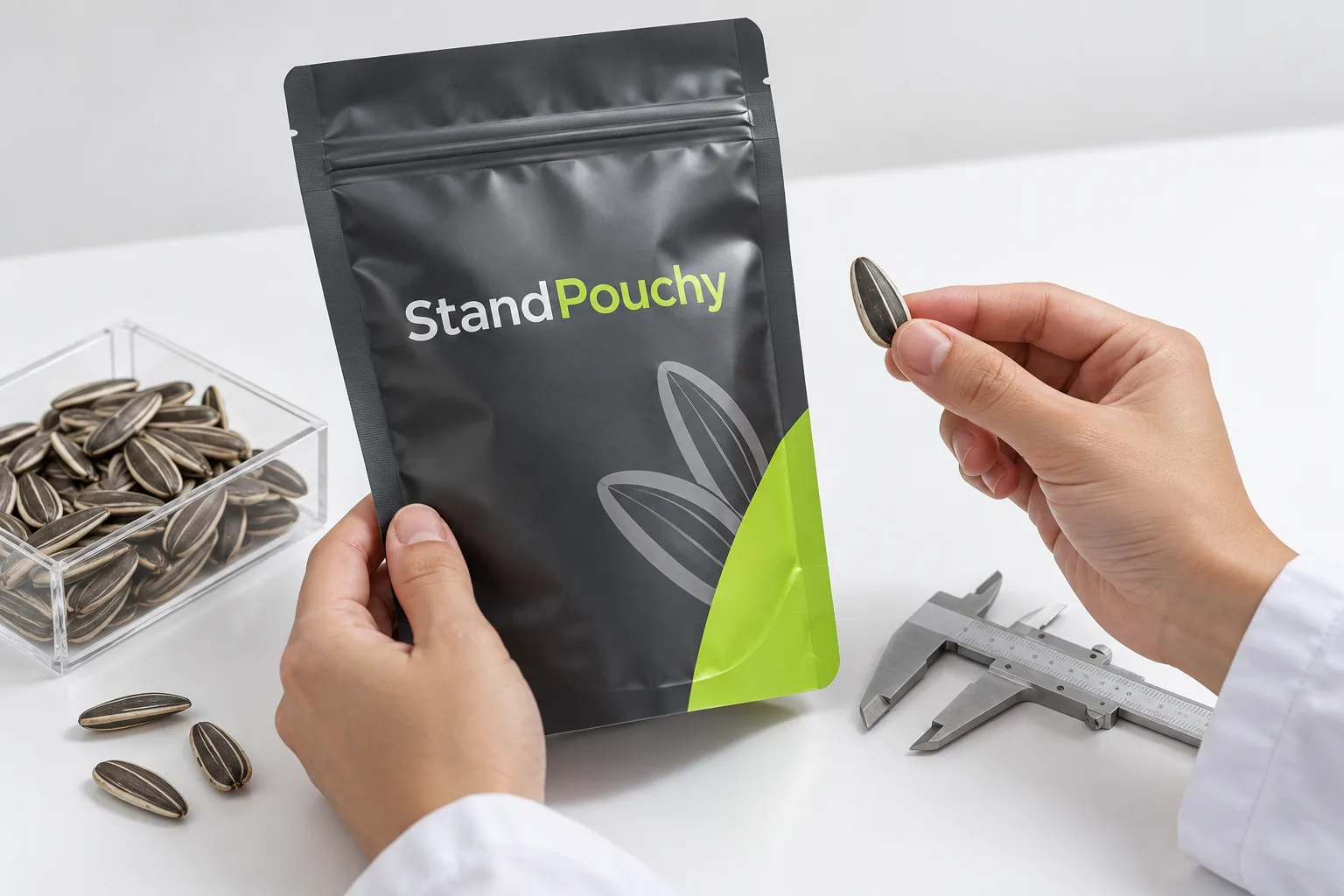
We separate film data from whole-pack approval
We ask for the outside-to-inside construction, relevant thickness information, and the source of each proposed barrier value. ASTM F1306 characterizes penetration resistance under controlled conditions; its scope highlights variables such as probe and test conditions.[2] We do not translate a film specimen result into a promise that pointed shells cannot damage a filled pouch. ASTM F1249 supplies a method for water-vapor transmission through film.[3] We retain the conditions and sample identity with the result. We treat oxygen, moisture, shell contact, and finished-pack handling as distinct questions rather than calling a film simply strong or high barrier.
We compare size candidates through actual fills. We want enough access for the selected seed format and enough operating room above the highest normal product level. At the same time, we ask the buyer whether a taller pack improves shelf recognition or merely looks underfilled. A wider face may make product identity clearer, but it may also change case arrangement. We show these trade-offs side by side and let the intended channel guide the choice. We use the stand-up pouch size guide as a planning reference, not as an automatic weight conversion.
We ask suppliers to explain each proposed upgrade. Which unresolved risk does it address? What evidence would distinguish the alternatives? Does the proposal include the same sample stage and filling assumption? We do not accept a heavier construction just because it sounds safer. We keep a lower-material option in the comparison when its evidence supports the brief, and we hold it when evidence is missing. Our next step is a matched trial, not a price claim or an unsupported savings percentage.
| Comparison | Evidence to keep | Decision boundary |
|---|---|---|
| Shell contact | Defined penetration method and filled observation | No universal puncture guarantee |
| Moisture barrier | Film identity and test conditions | No automatic storage-life claim |
| Pouch size | Filled access and case comparison | No weight-to-size shortcut |
03
Which Opening and Seal Details Are Worth Paying For?
We can buy a zipper that leaves too little grip or collects fragments. That frustrates use, so we review the entire opening path before ordering.
We add reclosure only for a clear repeat-use need. We check the tear path, grip, seed access, zipper cleanliness, and a separate permanent seal with filled samples.
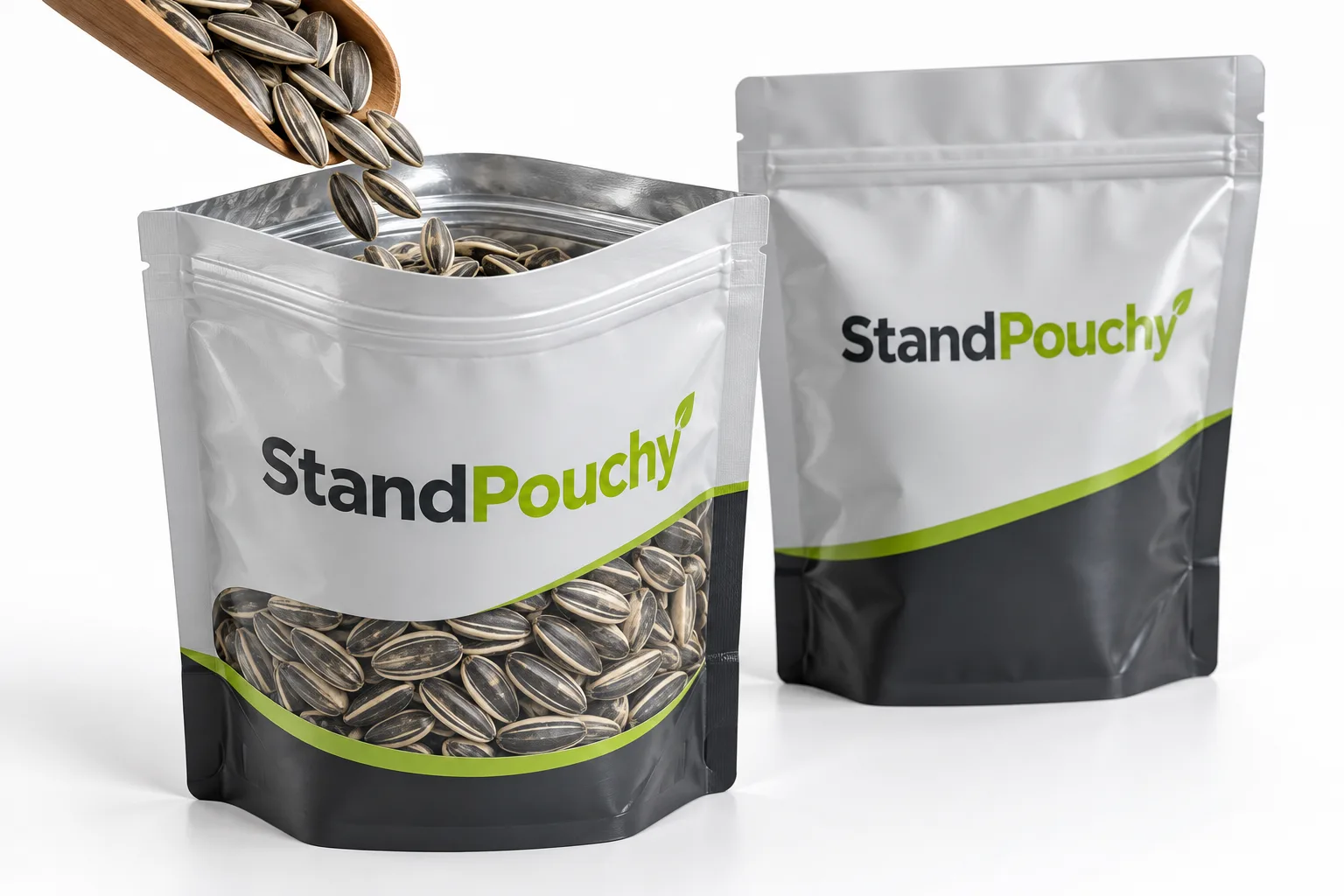
We give each closure feature a specific job
We map the top of the conventional pouch before approving artwork. We identify the permanent sealing area, tear path, zipper, and product limit. We watch representative filling for seasoning or shell fragments entering those zones. We keep a zipper distinct from the initial permanent closure. ASTM F88/F88M supports measuring seal strength for process validation and control.[4] We specify the relevant specimen, conditioning, result, and observed failure mode with the responsible team. We do not publish one pass force or infer leak integrity from seal strength alone. We reopen the review if the construction or closure layout changes.
We choose features from the use occasion. For a small pack consumed at once, a zipper can be an unnecessary step. For a larger pack, we compare grip and pouring on the filled sample after first opening. We ask whether the user can find the tracks without reaching past sharp shell ends. In a Reddit packaging complaint thread, participants describe frustrating tears and poorly placed reclosure.[6] We use that as an attributed access concern, not as evidence that our pouch has solved the problem or that a particular brand has a measured failure rate.
We bring the supplier into a practical comparison. We ask whether the sample represents a hand fill, the proposed line, or only a feature mockup. We request a clear explanation of the opening arrangement and the work needed to confirm it. Our filled snack pouch seal guide helps us frame that discussion. We prefer fewer justified features over a long feature list. We keep any extra opening aid pending until the buyer can connect it to a visible problem and an approval test.
| Feature | Buyer question | Approval evidence |
|---|---|---|
| Zipper | Will the pack be used again? | Filled opening and reclosure review |
| Tear path | Can we access the tracks cleanly? | Converted sample opening |
| Permanent seal | Can filling keep it clear? | Line observation and agreed testing |
04
How Do We Make Seed-Pouch Quotes Comparable?
We can approve one sample and receive a quote for another scope. That hides purchase risk, so we connect every offer to one controlled reference.
We compare quotes with the same product, construction, dimensions, features, artwork stage, sample plan, case route, and exclusions. We release the purchase only after the responsible owners close required evidence.
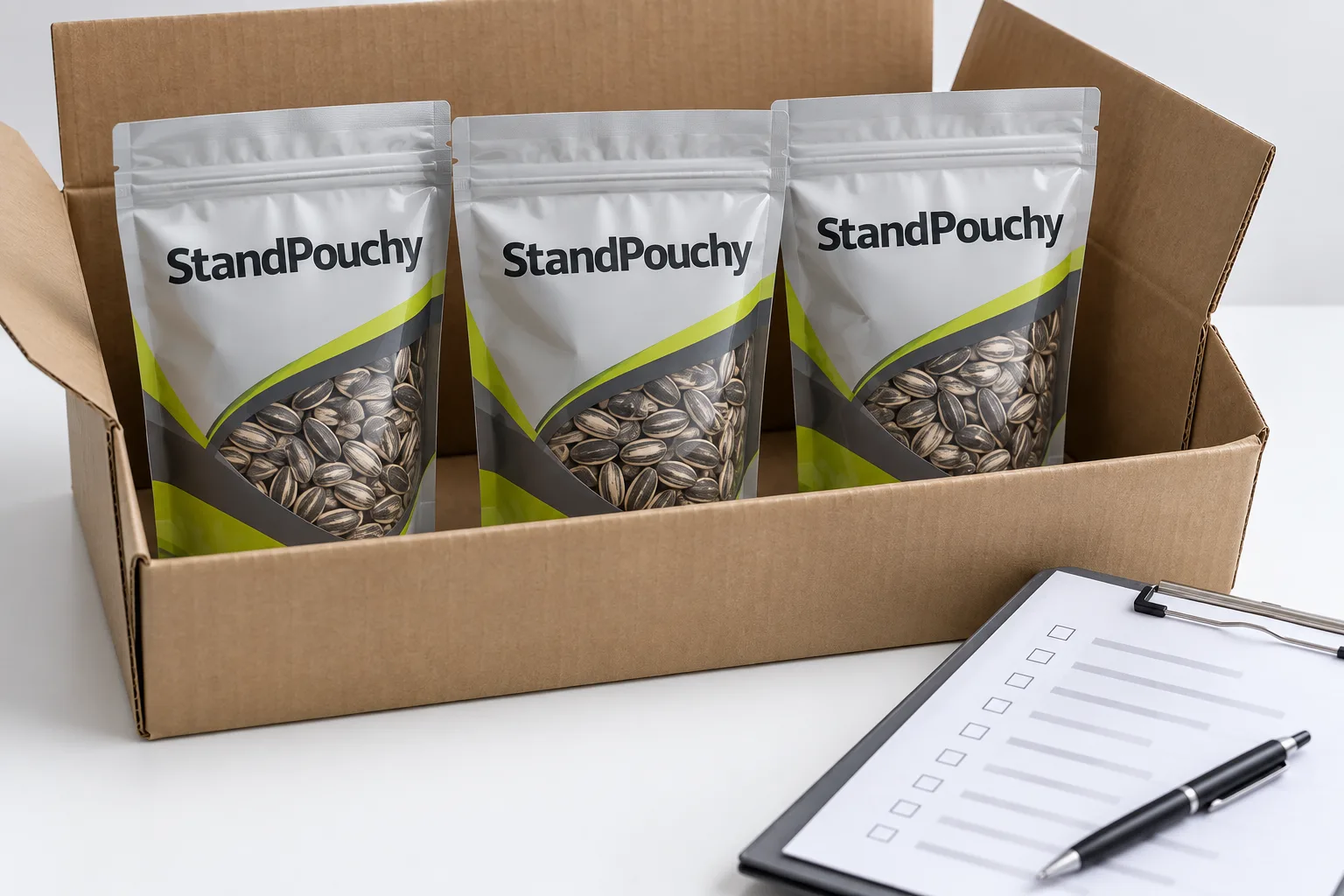
We choose a supplier scope rather than a vague bag price
We review the final filled pouch upright and in its intended case. We record face width, overall height, bottom-gusset convention, settled contents, and usable opening separately. GS1 measurement guidance addresses flexible packages in their relevant measurement context.[5] We distinguish those finished-unit measurements from the converter's manufacturing dimensions. We also inspect the side seals and bottom fold after handling. We retain the final sample and construction identity with the agreed test records. A new product lot, zipper location, laminate, or filling sequence can reopen the affected approval; it cannot automatically inherit an unrelated result.
We send each supplier a comparison sheet rather than a photograph alone. We ask what is included in sampling, artwork review, conversion, packing, and delivery scope. We ask which responsibilities remain with the buyer or co-packer. We do not fill missing answers with assumed capacity, timing, or pricing. If one proposal excludes an operating trial, we make that exclusion visible. This gives procurement a fair basis to compare offers without pretending every quotation describes the same work.
We use the pouch sample approval guide to separate accepted items from open questions. Brand reviews the product identity and supported copy. Operations reviews filling and initial closure. The channel owner reviews presentation and case use. Procurement confirms that the selected quote references the same revision. We then prepare the inquiry brief with the actual seeds, fill target, route, artwork status, and remaining evidence needs. We keep the next action specific: request matched candidates, run the agreed review, or close a named document gap. We do not call a pending sample production-ready.
| Quote field | Record to compare | Risk avoided |
|---|---|---|
| Construction and dimensions | Same filled sample revision | Unlike products compared as equals |
| Sampling and trial scope | Included work and exclusions | Unowned approval tasks |
| Channel and case | Intended route and packing | Unexpected presentation changes |
Conclusion
We buy a sunflower seed pouch from matched product, film, opening, sample, and supplier evidence. We release only the revision that supports the intended sale.
Notes and sources
- FDA: Regulatory status of food-contact material components (cited in article)
- ASTM F1306: Slow rate penetration resistance of flexible barrier films (cited in article)
- ASTM F1249: Water vapor transmission through plastic film (cited in article)
- ASTM F88/F88M-23: Seal strength of flexible barrier materials (cited in article)
- GS1: Package and product measurement standard (cited in article)
- Reddit community insight: Frustrating tears and reclosure (cited in article)
Reddit links are community insight only. We use official standards and regulator pages for technical context, and we require project evidence for the final pouch decision.