01
Which Brittle Pieces Should Our Supplier See?
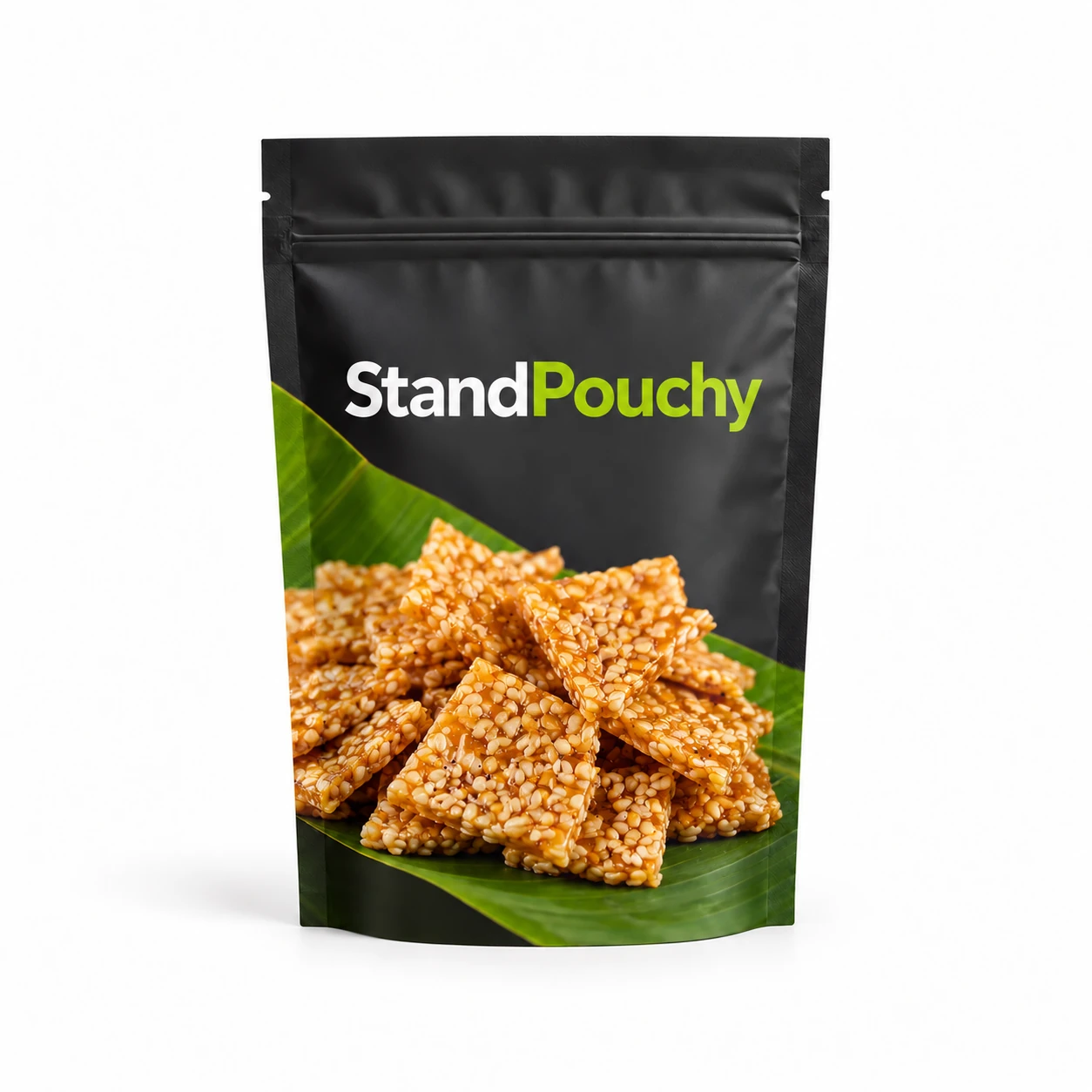
We can send only perfect pieces and hide normal fragments. That produces flattering samples, so we give suppliers a representative product range.
We provide whole pieces, normal shards, loose seeds, target fill, surface condition and the intended sale. We ask the food owner to define the acceptable product state and storage-study question.
We separate a product-quality question from a pouch defect
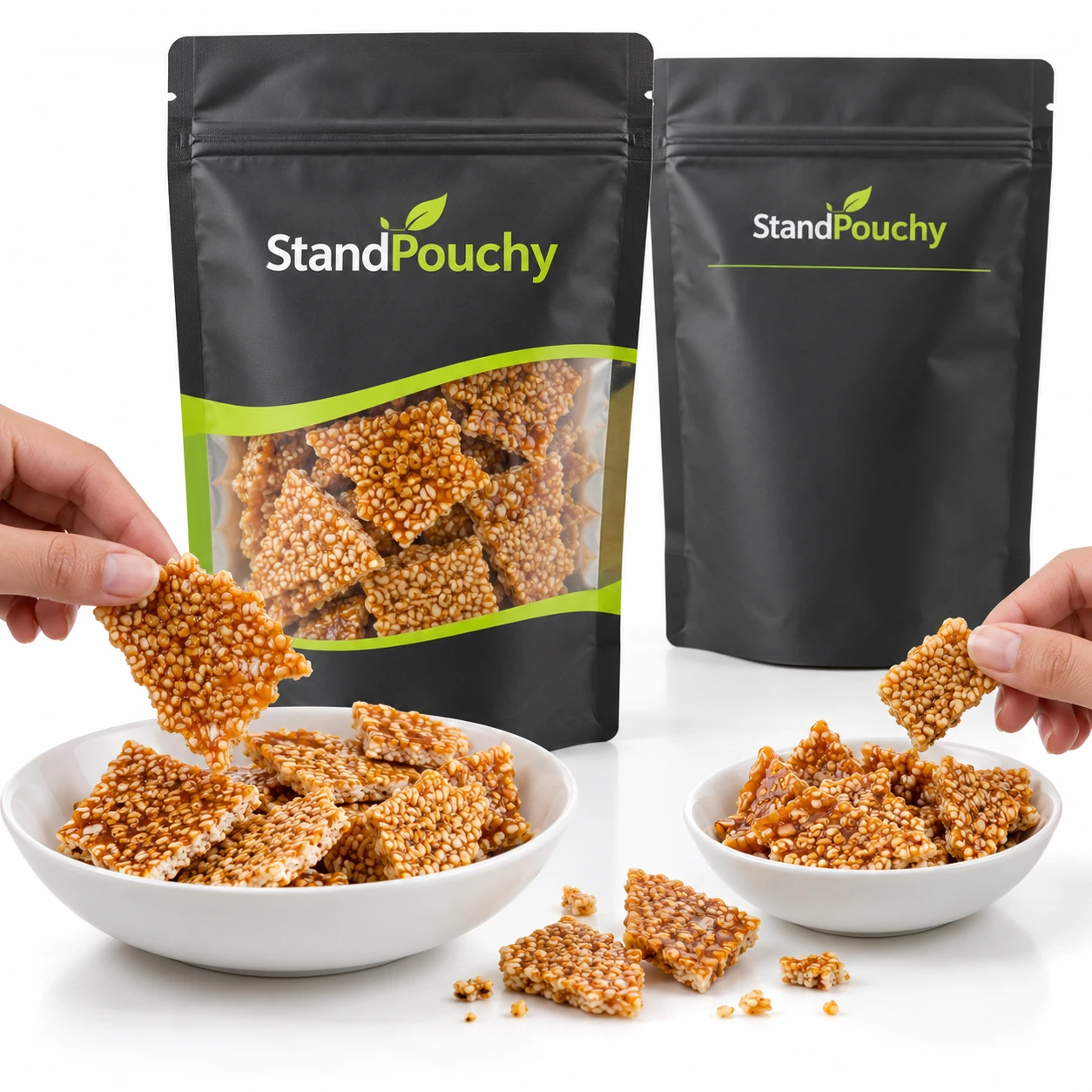
We record thickness variation, broken edges, loose seeds and the way pieces settle. We inspect their contact with the front, back and bottom fold in a conventional pouch. We also ask the food owner which texture or appearance change ends acceptable quality. We do not assign a shelf life or prescribe a cooking process. We keep storage conditions and product identity with the proposed study. FDA component guidance makes intended use part of the food-contact review.[1] We therefore request the exact construction support separately from the food assessment. A document about packaging components does not establish brittle quality, and a sound recipe does not approve the finished pouch. Both records remain visible in the brief.
We preserve the largest normal pieces and the ordinary smaller fragments in the sample range. We record whether the food is individually wrapped or directly contacts the pouch. That distinction changes what the physical review must represent. We photograph contact points before and after settling without assigning an untested penetration rating.
We ask what the buyer wants the unit to communicate. A small tasting pack, a gift-oriented product and a pantry sharing pack have different access and presentation needs. We compare whether the selling promise concerns large intact pieces or a mix of useful bite sizes. We ask the buyer to define that promise honestly. If normal shipping produces some fragments, the food and channel owners decide the acceptable result before we compare candidates. We do not create a universal broken-piece allowance from a catalogue example.
In a Reddit FoodScienceResearch discussion, a peanut-brittle seller moving into retail asks about extending storage life.[6] We use this as an attributed small-brand concern, not as direct evidence for sesame brittle or for the remedies suggested there. The useful question is what failure needs investigation. We give suppliers the flexible packaging specification checklist with representative food, intended channel and open evidence. This stops us from comparing proposals based on different imagined products. We request the sample most likely to resolve the next purchasing decision rather than buying every attractive candy format.
| Product input | Question to record | Purchasing use |
|---|---|---|
| Pieces and shards | What is normal variation? | Representative sampling |
| Selling promise | Which piece condition matters? | Buyer-defined acceptance |
| Storage question | Who sets the endpoint? | Separate food and pack records |
02
How Do We Compare Shard Contact and Film Options?
We can add thickness without testing the contact problem. That increases scope without clear value, so we compare controlled film evidence and actual fills.
We compare identified laminate directions and defined penetration evidence, then inspect representative filled packs. We keep barrier, shard contact and case handling as separate questions rather than assuming one film number approves them all.
We use film tests to narrow choices, then review the pack
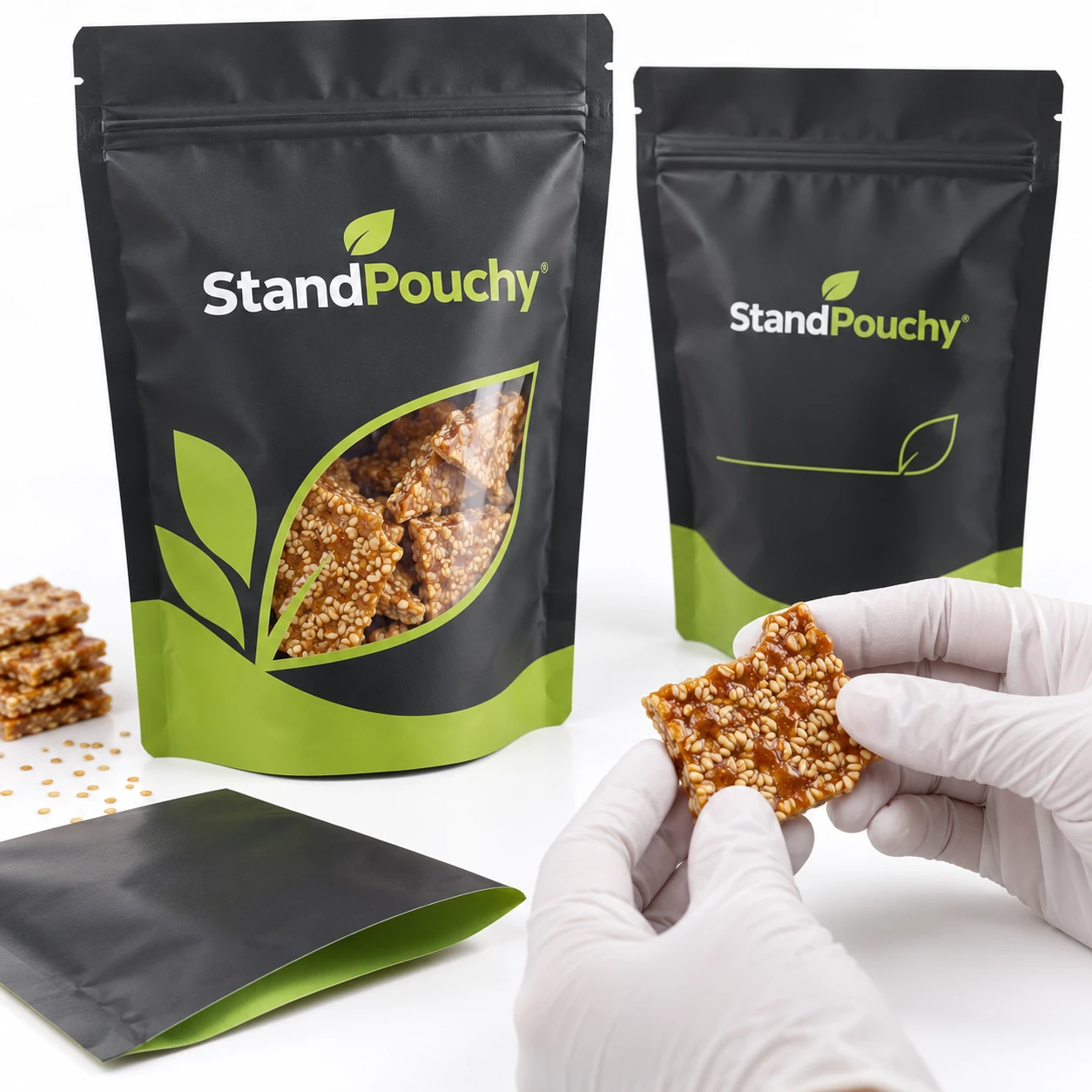
We ask where irregular pieces press against the laminate. We inspect contact after filling and normal settling, including folds and areas beside seals. ASTM F1306 characterizes flexible materials under a controlled driven-probe penetration test.[2] We use its public scope to frame comparable material evidence, not to promise that a brittle shard cannot damage a pouch. We retain method and specimen details with the supplier's results. ASTM F1249 provides moisture-transmission evidence for films under stated conditions.[3] We keep that question separate from mechanical contact. We also identify the outside-to-inside construction and any feature changes. A PET / VMPET / PE direction is a candidate for review, not an approved recipe or a guaranteed storage result.
We inspect the bottom fold and side-seal transitions where filled geometry changes. We keep each observed contact point tied to the piece range and sample revision. We ask the laboratory to identify any specimen preparation limits in the film report. A flat specimen remains distinct from the converted and loaded pouch.
We compare options in terms the buyer can act on. If one construction is proposed as an upgrade, we ask which remaining decision it addresses. If the supplier cannot connect it to the real piece range, we hold the proposal pending evidence. We compare filled presentation and case arrangement alongside the film record. A more generous geometry may reduce crowding but alter shelf presence and carton fit. A tighter unit may look compact yet make large pieces hard to remove. We show the alternatives instead of silently treating thickness as the only answer.
We use the material structure guide to organize the comparison. We ask each supplier for the same construction identity, sample stage and evidence scope. We list testing work that is included and work that remains with the buyer or laboratory. We avoid unsupported puncture ratings, breakage percentages and cost-saving claims. Procurement can then choose the most useful next trial, request a missing report or remove an option that does not fit the brief. The commercial benefit is a clearer decision path, not an invented claim that one laminate works for every brittle.
| Risk question | Evidence to compare | Buyer limit |
|---|---|---|
| Shard contact | Defined film method and filled observation | No whole-pack guarantee |
| Moisture question | Conditions and exact film identity | No universal shelf life |
| Crowding | Repeated fill and case comparison | No thickness-only decision |
03
Which Opening and Seal Features Are Useful?
We can buy a zipper while large pieces still catch at the mouth. That frustrates use, so we test access and closure as one arrangement.
We choose mouth width, grip, tear path and any zipper around representative brittle pieces. We keep a clean permanent sealing area and verify first opening and repeat use on filled candidates.
We give access and permanent closure different jobs
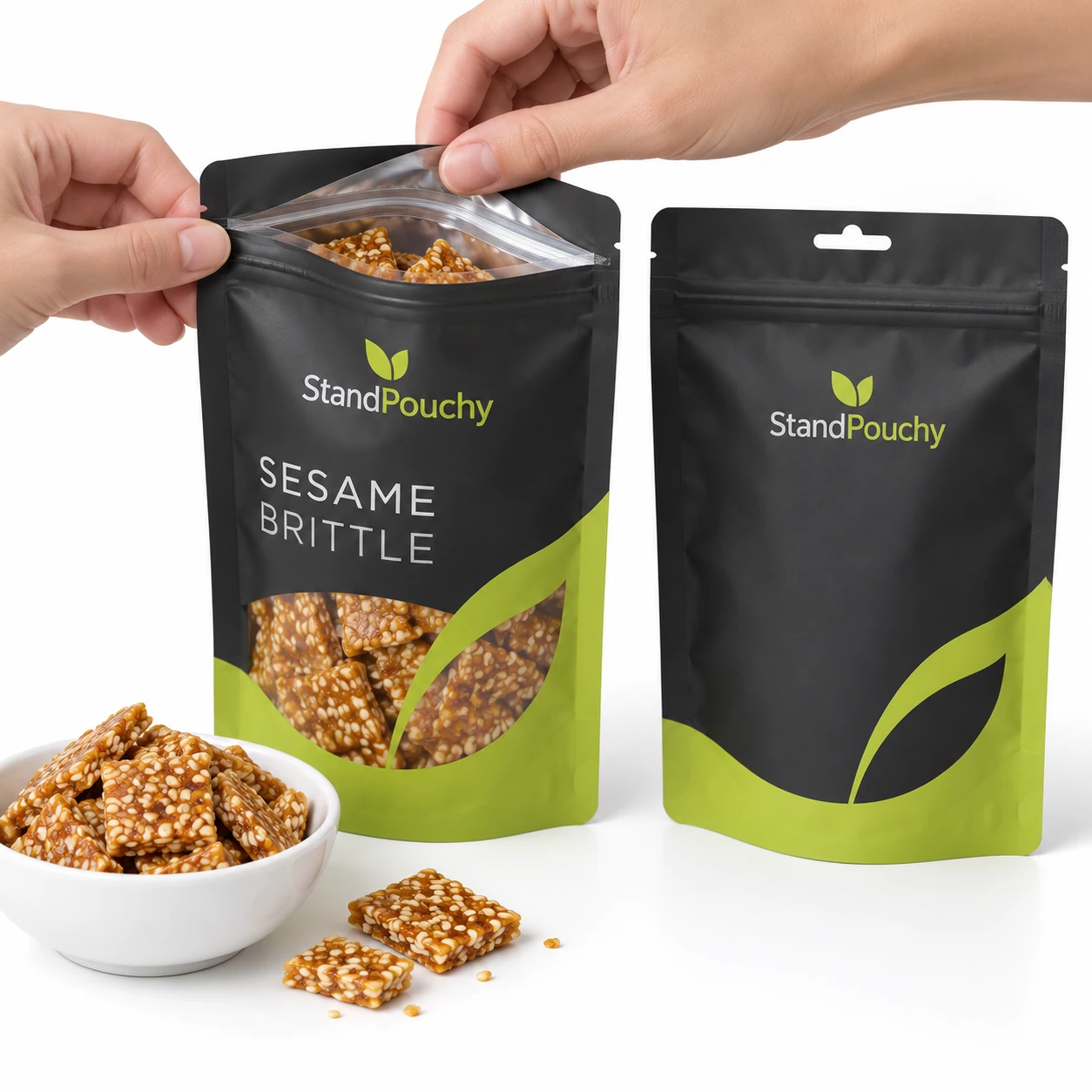
We fill the candidate with the normal piece range and observe the highest product level. We inspect loose seeds and fragments near the zipper and permanent top seal. We mark the tear path, grip area and closure positions on the converter's drawing. We use a conventional front/back pouch with side seals and a bottom gusset; the mouth must work with the actual fill. ASTM F88/F88M describes seal-strength measurement for flexible barrier materials.[4] We record the specimen and failure mode with the agreed result. We do not use that result as proof of leak integrity or product storage life. We keep any required integrity or food-quality study separate and tied to the same construction revision.
We review whether the torn header obstructs the usable opening. We observe how a large piece leaves the mouth and whether loose seeds remain near the track. We repeat access on partly emptied samples. We retain the film and closure identity because their combination determines what the opening trial actually represents.
We ask the buyer how the snack will be consumed. For a one-occasion pack, reclosure may add little value. For a sharing unit, we test whether people can find the tracks and remove large pieces without unnecessary handling. We compare access after the first portion as well as at a full fill. A wide mouth can support access but changes the face and closure arrangement. We show that trade-off using samples rather than prescribing one width for all brittle sizes.
We use the pouch size guide for the planning discussion and the sample approval guide for the physical reference. We ask the filler to review opening and clean sealing before print approval. We also ask suppliers whether the quoted feature represents a finished sample or only an empty reference. Procurement keeps those stages distinct. If the piece size, fill, zipper or film changes, we repeat the affected review. We choose features with a clear buyer job and keep unexplained extras out of the first comparison. This gives the next sample a defined purpose without asserting a universal opening or breakage result.
| Feature | Buyer question | Sample evidence |
|---|---|---|
| Mouth and grip | Can large pieces be removed? | Filled first-opening review |
| Zipper | Is repeat access required? | Remaining-product reclosure |
| Permanent seal | Can filling keep it clear? | Defined operating and test record |
04
What Should We Approve Before Ordering Brittle Pouches?
We can sign a front graphic while labels and packing remain open. That creates purchasing risk, so we release the complete unit on one revision.
We approve product identity, required label copy, converted artwork, filled closure, case arrangement and supplier exclusions together. The responsible food and market owners confirm the actual label and quality requirements.
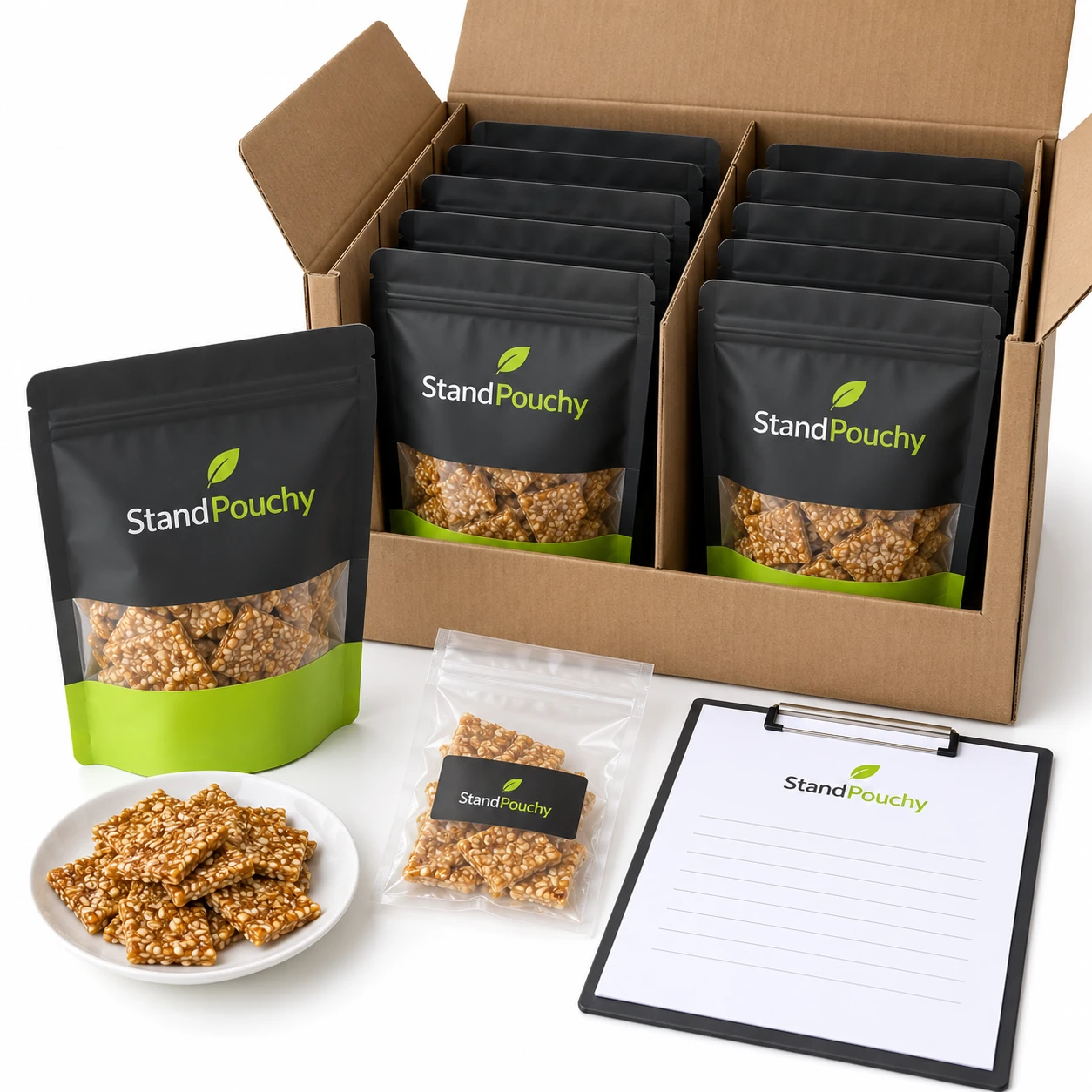
We connect the label and case to the purchasing scope
We inspect the final printed, filled pouch rather than the front design alone. We check the usable information area after settling and after the agreed case handling. We retain product identity, pouch dimensions, closure positions and print revision with the samples. For the United States, FDA identifies sesame as a major food allergen under the FASTER Act.[5] We leave the actual ingredient and allergen declarations to the responsible label reviewer. We do not turn our packaging note into a compliant label template for all markets. We also document the intended carton and any dividers. Their effect requires the actual trial; a photograph of separated pouches does not establish distribution performance.
We retain the selected case orientation and packing count with the samples. We inspect the lower corners and fold areas after handling and compare the food condition with the agreed reference. We keep visual damage observations distinct from any product-quality measurement. A revised divider or case arrangement triggers the relevant review.
We ask suppliers to quote one defined scope. The comparison names construction direction, dimensions, quantity per artwork, finish, sample stages, required review, packing and destination. We ask whether any setup, proofing or trial costs are included and who provides the food. We do not invent prices or claim that a more elaborate finish improves sales. If the buyer wants a gift presentation, we ask which sample will confirm it after filling. If the buyer wants a compact retail unit, we compare the actual fixture and case.
We use the pouch sample approval guide to keep each owner's decision tied to the same revision. Brand reviews identity and presentation. The food owner reviews the product and approved copy. Operations reviews filling and closure. Procurement checks that the quotation includes the accepted scope. We then prepare a brittle pouch inquiry with representative pieces, target fill, intended market and open evidence. We request a specific next sample or document review. We hold unresolved conditions visible and reopen the relevant check when the product, artwork, closure or distribution plan changes. This supports a controlled order rather than a purchase based on one polished image.
| Release item | Owner to identify | Reference to retain |
|---|---|---|
| Food and label | Responsible food and market reviewer | Approved copy and product record |
| Filled pouch | Converter and operations | Physical revision and test scope |
| Quote and case | Procurement and channel | Packing, exclusions and next action |
Conclusion
We buy sesame brittle pouches from representative pieces, controlled film evidence, usable openings and one approval record. We keep label and product responsibilities explicit.
Notes and sources
- FDA: Regulatory status of food-contact components (cited in article)
- ASTM F1306: Controlled penetration resistance of films (cited in article)
- ASTM F1249: Water-vapor transmission through film (cited in article)
- ASTM F88/F88M-23: Seal strength (cited in article)
- FDA: FASTER Act and sesame allergen labeling (cited in article)
- Reddit community insight: A peanut-brittle seller asks about retail storage life (cited in article)
Reddit links are community insight only. We use official standards and regulator pages for technical context, and we require project evidence for the final pouch decision.