01
Which Meringue Samples Should We Send First?
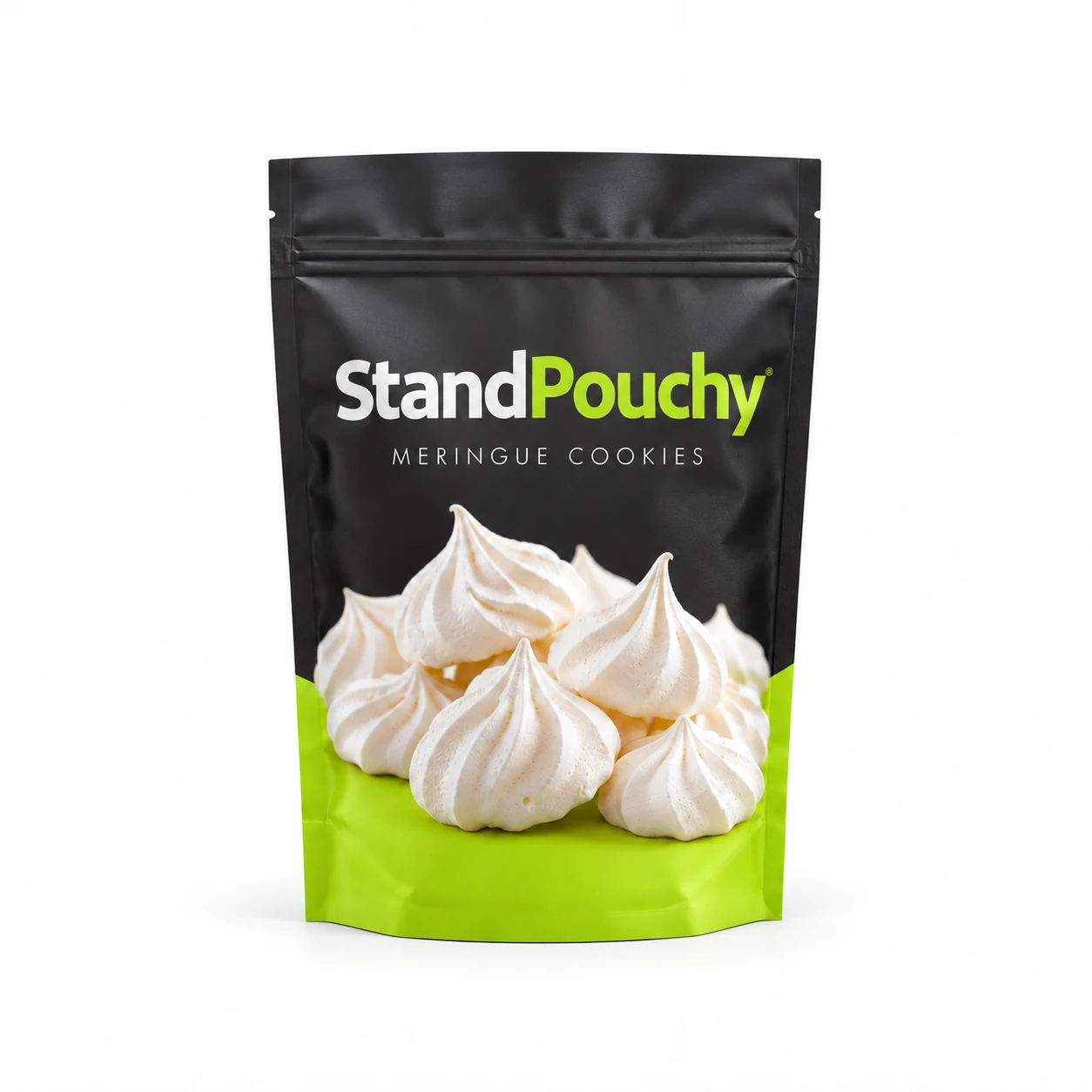
We can send only flawless cookies and hide ordinary variation. That gives us misleading samples, so we include the normal product range.
We send representative baked cookies, ordinary fragments, target fill and product-state records. We ask the food owner to define acceptable texture and appearance before we compare pouch offers.
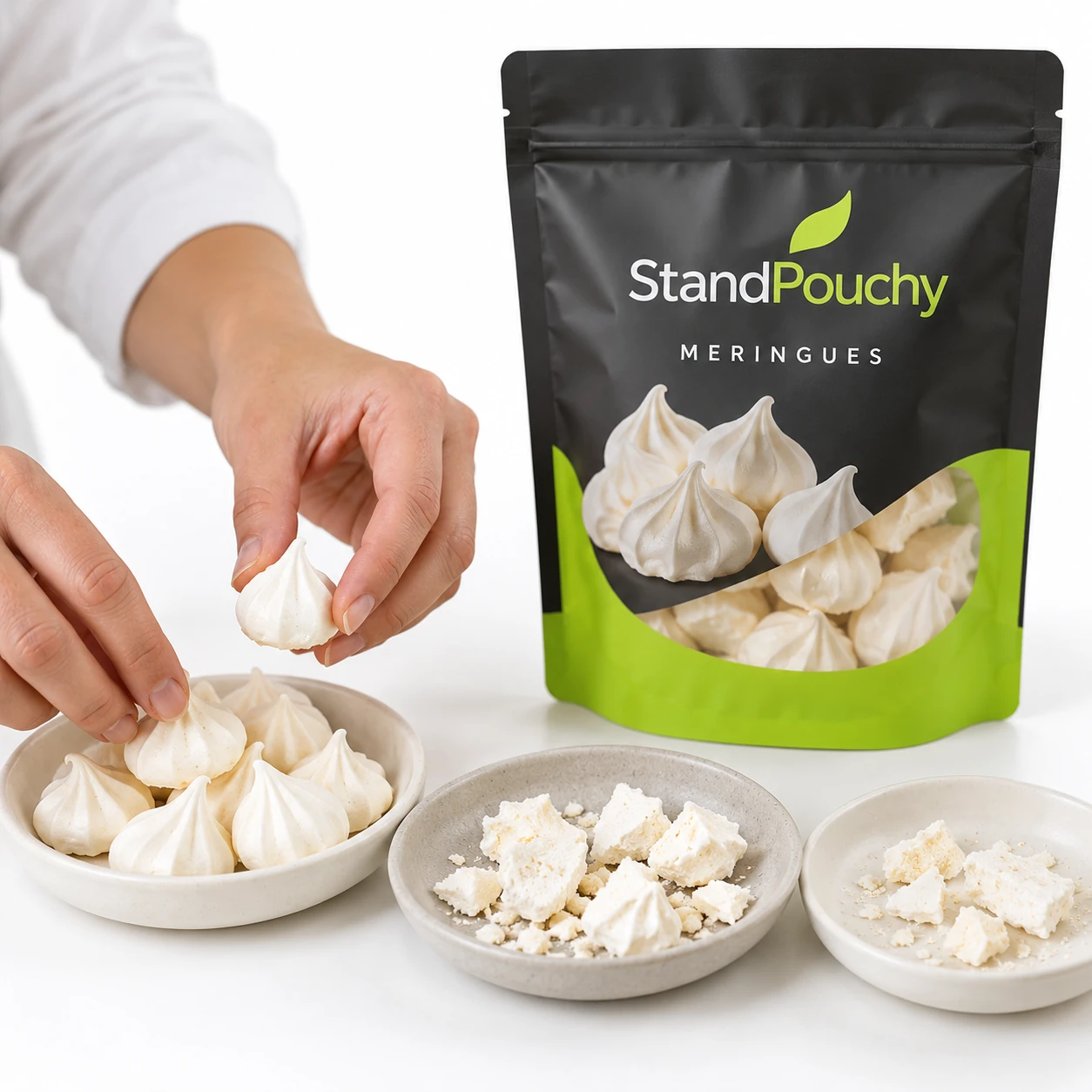
We define the cookie before we compare the package
We record the shape, peak height, base width and normal fragments in the supplied cookies. We note whether any coating or inner wrap is present. We examine how peaks contact the front and back faces, side seals and bottom fold during filling. We use the intended food state rather than a warm sample picked for convenience. We ask the producer to specify when the product is ready for packaging and which storage observations belong in its study.
We keep food-contact evidence separate. FDA component guidance ties the regulatory review to the substance and intended use.[1] We request support for the actual laminate, food-contact layer and intended conditions. We do not describe a generic material name as a certification. We record any missing support before accepting a sample as representative of a proposed order.
We label sample containers with the production reference and preparation time. We record cookie dimensions with a consistent measuring approach and photograph ordinary variation beside a scale. We keep fragments from the same sample set. We separate observations made before filling from observations made after contact with the pouch.
We ask our buyer what a good retail unit must show. A gift pack selling intact peaks needs a different appearance decision from a small tasting pack. We write that expectation before asking suppliers to improve it. We also agree who decides whether a fragment is ordinary product variation or unacceptable damage. Otherwise, the cheapest quote may simply assume a less demanding product presentation.
In a Reddit baking discussion, a baker asks how to protect meringues during humid storage before an event.[6] We treat this as a community concern, not proof that any suggested recipe change or desiccant will work in a commercial pouch. We use the packaging specification checklist to name the product owner, intended sale and open questions. We ask each supplier to acknowledge the same sample range. This lets us compare useful advice rather than three different interpretations of a cookie photograph.
| Comparison input | Question for our supplier | Buying decision |
|---|---|---|
| Cookie shape | Which normal peaks and fragments are included? | Representative sample |
| Product condition | Who defines packaging readiness? | Named food owner |
| Retail promise | What appearance must arrive? | Buyer acceptance basis |
02
How Do We Compare Openings Without Crushing Peaks?
We can choose a neat narrow bag that catches tall cookies during filling. That creates avoidable damage, so we review the usable mouth.
We compare face width, usable opening, bottom fold and seal clearance with the actual cookies. We review filling and removal separately, then choose the smallest candidate that meets the agreed presentation.
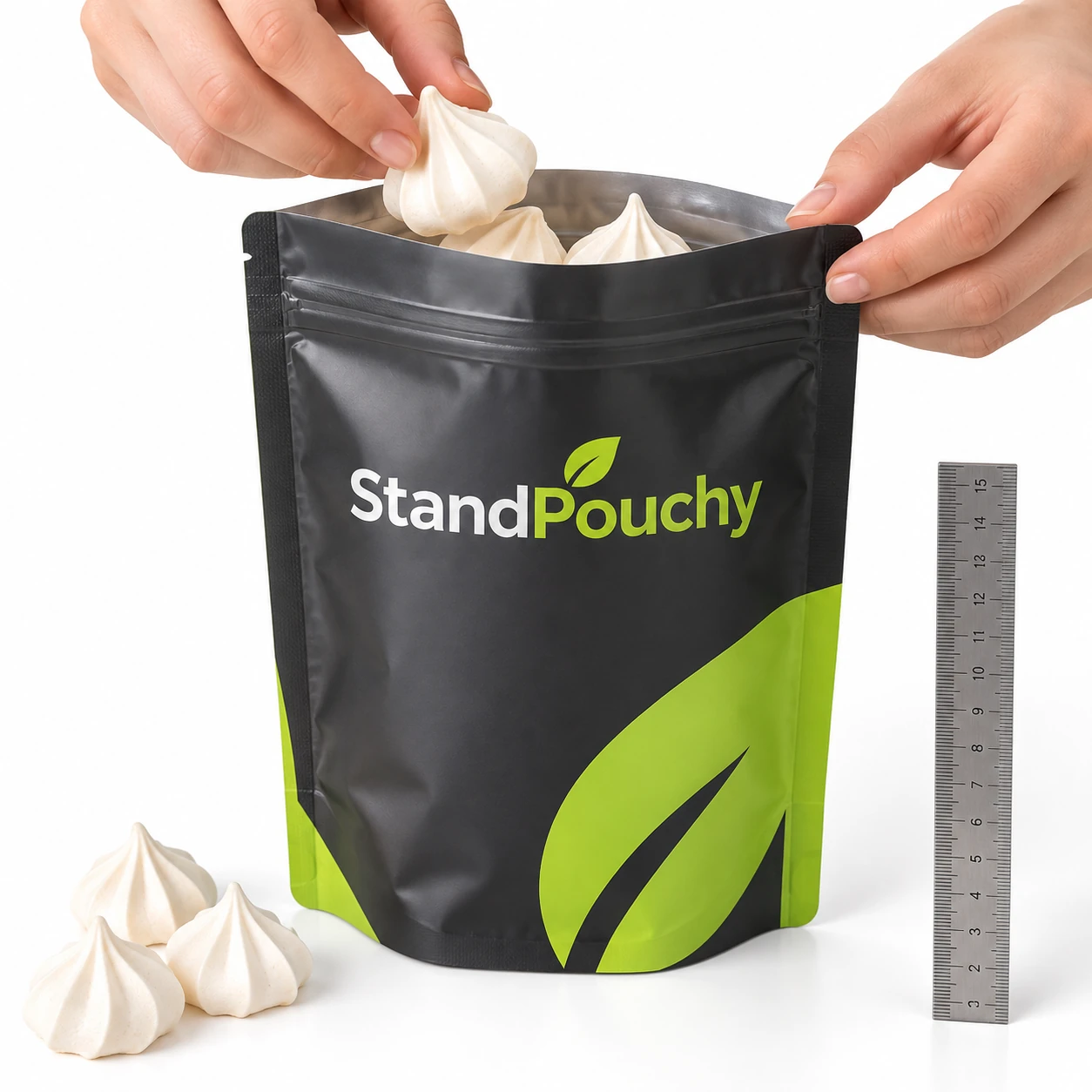
We test access in both directions
We map a conventional doypack as front and back panels, narrow side seals and a bottom gusset. We record the opening available below the zipper rather than treating nominal face width as usable access. We observe the tallest normal cookie as it enters the pouch. We then fill and settle the sample gently, photograph the fill line and note the space available for the permanent seal. These observations stay attached to the pouch revision.
We repeat the review after the tear strip is removed. We check whether fingers can grip a cookie without forcing it against the zipper. We note wrinkles, contact points and loose powder near the opening. We do not assign a standard cookie count from the flat drawing or infer capacity from water volume. We keep a planning dimension separate from the converter-approved production dieline.
We measure the cleared opening on the physical pouch after the intended tear, not across the sealed top edge. We record where the zipper begins and ends. We photograph the loaded cookie beside each contact point. We repeat the opening sequence on several filled units and retain the individual observations.
We ask suppliers to show two purposeful candidates rather than an unlimited size range. One can prioritize a compact shelf unit; the other can offer more generous access. We compare the extra material and case space against the access benefit. We ask what each option changes in the filling process, artwork and sample work. This makes a larger bag a decision with a reason, rather than an automatic upgrade.
We use the stand-up pouch size guide for the dimension brief. We also ask the packer to demonstrate its intended loading step with the same cookies. A buyer can approve the front photograph while operations still struggles to insert the product. We keep those approvals separate until both point to one sample. If a support insert is proposed, we request a new complete pack trial and a revised scope, including the insert and its contact evidence. We do not conceal that extra purchase inside the word protective.
| Comparison input | Question for our supplier | Buying decision |
|---|---|---|
| Usable mouth | Can normal peaks enter and leave? | Access comparison |
| Top space | Is filling clear of the permanent seal? | Packer trial |
| Filled footprint | How does the unit fit the case? | Size selection |
03
Which Moisture and Seal Evidence Should We Compare?
We can buy a moisture-proof promise with no stated test. That leaves the quality question unanswered, so we request controlled evidence.
We compare stated film transmission methods, specimen identity and conditions, then agree filled-seal checks and the food study. We keep moisture, oxygen, seal strength and leak observations as separate measurements.
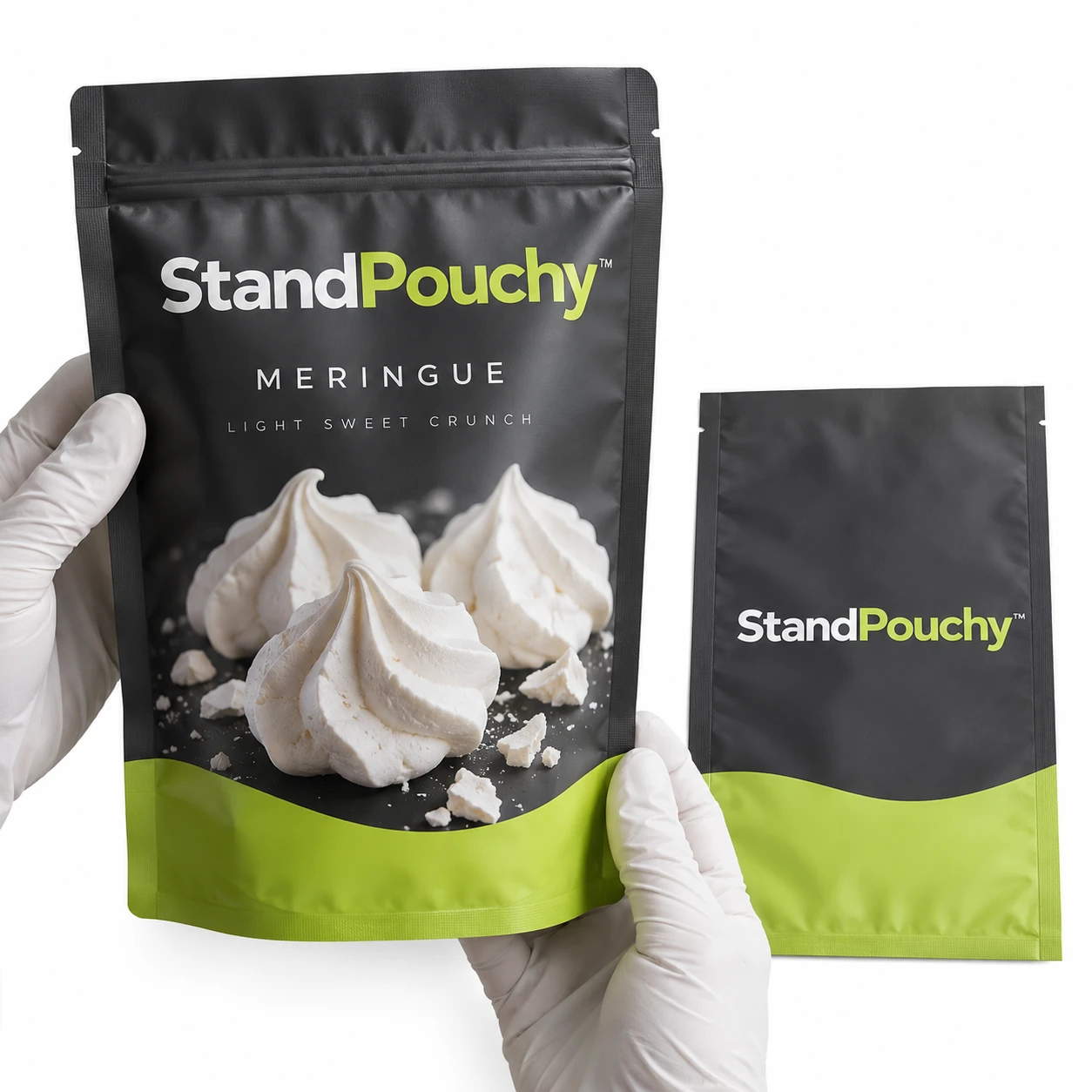
We compare measurements with the question they answer
We request the proposed layer sequence and thicknesses. PET with a metallized barrier layer and PE sealant is a direction to discuss, not our released specification. We ask for the actual film identity behind each report. ASTM F1249 concerns water vapor transmission through film and sheeting.[2] ASTM D3985 concerns oxygen transmission through film and sheeting.[3] We keep method, temperature, humidity where applicable, units and specimen thickness with the value. We avoid comparing numbers whose conditions differ without an agreed interpretation.
We inspect the permanent seal after representative filling, including ordinary cookie powder. ASTM F88/F88M is a seal-strength method.[4] ASTM D3078 addresses gross leaks in flexible packaging with headspace gas and may miss small leaks.[5] We ask the laboratory and packer to select suitable checks, specimen preparation and acceptance criteria. We do not turn a strength reading or absence of visible bubbles into a texture or shelf-life claim.
We keep laboratory results in their original units. We record which film face was exposed and the stated conditioning procedure where the method requires it. We ask for specimen location when reviewing seal strips. We record failure observations separately from measured force, and keep filled-pack quality observations in a different record.[4]
We compare what evidence each quotation actually includes. One supplier may provide an existing film report, while another includes a new trial using our filled pouch. Those are different scopes. We ask whether testing, sample freight and a later revision are included or separately quoted. We also ask who will investigate a sample that looks intact but fails the food owner’s quality endpoint. The answer should connect the pack, product and process rather than assign blame in advance.
We use the test specification guide to make this comparison readable. We prioritize the next decision that prevents an unsupported order: perhaps a matched moisture report, perhaps a filling trial, or perhaps a food study under the intended route. We ask the buyer to approve that evidence sequence before spending on final decoration. A window, special finish or added zipper should have a clear purpose and a revised evidence scope. We keep appealing appearance in the comparison, but we give unresolved product quality an owner and a due decision.
| Comparison input | Question for our supplier | Buying decision |
|---|---|---|
| Film reports | Do specimen and conditions match? | Comparable evidence |
| Filled seals | Which method and limits are agreed? | Trial scope |
| Food quality | Who defines the storage endpoint? | Separate study |
04
How Do We Approve the Case Before Placing an Order?
We can approve one display sample and overlook the case. That leaves arrival damage unresolved, so we review the complete shipping unit.
We compare filled pouch orientation, case clearance, handling observations and retail appearance against buyer-defined criteria. We release one revision only when the food, artwork, packer and channel owners agree.
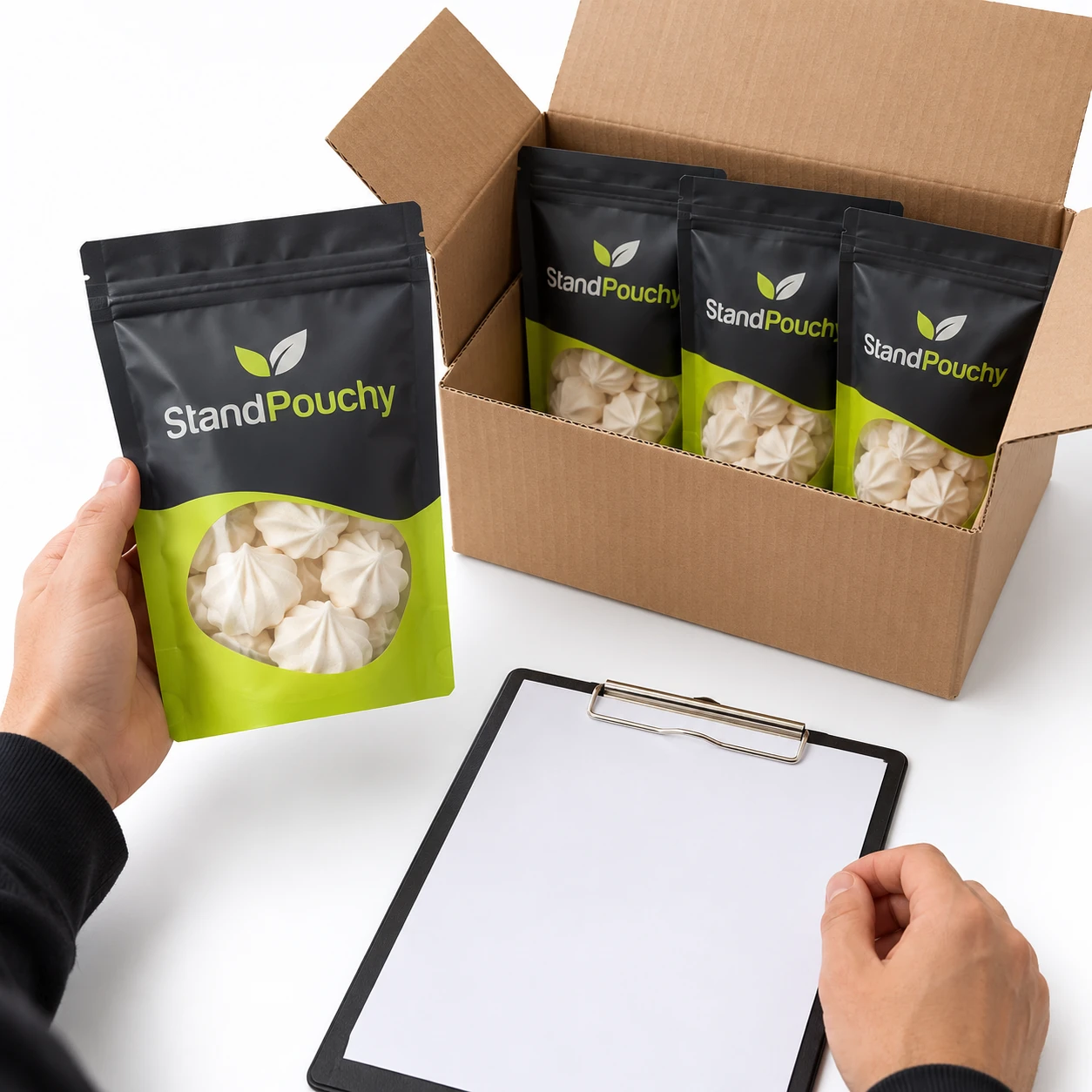
We buy an approved configuration rather than a loose bag
We record the actual filled pouch dimensions, case arrangement and space around the cookie peaks. We examine whether adjacent packs press on them when the case closes. We keep the case material, count and orientation with the trial record. We agree a handling sequence relevant to the route and inspect the food and pouch afterward. We do not choose an untested drop height or broken-cookie allowance from another product.
We identify the artwork, pouch and food sample revisions on the approval record. We keep visible damage, seal observations and texture study findings separate so that one good result does not erase another problem. We record which change requires a new review, such as a larger cookie, altered fill, different laminate or new case arrangement. We retain an identified sample rather than relying only on photographs.
We record the sequence of case handling before opening samples for inspection. We count intact cookies and ordinary fragments using the agreed categories. We identify the inspection time and sample location in the case. We compare these observations with the starting sample rather than using the final photograph as the whole record.
We ask suppliers to price the same deliverable: agreed pouch construction, dimensions, features, artwork scope, samples and shipping basis. We compare tooling or setup requirements, revision charges and what happens if the sample needs another adjustment. We ask for project-specific quantity and timing rather than publishing a universal minimum or lead time. A quote with a clear exclusion can be easier to evaluate than an attractive price with no approval scope.
We use the sample approval guide to organize the decisions. The brand owner approves the promise and artwork; the food owner approves product suitability; operations approves filling; the channel owner approves arrival presentation. We then prepare a packaging inquiry with real samples, target fill, sale format, destination and unresolved evidence. We include the case when its performance is part of the purchase. This gives the supplier a concrete next step and gives the buyer a controlled reason to order, revise or pause.
| Comparison input | Question for our supplier | Buying decision |
|---|---|---|
| Case arrangement | Which filled orientation was trialed? | Shipping scope |
| Decision owners | Who accepts appearance and product quality? | Shared approval |
| Quotation | Which revisions and exclusions apply? | Comparable order |
Conclusion
We order meringue pouches after product condition, access, film evidence and case handling agree. We keep the approved sample and supplier scope together.
Notes and sources
- FDA: Regulatory status of food-contact components (cited in article)
- ASTM F1249-25: Water vapor transmission through film (cited in article)
- ASTM D3985-24: Oxygen transmission through film (cited in article)
- ASTM F88/F88M-23: Seal strength of flexible barrier materials (cited in article)
- ASTM D3078: Gross leaks in flexible packaging by bubble emission (cited in article)
- Reddit community insight: A baker asks about humid storage of homemade meringues (cited in article)
Reddit links are community insight only. We use official standards and regulator pages for technical context, and we require project evidence for the final pouch decision.