01
Which Wafer Rolls and Presentation Should We Specify?
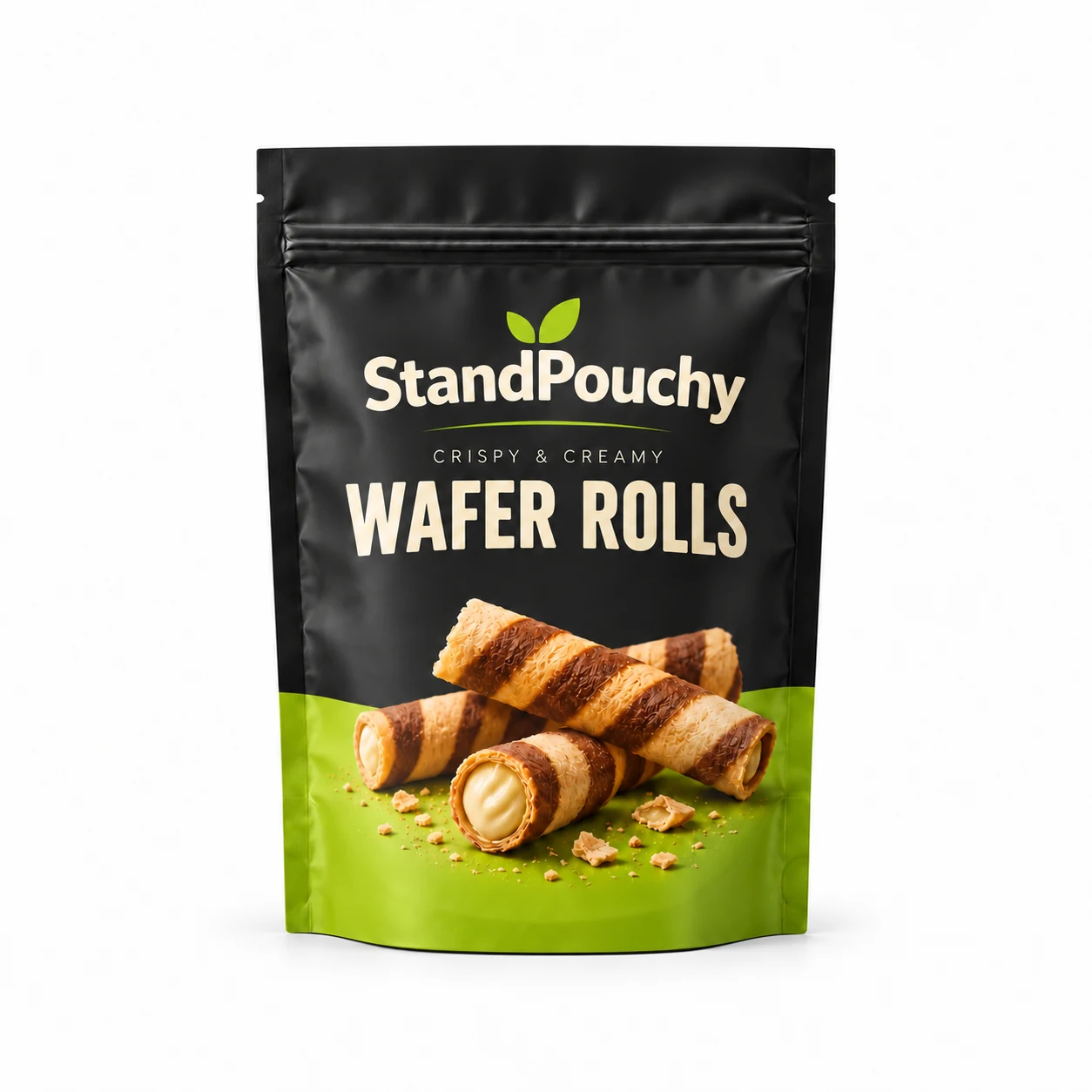
We cannot compare offers when one supplier assumes loose short pieces and another assumes long rolls in a tray. We make the intended presentation explicit.
We supply representative filled rolls, normal broken ends, intended count or fill weight and the desired presentation. We distinguish a loose snack portion from a pack expected to deliver intact long rolls.
We define the product that the pack must actually handle
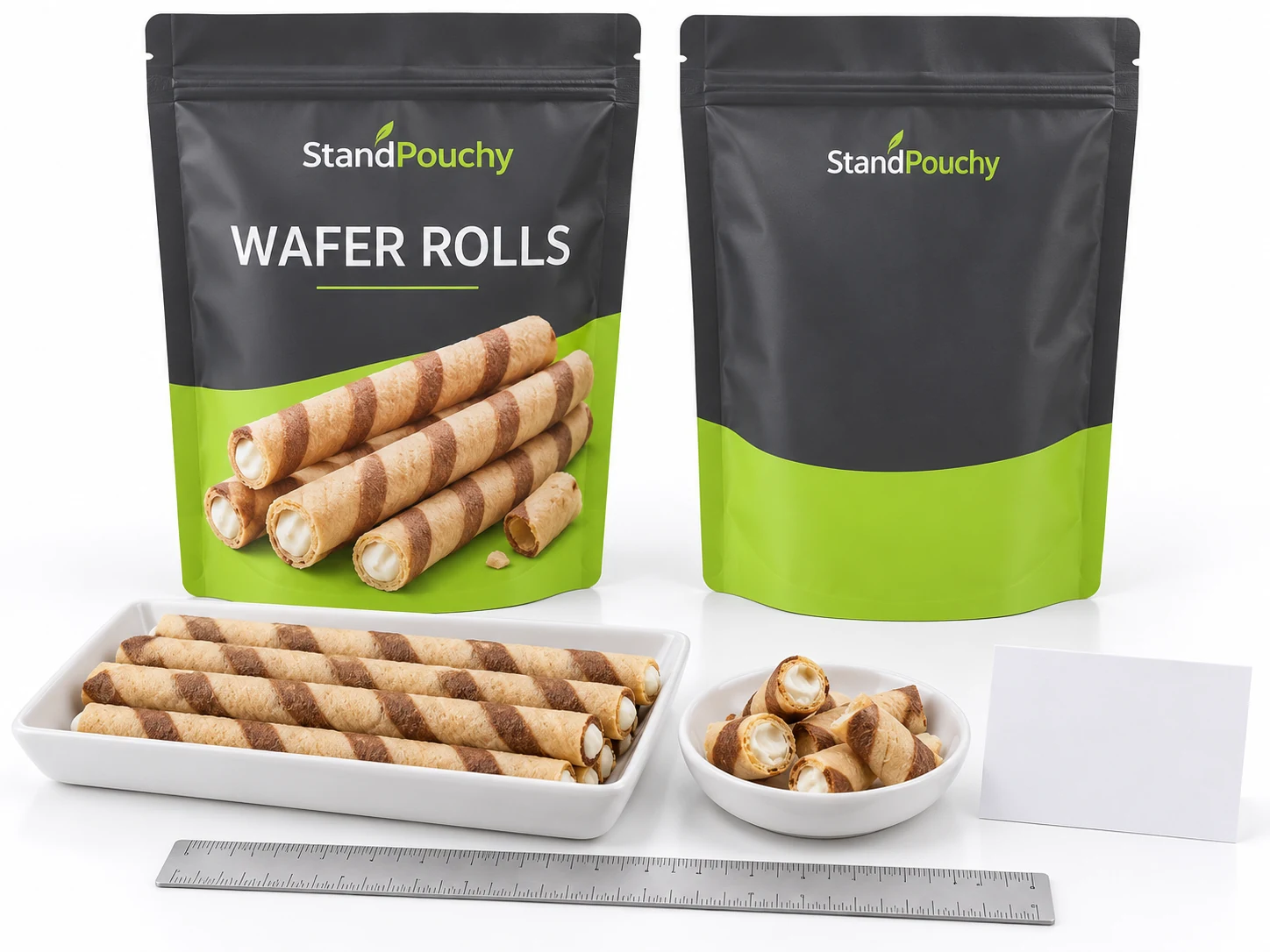
We measure roll length and diameter across the represented sample, then record normal variation and the condition of exposed ends. We observe which way the pieces enter the proposed pouch. A long roll can fit inside a flat drawing while still catching at the actual opening. We record contact with the zipper ends, the top margin and the settled base. The intended filling orientation is part of the sample identity.
We identify any tray, wrap or liner separately from the outer pouch. A component that touches the rolls needs its own appropriate food-contact support. FDA links regulatory status to the individual substances and their intended use.[1] We therefore request the actual proposed construction and contact conditions. We do not treat a generic food-grade description as approval of every component in the complete pack.
We separate the roll measurements from the portion record. We photograph the longest represented pieces beside a scale, record the sample orientation and retain the broken-end dish separately. This makes a later comparison repeatable without presenting one selected piece as the complete product range.
We ask the buyer which commercial promise matters: a convenient snack portion, a counted serving or a premium whole-roll presentation. Those choices may justify different support and inspection effort. Pirouline describes its own crisp, light creme-filled rolled wafers.[5] That helps us identify the product form and market vocabulary. It is not evidence that our proposed flexible pack will protect another product without a trial.
We put the chosen presentation into the packaging specification checklist. We attach photographs of acceptable represented pieces and identify who approves the product itself. We ask whether the buyer will accept ordinary broken ends, wants a defined whole-piece outcome or needs a separate count review. We agree the basis before requesting a production quote.
We avoid asking three suppliers for three undefined versions of a wafer bag. We send the same product sample and explain the desired opening experience to each. If one supplier proposes an insert, we ask which observed problem it addresses and who supplies it. This gives procurement a decision it can compare instead of a collection of attractive empty pouches.
| Choice or record | Buyer question | Approval evidence |
|---|---|---|
| Loose rolls | Is whole-piece presentation essential? | Represented portion |
| Counted pack | Which count and variation apply? | Agreed product sample |
| Separate insert | Who supplies the contact component? | Identified component scope |
02
How Do We Compare the Opening and Any Inner Support?
A wider-looking pouch can still trap a tray or catch a long roll. We compare usable access before paying for extra space or components.
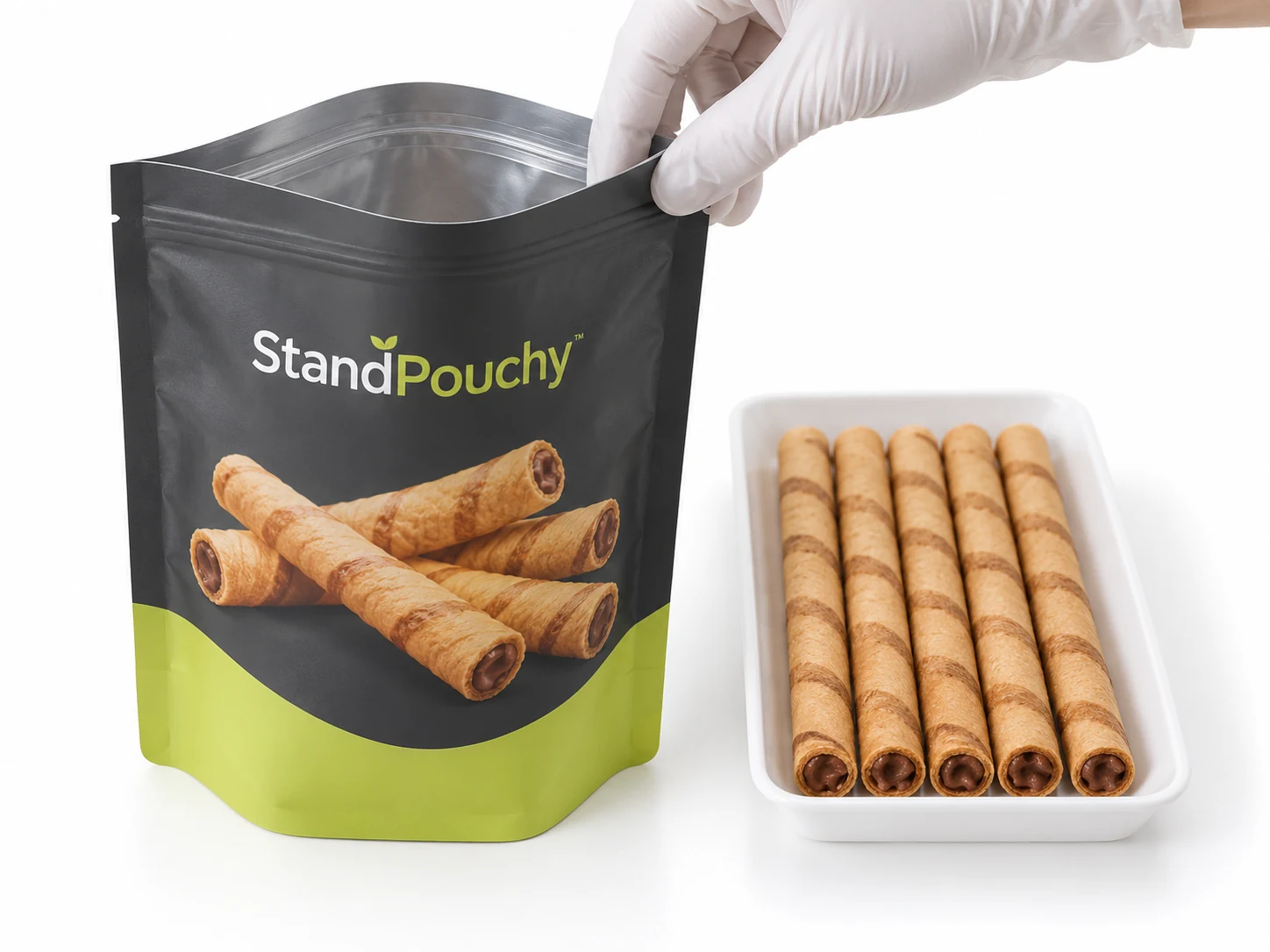
We trial the actual roll or proposed tray through the useful opening, then review removal from a partly emptied pack. We compare a supported option with a loose-fill option using the same product and presentation goal.
We check the path into and out of the pouch
We record face width, height and full bottom-gusset depth separately from useful opening width. Conventional doypacks have front and back faces, side seals and a bottom gusset. Their flat dimensions do not describe every clearance in a filled pack. We observe whether a tray corner catches beneath the zipper and whether the rolls cross over each other as they settle. We retain the orientation used during the review.
We check the outer pack after filling, standing and partial emptying. When a channel needs finished package dimensions, we use the applicable GS1 measurement framework.[3] We keep those dimensions separate from the converter drawing and from the insert dimensions. We also record how the flexible faces fold during access, because an empty pouch opened fully by hand can present a different useful mouth from a partly filled one.
We mark the tray entry direction and compare its widest represented cross-section with the mouth in the filled condition. We record any contact point before changing dimensions. We then repeat the same sequence with the alternative so the observations describe a controlled comparison.
We use the stand-up pouch size guide to prepare candidate dimensions, then ask the packer to demonstrate the actual task. We compare the time and handling steps needed to place rolls or load a tray. We do not assume a manual demonstration proves a machine-loading route. Any remaining operating trial stays visible in the quotation.
We ask whether an insert improves the required result enough to justify buying, storing and loading another component. A tray may organize pieces, but it also needs an agreed fit, supply owner and packing sequence. A pouch-only offer and a pouch-plus-tray offer should be compared as different scopes. We request both complete scopes when that is the decision the buyer actually needs.
We also ask someone to remove rolls after several pieces have been taken. We record the grip, reach and resealing task. One Reddit discussion about wafer-stick packaging raises competing concerns about inner components and breakage.[6] We use that as a reason to review the whole opening experience. We do not use commenters’ explanations as proof of how a particular pack performs.
| Choice or record | Buyer question | Approval evidence |
|---|---|---|
| Useful mouth | Can the represented roll enter? | Observed filling path |
| Tray fit | Can it pass without catching? | Matched physical sample |
| Partly emptied pack | Can users reach remaining rolls? | Recorded access review |
03
Which Film and Closure Evidence Should We Compare?
A strong material description can hide missing test conditions or a dirty seal zone. We connect the evidence to the actual wafer pack before ordering.
We compare identified laminate directions, moisture-test conditions, contact support and filled closure observations. We separate film evidence from the finished pack and leave product shelf life with the food owner’s validation.

We connect the construction to a defined trial
We request a layer description that identifies the proposed print carrier, barrier direction and food-contact sealant. PET with a suitable barrier layer and PE sealant can be a direction to evaluate; it is not a released specification. We ask which exact material the report represents. ASTM F1249 measures water-vapor transmission through film and sheet materials and requires agreed comparison conditions.[2] We do not convert a film result into a universal freshness period.
We inspect the proposed filling sequence for crumbs near the zipper and permanent top-seal area. We record the sample revision, fill height and observed residue. The top seal and the consumer zipper have different roles, so we review them separately. We ask the packer and converter to define the relevant strength, leakage or process checks with their applicable methods, specimen conditions and acceptance basis. No photograph establishes those results.
We identify whether a result covers flat film, a converted seam or the packer’s final top seal. We preserve specimen orientation and the reported failure description. Those records answer different physical questions and should remain identifiable even when procurement stores them in one approval folder.
We use the test specification guide to compare what each supplier has actually included. We ask whether an offered result is existing material data, a new laboratory test or a proposed future task. We price and schedule those scopes separately when necessary. This avoids buying a report title without knowing what sample it covers.
We ask the food owner to explain the target texture, intended storage and any sensitivity of the cream filling. We do not let a converter choose those product targets from habit. If the buyer needs a clear window, we compare its effect on the whole construction and the intended presentation. We request evidence for the selected option rather than assuming appearance and protection always improve together.
We approve a documented sample stage. An empty reference can help us choose dimensions; a filled hand sample can reveal access or crumb issues; a line trial answers operating questions. We use the sample approval guide to keep those decisions separate and clear. The buyer can then authorize the next useful step without pretending that every outstanding test has already passed.
| Choice or record | Buyer question | Approval evidence |
|---|---|---|
| Film report | Which material and conditions apply? | Identified result |
| Permanent seal | Which trial will confirm it? | Agreed method and owner |
| Zipper | Does repeated access work? | Partly emptied sample |
04
What Must the Complete Wafer-Pack Order Include?
A low pouch price can become a costly order when trays, loading steps or shipping cases are missing. We compare the complete deliverable before release.
We name the pouch revision, inner components, quantities, packing arrangement, sample stage and approval owners. We review the actual packed case and identify which tests and transport responsibilities are included in the supplier offer.
We buy one agreed system and retain its boundaries
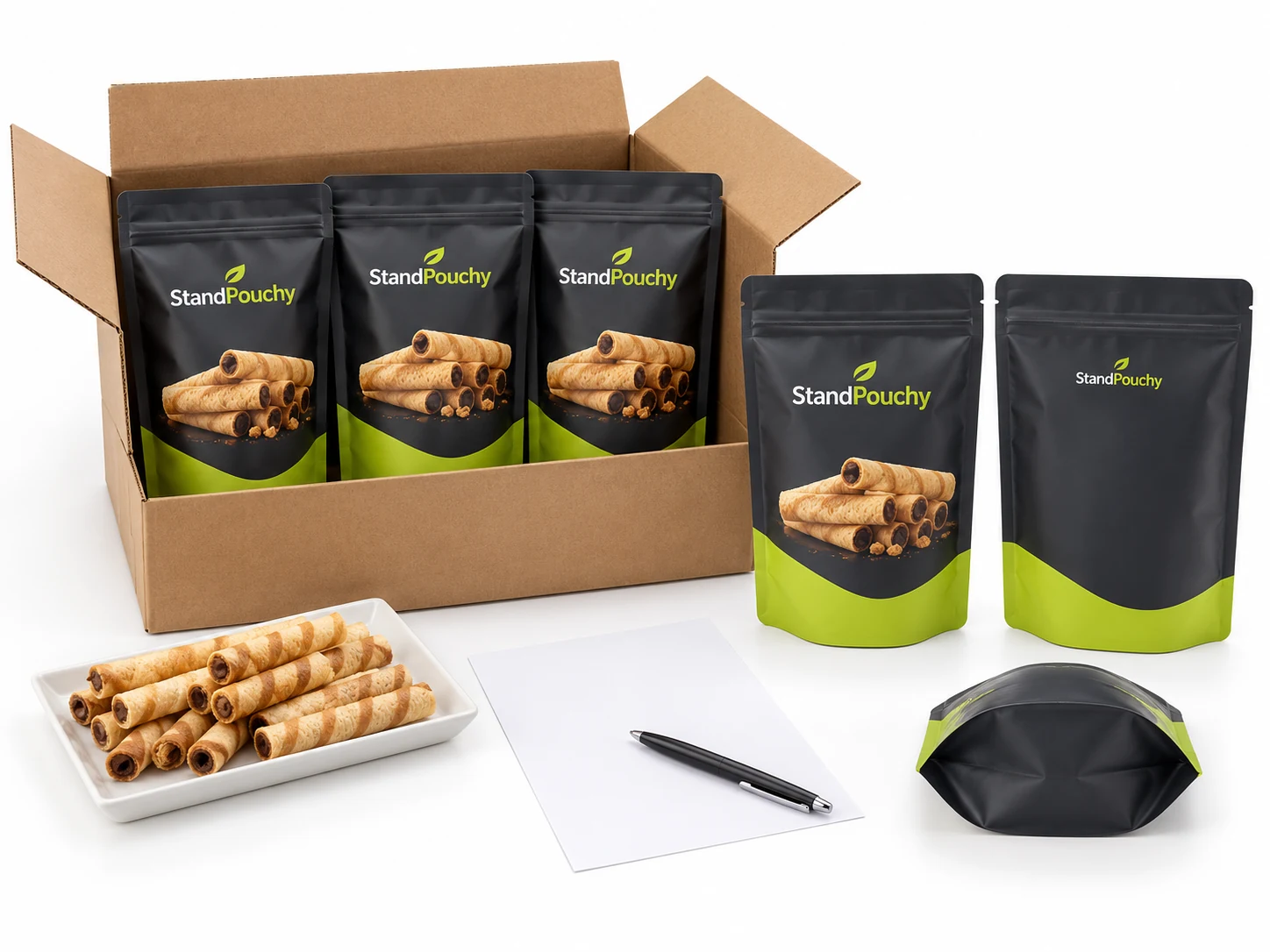
We record the number and orientation of filled pouches in the case, any dividers, and the condition of rolls before and after the agreed handling review. The filled arrangement matters because a pouch is only part of the load path. We keep the represented product, support and carton revision together. A case containing a different tray or product length is a changed sample, even if the printed pouch artwork is identical.
We ask the testing owner to document conditioning as well as the chosen handling sequence. ASTM D4332 addresses conditioning packages or components for testing; its public scope does not supply a universal warehouse environment or a guaranteed route simulation.[4] We identify which condition was used and which real route question it represents. We also record whether observed breakage was already present before the case trial began.
We record where rolls were sampled within the case and retain the before-and-after photographs under the same sample reference. We distinguish a torn pouch, displaced insert and broken roll as separate observations. This keeps a later investigation attached to the observed failure mode.
We compare the pouch price, insert supply, tooling or print setup, sampling, carton packing and transport terms as named items. We do not invent a cost saving from removing a tray. We ask the buyer to compare the total scope and the desired product presentation. A component can be removed only after the complete alternative has been reviewed against the agreed goal.
We request a clear answer about who investigates a later complaint. The buyer should be able to find the product lot, pouch revision, filling record and packing arrangement. We define which differences require approval before a repeat order. We link the finished brief to the snack packaging RFQ checklist so purchasing does not lose these decisions when requesting prices.
We make the final inquiry practical. We include representative rolls, intended count or weight, destination, sales channel, artwork status and any proposed support. We identify the next decision: choosing a size, comparing a tray, commissioning a test or releasing the approved order. We can then request matched pouch samples with a useful task and a named approval owner.
| Choice or record | Buyer question | Approval evidence |
|---|---|---|
| Component scope | Does the offer include the insert? | Matched quotation |
| Packed case | Which arrangement was reviewed? | Case sample record |
| Repeat order | Which changes need approval? | Controlled revision |
Conclusion
We approve wafer-roll pouches around whole-piece access, justified support and matched evidence. We order the complete agreed pack, with each component and responsibility clearly named.
Notes and sources
- FDA: Regulatory Status of Food-Contact Components (cited in article)
- ASTM F1249: Water-Vapor Transmission Through Film (cited in article)
- GS1: Package and Product Measurement Standard (cited in article)
- ASTM D4332: Conditioning Packages for Testing (cited in article)
- Pirouline: Chocolate Hazelnut Creme-Filled Wafer Product (cited in article)
- Reddit community insight: Wafer sticks and inner packaging (cited in article)
About the StandPouchy packaging team and editorial responsibility
Reddit links are community insight only. We use official standards and regulator pages for technical context, and we require project evidence for the final pouch decision.