01
What Are We Buying the Outer Pouch to Do?
An attractive outer pack can duplicate work the inner wrappers already do. We list what the customer and channel expect from it.
We specify the fixed count, inner pouch dimensions, sales channel and any required outer features. We assign food protection, assortment identification and handling tasks to the appropriate pack and ask suppliers to quote that scope.

Define the represented assortment
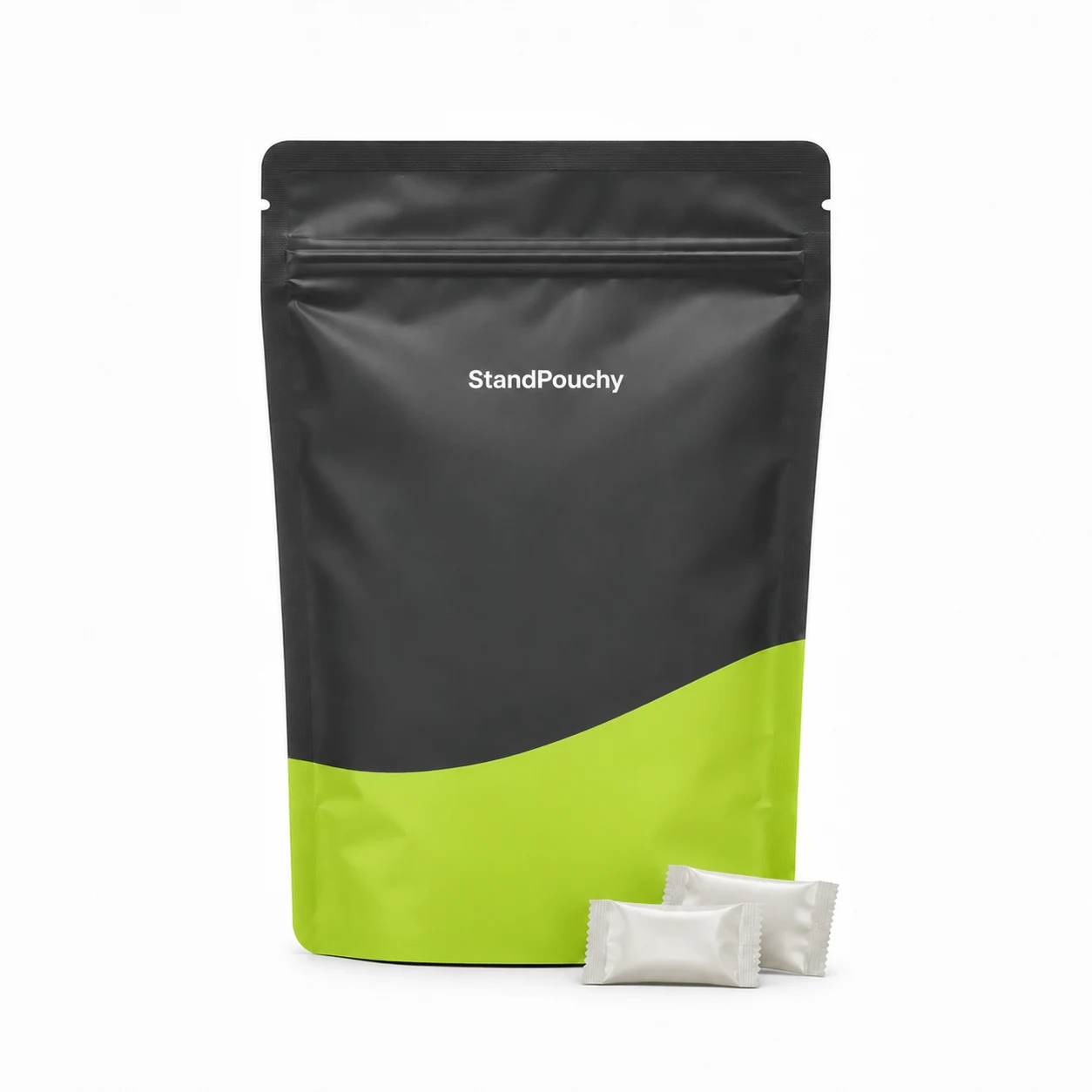
We lay out the largest ordinary samples of each sealed inner pack and note the longest sealed edges, folded corners and areas that bow. We record the count and version of each item in the assortment. GS1 distinguishes predefined physical assortments from other kinds of bundles and identifies the fixed composition in the former.[1] We confirm with the channel team how the sold unit and individual items will be identified.
We ask whether our buyer needs the outer pouch to stand on a retail shelf, group items for direct shipment, or both. A stand-up base earns its space when the assembled pack needs to stand and the channel accepts the footprint. If we only need a shipping grouping, we ask our supplier which costs come from the display features. We also ask the buyer what needs to be visible from outside, such as flavor names or pack count.
We compare a zipper with a simple opening when every inner snack stays in its own wrapper. We ask whether shoppers actually want to store loose inner units in the outer bag. A Reddit packaging design discussion about individual packets inside a larger pouch raised shipping shape and perceived packaging volume.[2] We use those points to review handling with the intended buyer and compare with our retail and ecommerce design guide.
| Decision | What we check | Evidence |
|---|---|---|
| Assortment | Confirm inner count | Item list |
| Display | Set standing footprint | Channel brief |
| Closure | Define shopper use | Sample review |
02
How Do We Size the Mouth for Sealed Inner Packs?
Individual wrappers can catch where a handful of loose snacks would flow. We choose the opening from a realistic loading trial.
We load the exact sealed packets through candidate mouths in the intended sequence. We compare snagging, corner contact, count visibility and top seal clearance using complete filled samples.

Trial the order and orientation
We start with a wider and a taller conventional bottom-gusset pouch when both are reasonable options. We feed each inner pack in the expected orientation and watch the seam corners as they approach the outer zipper ends. We measure the useful opening between those points and observe whether the loaded units spring back into the top seal zone. We inspect the inside surfaces and the individual packets after unloading. If a seal strength test is needed, we ask the lab to specify specimens under the selected ASTM method.[3]
We ask the packer to quote assembly for each option. A wider mouth may make counting and loading easier but occupy more room in the case. A tall sample may work only when the operator turns each inner pack, adding a handling step. We have the packer show the ordinary sequence with representative units and tell us which steps it included in its offer. We keep a separate contingency if an inner pouch size changes.
We ask who provides trial stock for all the inner variants and whether a fixture or counter is included. We avoid paying for printed outer samples before we can run the physical task. If the first trial reveals an awkward last item, we compare a different loading order before we ask for a new dieline. Our converter dieline guide helps us keep the useful mouth dimensions attached to that decision.
| Decision | What we check | Evidence |
|---|---|---|
| Mouth | Clear sealed corners | Loading trial |
| Sequence | Place final item | Operator review |
| Seal margin | Keep clear | Filled unit |
03
How Do We Check the Complete Pack in Distribution?
A closed assortment can stand well and still load the case badly. We compare the actual case pattern before committing to a footprint.
We fill and seal the outer pouches with the correct assortment, measure the sale units, and arrange them in the intended cases. We define the distribution evidence with our logistics and quality teams.

Observe where the inner packets move
We stand a filled unit on its base and check whether the individual packs lean, stack or concentrate their corners against one surface. We fit multiple units into the intended case pattern and record orientation and pack count. We open checked samples after handling and compare the condition of their inner seals and corners with unhandled samples.
We record which end of the case each pouch faced and which inner item sat against its wall. When a corner rubs, we compare the contact point with the corresponding mark on the outside of the inner wrapper. We keep the outer closure and any inner wrapper damage as separate observations. A loose packet can travel inside the outer pouch even when the full unit stays in position in the case. ASTM lists D4169 for performance testing of shipping containers and systems.[4] We ask the lab to choose a scope for the represented route.
We compare quotes on the complete packed system. A wider unit may make assembly convenient but reduce case count. A tighter case may use space well while pressing one packet corner into the next unit. We ask logistics to price the two real case patterns and look at how workers pick the bundle, rather than comparing only the outer pouch price.
We ask the seller which footprint and unit count its channels can accept. A retail shelf may favor a narrower unit while the warehouse values a repeatable fit in a shipper. If the proposals split on those needs, we ask whether one geometry can satisfy both before costing separate packaging versions. We record the scope of the trial in our sample approval guide and name any route or configuration the trial left for later.
| Decision | What we check | Evidence |
|---|---|---|
| Orientation | Record pack position | Case pattern |
| Damage | Inspect contact points | Handled samples |
| Cost | Compare full system | Matched quote |
04
What Should We Approve Before Printing the Multipack?
A small assortment change can leave the outside description out of date. We review what the customer will actually receive before release.
We approve the inner list and count, outer artwork, trade item identifier, final geometry and sample record together. We ask the label owner to review the outer and inner units for the intended market and sale configuration.

Tie the artwork to the assembled unit
We present a closed assortment and each distinct inner pack to the label reviewer. We identify any inner units that are also sold separately and which information is visible through the outer construction. FDA's food allergen resources point to guidance that addresses certain multiunit labeling situations.[5] We ask our reviewer to identify the applicable treatment. We also check the channel's identifier decision against the represented fixed assortment and scan the approved outer code at the filled stage.[1]
We ask the supplier to identify which cost changes if we swap an item, change the count or ship the assortment through another route. We compare quotes with the same closing features, artwork versions and packing assumptions. If a flavor will be replaced seasonally, we ask the channel and label owners how that affects identification and the outside panel before we order more stock.
We use the packaging RFQ checklist to send one controlled assembly description. We include the inner sample photos, count, loading instructions, case pattern and drawing revision. We tell the converter what the buyer expects to approve and tell the co-packer which assembled pack must match. If a supplier is only quoting the outer pouch, we mark assembly and verification as separate work in the buying brief.
After approving the outer retail pouch, we qualify the shipping box and packout if fulfillment will send the assortment by parcel.
| Decision | What we check | Evidence |
|---|---|---|
| Artwork | Review outer and inner | Label approval |
| Identifier | Check sold assortment | Channel record |
| Order | Match assembly scope | Supplier brief |
Conclusion
We buy the outer pouch around the assembled assortment, then approve its physical fit, artwork and order scope together.
Notes and sources
- GS1: General specifications for predefined physical assortments (cited in article)
- Reddit packaging design discussion: Individual packets inside a pouch (cited in article)
- ASTM F88/F88M: Seal strength of flexible barrier materials (cited in article)
- ASTM Committee D10: Shipping container and system test practices (cited in article)
- FDA: Food allergen and multiunit labeling guidance resources (cited in article)
About the StandPouchy packaging team and editorial responsibility
Reddit links are community insight only. We use official standards and regulator pages for technical context, and we require project evidence for the final pouch decision.