01
Which Rice Cake Product Should Our Supplier Actually See?
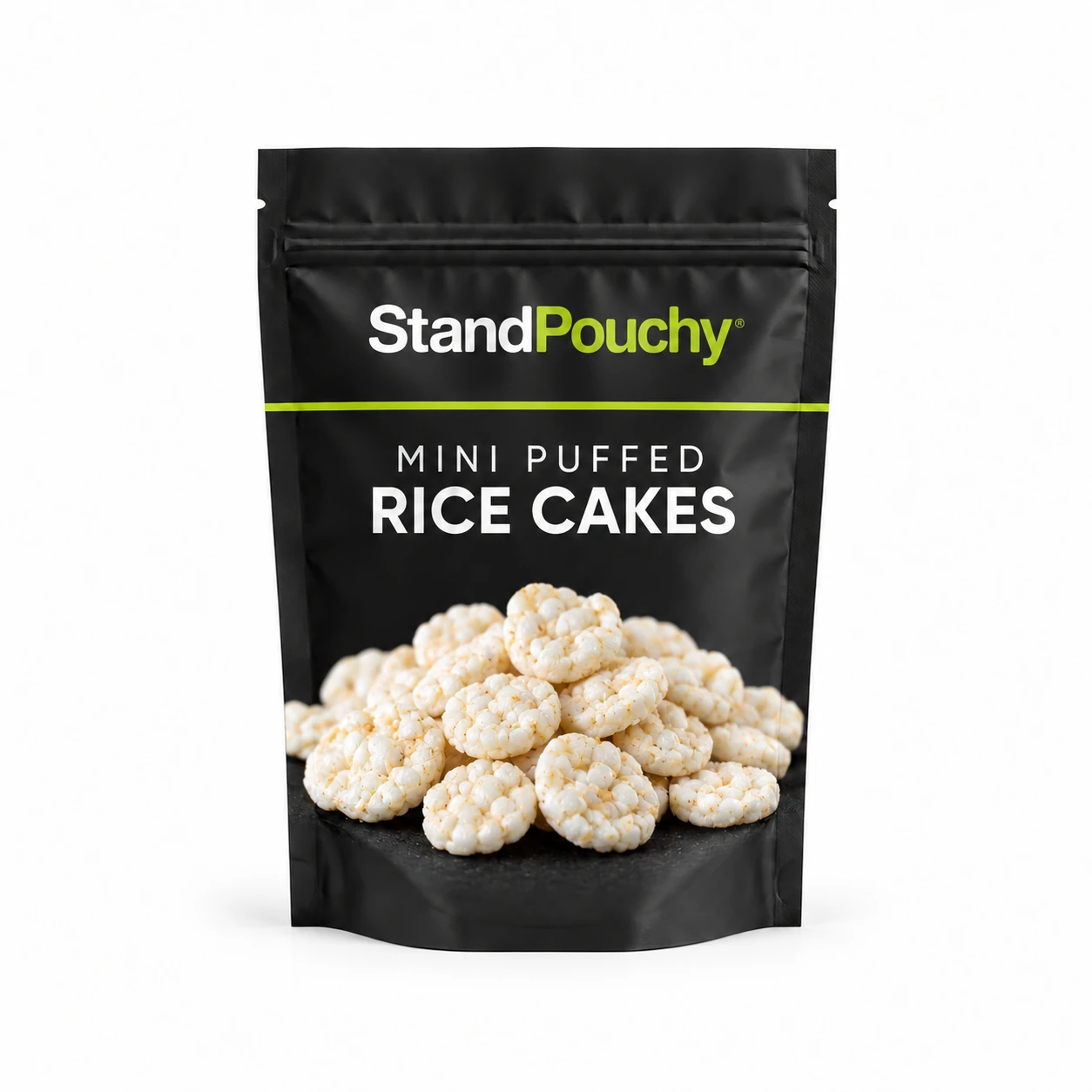
We can request rice-cake bags and receive a sample for another food. That wastes development, so we distinguish dry discs from soft rice products.
We send representative dry puffed mini discs with their diameter range, thickness, broken fraction, coating and target fill. We define the sales occasion and keep product-quality responsibilities with the food owner.
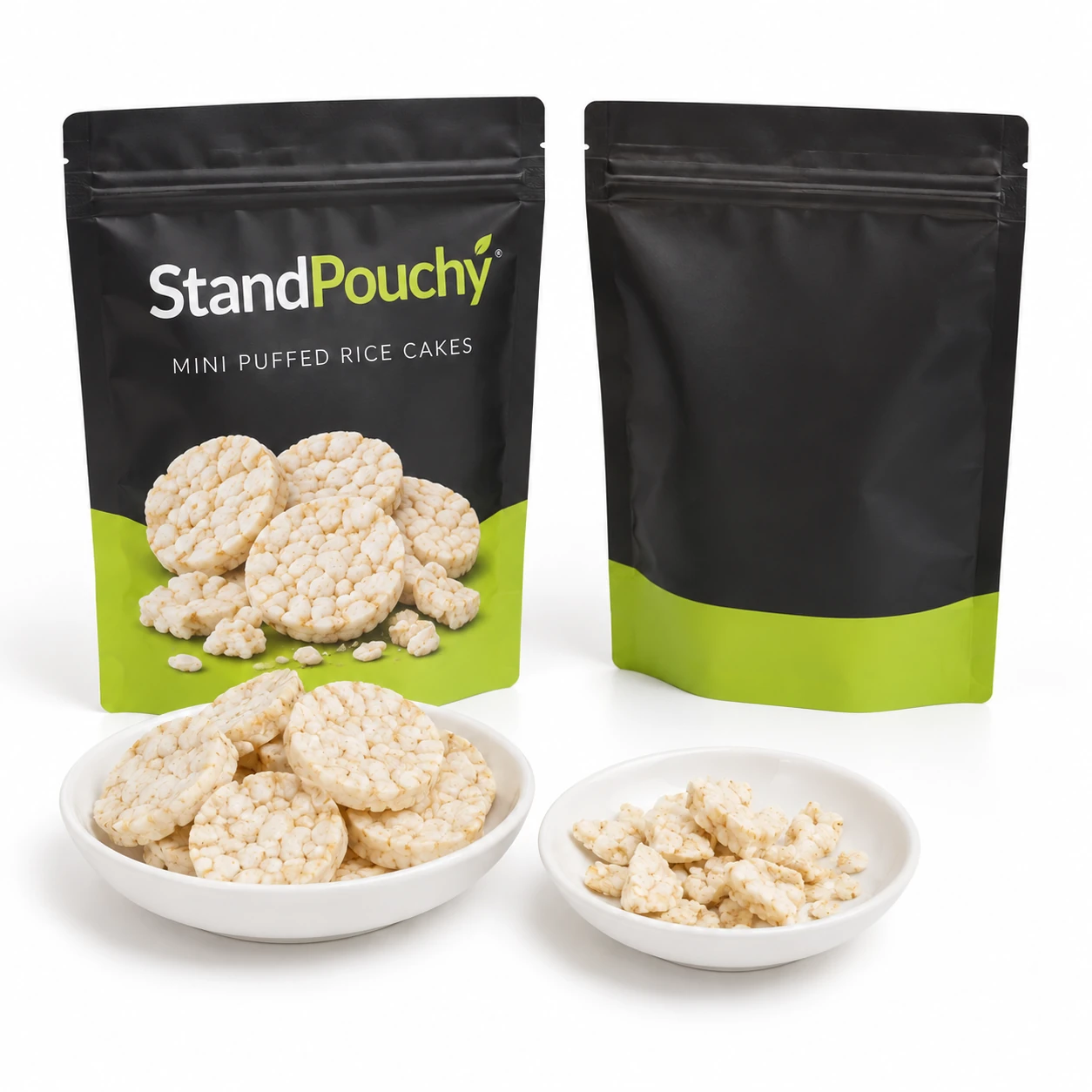
We describe the disc rather than relying on its category name
We describe the dry puffed snack precisely. We record the normal diameter and thickness range, the coating or seasoning, and the amount of fragments in a representative sample. We retain the product lot and its packing condition. We do not use soft tteok, mochi or a large stack of full-size discs to qualify a mini-disc pouch. Madon Pure Foods describes puffed-rice products and several proposed packaging formats.[5] That shows why the format question belongs in the brief; its marketing claims are not our performance evidence.
We ask the food owner to define the quality endpoint and storage conditions. We keep the contact-use document review separate. FDA's component-status guidance concerns the individual food-contact substances and intended use.[1] We ask the supplier for construction support that matches this food and market. We do not turn a general food-grade statement into approval of every rice product or use condition.
We retain whole discs and fragments from the same product sample. We record the observed thickness range and the part of the normal diameter range being trialed. We note whether coating is present and where loose particles collect. We keep the packing condition and sample date with the record. We label what a hand-filled candidate represents and identify which operating conditions still require the actual packer, instead of quietly treating every rice product as equivalent.
We ask the buyer how the product will be sold and eaten. A portion pack used once may prioritize compact handling. A sharing pack may need repeated access to whole discs. A consumer in a Reddit discussion asks how to keep rice cakes when the original pack cannot be clipped or resealed conveniently.[6] We use that as an attributed use problem. We do not adopt commenters' storage remedies as a qualified study or claim that adding a zipper guarantees freshness.
We issue a common packaging brief to each supplier. We ask what sample would demonstrate the access task and which product quantity the buyer must provide. We request separate options for different occasions rather than asking one pouch to suit every channel. This gives procurement a useful basis for comparing development scope before paying for printed stock.
We make the first decision small and verifiable. The supplier should confirm which dry disc it has received, what the proposed sample represents and what remains unknown. We hold product duration, breakage and health claims outside the offer unless the responsible food team supplies evidence. The result is a controlled sampling request rather than an attractive bag selected from a broad rice-cake search.
| Product input | Question to answer | Buying action |
|---|---|---|
| Dry mini discs | Which diameter range is represented? | Common sample lot |
| Coating and fragments | What enters the opening? | Define trial variation |
| Sales occasion | Will users return to the pack? | Choose a purposeful feature scope |
02
How Do We Choose a Mouth That Preserves Whole Discs?
We can choose a narrow bag and force discs through it. That damages the intended presentation, so we test access before optimizing the size.
We compare useful mouth width, product clearance, filled height and bottom-gusset depth with representative discs. We observe filling, pouring and remaining-product access, then review the same candidates inside the intended case.
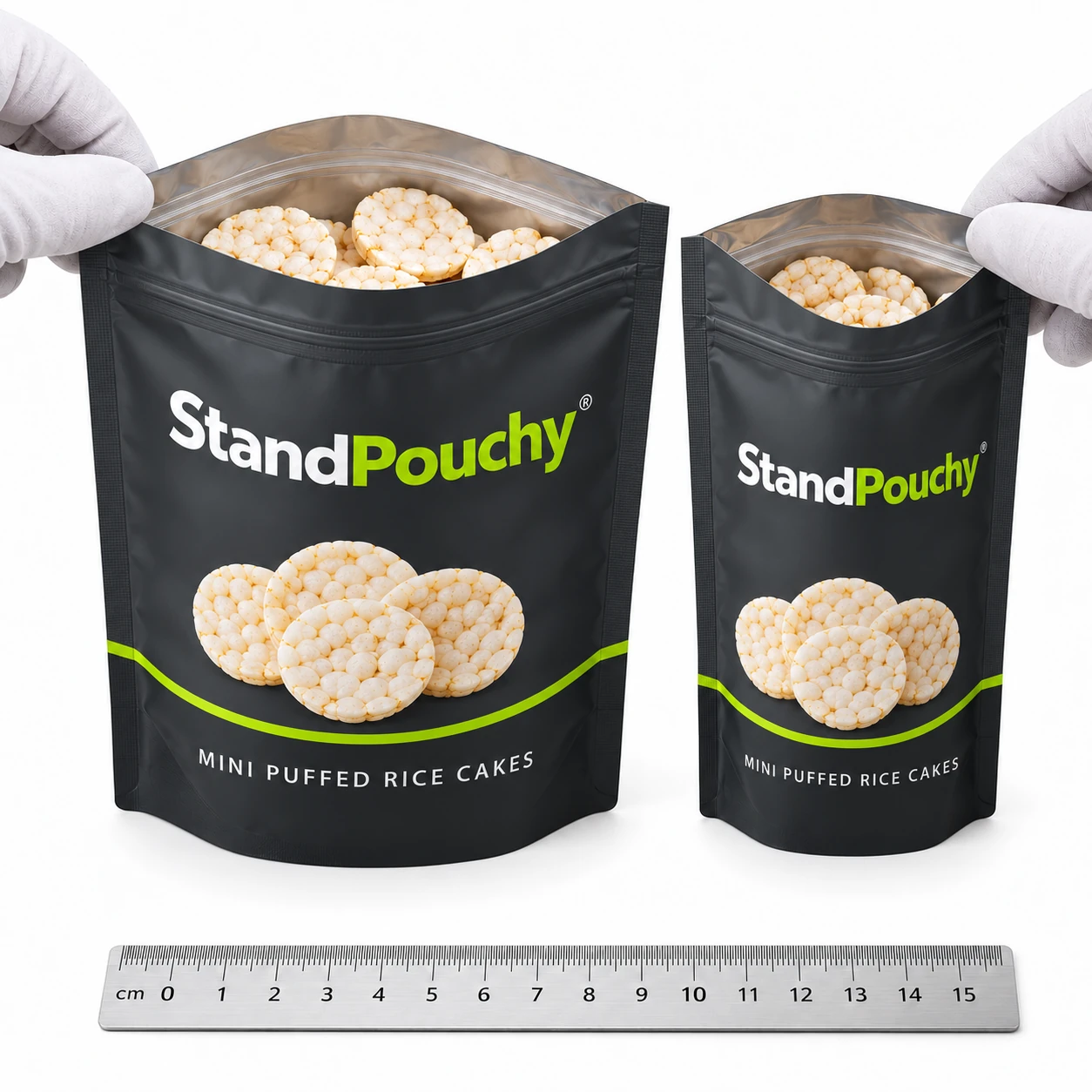
We compare access and case fit as one purchase
We fill each candidate without selecting only the smallest discs. We observe whether normal pieces pass through the mouth, bridge or require force. We record any new fragments during the agreed filling observation. We distinguish a zipper's usable opening from the full flat face width. We also mark the clean permanent-seal area above the expected product. A conventional stand-up pouch uses front and back faces, side seals and a bottom gusset; we do not quietly substitute a box-pouch construction.
We inspect the filled base and front after settling. We record loose and settled height, standing posture and wrinkles around the disc stack. We keep finished-unit measurements separate from manufacturing dimensions. GS1 provides measurement guidance for flexible packaging in its relevant context.[4] We retain the orientation and actual contents with the measurements. We then observe removal from a partly emptied pack, because access can change when its faces fold inward.
We photograph the pouch mouth from above with a representative disc beside it, without presenting the photograph as a dimension standard. We record where pieces catch and how their orientation changes during entry. We inspect the bottom fold and side seals after settling. We retain the actual number of fills and observed conditions in the trial record. We keep those project observations separate from any promised production capacity or universal whole-piece performance.
We ask the buyer which improvement matters enough to purchase. A wider mouth may protect whole-piece access while taking more space in a case. A deeper base may change standing appearance without solving a narrow opening. We compare the actual task rather than ranking candidates by size alone. Our pouch size guide helps record the options. We still need the converter's final drawing after the choice is made.
We ask the packer to show the intended dosing and closing sequence. A gentle hand-filled reference can start the geometry review, but it cannot stand in for an untested production route. We request the included trial work and its limits. We ask whether changing disc diameter or the broken fraction needs another sample. These questions help the buyer avoid ordering a polished shape that operations must later repair.
We keep the shipping case in the discussion from the start. We compare the number of units, orientation and pressure on the filled pouches. We request an actual case trial before claiming that extra headspace or more film protects the discs. We buy a geometry with a demonstrated job, while keeping any unresolved damage question attached to its next review.
| Geometry task | Observation | Purchase trade-off |
|---|---|---|
| Mouth access | Normal discs pass without force | Width versus case fit |
| Top allowance | Product stays below usable closure | Compact unit versus operating room |
| Remaining product | Users can remove whole discs | Appearance versus access |
03
Which Moisture and Seal Evidence Belongs in the Offer?
We can buy a moisture-barrier label and skip the finished closure. That hides quality risk, so we ask what each reported result actually represents.
We compare identified film data and filled-seal records under stated conditions. We keep the unopened product study separate from repeated opening and avoid using a zipper or a flat-film result as a storage-life promise.
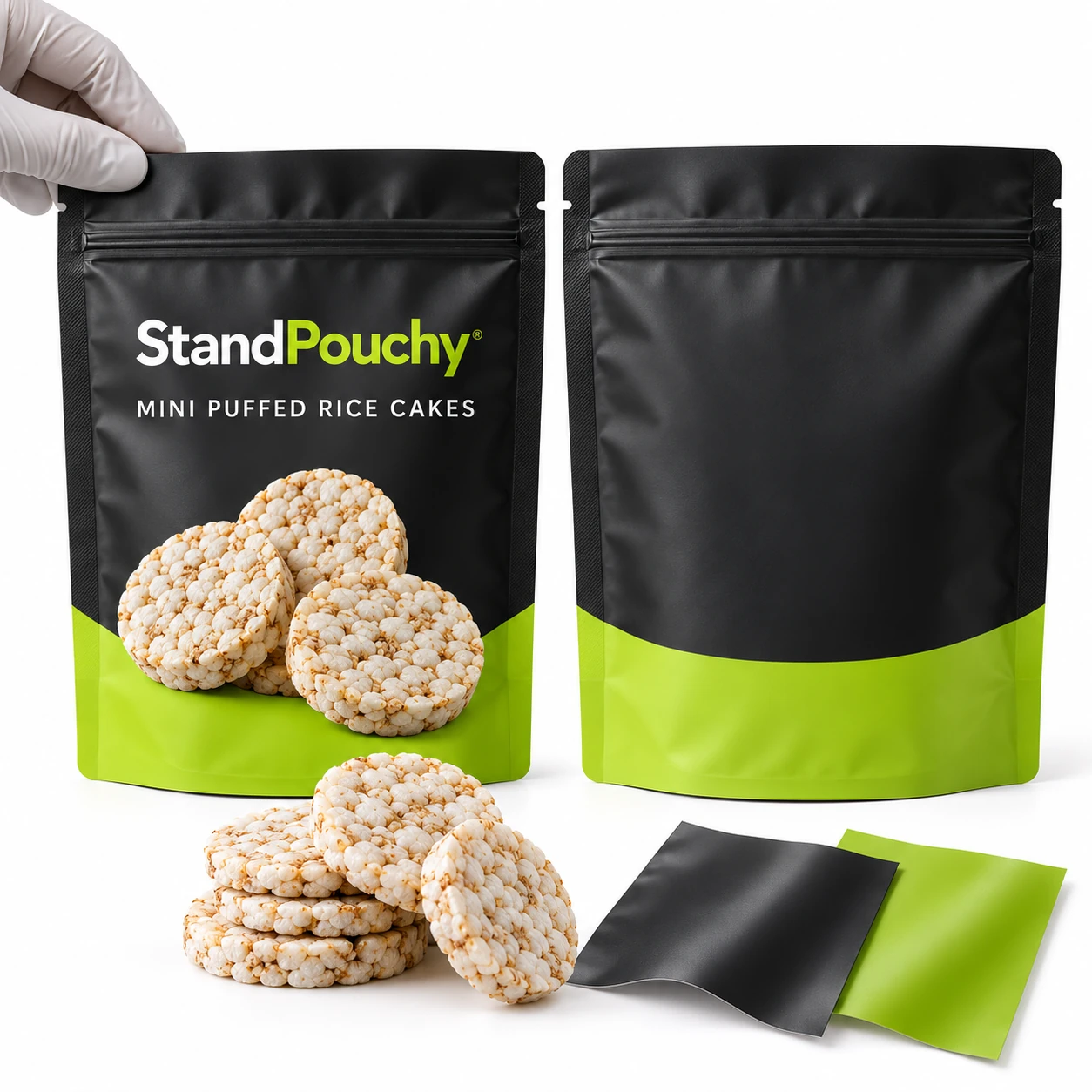
We keep the evidence tied to the tested pack
We ask the food team which moisture-related change its study must evaluate. We request the proposed outside-to-inside construction and data for the actual laminate. ASTM F1249 addresses water-vapor transmission through plastic film and sheeting.[2] We keep test method, specimen, temperature, humidity and units with the result. We identify any window or finish that changes the proposed construction. We do not infer whole-pack storage performance from a film family value or a metallic appearance.
We inspect closures using representative filled units. We keep product lot, pouch lot and sealing conditions with the samples. ASTM F88 addresses seal strength and its use in flexible-material control.[3] We agree what that measurement will answer before interpreting it. We record visible wrinkles or fragments in the seal area separately from measured strength. We keep leak investigation and the food team's quality study distinct, since they answer different questions.
We inspect the closure at both ends and through the middle. We record visible product or wrinkles before interpreting any separate measurement. We identify whether a film report represents the actual printed laminate and retain the window area when it differs. We preserve the specimen and its stated conditions. We then connect the relevant package records to the food owner’s defined study, without using an isolated laboratory number to assign a product duration.
We ask the supplier to explain the practical purpose of each alternative. If it proposes a different barrier direction, which unresolved product question does it address? If it proposes a zipper, what repeat-use task will the sample show? We use the barrier-data reading guide to request matched conditions. We compare supplier scope only when the construction, fill and represented sample stage are clear.
We ask the buyer to review first opening and reclosure with the dry discs present. We observe grip, pouring and alignment rather than coaching each user into an ideal closure. We keep those observations in a consumer-use record. We ask the food owner what further opened-pack evidence is needed before it approves any storage instruction. We do not turn a convenient closure into an unsupported claim about how long the remaining food stays acceptable.
We also ask what a new coating or revised disc size would reopen. The answer belongs in the quotation and approval scope before the order is placed. Procurement should see what was tested, who accepts it and which work is still pending. That makes a documented option easier to compare with an offer that says only high barrier, without inventing a technical target or a price saving.
| Evidence item | Record required | Boundary |
|---|---|---|
| Film transmission | Exact specimen and conditions | Input to product study |
| Permanent seal | Filled samples and agreed method | Specific strength question |
| Reclosure | Observed use with actual discs | Separate opened-pack review |
04
How Do We Approve the Case Before Buying Printed Pouches?
We can approve a single pouch and miss pressure inside the case. That risks damaged presentation, so we review the packed system before ordering.
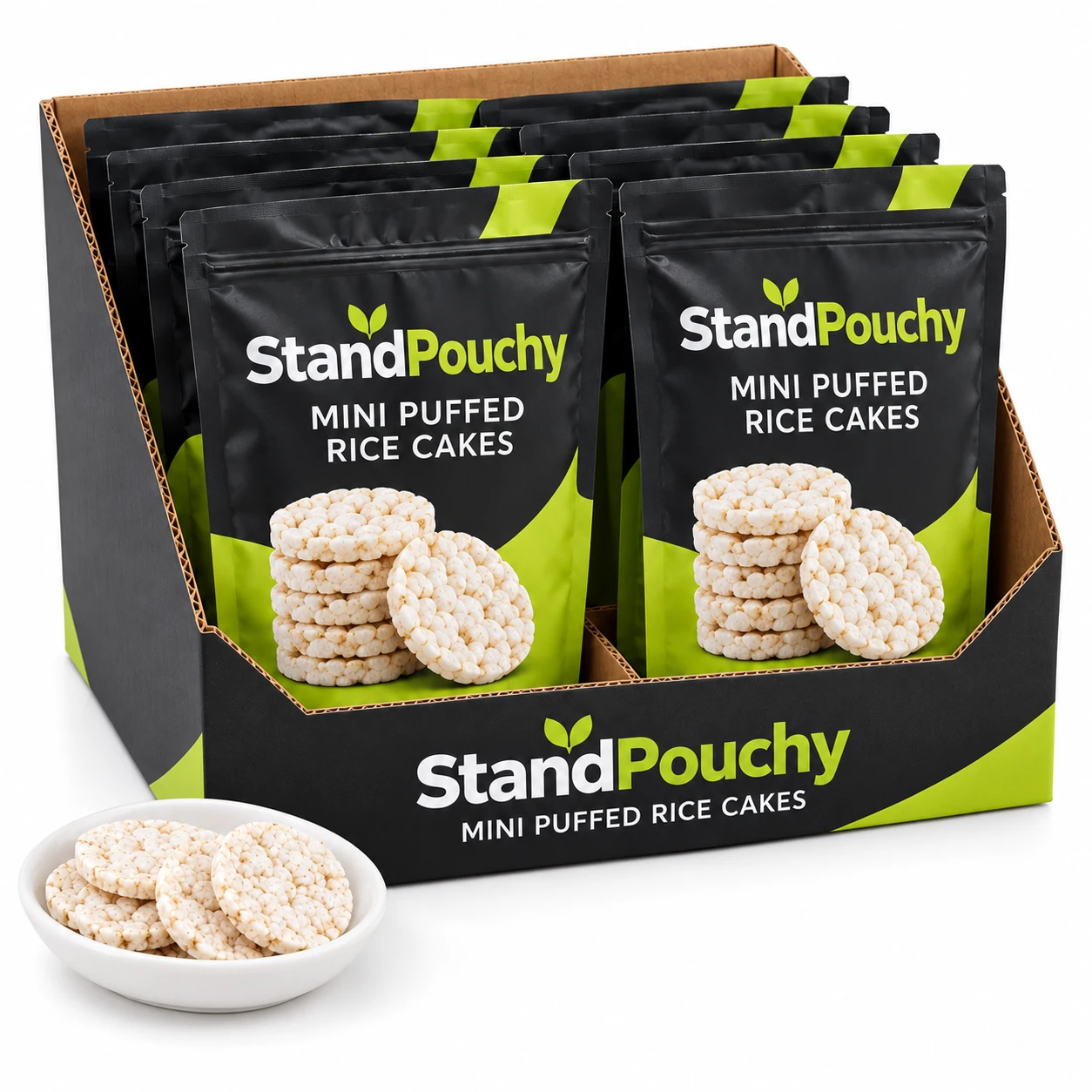
We approve the pouch inside its intended case using representative discs, unit count and orientation. We match accepted samples, artwork, test records and packing instructions to the supplier quotation before releasing the purchase.
We buy a represented packing arrangement
We pack representative filled pouches in the intended case. We retain unit count, orientation, any proposed support and the agreed handling conditions. We photograph pouch and disc condition before and after the review. We keep unhandled references when the plan calls for them. We inspect new folds, abrasion, seal distortion and fragments separately. We do not claim that one drop or one neat case photograph qualifies every distribution route.
We connect each observation to the actual sample. We retain the food, pouch construction, dimensions, closure and operating conditions together. We identify any difference between the trial unit and the proposed printed order. A changed case divider, fill or laminate triggers the affected review again. We also keep the product-quality study and contact-use documents identified separately, so a successful handling trial does not become evidence for unrelated requirements.
We record case dimensions and the represented arrangement with photographs of the filled units. We note where carton edges or neighboring pouches touch the faces and closure areas. We retain any proposed separator as part of the sample configuration. We distinguish fragments present before handling from new fragments observed later. We keep the observation method and acceptance decision in the trial plan rather than inventing a general damage limit for every rice-cake route.
We ask the channel owner to compare the delivered presentation with the sales image. We ask operations whether the chosen count and orientation are practical to pack. We compare alternatives using the same food and case conditions rather than accepting the supplier's most flattering sample. Our retail and ecommerce guide helps frame that channel discussion. The point is to buy a represented arrangement, not to name one format universally ecommerce-ready.
We request a quote that includes the accepted construction, dimensions, artwork quantity, proofing, sample stages, packing instructions and destination. We ask which trial work and delivery responsibilities are excluded. We ask whether the supplier will keep a controlled reference for a reorder. We do not invent a case-efficiency percentage, breakage rate or cost. The buyer can compare proposals fairly when their actual work and conditions are visible.
We use the sample approval guide to close the decisions by food owner, brand, operations, channel and procurement. We then prepare a rice cake pouch inquiry with the actual mini discs, target fill, accepted access task and pending evidence. We request a named next sample or confirmation. We hold the order when a required case or product decision remains unresolved, while retaining the reviews that are already useful.
| Release question | Shared reference | Buyer decision |
|---|---|---|
| Pouch in case | Actual count and orientation | Accept represented handling |
| Artwork and sample | Same controlled revision | Approve honest presentation |
| Quotation | Included work and exclusions | Release matched purchase |
Conclusion
We buy mini rice-cake pouches from representative discs, useful access and a qualified case arrangement. We match the accepted sample to the order scope.
Notes and sources
- FDA: Regulatory Status of Food-Contact Components (cited in article)
- ASTM F1249: Film Water-Vapor Transmission Method (cited in article)
- ASTM F88: Seal Strength of Flexible Barrier Materials (cited in article)
- GS1: Package and Product Measurement Standard (cited in article)
- Madon Pure Foods: Rice Cake Product and Format Options (cited in article)
- Reddit community insight: Rice cakes and difficult reclosure (cited in article)
Reddit links are community insight only. We use official standards and regulator pages for technical context, and we require project evidence for the final pouch decision.