01
What Does the Outer Pouch Need to Do When Each Candy Is Wrapped?
We can over-specify the outer bag or leave a protection gap when nobody defines what the individual wrapper already does. We assign both roles.
We define the inner wrapper’s verified role and the outer pouch’s containment, presentation, handling and storage tasks. We request the actual wrapped pieces and wrapper revision before comparing options. We do not assume a twist wrap is a sealed barrier pack.
We buy a defined two-layer packaging system
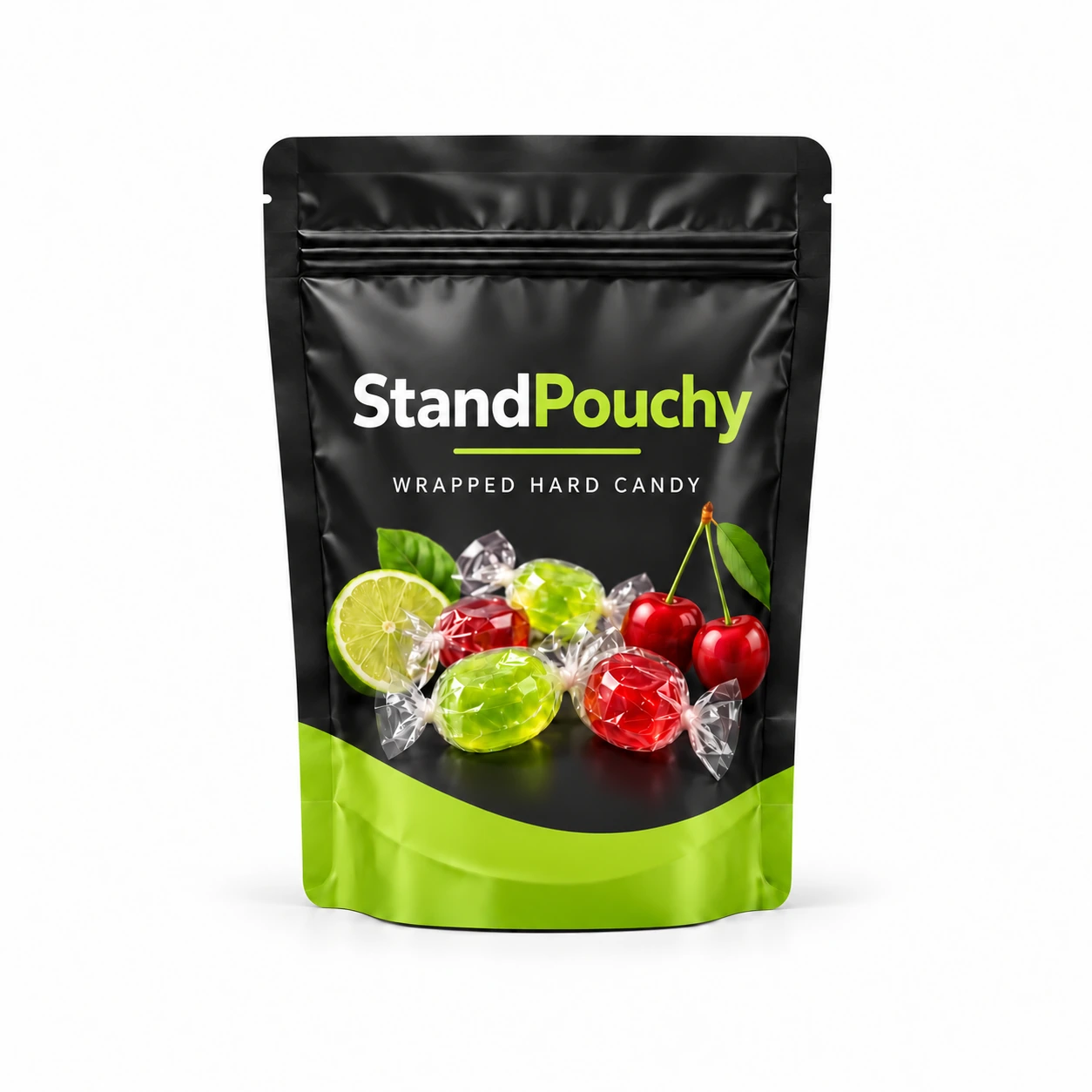
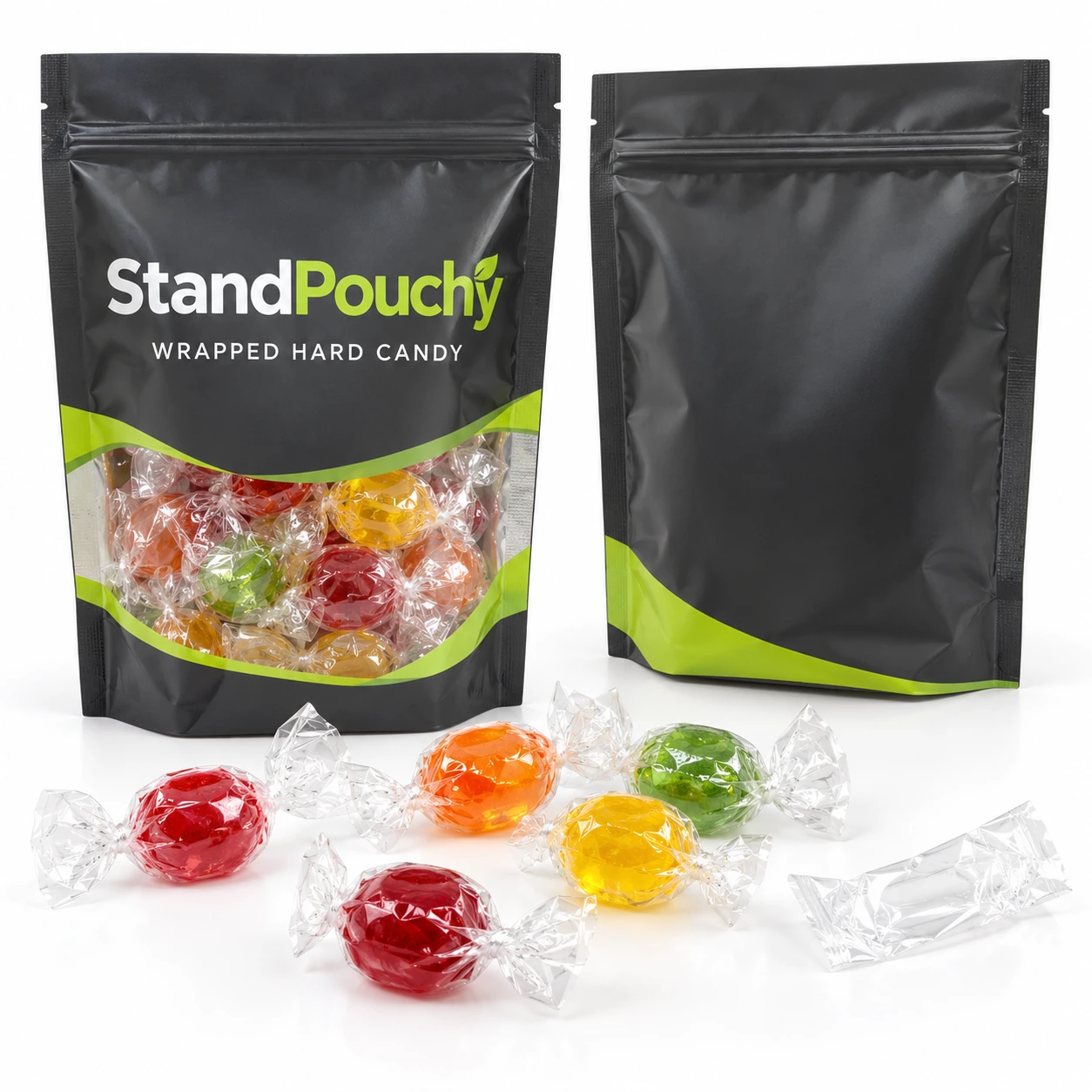
We start with the actual wrapped candy. We record the wrapper material identity, opening style, tail length and normal range of finished dimensions. We ask the product owner what the inner wrapper has been shown to do. A twist-wrapped piece and a fully sealed small pack are different constructions. We do not assign either one a moisture or oxygen result without evidence for that exact wrapper and product.
We then define the buying job for the outer pouch. It may organize an assortment, make a sharing pack easier to store or provide a clear retail face. Hershey's shop presents an actual resealable bag of individually wrapped hard candy.[1] We use it only as a real example of the two-layer format. It does not prove the construction, shelf life or demand for our buyer's new product.
We inspect how wrapper ends meet the outer film. Stiff folded corners, crumpled tails and dense pieces can create local contacts. We observe them on repeated fills instead of assuming the bare candy dimension defines the bag. We also check for pieces that are partly unwrapped or damaged in normal handling. Those observations inform the trial scope; they are not an instruction to accept damaged food or a substitute for the product team's quality rules.
We send the specification checklist with a sample set to each shortlisted supplier. We name whether it must quote an outer pack only or coordinate another packaging component. We ask which wrapper change would trigger a new pouch trial. That question prevents procurement from treating an old sample approval as valid after a new twist-wrap machine or wrapper stock changes the finished piece.
We also ask who owns the final market review. FDA's component guidance concerns substances and applicable uses, including manufacturer scope for an FCN.[2] We do not declare an outer pouch exempt because an inner wrap exists. We ask the supplier and responsible buyer to document the intended contact arrangement and relevant support. This keeps the commercial brief complete without turning a general packaging statement into a legal approval.
| Packaging layer | Question for the buyer | Evidence to keep |
|---|---|---|
| Inner wrapper | What function has been verified? | Wrapper revision and product review |
| Outer pouch | Which selling and handling tasks remain? | Defined pack brief |
| Combined system | What changes require another trial? | Matched filled samples |
02
How Do We Size the Pouch Around Wrapper Tails and Assortments?
We can mistake a neat hand-packed sample for a repeatable production fill. We include normal wrapper shapes and assortment variation.
We choose the mouth, face width, usable height and bottom gusset from repeated fills of the actual wrapped assortment. We check clean sealing space, standing shape and removal. We define a practical size trial before accepting a capacity claim.
We compare the assortment that production will actually pack
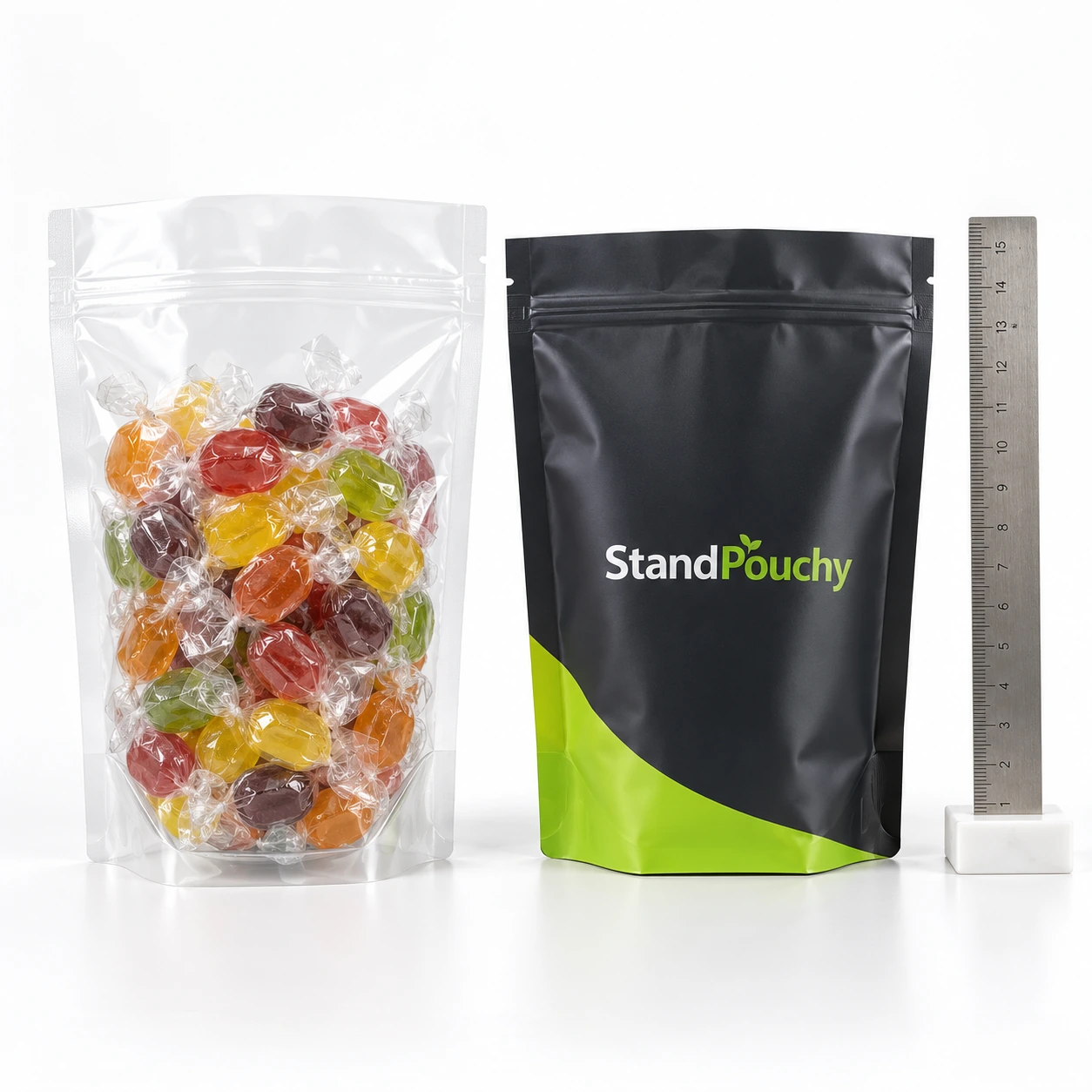
We fill several candidates using normal wrapped pieces. We keep extended tails, common folded corners and the expected candy mix in the sample. We note the loose and settled fill heights and which pieces bridge at the opening. We check the clean zone below the permanent seal after the normal filling sequence. The zipper must also remain accessible when the consumer removes a portion; we do not approve mouth width using one perfectly aligned candy.
We make the quotation scope comparable. We name the target amount, normal mix range and whether a different assortment will share the pouch. We ask each supplier to explain its proposed dimensions and trial assumptions. If one supplier quotes a larger pack, we ask what practical task the extra space solves. We compare the actual benefit rather than treating the smaller dimensions as automatically cheaper or the larger pack as automatically premium.
We inspect dense-load behavior on the bottom gusset and side seals. The pouch must have a conventional front/back construction with a folded base. We look for concentrated contacts from wrapper ends and for a front that bows enough to change the reading area. We also check what happens when units rub in the intended case. A flat empty sample cannot show these interactions, and an arbitrary thicker film is not a proven answer to them.
We use the size guide to record outside dimensions separately from useful fill space. We give procurement the product and wrapper revisions with the comparison. We retain at least one candidate that runs through the intended filling process before asking for the final commercial offer. This avoids releasing artwork for a geometry that the packer has only imagined from a drawing.
We ask how the supplier's price scope changes with face area, film direction, zipper, print and ordered assortment quantities. We do not publish a price prediction. We want the buyer to see which requirement caused a proposed change. When the same pack serves several assortments, we agree a representative trial range with the product owner. We order a shared size only when that comparison supports it, not merely because one artwork system would be easier to manage.
| Size input | What we observe | Buyer response |
|---|---|---|
| Wrapper tails | Bridging and contact points | Confirm usable mouth |
| Assortment range | Loose and settled fill variation | Define sample range |
| Dense filled load | Base, face and case behavior | Compare practical candidates |
03
Which Film and Closure Evidence Should the Supplier Provide?
We can buy a clear pouch for visibility and overlook unsupported storage assumptions. We compare the film with the wrapped product’s actual needs.
We request exact layers, relevant transmission data, contact-use support and finished-seal evidence. We choose a zipper for repeat access when that use is intended. We test the inner wrapper and outer pouch together before accepting any product-quality promise.
We attach the visual option to a controlled material offer
We map the product's exposure path with the responsible team. We ask whether the inner wrapper is open at its twists or fully sealed, and which quality changes matter under intended storage. We keep moisture, aroma, oxygen and light questions separate. The product owner defines any storage study and acceptance endpoint. We do not say that every hard candy needs one barrier value or that its outer pouch can ignore moisture because the pieces are wrapped.
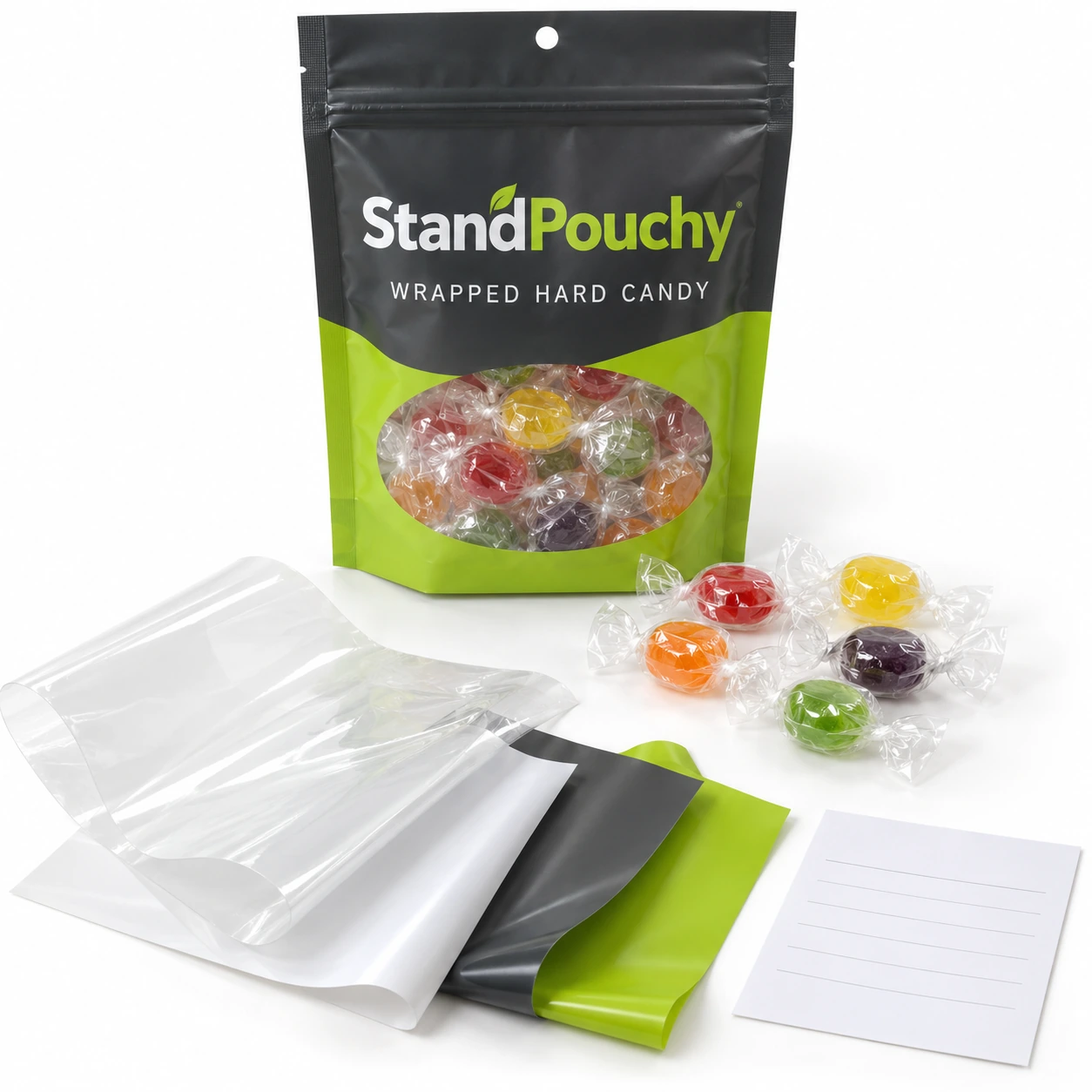
We compare a clear direction with an opaque direction only when each supports a named buyer purpose. Visibility may help show wrapper colors or assortment. An opaque design may give more controlled print space. We ask what the supplier would change in the proposed laminate and which evidence would need repeating. We use the material structure guide to keep those differences visible in the commercial comparison.
We keep transmission and sealing data attached to their specimens. ASTM F1249 concerns water-vapor transmission through film and sheeting and calls for agreed test conditions.[3] ASTM F88 concerns seal strength in flexible barrier materials.[4] We request the method and result context instead of copying an isolated number into the order. We still inspect converted folds, side seals and the filled top seal because they are part of the actual outer pack.
We decide the reclosure job from use. A sharing bag that supplies a bowl over several occasions may benefit from a zipper; a one-time pack has a different brief. A Reddit buyer asks about purchasing individually wrapped candy for repeated replenishment.[5] We treat that as an attributed use example, without adopting its prices or assuming all shoppers behave the same way. We ask our buyer to define its own portion and storage pattern before paying for a feature.
We put the evidence scope beside the supplier offer. We ask whether sample trials, print proof, specified reports and packing review are included or still need arranging. We ask who reviews a changed wrapper stock after the quote. If the outer pouch changes too, we keep both revisions together. This gives the buyer a clear purchasing question: what exact combination is being supplied and which approvals make it ready to order?
| Choice | Evidence question | Decision consequence |
|---|---|---|
| Clear or opaque | What product and visual task is supported? | Compare exact constructions |
| Zipper | How will the buyer use the remaining pieces? | Approve access task |
| Material and seals | Do records match this revision? | Keep release traceable |
04
How Do We Release a Wrapped-Candy Pouch Order Without Gaps?
We can miss an inner-wrapper change while approving the outer artwork. We release a matched product and packaging revision.
We review filling, wrapper contact, opening, storage and the final case using the same outer pouch and inner wrappers. We keep brand, packer and supplier decisions together. We turn the approved record into a quotation and order scope with clear change controls.
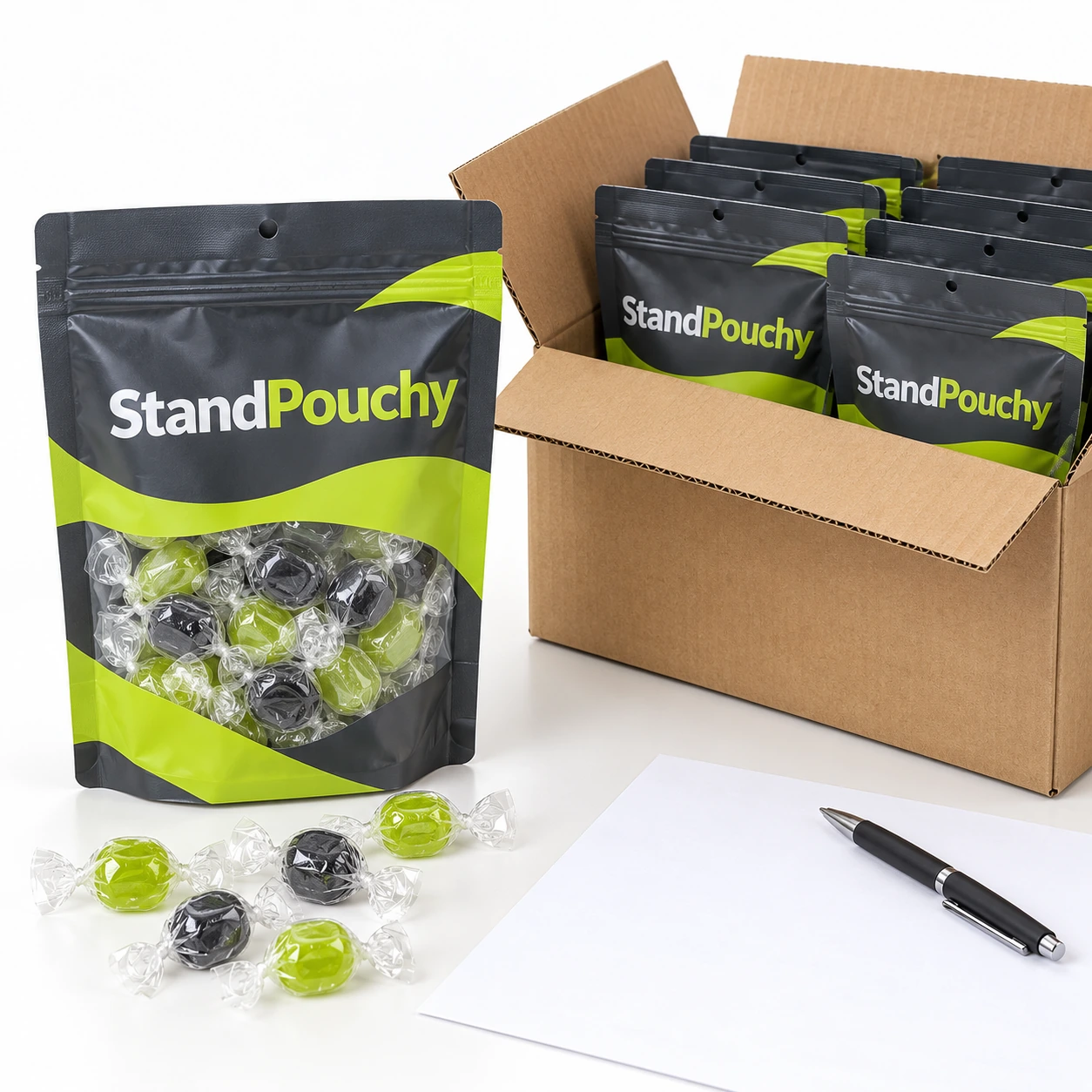
We approve the filled system and the supplier commitment
We run the intended filling sequence and inspect several finished pouches. We check wrapper tails near the mouth, trapped pieces in the top zone and wrinkles across the seal. We record how the filled load sits on the bottom gusset. We photograph any local contact or abrasion after representative case handling. Those observations help us target a repair; we do not call a single clean-looking seal a full package validation.
We give the brand owner the actual filled face and artwork proof. It must be clear which assortment the pouch contains and which quantity statement the buyer has reviewed. We preserve required information and avoid unsupported nutrition or sustainability claims. If colors on the inner wrappers help identify variants, we check that the outer design does not create a different impression. We ask the responsible team to confirm the complete label for the destination market.
We open the final pack through its intended header and zipper. We remove wrapped pieces, close it when relevant and inspect whether tails interfere with the closure. We also review storage under the product team's protocol with the exact inner and outer material combination. We keep sample dates, product and wrapper lots, pouch revision and case configuration together. A short use trial is not evidence for a long shelf-life date.
We use the sample approval guide to name the owner and evidence for each task. We separate geometry, print, process and product-quality decisions so procurement can see what remains pending. If a supplier changes the film or another component after approval, we ask which evidence must be repeated before the changed scope is released. We do not let a similar-looking pouch silently replace the approved one.
We finish by sending a wrapped-candy pouch inquiry with dimensions, inner-wrapper details, target fill, exact assortment range, features, artwork status and destination. We ask the supplier to respond with the offered construction and sample plan, then compare its final quotation with the approved record. This gives the buyer a practical next step: confirm one matched scope and order from it, rather than purchasing an outer bag on appearance alone.
| Approval | Owner question | Release reference |
|---|---|---|
| Fill and handling | Does the combined pack work? | Matched product and wrapper samples |
| Artwork and market | Is the assortment accurately represented? | Controlled proof |
| Supply scope | Does the offer match approval? | Revision and final quotation |
Conclusion
We buy wrapped-candy pouches as part of a matched packaging system. We approve inner wrappers, outer geometry, opening and evidence before releasing the supplier scope.
Notes and sources
- Hershey: Individually Wrapped Hard Candy in a Resealable Bag (cited in article)
- FDA: Determining Food-Contact Component Status (cited in article)
- ASTM F1249: Water Vapor Transmission Rate (cited in article)
- ASTM F88: Seal Strength of Flexible Barrier Materials (cited in article)
- Reddit community insight: Buying Individually Wrapped Candy for Replenishment (cited in article)
Reddit links are community insight only. We use official standards and regulator pages for technical context, and we require project evidence for the final pouch decision.