01
Which Market and Language Decisions Must We Make First?
We cannot fix an unclear destination by squeezing more text onto a pouch. We define the market, language set and approval owner first.
We name where the snack will be sold and who approves all required copy. We create one controlled language set before requesting print layouts, then ask the supplier which documents and artwork files its offer includes.
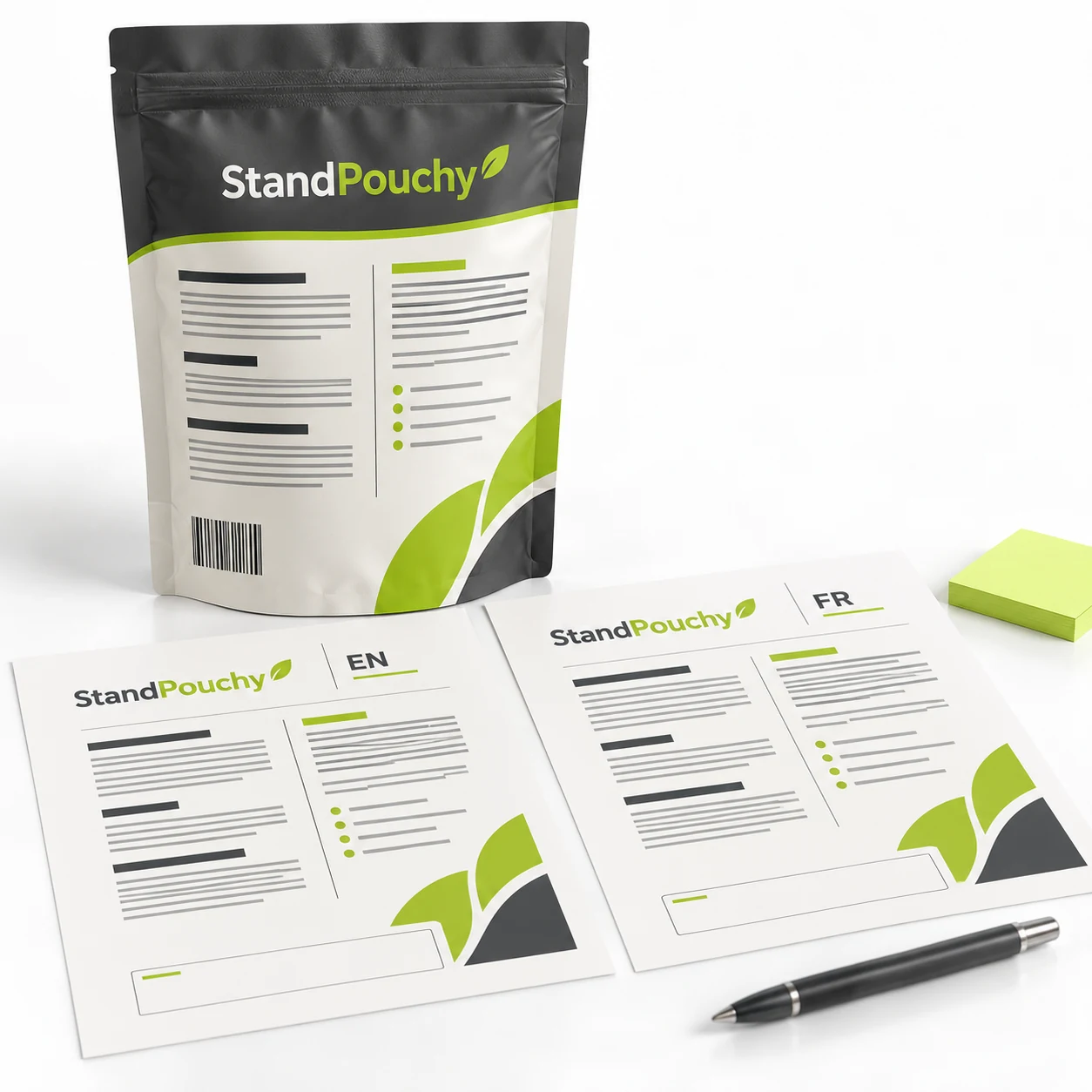
We make translation part of the purchasing brief
We start with the intended market and the actual food. We identify the product name, variant, quantity statement and the food owner’s approved information. FDA’s foreign-language guidance explains the relationship between a foreign-language representation and required label information in that language.[1] We ask the responsible reviewer to apply the current requirements to the exact proposed label. We do not assume that translating only the front name settles a US-facing label or that a design preference creates an exemption.
We ask whether the buyer needs one common language pack or separate market versions. A common design can simplify some artwork administration, while separate versions can give each label more usable space. We compare those actual responsibilities rather than promise an inventory saving. We ask which variants and languages must be ready for the proposed first order.
We keep ingredient and allergen information tied to the actual recipe and destination. FDA provides current food-allergen labeling information.[5] We ask the food owner to approve the complete copy and any relevant update before it enters the print file. We distinguish that content review from the physical pouch specification. If the proposed packaging construction changes, we request intended-use support separately under the component framework described by FDA.[3] These are related project tasks with different evidence and owners.
We use the packaging specification checklist to give every supplier the same brief. We name the source-copy owner, translator, regulatory reviewer and artwork approver. A Reddit imported-food discussion asks what information belongs on a local-language label.[6] We treat it as an attributed buyer question from another market, not authority for our US example.
We record which source-copy fields are fixed and which vary by flavor or destination. We keep the approval date and reviewer beside each changed field. We preserve the original approved text separately from the print layout, so a layout correction can be checked without silently changing the underlying content.
We request a quotation that states whether translation, copy review, layout or printing is included. If the converter prints supplied artwork only, procurement should see that before comparing offers. We ask for a named next file or review rather than assume that a polished pouch rendering means all language obligations have been resolved.
| Decision input | What we compare | Buying action |
|---|---|---|
| Destination | Actual sales market | Name the label reviewer |
| Language set | Approved source and translation | Control the complete copy |
| Offer scope | Translation, layout or print only | Compare included work |
02
How Do We Fit Both Languages Around the Pouch’s Functional Zones?
We can make a flat layout readable while its filled pouch hides text in folds. We compare usable panels before choosing the artwork route.
We place approved text on the converter’s current drawing, away from functional seal, zipper and tear areas. We compare separate panels, grouped language blocks or market-specific versions using filled-size proofs before releasing the design.
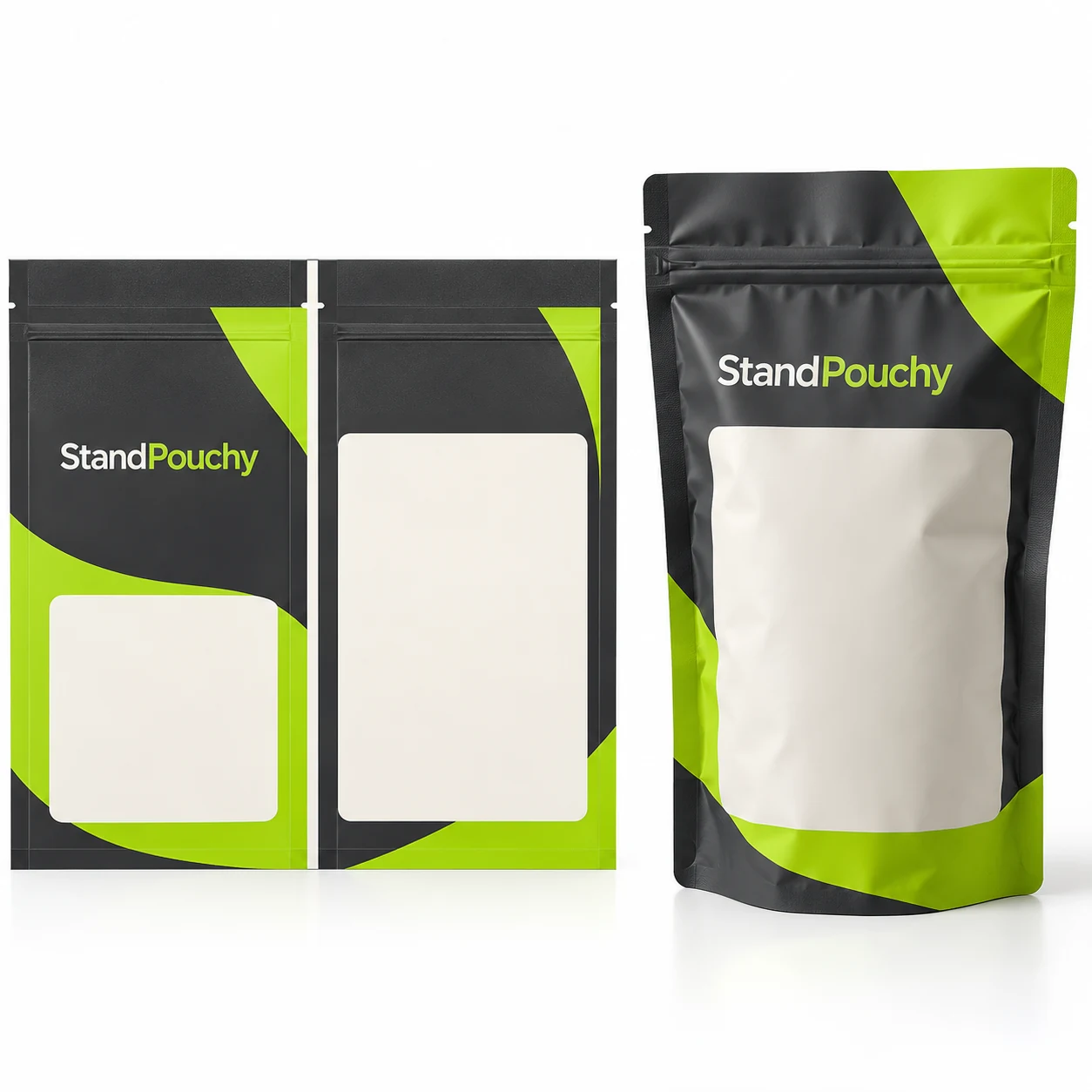
We reserve readable space before decoration
We use the actual front and back drawing for the proposed pouch. We identify side-seal margins, the bottom fold, zipper, tear path and permanent seal area before placing information. We keep full dimensions separate from useful text space. We examine the filled back as well as the flat proof, because curvature and folds can change what remains visible. We label planning layouts as planning references until the converter releases the production drawing for the selected construction.
We show the buyer a small set of purposeful layouts using the same approved copy. One option may group languages in separate blocks; another may use coordinated paired lines. If neither gives the required information practical space, we ask whether separate versions or a different panel arrangement better serves the market. We do not claim one layout is universally compliant or commercially superior.
We preserve barcode placement and its surrounding clear area as part of the same layout. GS1 US discusses symbol placement, quiet zones and careful use of barcode artwork.[4] We ask the reviewer to check the printed symbol in the intended pack condition. We also identify any later coding reserve and the proposed outer finish. We do not reduce a code, crowd required copy or move information onto an unreviewed fold just to make the front artwork appear cleaner.
We use the artwork and dieline guide to record the selected zones and supplier questions. We ask which proof stage will show actual size, color and curved-panel readability. Procurement compares the included proofing work, revision allowance and responsibility for checking copy after the layout changes, rather than compare two undefined printing services.
We mark the proposed reading panels on both the flat and filled references. We identify text near a curve, crease or closure area and retain its actual position. We keep those observations with the current drawing, so moving a paragraph to another face creates a visible review task.
We keep decoration subordinate to the agreed reading task. We ask what shoppers need to identify first and which information the responsible reviewer requires on each face. We request the supplier’s actual explanation of any size or print change. We do not invent a cost saving from smaller text or a conversion benefit from a cleaner-looking panel.
| Decision input | What we compare | Buying action |
|---|---|---|
| Functional zones | Seals, zipper and folds | Reserve usable text panels |
| Language layout | Same approved copy in alternatives | Choose a readable arrangement |
| Proof stage | Actual size and filled reference | Confirm included review work |
03
Which Printed-Proof Checks Should We Request?
We can approve a screen file and miss missing characters or a weak printed panel. We review the actual proof before ordering production stock.
We compare the controlled text with a printed proof at actual size, then inspect the filled pouch. We check character presence, language pairing, contrast, barcode evidence and any variable-code area with the responsible owners.
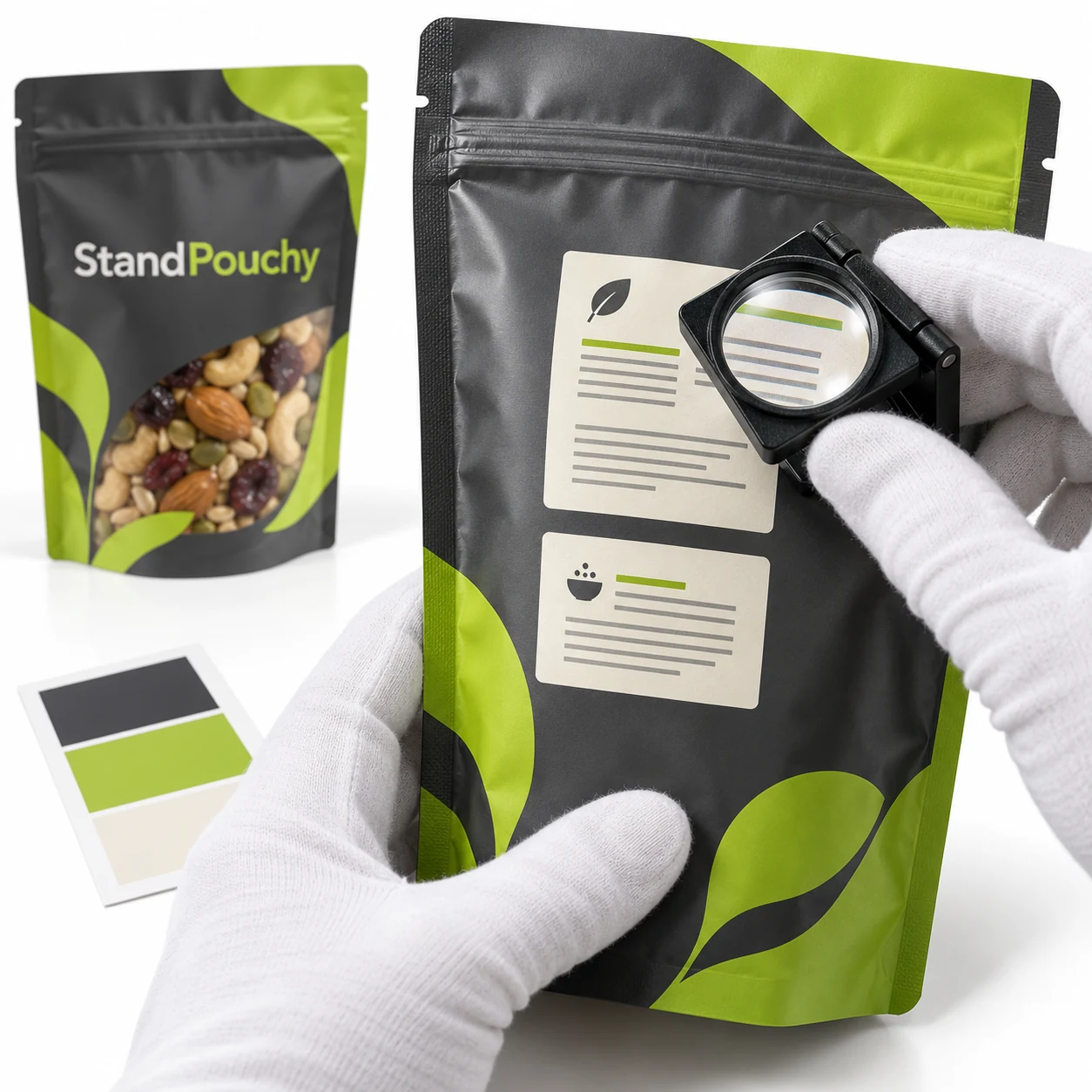
We review the words and the printed surface separately
We retain the approved source text and each translated version with revision identifiers. We compare the printed proof line by line with that controlled copy, including accents, punctuation and units where applicable. We check whether substituted fonts or converted outlines change any character. FDA’s Food Labeling Guide links to relevant guidance and flags older translated editions as out of date.[2] We therefore identify the actual current reference used for a label decision instead of treating any translated PDF as current authority.
We ask the buyer to approve the complete language pair at the same time. Separate approvals can leave one language using an older recipe or variant name. We use the pouch sample approval guide to make the reference and owners explicit. The translator checks linguistic accuracy; the responsible food-label reviewer checks the intended market; brand checks honest product presentation.
We inspect the printed surface flat and on a representative filled unit. We record the construction, outer finish, artwork revision and proof condition. We examine folds, contrast and readable placement under the agreed viewing task. We keep barcode verification distinct from simply photographing a demonstration symbol. We also retain a sample of any later-applied code on its actual surface. A screen preview, an empty film proof and a converted filled pouch represent different physical conditions in that review.
We ask the converter to state which proof it supplies and which changes require another proof. Procurement should know whether its offer includes a physical converted sample, a print reference or only a digital file. We request missing work as a separate named step. That makes quotations comparable without assuming that more elaborate packaging automatically includes a broader approval service.
We record the proof method and whether the sample represents final film, finish and conversion. We retain a readable text reference beside the physical specimen. We check small characters at actual size and identify any difference between the proof and the intended production process before interpreting its appearance.
We keep a short issue log with the exact location, correction owner and replacement proof. A missing accent and a moved barcode are different repairs, and each needs the relevant recheck. We retain passed work while resolving the affected item. We do not release a known copy error merely because a production date has been discussed.
| Decision input | What we compare | Buying action |
|---|---|---|
| Controlled text | Characters and matching revisions | Approve both languages together |
| Physical proof | Flat and filled reading conditions | Identify the represented sample |
| Functional print | Barcode and later code evidence | Close specific issues |
04
How Do We Release Multilingual Pouch Artwork Without Version Mix-Ups?
We can approve the correct proof and still order an older language file. We connect the release package to the exact supplier quotation.
We release one package containing approved copy, artwork, drawing, proof reference and version list. We specify quantities by artwork and market, name any excluded services and define which product or text changes need another review.
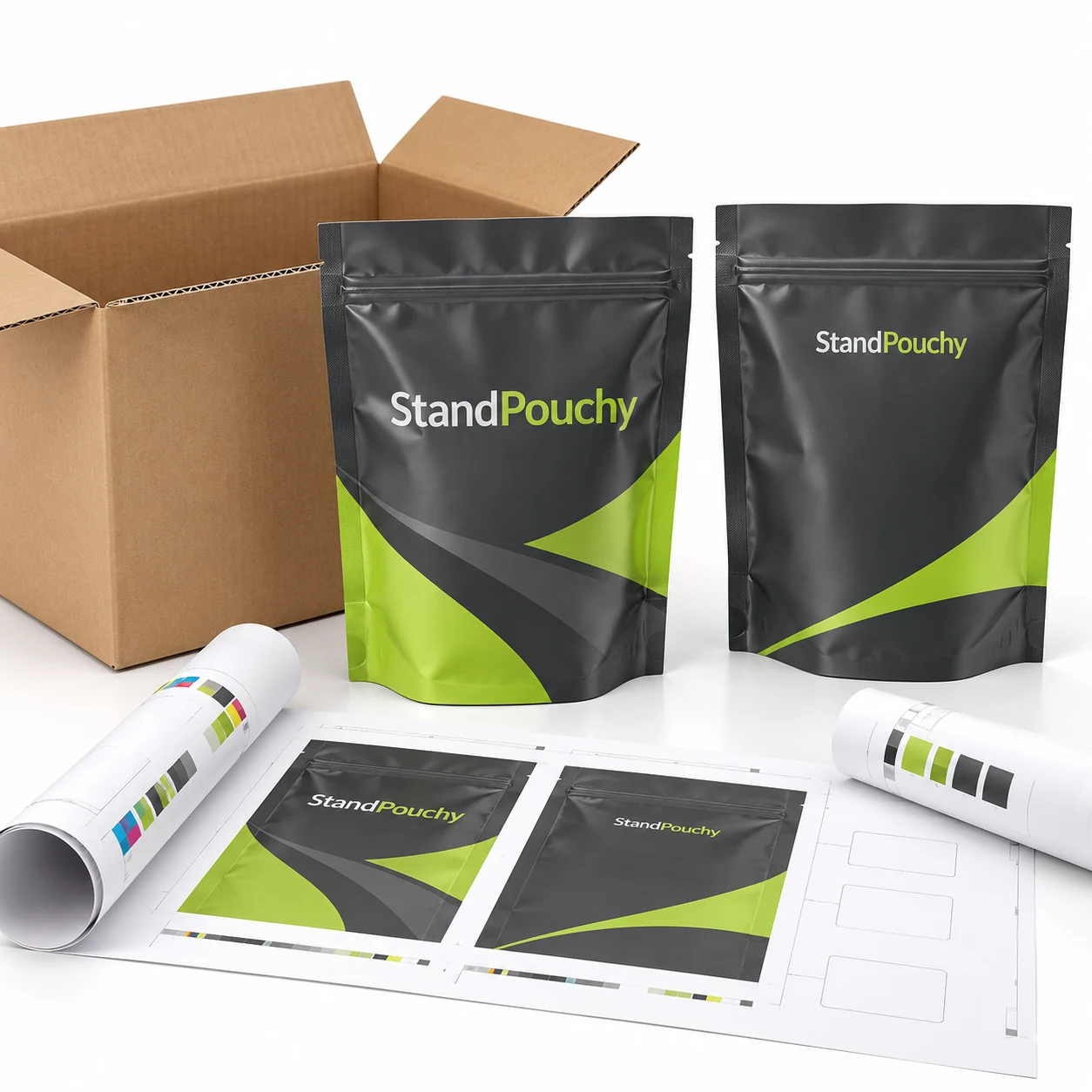
We make the accepted label orderable and traceable
We identify the final source-copy revision, each language revision, artwork file and converter drawing together. We retain the physical proof reference and record what product and pouch it represents. We distinguish fixed printed information from any later variable coding. We also identify separate market versions clearly, so one destination’s label is not silently used as the reference for another. The release record points to an exact accepted combination rather than a folder called final with several competing files.
We use the multi-flavor order guide to list quantities by artwork rather than merge unlike versions into an ambiguous total. We ask which setup, proofing and revision work the quotation includes. If separate market versions create different printing scopes, we request comparable alternatives and the supplier’s actual cost-driver explanation. We do not invent minimum quantities, prices or lead times.
We record what triggers an affected review. A new recipe, allergen statement, net quantity, importer detail or market can change the copy task. A changed pouch size, finish or closure layout can change the physical reading task. We ask the responsible owners which checks need repeating before the next file is released. We keep the earlier approved sample as a reference, while preventing its approval from being transferred automatically to a materially different label or construction.
We ask the buyer, food-label reviewer, translator and converter to close their own decisions against the same release package. Procurement checks that the order identifies the approved files and excluded services. We also ask who keeps the reference and how changes are communicated on reorder. This makes the commercial commitment clear without suggesting that the converter automatically provides legal translation or regulatory approval.
We record file identifiers on the release sheet and retain the accepted proof with the same artwork reference. We keep superseded references identifiable in the project record. We also mark which later-applied fields belong to the packer, so the printed file is not mistaken for the complete finished label.
We then prepare a multilingual snack pouch inquiry with the destination, language set, variant list, controlled copy and intended proof stage. We request a named next confirmation or sample. We keep unsupported nutrition, environmental and performance claims out of the artwork. The buyer can order an honest label and a defined print service with the remaining responsibilities visible.
| Decision input | What we compare | Buying action |
|---|---|---|
| Release package | Copy, drawing and proof identifiers | Approve one matched revision |
| Artwork quantities | Language and market versions | Request comparable quotations |
| Reorder change | Recipe, text or physical layout | Repeat the affected review |
Conclusion
We approve multilingual snack artwork as a complete label on a real pouch. We order one controlled copy, print and supplier scope with clear ownership.
Notes and sources
- FDA: Foreign-language declarations on food labels (cited in article)
- FDA: Food Labeling Guide and current guidance links (cited in article)
- FDA: Food-contact component status and intended use (cited in article)
- GS1 US: Barcode placement and printing (cited in article)
- FDA: Food allergies and food-label information (cited in article)
- Reddit community insight: Imported-food language labels (cited in article)
About the StandPouchy packaging team and editorial responsibility
Reddit links are community insight only. We use official standards and regulator pages for technical context, and we require project evidence for the final pouch decision.