Snack application specification
Beef Jerky Packaging Pouches
Custom printed pouches for jerky. Compare materials, closures and print finishes, then request a quote or sample guidance for your product and quantity.
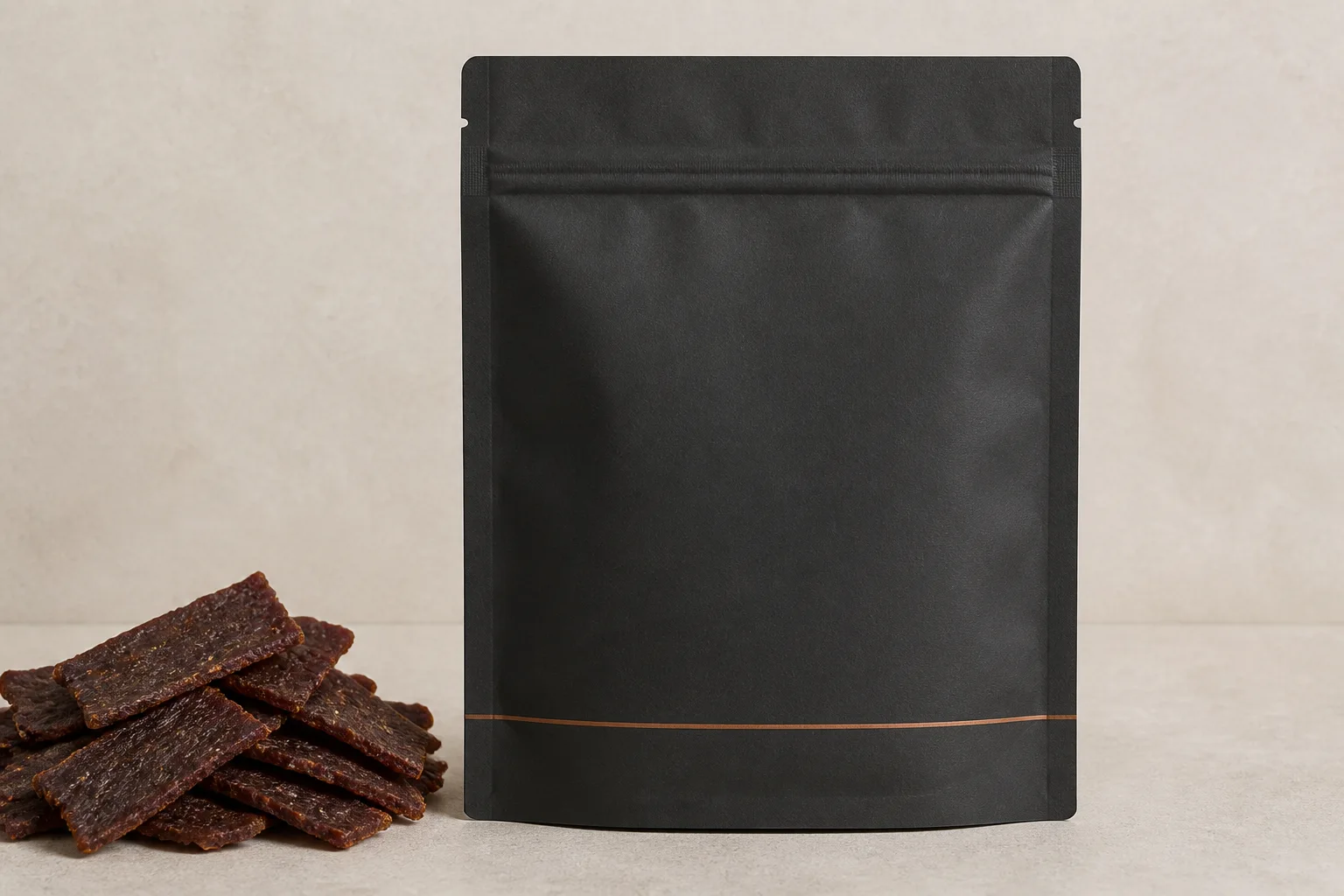
Compare custom pouch options
Choose a jerky pouch to discuss.
Compare the material direction, closure and finish below. The minimum, sample route and price depend on your size, construction and print requirements.
 View details
 Jerky & Meat Snacks
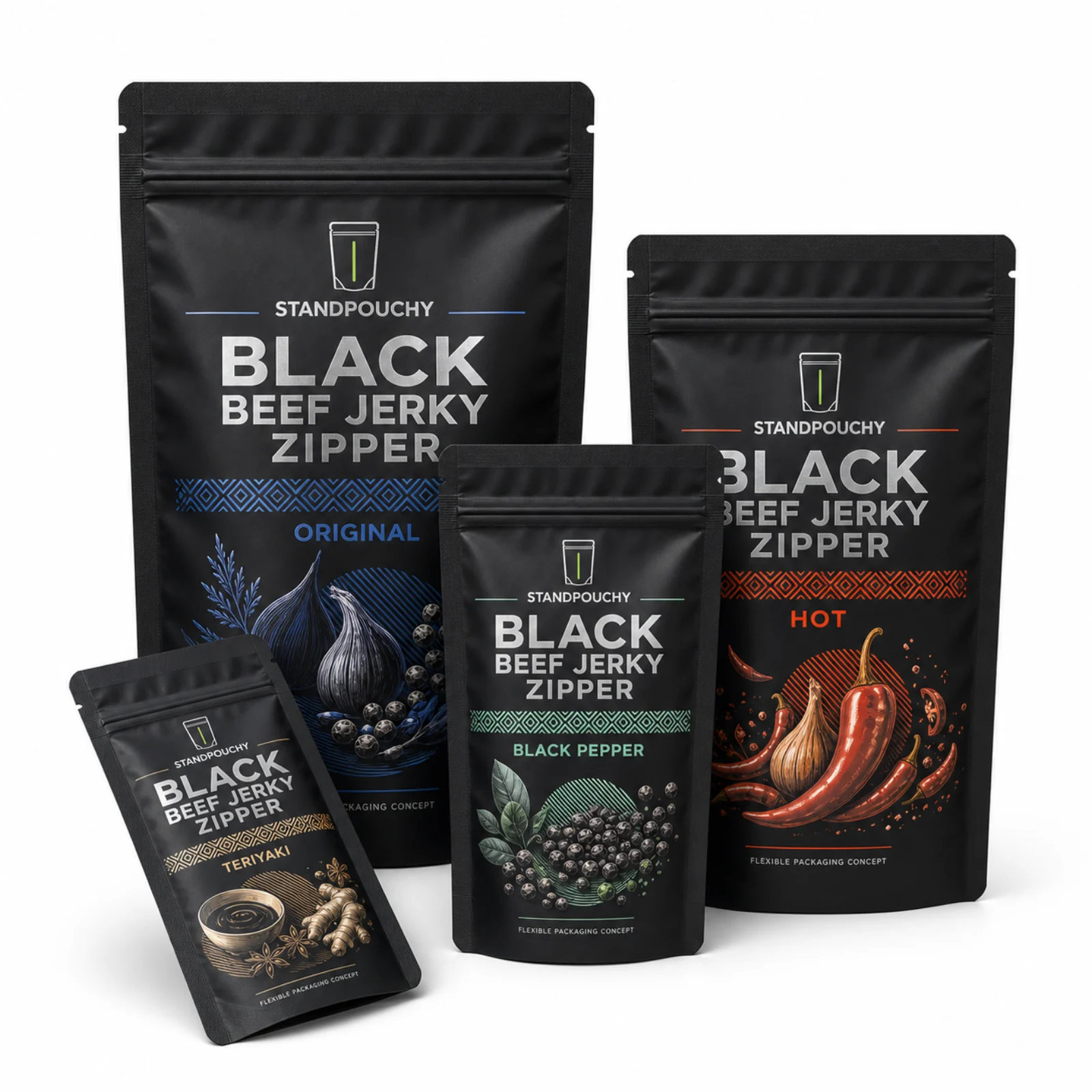
Black Matte Beef Jerky Zipper Pouch
Custom pouches for beef jerky pieces, planned around oxygen, aroma, grease and sharp meat edges. Review a robust zipper and sealant reviewed for the actual product surface before confirming size and materials.
- Structure
- Matte PET / AL / PE direction
- Closure
- Resealable zipper
- Finish
- Black matte
- Digital MOQ
- From 200 pcs*
- Printing
- Digital / gravure
- Production
- 7–10 days after approval*
- Shipping estimate
- 7–10 days*
*Selected specifications and routes; confirm eligibility and timing in your quote.
 View details
 Jerky & Meat Snacks
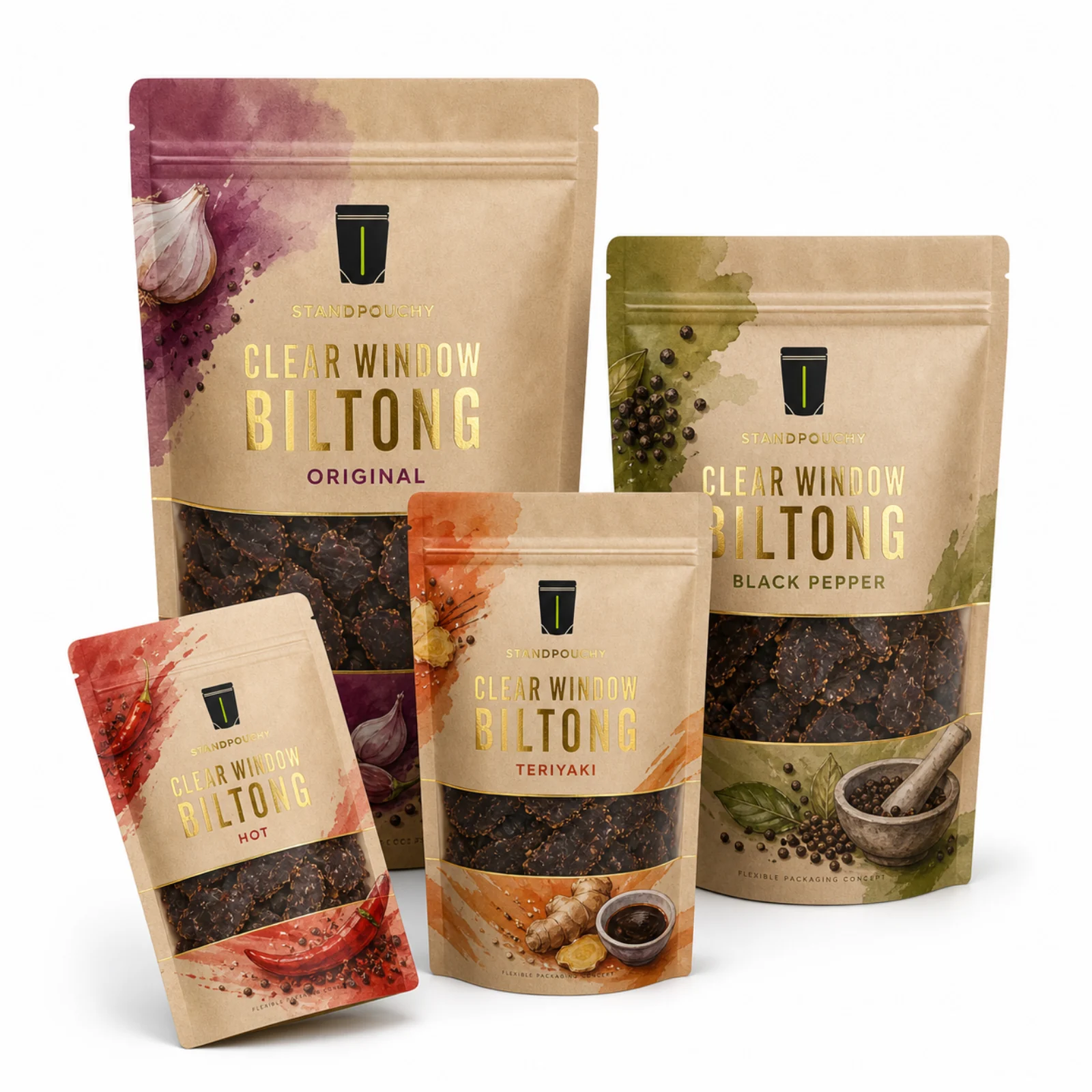
Clear Window Biltong Packaging Pouch
Custom pouches for biltong slices, planned around product visibility, oxygen exposure and variable slice thickness. Review a window that avoids weakening critical seal and handling zones before confirming size and materials.
- Structure
- PET / transparent-barrier PE direction
- Closure
- Resealable zipper
- Finish
- Matte tan
- Digital MOQ
- From 200 pcs*
- Printing
- Digital / gravure
- Production
- 7–10 days after approval*
- Shipping estimate
- 7–10 days*
*Selected specifications and routes; confirm eligibility and timing in your quote.
 View details
 Jerky & Meat Snacks
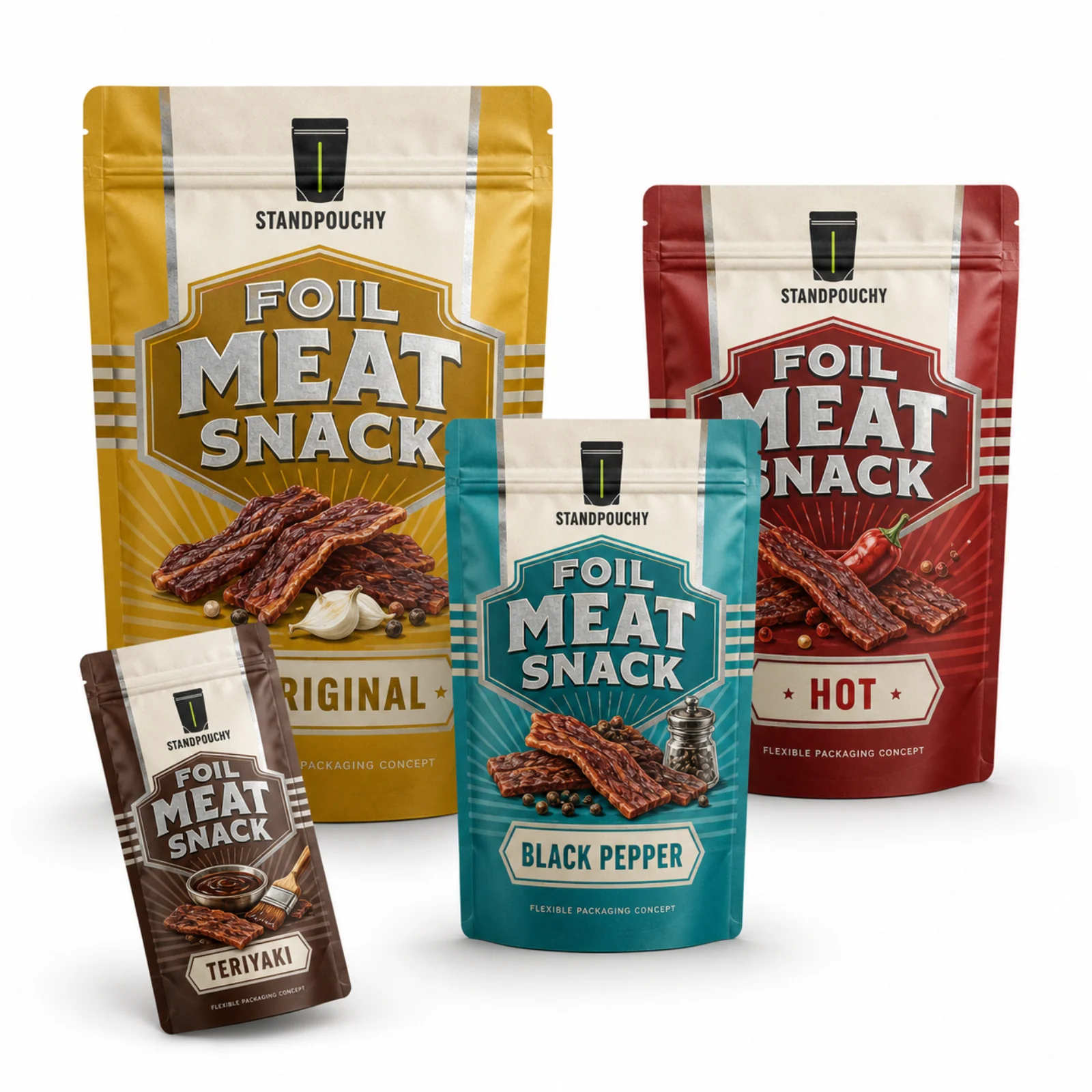
Foil High Barrier Meat Snack Pouch
Custom pouches for shelf-stable meat snacks, planned around oxygen, light, aroma and product-contact compatibility. Review an exact foil laminate and seal window linked to the product process before confirming size and materials.
- Structure
- PET / AL / PE direction
- Closure
- Resealable zipper
- Finish
- Metallic silver
- Digital MOQ
- From 200 pcs*
- Printing
- Digital / gravure
- Production
- 7–10 days after approval*
- Shipping estimate
- 7–10 days*
*Selected specifications and routes; confirm eligibility and timing in your quote.
Send your product, estimated quantity and contact details. If dimensions or materials are undecided, ask for guidance and a sample review before approving production.
Jerky product directory
Browse every jerky pouch reference.
This directory connects the application guide to every matching product specification, including references beyond the three comparison cards.
Direct answer
What matters most when packaging jerky?
Jerky packaging must be specified from the actual recipe, water activity, oil, oxygen sensitivity, piece shape, target shelf life and any atmosphere-control component. A high-barrier zipper pouch is a common direction, but the material, seals, absorber or gas strategy and food-contact documentation must be reviewed for the exact product and destination market.
Failure-mode map
Define the product risk before selecting a pouch.
Oxygen and quality change
Product formulation and processing determine whether oxygen control is a leading risk.
Moisture balance
Texture depends on the product and the package/storage system.
Puncture and seal stress
Rigid or sharp strips can contact the film and load the seals.
Oil and product contact
Grease exposure may affect appearance, sealing and compatibility.
Format logic
Match format to filling, shelf and use.
| Project condition | Format direction |
|---|---|
| Small resealable pouch | Useful for repeated access when the zipper and product pieces work together. |
| Vacuum or atmosphere-control project | Requires equipment, headspace and package testing beyond a generic pouch decision. |
| Large jerky strips | Use opening width and internal dimensions that prevent forcing product against seals. |
Material direction
Compare candidate structures without turning them into promises.
Use supplier reports to compare the exact proposed material under stated conditions. Windows, zippers, seals, folds and conversion still require separate finished-pouch review.
| Candidate direction | When to evaluate it | Evidence still required |
|---|---|---|
| PET / VMPET / PE direction | Common comparison direction for opaque jerky packs. | Exact OTR/WVTR conditions, oil compatibility, puncture and seals. |
| PET / foil / PE direction | Candidate for demanding projects when handling permits. | Flex cracking, product edges, sealing and process compatibility. |
| Transparent barrier direction | Candidate only with supporting material data and product/light review. | Exact layer, aging, light, package integrity and shelf life. |
Filling and sealing
Protect the closure and final top seal.
Fill weight is not pouch volume. Record bulk density, settled pack shape, functional headspace, opening width and the intended sealing process before final dimensions are approved.
- Define whether absorbers, vacuum or gas are part of the system and validate them separately.
- Keep strips and oil away from zipper and final-seal areas.
- Check puncture at corners, folds and packed orientations.
- Tie shelf-life conclusions to the approved product, process, component and package revision.
Buyer specification table
Copy these fields into the RFQ and approval record.
| Field group | Record for this project |
|---|---|
| Product | Jerky type, recipe/process reference, water activity if available, oil and piece geometry |
| System | Pouch, zipper, headspace, absorber/vacuum/gas route when applicable |
| Process | Filling, component insertion, seal-area controls and final sealing |
| Market | Destination, storage, labeling and food-contact documentation needs |
| Evidence | Barrier, compatibility, seal/leak, puncture, handling and shelf-life study |
Jerky packaging questions
Does jerky always need an oxygen absorber?
No. The product, process, target shelf life and package system determine whether an absorber is suitable. Confirm component safety and performance evidence.
Can jerky use a clear pouch?
Only after light, oxygen, moisture and shelf-life requirements support the selected transparent structure.
What causes punctures?
Sharp product edges, tight packing, flexing and distribution can contribute. Use representative filled-pack handling checks.
Is the zipper part of the barrier?
It is part of the package path after opening, but the permanent seals, laminate and consumer reclosure remain separate considerations.
Can a supplier guarantee shelf life from film data?
Film data alone cannot establish filled-product shelf life; use a defined study on the finished package system.