01
How Do We Identify Each Printed Pouch Revision?
Flavor colors are easy to recognize until two versions share the same stripe. We give purchasing and the packer a dependable reference.
We record the product SKU, pouch item code, artwork revision and approved identifier together. We ask the converter to show how the carton label and sample can be traced to the quoted revision.

Make the purchase order usable at the line
We build a small version register. Each row points to the approved artwork, the packaging item number and the specific product it will hold. The release copy identifies the barcode and the version of the ingredient and allergen text reviewed for that product. We ask the supplier where its lot appears on the cartons and how a returned loose stack can be traced. FDA summarizes U.S. food allergen labeling requirements and points to its detailed guidance.[1]
We ask whether the supplier quotes artwork separately from the pouch construction. With an unchanged material and a revised ingredient panel, we may still need distinct receiving identities and a new proof. Conversely, two products with the same artwork family can require different films or dimensions. We avoid purchasing one combined line item when our packer needs to distinguish the two on the floor. Our multi-flavor pouch ordering guide describes how we split quantities.
We ask the brand and the packer to read the register together. If someone sees a pouch with no outer carton, what visible cue lets the team look up the right record? We can ask for a printed revision mark when the artwork allows it. We confirm that it will remain visible on the filled bag and is distinct from the variable lot code. If the existing design lacks space, we record which carton identifiers stay with the working stock.
| Decision | What we check | Evidence |
|---|---|---|
| SKU | Active food | Work order |
| Pouch item | Physical stock | Carton ID |
| Artwork | Current version | Approved proof |
02
What Do We Remove Before Bringing the Next Pouches In?
Loose bags left by a feeder can mix into the next run. We assign one owner to inspect each staging point.
We clear prior printed pouches and related packaging from the active station, identify stock being returned, and verify the incoming material against the work order. We use the packer's approved procedure to govern the change.
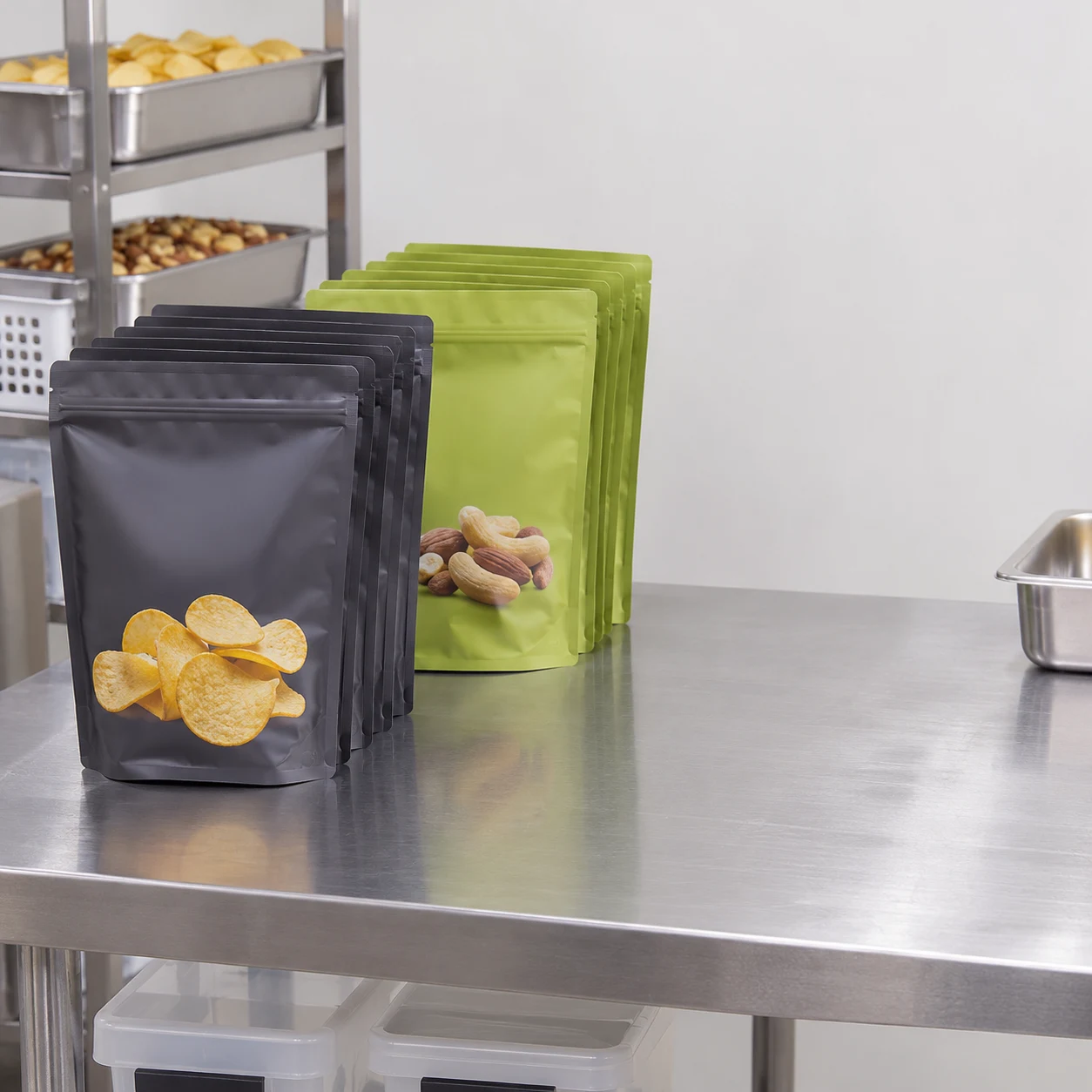
Walk the physical route of the old stock
We start where working stacks enter the line and follow them through the feeder, reject station and nearby holding points. We look at open cartons and any stock that operators set aside for troubleshooting. We keep the previous item identity and lot with stock that leaves the station. Under U.S. preventive controls rules where applicable, food allergen controls address cross-contact and label-related protection.[2] The responsible facility decides how the check fits its food safety plan.
We ask the packer what a change costs when two flavors run on one shift. The quote may include time to change materials, record the first pack and handle leftover cases. We ask which costs are charged per run and which depend on the planned sequence. We also ask who holds short returns. Those details help us compare combining orders at the converter with holding separate stock at the packer. A Hershey supplier manual offers one example of line clearance and pre-start review in a customer program.[3]
We use our empty pouch storage guide when an open box goes back to storage. We agree how the packer will identify the pouch and maintain its protection. We make the expected handoff easy to see on the order instructions so temporary staff and purchasing are working from the same reference.
| Decision | What we check | Evidence |
|---|---|---|
| Feeder | Old material removed | Clearance check |
| Returns | Lot preserved | Return label |
| Incoming | New revision identified | Order match |
03
How Do We Verify the First Filled Pack?
An empty bag can look correct while the filled pack carries an outdated code. We check the finished unit at startup.
We compare the first filled pack with the active order, artwork and coding instructions. We confirm that its product identity, approved label, printed code and barcode are the ones expected before the designated reviewer releases the run.

Review the same pack the buyer will receive
We examine the first represented pack from both faces and read the variable code at the printed location. We scan the barcode and compare the decoded value with the work order. We inspect where the front and back fold or wrinkle after filling because a scan in a flat proof is a different observation.
We record the printer setting and the part of the pouch that passes the print head. If the code appears across a fold or seam, we record the position and compare a sample after the pack is handled in its case. We separate legibility of the variable lot code from the encoded trade item identifier. Either may need a correction at startup, and they are checked against different parts of the order record. Where barcode verification is specified, we ask which verification method and acceptance criteria apply. GS1 provides placement guidance.[4]
We ask whether the first-pack check is included in the co-packer quote and which results we will receive. A date-stamped photo can help the buyer see the represented revision. A photo alone leaves details such as the decoded value or the reviewer unclear unless they are written down. We ask the packer to retain the information it uses to release the line and clarify which sample we will see. Our barcode verification guide helps define that evidence.
We check whether the lot code area behaves as expected at the filled stage. A Reddit manufacturing thread raised a concern about printing near the thicker base of a pouch.[5] We treat it as a prompt to test the selected location with the actual printer. If the packer offers a change to the location, we ask for an approved drawing and a sample at the proposed position before ordering the full batch.
| Decision | What we check | Evidence |
|---|---|---|
| Artwork | Right panel | Proof comparison |
| Code | Legible at set position | Filled sample |
| Barcode | Expected decoded value | Scan record |
04
How Do We Close Out Unused Bags and Suspect Stock?
An unidentified return can become tomorrow's mix-up. We give leftovers and suspect material a documented destination.
We record unused packaging by revision and lot, distinguish stock held for review from stock cleared for reuse, and assign who may release each. We give purchasing the confirmed balance before they place another order.

Reconcile the material before the next buy
We identify the stock that entered the run and record quantities filled, rejected and returned using the packer's agreed counting method. We preserve the packaging lot and work order with any retained sample. If a mismatch turns up, we keep the affected production interval and packaging records together for the responsible team's assessment. We agree how to label stock awaiting that decision and where to keep it separate from released material.
We ask the packer for the expected return process before shipping pouches there. If it can store small partial cartons by lot and revision, purchasing may be able to plan a later run from those quantities. If it charges for returns or cannot retain a partial carton, that changes the comparison between order sizes. We use the snack packaging cost-factor guide to keep those charges visible alongside the quote.
We set up one contact on each side for a discrepancy. A purchasing contact can confirm the approved order, a converter contact can trace a packaging lot, and the packer can hold the affected stock and investigate with its quality team. We ask each party to state who releases the next order or run when the records disagree. The resulting brief gives us a repeatable changeover without depending on someone's memory of the last artwork.
| Decision | What we check | Evidence |
|---|---|---|
| Unused bags | Identify return | Stock balance |
| Suspect bags | Hold separately | Hold record |
| Release | Confirm reviewer | Named owner |
Conclusion
We release the new run against one approved pouch record and keep each return identifiable for the next purchasing decision.
Notes and sources
- FDA: Food allergies and labeling resources (cited in article)
- 21 CFR 117.135: Preventive controls (cited in article)
- Hershey: Supplier quality expectations manual (cited in article)
- GS1: General specifications and barcode placement (cited in article)
- Reddit manufacturing discussion: Coding near a pouch base (cited in article)
About the StandPouchy packaging team and editorial responsibility
Reddit links are community insight only. We use official standards and regulator pages for technical context, and we require project evidence for the final pouch decision.