01
Normalize the pouch specification first
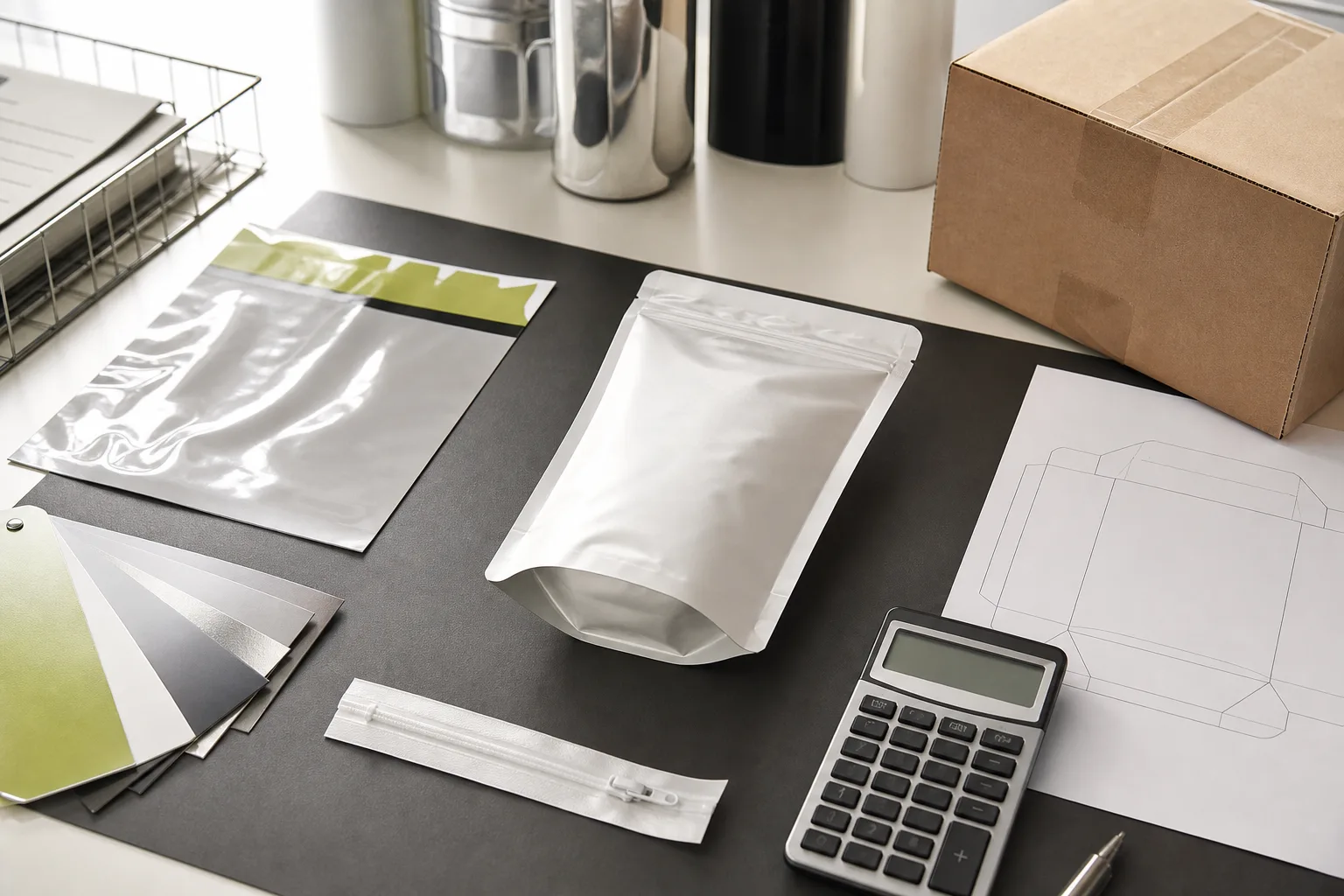
Two quotations are not comparable when one omits laminate layers, thickness, zipper type, finish, plate/cylinder charges, cartons or freight. Use one specification revision as the baseline for every quote. Record flat size and bottom-gusset convention, outside-to-inside structure, thickness, closure, artwork count and packing format. If a supplier leaves a field open, mark it as an assumption rather than treating two quotes as equal. Check the proposed sample against the same revision before comparing price. A unit figure attached to a different zipper, laminate or print scope cannot decide the approved pouch purchase.
02
Separate one-time and repeat costs
Identify artwork preparation, cylinders or tooling, sample charges and other setup separately from the recurring pouch price. Place setup, tooling, proof and freight outside the repeat unit-price column. Ask which charges recur when the buyer reorders the same approved design and which return if artwork or size changes. Include inspection and sample costs if they are part of the offer. This view makes a low launch price and a low repeat price visible as separate outcomes. Procurement can then choose against its realistic demand pattern without inventing a universal cost per pouch.
03
Model inventory exposure
A lower unit price at a higher quantity may increase obsolete-artwork, storage and cash-flow risk. Compare usable demand, not only nominal savings.
04
Define delivery basis
Record whether the quote is ex works, FOB, CIF, DDP or another agreed basis, and what is excluded.
Buyer decision example
Compare the same delivered scope
Two pouch quotes can show different unit prices because one includes a zipper, print setup and cartons while the other prices only converted bags. Build one comparison row per scope item: dimensions, laminate, gauge, finish, artwork count, quantity per design, proofs, setup, packing and delivery terms. Keep excluded charges visible.
Then compare both offers at the same accepted quantity and destination scope. Separate one-time setup from repeat-order cost, and record what a later artwork change would require. A lower unit price is not a saving if the order creates unusable inventory or omits required protection. Ask the supplier to identify assumptions before using either quotation in a purchase decision.
Build the comparison around total usable pouches delivered to the agreed destination, not the lowest number in a price column. Note whether the quoted quantity is ordered, produced or accepted after inspection, and how overruns or shortfalls are handled. Keep tooling, proof, carton, freight and tax assumptions on separate rows so procurement can see which charges occur once and which recur. Where a term is missing, request a written answer rather than inserting a guessed allowance.
A useful decision sheet also records the cost of a specification change. If the buyer adds a zipper, changes artwork count or changes material after sampling, identify which price lines and approvals must be reopened. Compare the revised offer only after the physical sample and commercial quote use the same dimensions, construction and revision. This prevents an apparently cheaper option from winning on an obsolete drawing while the more complete offer carries the actual approved scope.
Ask for a priced baseline and clearly marked alternatives rather than one blended offer. A baseline might use the required closure and approved artwork; a second line can show an optional finish or a different order split. Hold the destination and packing basis constant when comparing the alternatives. If a freight term or inspection scope changes between them, treat that as another difference to resolve.
Close the comparison with a short purchasing decision: selected specification, accepted sample, quantity per artwork, included setup, delivered basis, validity and open exceptions. Assign an owner to each exception. This sheet is more useful than a price screenshot because operations can confirm whether the quoted pouch is the one it will fill and marketing can confirm whether the print proof matches the approved design.
Illustrative review workflow; this is not a reported customer project or test result.
Decision table
Use one normalized record for comparison.
| Cost factor | Scope to compare | Common hidden difference |
|---|---|---|
| Dimensions | Flat width, height, gusset and tolerances | Nominal size versus finished usable volume |
| Laminate | All layers, thickness and test evidence | Trade name without exact construction |
| Printing | Route, colors, design count, finish and cylinder/tool scope | Setup excluded from unit price |
| Features | Zipper, notch, window, valve and hang hole | Different component or location |
| Quantity | Per design, over/under-run rule and packing | Total quantity masks SKU allocation |
| Freight | Incoterm, destination, carton/pallet and duties | Different delivery basis |
Buyer questions
Direct answers with project boundaries.
Why is there no instant price?
A defensible price requires a defined project. Use the RFQ checklist so suppliers price the same scope.
What usually changes price most?
Dimensions, material, print route, features, quantity and design count are common drivers, but their effect is project-specific.
Is the cheapest laminate the lowest-cost choice?
Not if it fails filling, shelf-life or distribution needs. Compare total approved-package cost and risk.
How should quotes be compared?
Normalize specification, sample/approval scope, setup, overrun, packing, freight and payment basis in one table.