01
What Does Our Walnut Pack Promise the Buyer?
One vendor's halves and pieces can look different from another's. We define the intended mix before we compare fill weights and pouch widths.
We record walnut form, accepted size distribution, color range and recipe. We compare incoming and packed samples of the same lot so the food team can distinguish supplier variation from damage during filling.
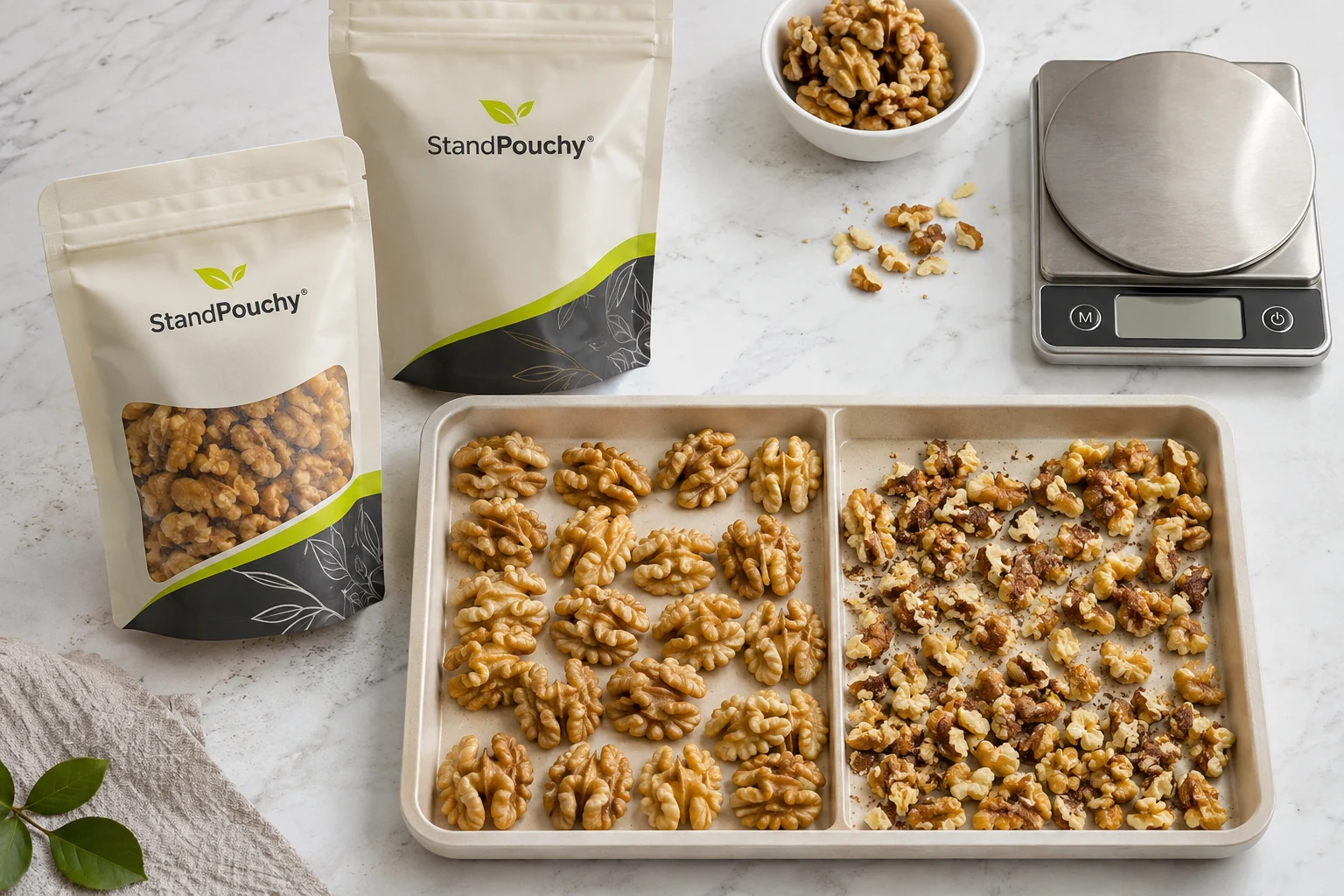
We write down the kernel mix
USDA distinguishes kernel color and size classifications for shelled walnuts [1]. We use the reference to agree on terms with the walnut supplier. We keep the applicable grade or purchase specification next to actual photos and sort representative sample portions into the classes we are using. We photograph them beside the lot label.
We record incoming condition and the intended preparation, such as raw kernels or a specific toasted recipe. After packing, we sort an equivalent sample under the same rules. We also preserve samples after internal transport. Comparing these three points helps us investigate where presentable halves became pieces.
We ask the sales team what the customer is actually buying. A premium whole-half topping can justify paying for a careful fill or more protective case. A baking mix may allow more pieces and give us different packaging choices. We give the filler both the naming promise and the acceptance criteria. Our nuts and trail mix guide helps separate the needs of a single nut from a blend.
When a quotation lists only weight, we ask whether inspecting and documenting breakage is in scope. We agree who provides the fruit lots, who will retain packed examples and who can decide whether a sample has lost too many halves. That lets us check comparable offers without implying that a supplier owes a grade we never specified.
| Kernel promise | What we request |
|---|---|
| Intact halves | Arrival and post-fill sorting checks |
| Halves and pieces | Matched purchase reference and photos |
| Recipe variants | Separate finish and lot identification |
02
How Do We Compare Pouch Protection for Shelled Walnuts?
An attractive clear pouch can leave our buyer guessing about quality through storage. We ask for the package evidence and a filled-pack study.
We compare an opaque candidate with any clear or window candidate we intend to sell. We request comparable oxygen transmission data and use retained sealed samples to assess what happens to our walnuts under the planned route.
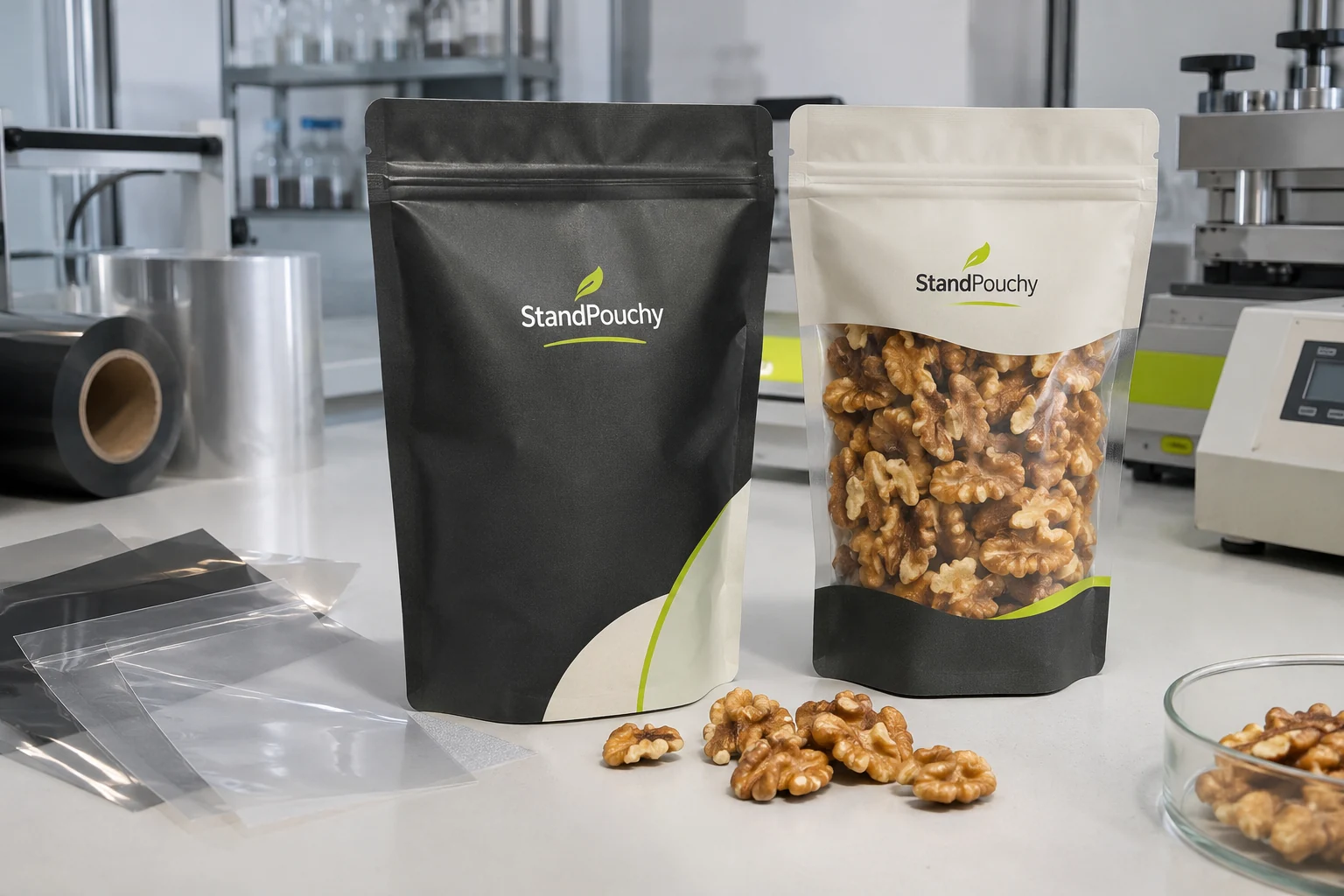
We separate film data from walnut quality
A UC Davis study investigated darkening and rancidity in shelled walnuts, including how oxygen exposure and storage conditions affected quality [2]. We use that as a reason to monitor more than appearance. Our product team defines color and sensory criteria separately and compares packs from the same lot at agreed checks.
ASTM D3985 measures oxygen transmission through plastic film and sheeting [3]. We ask for the specimen, method, conditions and revision, and we match those conditions across competing reports. We record the clear panel separately if it uses a different construction. A film result is not a direct measurement of the pouch seals or the shelf life of our walnut recipe.
If a retailer wants visibility, we ask it to compare filled clear and opaque prototypes under the shelf lighting it will use. We name the minimum visibility that serves the sale. If a window no longer shows intact halves after settling, we can trade it for a good product image rather than approve it by habit. The snack packaging barrier guide helps us request comparable evidence.
We request a quote and study scope for each viable construction, including who makes the retained packs and who reviews them. If the data only cover a film we are no longer buying, we ask for the right document before signing. We keep that gap open in the order brief until the reviewer closes it.
| Evidence | Comparison scope |
|---|---|
| Film report | Exact specimen, revision and conditions |
| Retained walnuts | Color and flavor evaluated separately |
| Clear window | Shelf advantage observed after fill settles |
03
How Do We Protect Walnut Halves During Filling and Sealing?
A fast trial can break halves or leave fragments near the top seal. We observe a normal run and record the points that need attention.
We compare normal runs using the same walnut lot and weight, watch the feed into the pouch, and check for new fragments and residue. We document permanent seal quality separately from repeat zipper use.
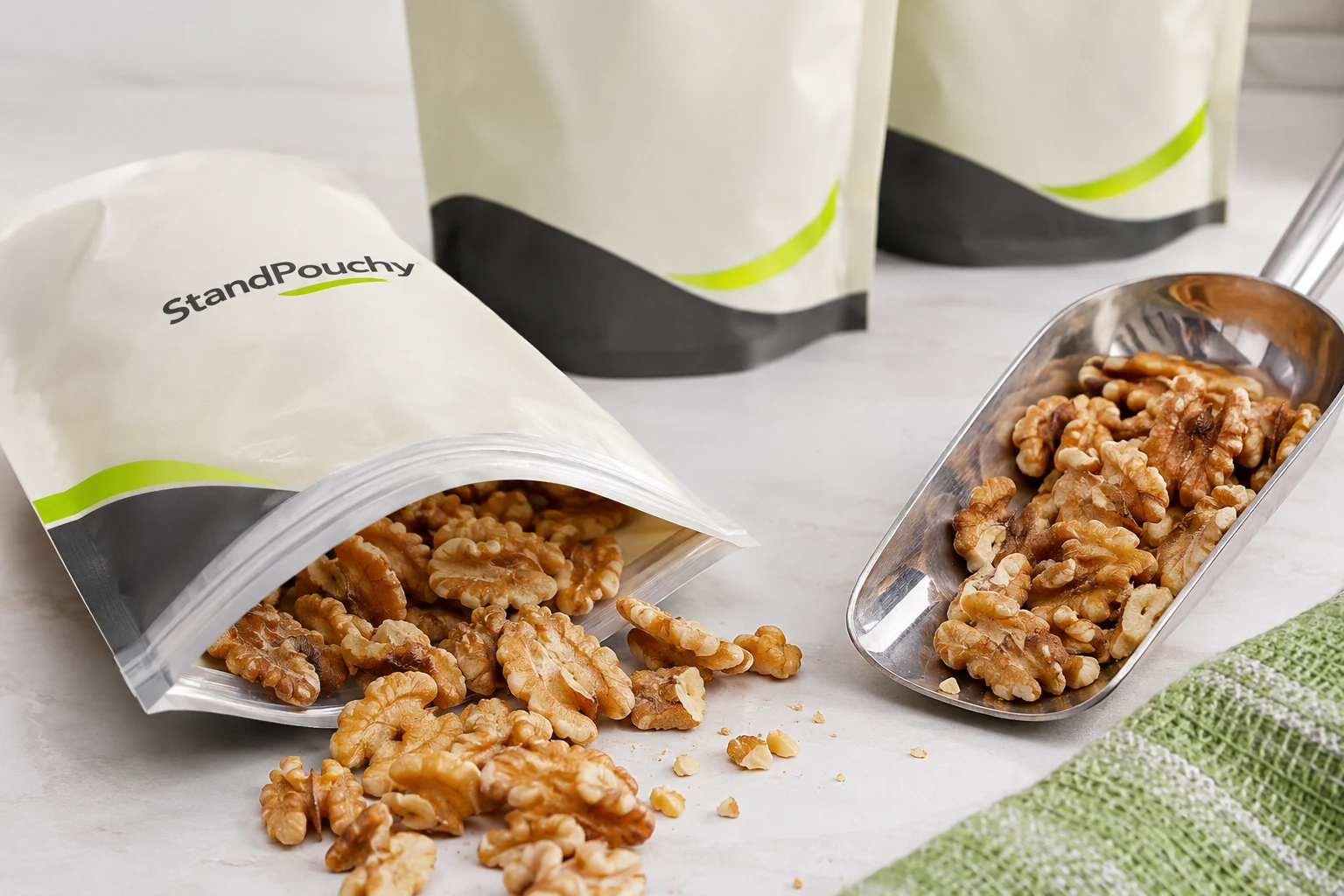
We find where the pieces change
At the filler we record the feed path, drop, chute clearance and usable mouth. We check whether bridging prompts the operator to tap the pouch or push down the product. We compare an incoming sample, a filled pouch at the station and an equivalent pack after case handling. Our photos preserve the location and time of each observation.
We inspect the intended seal band for nut dust and fragments and record settings with the samples. ASTM F88/F88M provides a method for measuring flexible seal strength [4]. A strength check serves a different purpose from a leak check or zipper function check, so our quality team names which checks and sample locations apply.
We ask the co-packer to price the viable filling path, with any line adjustments or trial time visible. If all good trial pouches came from hand loading, we identify those as hand samples and request a line demonstration before using the estimate. We include the co-packer trial brief when sharing the fill target and operator observations.
A buyer choosing between two dimensions should be able to tell whether the wider setup actually prevents jams or simply moves residue to a different location. We ask for the same operator and material conditions for the comparison and include one normal changeover. We record any extra handling time before comparing the total costs.
| Checkpoint | What we keep |
|---|---|
| Before feeding | Representative sample from same lot |
| After sealing | Fragments, seal view and fill setup |
| After case handling | Matched sample and handling notes |
04
What Evidence Do We Need Before Releasing the Walnut Order?
A shelf-ready mockup can hide an untested film or filler change. We connect the signed sample, repeatable process and quoted construction before approving production.
We release the order when the walnut specification, storage checkpoints, pouch drawing, film documentation and filled sample agree. We also name who reviews changes to the pack, walnut form or distribution route.
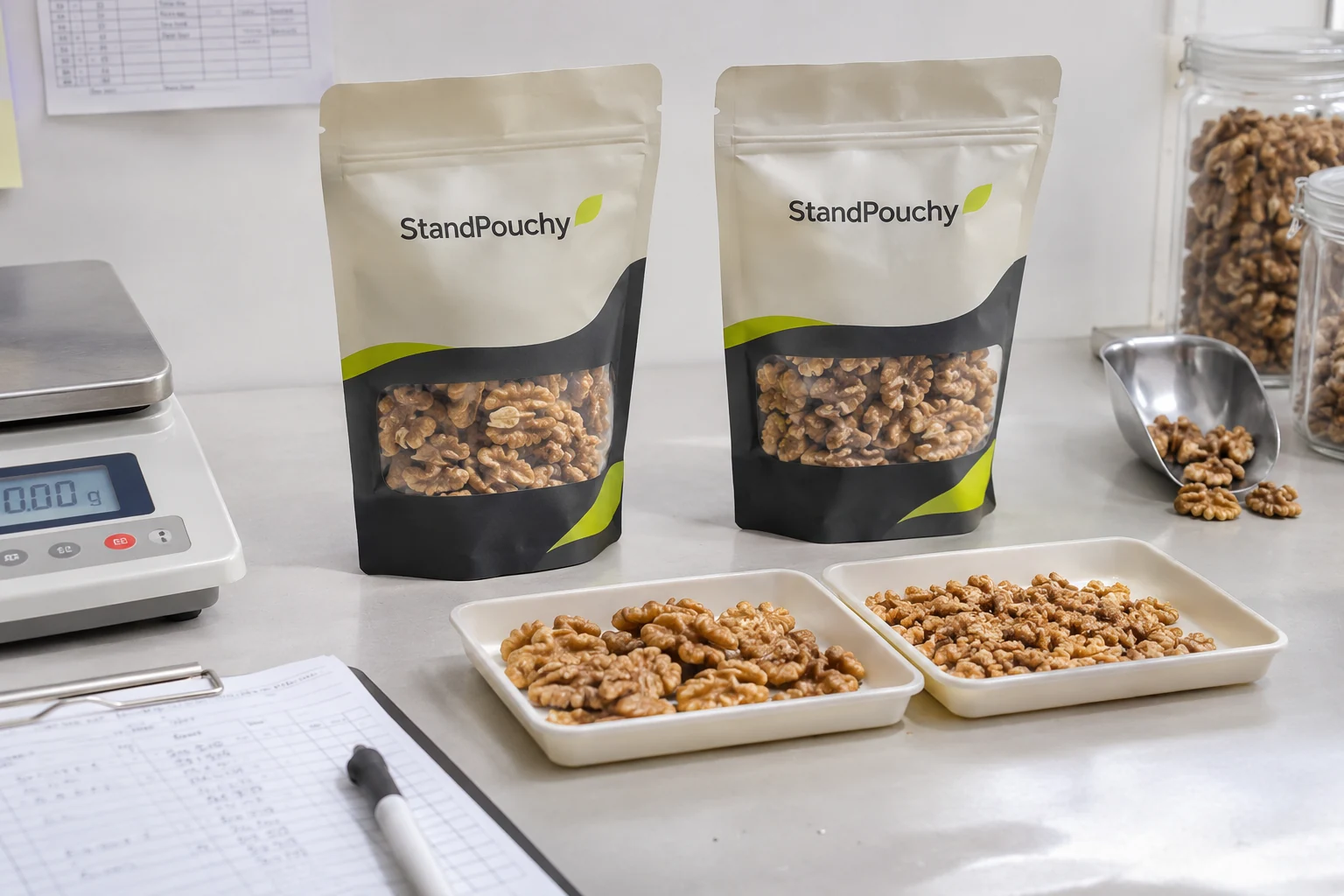
We keep the purchase record clear
We log pack date, walnut lot, finish, pouch revision, fill weight and seal setup on retained samples. We plan when to check the sensory and appearance targets and record the route the samples represent. We ask the supplier for food-contact support aligned with the actual food and conditions of use rather than taking a broad material claim as sufficient [5].
We check the filled sample's shelf footprint and closed case fit. If the case compresses walnut pouches together, we want to know whether inspection after ordinary handling changes the percentage of whole halves. We identify any condition the available samples have not covered and leave approval of that condition with the person who owns it.
We compare the supplier offers against one drawing and a common trial record. We separate the pouch itself, art revisions, stock commitments and the cost of getting to a usable packed unit. If the artwork promises halves, we include a before and after reference for the food team and give the retailer an example of the minimum acceptable display.
In our inquiry brief we attach the current production setup and actual sales route. We ask the supplier to list any deviation on the quote instead of using a generic alternative. If the chosen sample cannot be repeated with the walnut lots we expect to ship, we keep the commercial release open until a representative run passes.
| Release record | Owner |
|---|---|
| Kernel appearance and sensory targets | Food team |
| Run and seal records | Filler and quality team |
| Drawing, art and delivery assumptions | Buyer |
Conclusion
We approve the walnut pouch when the agreed kernel mix, handling quality, storage study and final pack specification all match the quoted offer.
Notes and sources
- USDA: Shelled walnuts grades and standards (cited in article)
- UC Davis study: Removing ready-to-use shelled walnut consumption barriers (cited in article)
- ASTM D3985: Oxygen transmission rate through plastic film and sheeting (cited in article)
- ASTM F88/F88M: Seal strength of flexible barrier materials (cited in article)
- FDA: Food types and conditions of use (cited in article)
About the StandPouchy packaging team and editorial responsibility
Reddit links are community insight only. We use official standards and regulator pages for technical context, and we require project evidence for the final pouch decision.