01
Which Cashew Grade and Eating Occasion Should We Specify?
We waste samples when one quote assumes whole nuts and another assumes pieces. We name the grade and use before comparing pouch options.
We provide representative whole nuts, normal broken pieces, seasoning condition, target fill and expected use. We separate a pantry sharing pouch from a portable snack and ask every supplier to work from the same product reference.

We connect the grade to the way customers will eat
We retain samples showing the proposed whole-nut grade and normal broken pieces. We inspect how curved nuts settle against the base and how fines collect near the mouth after handling. We record any added oil or seasoning as part of the actual product. We do not infer the finished surface from an unseasoned nut photograph.
We reserve label space for the approved food identity. FDA includes tree nuts among major food allergens and discusses identifying their food source.[6] We ask the food owner to approve the cashew and seasoning declarations for the destination. A generic nut picture cannot settle that document question or establish the composition of a flavored product.
We photograph the cashew reference from above and from the side with a scale marker. We retain a separate image of the broken fraction and seasoning residue. We link those observations to the lot identifier so the filling review can distinguish the starting product from changes observed after handling.
We ask whether customers will pour into a bowl, eat from the pouch or transfer the nuts into another container. In one Reddit discussion, a cashew buyer reports unsatisfactory taste after moving nuts into smaller reusable bags.[7] We treat that report as a question about carrying and storage expectations. We cannot diagnose its cause or use it to rank films.
We compare a portable pouch and a pantry pouch as separate offers if they serve different occasions. We ask which sample route covers each size and whether the buyer can test both with the same cashew lot. We prioritize the decision that affects the launch channel first, rather than ordering every available closure.
We attach these choices to our nut and trail-mix overview and the specification checklist. We keep the overview for shared nut principles while this brief records the cashew grade and access task. We send suppliers an agreed reference, not a request to guess what premium means.
| Option or input | Buyer question | Approval evidence |
|---|---|---|
| Whole grade | Must whole nuts pour freely? | Representative grade |
| Broken pieces | Is the normal mix visible? | Retained product sample |
| Portable use | Will buyers decant or carry it? | Use review |
02
How Do We Compare Pouring and Filled Pouch Size?
We can fit the target weight into a pouch that pours poorly. We compare the filled mouth and remaining access before approving dimensions.
We fill candidate conventional doypacks with the same cashew reference. We compare usable mouth width, settled height, top-seal clearance and pouring at full and partly empty conditions, then record the actual standing pack for shelf and case review.

We test the opening with curved nuts and remaining portions
We measure width, total height and full bottom-gusset depth separately. We also record the accessible space below the zipper and the permanent-seal area. A conventional doypack uses front and back faces, side seals and a bottom gusset. We evaluate the filled shape rather than assigning capacity from the flat dimensions alone.
We use a repeatable sample sequence: fill, settle, stand, open and pour. We observe whether curved pieces bridge at the opening, whether seasoning moves toward the zipper and how the pouch behaves with less product remaining. We keep package measurement records aligned with the GS1 measurement framework without treating it as a food-volume calculator.[5]
We record mouth width with the pouch opened to its normal filling position and keep the measuring method with the result. We inspect access after removing part of the fill. We note where nuts gather at the base and where folds develop, rather than adjusting the sample between photographs without recording it.
We ask the buyer to compare access and shelf presence together. A wider mouth may make pouring easier, but it can also alter the facing and carton arrangement. We ask the channel owner which dimensions actually constrain placement. We document that constraint before a supplier invests in a different size.
We request the size alternatives on the same sample basis. We ask whether the quotation includes an unprinted geometry trial, a printed sample or only an existing reference pack. We do not pay for a decorative proof to answer a question that requires filled nuts. We keep sample cost and final production cost as separate lines.
We use the pouch size guide for the planning measurements. We retain a full and partly used pouch with the chosen size so brand and purchasing can review the same result. We choose the smallest useful comparison set and eliminate a candidate only with a recorded access or channel reason.
| Option or input | Buyer question | Approval evidence |
|---|---|---|
| Mouth width | Does the grade pour? | Full and partial fill trial |
| Standing pack | Does the facing suit the shelf? | Measured filled sample |
| Case layout | Does the new size fit? | Actual carton arrangement |
03
Which Film and Closure Evidence Should We Compare?
We cannot buy proven freshness from a film nickname. We match each material proposal to the food, test conditions and filled closure before comparing value.
We request the identified laminate, intended food-contact support, relevant barrier reports and permanent-seal trial. We evaluate reclosure separately from the unopened pack, then ask what evidence supports the proposed storage and distribution conditions.
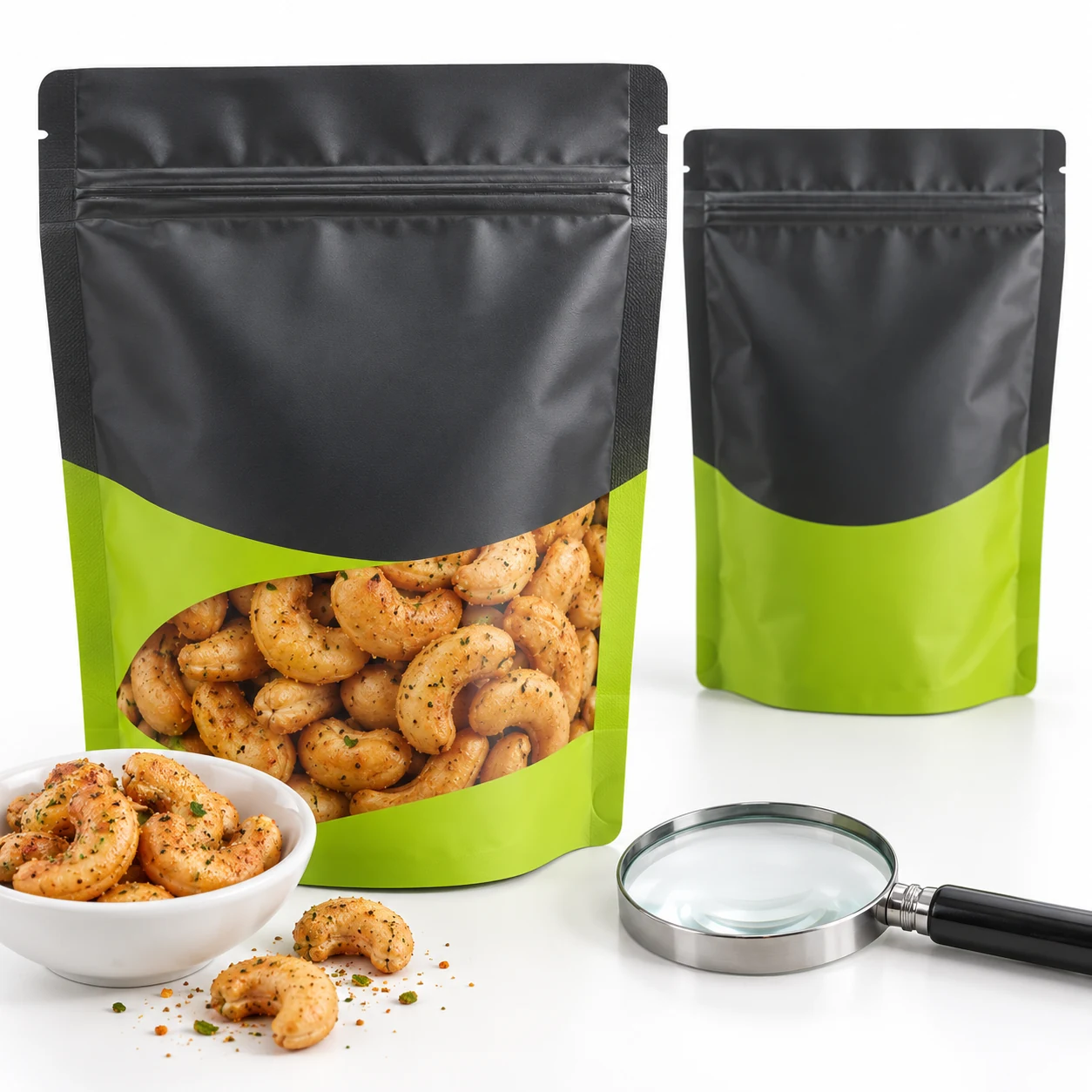
We keep film data and the filled closure on one record
We ask for the complete material direction, including the contact layer and any barrier layer, rather than choosing by matte appearance. FDA ties food-contact status to the individual components and their intended use.[1] We compare supporting documents against the actual proposed construction and food-contact conditions. We do not describe a generic certificate as approval of every cashew pouch.
We request the sample identity, units and conditions beside water-vapor transmission data. ASTM F1249 covers film water-vapor transmission measurement.[3] We also ask the laboratory and packer to agree a filled-seal evaluation; ASTM F88 addresses seal strength, not every possible leak mechanism.[4] We retain failure observations and the specific revision rather than a detached pass label.
We keep the physical film sample with its construction reference and thickness information supplied by the converter. We distinguish that reference from the assembled pouch, where side seals, bottom folds and the top closure add separate interfaces. We inspect those interfaces on the actual filled sample through the agreed handling sequence.
We ask what product change the buyer needs to investigate first and who owns the shelf-life study. We compare plain and seasoned cashew options only when the supplier identifies which food conditions each proposal covers. We leave an incomplete study visible in the quotation, with a decision owner and sample stage.
We ask suppliers to separate the cost drivers: selected film, pouch area, print route, zipper, finish and sampling scope. We avoid choosing a heavier or more elaborate structure simply because its description sounds stronger. We ask what evidence would justify moving from one option to another and what must be retested after a change.
We use our material structure guide to frame the alternatives and the test specification guide to assign the open work. We order the study and sample that resolves the purchase decision. We do not turn a zipper opening demonstration into an unopened shelf-life claim.
| Option or input | Buyer question | Approval evidence |
|---|---|---|
| Laminate identity | Which food conditions are covered? | Matched contact support |
| Barrier report | Are the conditions comparable? | Identified film report |
| Permanent seal | What failed during testing? | Filled sample record |
04
What Must Our Cashew Pouch Order Actually Include?
We can approve a sample and still order a different scope. We connect the cashew grade, artwork, pouch revision and case before releasing the purchase.
We approve one product reference, pouch drawing, material direction, artwork file, filling trial and case configuration. We make pending evidence and supplier responsibilities explicit, then compare quotations on that shared scope before ordering.

We buy the approved configuration rather than a similar-looking bag
We retain the filled reference through the planned handling sequence. We inspect the pouch base, side seals, top closure and product condition at the agreed review points. We record whether nuts were whole or broken before the trial so a later comparison has a meaningful baseline. We do not attribute every fragment to the pouch.
We link artwork and physical pack by a common revision identifier. We check the visible product name, approved allergen information and code reserve on the same standing sample. We record the final sealing sequence used by the packer. A sample sealed under different conditions needs its own record rather than inheriting the production decision.
We photograph the same pouch before and after the handling trial, using consistent views of its top, base and faces. We keep the opening record and visible product condition beside the sample identity. We record deviations as observations requiring review, without converting a single photograph into a quantified performance result.
We ask the supplier to identify what is included in the offer: trial pieces, printing setup, material direction, quantity per artwork, shipping basis and the approval steps. We request an explanation of exclusions before comparing totals. We cannot compare an unprinted stock sample with a project-specific printed trial as though both buy the same evidence.
We assign the buyer, food owner, converter and packer a clear decision. We ask when the commercial order becomes committed and which changes would trigger revised sampling. We keep the deadline separate from any technical acceptance. If the buyer changes from whole cashews to a heavily seasoned broken grade, we reopen the affected questions.
We finish with the sample approval guide and a product-specific inquiry. We include the selected grade, fill, destination, use occasion, artwork status and remaining questions. We want a supplier response that names the next sample and decision, so purchasing can move forward without treating an attractive photograph as final release.
| Option or input | Buyer question | Approval evidence |
|---|---|---|
| Product scope | Is the cashew grade unchanged? | Retained lot |
| Supplier scope | What does the quotation include? | Written inclusions |
| Release | Who owns unresolved work? | Signed revision record |
Conclusion
We order roasted cashew pouches from a defined grade, useful opening and matched trial. We approve the physical pack and supplier scope together.
Notes and sources
- FDA: Food-contact component status (cited in article)
- FDA: Water activity technical background (further reading)
- ASTM F1249-25: Film water-vapor transmission scope (cited in article)
- ASTM F88/F88M-21: Seal strength method scope (cited in article)
- GS1: Package and product measurement standard (cited in article)
- FDA: Food allergies and tree-nut labeling (cited in article)
- Reddit community insight: Carrying cashews in reusable bags (cited in article)
About the StandPouchy packaging team and editorial responsibility
Reddit links are community insight only. We use official standards and regulator pages for technical context, and we require project evidence for the final pouch decision.